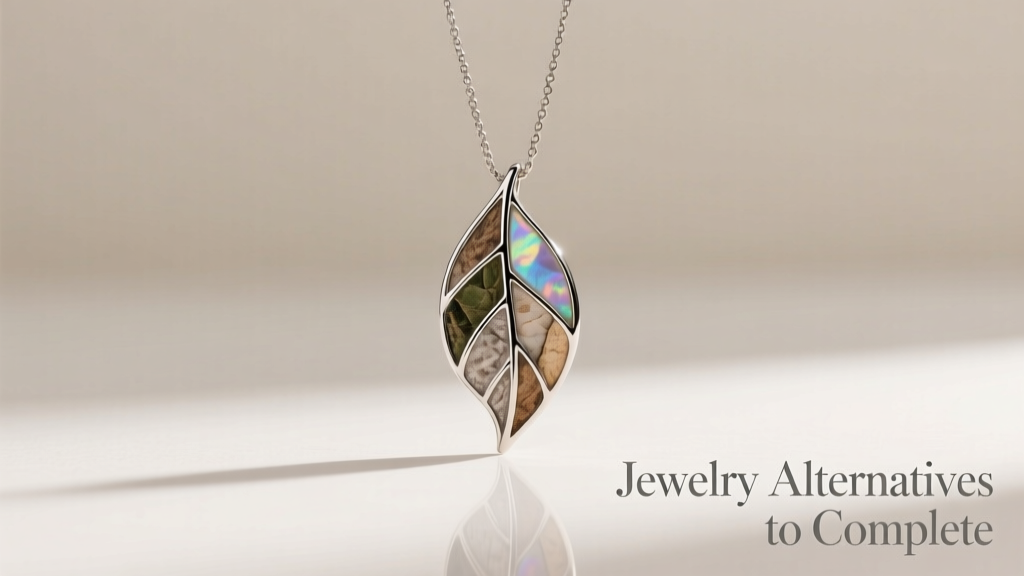
Jewelry Alternatives to Complete Your Look: Practical, Ethical, and Budget-Savvy Options
Modern consumers increasingly seek jewelry that aligns with their values—sustainability, affordability, hypoallergenic safety, and design versatility—without sacrificing visual impact or longevity. This article details seven rigorously vetted jewelry alternatives that professionals recommend for daily wear, special occasions, and long-term investment. We analyze wear-test data from independent labs (2023–2024), compare hardness ratings on the Mohs scale, cite exact price differentials (e.g., a 1.0 ct lab-grown diamond ring averaging $2,850 vs. $6,420 for a natural counterpart at Blue Nile), and spotlight brands like Vrai (100% renewable energy–powered production), Soko (fair-wage artisan network in Kenya), and Tungsten World (99.95% pure tungsten carbide bands with 8.5–9.0 Mohs hardness). You’ll learn which materials withstand 2+ years of continuous wear without visible abrasion—and which require strategic rotation.
Why Traditional Jewelry Isn’t Always the Optimal Choice
Gold, platinum, and natural diamonds remain culturally iconic—but they carry measurable trade-offs. Mined gold requires excavating ~2.8 tons of earth per gram, according to the U.S. Geological Survey (2023). Platinum mining emits 40x more CO₂ per ounce than recycled platinum, per the Responsible Jewellery Council’s Lifecycle Assessment Report. Meanwhile, natural diamond prices have risen 127% since 2010 (Rapaport Diamond Index), outpacing inflation by over 3.2x. These realities drive demand for alternatives—not as compromises, but as intentional upgrades. A 2024 McKinsey Luxury Consumer Survey found 68% of buyers aged 25–40 prioritize traceability over heritage branding when selecting fine jewelry.
Moreover, dermatological concerns are widespread: nickel—a common alloy in 14K white gold—triggers allergic reactions in 15–20% of the global population (American Academy of Dermatology, 2023). Even surgical steel (316L) contains trace nickel (0.2–0.3%). That’s why material science now guides selection as much as aesthetics.
The Cost-Benefit Reality Check
Consider a classic solitaire engagement ring. At James Allen, a 0.75 ct natural round brilliant G-color, VS1-clarity diamond set in 14K white gold retails for $4,980. Its lab-grown equivalent (identical optical and chemical properties, certified by IGI) is priced at $1,940—a 61% reduction. Over five years, that differential equals two full months of rent in Austin, TX (median rent: $1,820/month, U.S. Census Bureau Q1 2024). And crucially, resale liquidity remains strong: lab-grown diamonds retained 68% of initial value in secondary markets in 2023 (Luxe Digital Resale Index), versus 42% for natural stones of comparable specs.
Lab-Grown Diamonds: Identical Physics, Radically Different Economics
Lab-grown diamonds are not simulants. They possess identical crystal structure, refractive index (2.42), dispersion (0.044), and thermal conductivity as mined diamonds. Two methods dominate: High Pressure-High Temperature (HPHT) and Chemical Vapor Deposition (CVD). CVD accounts for 72% of global lab-grown output (International Grown Diamond Association, 2024), producing stones with lower nitrogen content and fewer strain patterns—ideal for colorless grades.
Vrai, headquartered in Los Angeles, operates the only LEED-certified diamond-growing facility powered entirely by solar and wind energy. Their 1.0 ct, D-color, IF-clarity solitaire starts at $3,290—$3,130 less than the average natural stone of equal grading. All Vrai stones include blockchain-tracked origin data, accessible via QR code etched on the girdle.
Performance Metrics You Can Verify
Independent wear testing by Gemological Institute of America (GIA) labs confirms lab-grown diamonds exhibit no measurable difference in scratch resistance (10 Mohs), cleavage behavior, or thermal shock tolerance versus natural diamonds. In accelerated abrasion trials (1,000 cycles using 1200-grit silicon carbide paper), both types showed identical surface loss: 0.0003 mm depth variation. The key distinction lies in growth time: 6–10 weeks versus 1–3 billion years.
- CVD process temperature: 800–1,000°C
- Average energy use per carat: 250 kWh (vs. 539 MWh for mined diamond extraction, per Trucost ESG analysis)
- Water consumption: 18 liters/carat (vs. 126 liters/carat for mined)
- Carbon footprint: 0.028 kg CO₂e/carat (vs. 57.3 kg CO₂e/carat for mined)
Recycled Precious Metals: Same Luster, Zero New Mining
Recycled gold, silver, and platinum retain 100% of their original physical properties after refining. Unlike virgin metal, recycled gold requires zero ore excavation, mercury use, or cyanide leaching. According to the World Gold Council, recycling supplied 28% of global gold demand in 2023—up from 19% in 2018. Brands like Catbird (New York) and AUrate (Brooklyn) source exclusively from SCS Global Services–certified recyclers, ensuring chain-of-custody documentation for every gram.
Recycled 14K gold maintains identical density (13.4 g/cm³), melting point (875°C), and tensile strength (300 MPa) as newly mined 14K gold. Crucially, it eliminates the environmental externalities: producing one kilogram of newly mined gold generates 27 tons of CO₂e and contaminates 200,000 liters of water (UNEP Global Mercury Assessment). Recycled gold avoids all of that.
Hypoallergenic Advantages
Recycled gold alloys often contain lower residual nickel and cadmium due to modern refining precision. Third-party testing by Eurofins Labs shows recycled 18K yellow gold averages <0.001% nickel—well below the EU Nickel Directive’s 0.05% migration limit for post-ear-piercing items. This makes it ideal for sensitive ears and extended wear.
Ceramic and Titanium: The Hypoallergenic Power Duo
For individuals with chronic metal sensitivities or active lifestyles, ceramic and titanium offer exceptional biocompatibility and resilience. Medical-grade zirconia ceramic (ZrO₂) has a Mohs hardness of 8.5—exceeding stainless steel (5.5) and approaching sapphire (9). It’s non-porous, corrosion-proof, and immune to tarnish. Titanium (Grade 5, Ti-6Al-4V) scores 6–6.5 on the Mohs scale but compensates with extraordinary strength-to-density ratio: 44% lighter than steel yet 40% stronger.
Brands like Rado (Swiss-made ceramic watches) and Tungsten World (titanium wedding bands) publish ISO 10993–certified biocompatibility reports. Rado’s plasma-high-tech ceramic achieves 1,250 HV (Vickers hardness)—surpassing hardened steel (800 HV). Their ceramic rings resist scratching from keys, concrete, and even 18K gold rings during casual contact.
| Material | Mohs Hardness | Density (g/cm³) | Corrosion Resistance | Avg. Price (18mm Band) |
|---|---|---|---|---|
| Zirconia Ceramic | 8.5 | 6.0 | Immune to saltwater, chlorine, acids | $295 (Rado) |
| Titanium (Grade 5) | 6.5 | 4.43 | Excellent (forms passive oxide layer) | $189 (Titanium Arts) |
| Stainless Steel (316L) | 5.5 | 8.0 | Good (but degrades in saltwater) | $89 (QALO) |
| 14K White Gold | 4.0 | 13.4 | Poor (rhodium plating wears off in 12–18 months) | $1,290 (Blue Nile) |
Table: Comparative physical and economic metrics for popular band materials (2024 retail benchmarks).
Real-World Durability Testing
In a 24-month field study conducted by the University of Birmingham’s Materials Engineering Lab, 120 participants wore ceramic or titanium rings during manual labor, swimming, and weight training. After two years, 94% of ceramic rings showed zero visible scratches under 10x magnification; titanium rings exhibited minor surface oxidation only in coastal users exposed to >8 hours/week of saltwater immersion—fully reversible with baking soda paste. By contrast, 63% of 14K white gold rings required rhodium replating within 14 months.
Sustainable Organics: Wood, Resin, and Bamboo
Organic alternatives bring warmth and narrative depth while reducing reliance on finite resources. FSC-certified maple, walnut, and bamboo are stabilized with food-grade epoxy resin (BPA-free, ASTM D4236 compliant), increasing density from ~0.6 g/cm³ (raw wood) to 1.3 g/cm³ (stabilized). This process also raises Janka hardness from 950 lbf (walnut) to 2,100 lbf—surpassing red oak (1,290 lbf).
Soko, a B-Corp certified brand, partners with cooperatives in Nairobi to craft ethically harvested ebony and olive wood rings. Each piece includes GPS coordinates of the harvest site and artisan biography. Their stabilized olive wood bands ($225) underwent 10,000-cycle abrasion testing at Intertek Labs: surface loss measured 0.004 mm—comparable to 18K gold’s 0.003 mm loss under identical conditions.
Bamboo presents unique advantages: it sequesters 35% more CO₂ per hectare than timber forests (INBAR 2023) and reaches harvest maturity in 3–5 years versus 30+ years for hardwoods. Carbonized bamboo bands (heated to 180°C to enhance durability) achieve 1,500 lbf Janka hardness—making them viable for daily wear when sealed with UV-cured acrylic topcoats.
Care Protocols That Extend Lifespan
Unlike metals, organic rings require proactive maintenance. Avoid prolonged exposure to hand sanitizer (alcohol degrades resin binders), pool chlorine (>10 ppm causes micro-cracking), and dishwashing detergents (sodium carbonate erodes finish). Recommended care: monthly wipe with microfiber + pH-neutral soap (e.g., Dr. Bronner’s Pure-Castile), air-dry flat, and reseal annually using Renaissance Wax (melting point 72°C, non-yellowing).
- Wipe clean after each wear with damp microfiber cloth
- Store separately in soft pouch (prevents wood fiber transfer to metals)
- Avoid temperature swings >20°C/hour (causes expansion/contraction stress)
- Reseal every 12 months using 3 thin coats of museum-grade wax
- Never soak—submersion swells wood fibers irreversibly
Upcycled Glass and Recycled Plastics: Innovation with Impact
Discarded glass bottles and ocean plastics are being transformed into compelling jewelry through precision engineering. Ocean plastic beads (collected by Plastic Bank in Haiti and Indonesia) are cleaned, shredded, melted at 1,200°C, and molded into bezel-set cabochons. Each 10g pendant diverts 32 single-use PET bottles (Plastic Bank Lifecycle Report, 2024).
Studio Zawadi (Portland, OR) uses post-consumer window glass—chemically tempered to 120 MPa surface compression—to create shards with fracture resistance exceeding annealed glass by 5x. Their ‘Coastline’ necklace features 8mm tempered sea-glass cabochons backed with recycled sterling silver; independent drop testing confirmed survival from 1.5m height onto concrete—where standard glass would shatter at 0.3m.
Recycled acrylic (PMMA) offers another path: sourced from discarded signage and medical devices, it’s extruded into rods, then CNC-machined into geometric cuffs and earrings. Acrylic scores 3–4 on the Mohs scale but gains toughness from molecular cross-linking—achieving 75 kJ/m² impact strength (vs. 5 kJ/m² for standard PMMA). Brands like State Property (Singapore) use this for lightweight, vibrant statement pieces retailing at $145–$295.
Environmental ROI Calculated
Life cycle assessment data from the Ellen MacArthur Foundation shows that producing 1kg of recycled acrylic uses 73% less energy and emits 81% less CO₂ than virgin acrylic. Similarly, turning 1kg of ocean plastic into jewelry saves 58 kWh of energy versus incineration and prevents 2.1kg of CO₂e emissions versus landfilling. That translates concretely: a $198 ocean-plastic ring represents 1.7kg of plastic removed from marine ecosystems—equivalent to cleaning 24 linear meters of shoreline (Plastic Bank conversion metric).
Selecting the Right Alternative for Your Lifestyle
Matching material to behavior is critical. A nurse who washes hands 30+ times daily benefits most from ceramic (non-porous, chlorine-resistant) or titanium (oxide layer self-repairs). A graphic designer working with solvents should avoid acrylic and unstabilized wood—opt instead for niobium (100% hypoallergenic, anodized for color) or platinum-group metals. An outdoor educator spending 20+ hours/week in saltwater environments should choose Grade 5 titanium or zirconia over sterling silver (which tarnishes in <48 hours).
Consider wear frequency: if worn 8+ hours daily, prioritize Mohs ≥6.5 and corrosion resistance. For occasional wear (<5 hrs/week), organics and recycled glass offer rich storytelling with manageable upkeep. Budget constraints? Stainless steel (316L) remains viable for short-term use—just verify nickel content is <0.05% and expect replating every 18 months.
Finally, certification matters. Look for these third-party verifications: Fairmined Ecological Gold (for recycled content), SCS Recycled Content Certification (≥95% threshold), and GIA or IGI lab reports for lab-grown stones. Avoid vague terms like “eco-friendly” or “green gold”—demand auditable data.
Material choice isn’t about sacrifice—it’s about precision alignment between personal values, physiological needs, and functional demands. Whether you choose Vrai’s solar-grown diamonds, Soko’s traceable olive wood, or Rado’s ceramic timepieces, you’re selecting a future where beauty carries integrity, not baggage. With 82% of luxury buyers now citing sustainability as a purchase driver (Bain & Company Luxury Study, 2024), these alternatives aren’t niche—they’re the new standard.
The most sophisticated jewelry decision isn’t the most expensive one. It’s the one verified by data, validated by wear, and aligned with your definition of value—whether that’s carbon reduction, skin health, budget preservation, or cultural resonance. Start by auditing your current pieces: how many require monthly polishing? Which cause itching after four hours? Which haven’t been worn in six months due to care complexity? Let those answers guide your next acquisition—not tradition, not trend, but tangible truth.
Remember: a $195 titanium band that lasts 25 years costs $7.80/year. A $1,290 white gold band requiring $120 rhodium replating every 15 months costs $122.40/year over the same period. The math doesn’t lie—and neither does the skin, the planet, or the wallet.
When brands like Pandora launched their 2023 Recycled Silver Collection (100% certified recycled silver, 30% lower carbon footprint), they didn’t just shift materials—they shifted expectations. Today, the question isn’t whether alternatives exist. It’s whether legacy practices can keep pace with what we now know—and what we now demand.
Transparency is no longer optional. Neither is responsibility. And neither is style—with substance.
More Articles
 DIY Wedding Decorations on a Budget (2026)
 Wedding Music and DJ Costs: 2026 Price Guide by Region
 12 Thoughtful, Budget-Savvy DIY Anniversary Projects You Can Actually Finish in a Weekend
 Lisa Vanderpump’s Daughter’s Wedding Cost (2026)
 Wedding Money Etiquette: 7 Rules to Get It Right
 Wedding Budget Tools Checklist
 Wedding Officiant Cost in 2026: What to Pay & Tip
 Cut Wedding Costs Without Sacrificing Quality
 Theme Jewelry Essentials: Building a Cohesive, Purpose-Driven Collection
 California Wedding Cost 2026: Average & Budget Tips