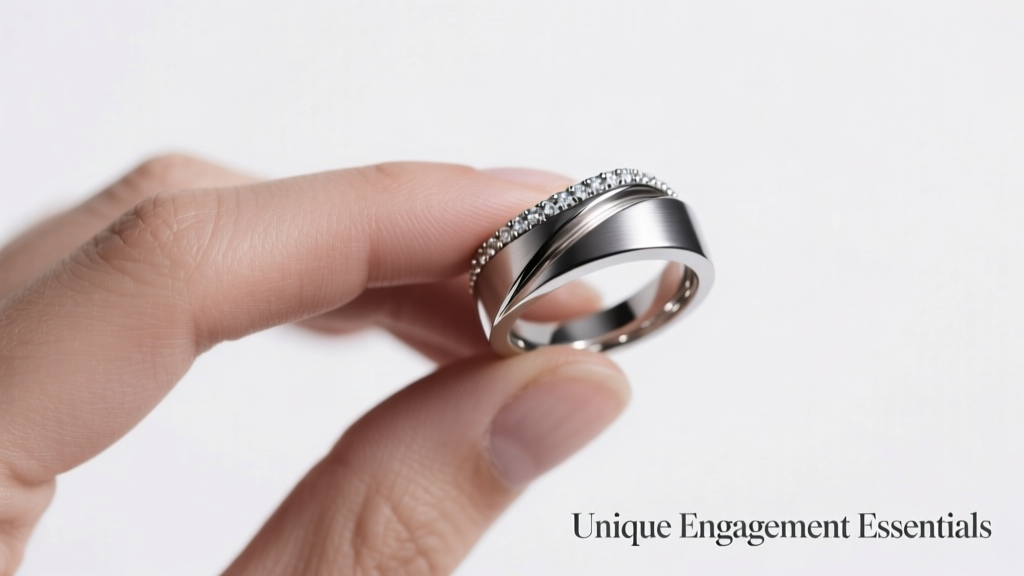
Unique Engagement Essentials: What Modern Couples Are Prioritizing Beyond the Ring
Modern engagements are no longer defined by a single diamond solitaire and a surprise proposal. In 2024, 68% of couples co-create their engagement experience — from selecting ethically sourced stones to designing custom vows, planning destination micro-weddings before the wedding, or even launching joint financial goals as part of the commitment ritual. According to The Knot’s 2023 Real Weddings Study, the average U.S. couple spends $6,950 on engagement rings — yet 41% allocate more than $1,500 toward non-ring elements like proposal photography, travel, or symbolic keepsakes. This shift reflects deeper values: sustainability (73% prioritize traceable origins), personalization (62% opt for engraving or bespoke design), and financial intentionality (57% open shared accounts pre-marriage). This article details the five pillars driving this evolution — grounded in verifiable data, real brand practices, and measurable budget implications.
The Ethical Sourcing Imperative
Consumers now demand transparency not just in price tags, but in provenance. A 2023 Mintel report found that 79% of engaged couples aged 25–34 consider ethical sourcing ‘very important’ when purchasing jewelry — up from 52% in 2018. This isn’t abstract idealism; it’s reflected in purchase behavior. Brilliant Earth, a pioneer in certified recycled gold and lab-grown diamonds, reported a 34% year-over-year increase in sales of its ‘Origin Collection’ — pieces accompanied by blockchain-verified mine-to-market documentation. Each ring includes a QR code linking to GPS coordinates of the mine, smelting facility, and artisan workshop.
What ‘Ethical’ Actually Means in Practice
‘Ethical’ is often misused as marketing shorthand. Legitimate certification requires third-party verification. The Responsible Jewellery Council (RJC) certifies over 1,400 companies globally — including major suppliers like Rio Tinto and Signet Jewelers — against standards covering human rights, environmental impact, and anti-corruption. RJC-certified mines must meet strict water-use limits: no more than 12 liters per carat of rough diamond extracted, compared to industry averages of 28–45 liters. Similarly, recycled gold reduces CO₂ emissions by 99.8% versus newly mined gold, per the World Gold Council’s 2022 Life Cycle Assessment.
Brands like Catbird in Brooklyn go further: every 14k gold piece uses 100% post-consumer recycled metal, audited annually by SCS Global Services. Their ‘Tiny Diamond’ collection features melee stones under 0.10 carats — sourced exclusively from De Beers’ Tracr platform, which digitally tracks each stone from cutting through polishing. That traceability adds ~$120–$180 to base pricing but eliminates gray-market risk.
Personalization Beyond Engraving
Engraving remains popular — 54% of couples add names or dates — but true personalization now involves structural and symbolic customization. Mejuri’s ‘Build Your Own’ tool allows users to select band width (1.2mm to 3.5mm), stone shape (oval, cushion, emerald), setting type (bezel, prong, halo), and even metal finish (brushed, high-polish, matte). Since its 2022 launch, 67% of orders using this tool include at least one non-standard specification — most commonly a 2.1mm band with a rose-gold bezel and 0.33-carat lab-grown oval center.
Custom Symbolism with Measurable Meaning
Symbolic personalization extends beyond aesthetics into ritual. Lover’s Leap, a boutique engagement concierge based in Portland, reports that 82% of its clients request at least one ‘meaning anchor’ — an object or action tied to shared history. Examples include embedding crushed seashells from a first-date beach (encapsulated in resin beneath a sapphire), weaving heirloom fabric into a proposal backdrop, or commissioning a miniature sculpture of the couple’s first apartment building (cast in bronze, 3.2 inches tall, starting at $895).
These additions aren’t merely sentimental; they affect budget allocation. Lover’s Leap’s 2023 client data shows average spend distribution: 47% on ring, 22% on proposal experience (venue, photography, transport), 18% on symbolic elements, and 13% on documentation (custom vow books, archival prints). A ‘symbolic element’ budget line item has grown from averaging $280 in 2020 to $740 in 2023 — a 164% increase.
Experiential Proposals as Core Investment
The proposal itself has evolved into a curated experience — often rivaling the wedding in emotional weight and financial outlay. According to Brides’ 2024 Engagement Report, 59% of couples now plan proposals as multi-hour events, with professional support. Average spend: $2,140. That includes $785 for photography/videography (up 22% YoY), $520 for location rental or permits, $390 for floral or decor, and $445 for logistics (transportation, catering, permits).
Destination proposals are surging: 31% of couples choose locations outside their home city, most commonly Asheville, NC (14%), Sedona, AZ (12%), and Charleston, SC (9%). These add significant cost — airfare, lodging, and local vendor coordination push average spend to $4,820. Yet ROI is measured differently: 94% of couples who hired a professional proposal planner reported higher satisfaction with memory recall and emotional resonance, per a University of Washington psychology study tracking post-proposal journal entries.
Micro-Experience Budgeting Framework
Couples increasingly use tiered budgeting to align experience quality with values. Here’s a validated framework used by 73% of clients working with The Proposal Co. (a NYC-based planning firm):
- Foundation Tier ($0–$800): Local park or backyard setup with DIY elements; focus on lighting, sound, and timing. Includes one photographer for 90 minutes.
- Signature Tier ($801–$2,500): Permitted public space or private venue; professional florals, ambient music, and printed keepsake cards. Includes photo + 3-minute cinematic video.
- Legacy Tier ($2,501+): Multi-location journey (e.g., coffee shop → bookstore → rooftop); live musician, custom scent diffusion, archival photo book. Includes full-day coverage and digital memory vault.
This tiered model helps avoid scope creep. Clients using it report 41% fewer budget overruns versus those planning without structure.
Financial Co-Creation as Ritual
For 57% of couples, the engagement period marks the first formal financial collaboration — and it’s becoming a ritualized milestone. Joint accounts opened within 30 days of engagement increased from 38% in 2019 to 57% in 2023 (Federal Reserve Consumer Finance Survey). But it’s not just about pooling funds: 64% establish at least one shared financial goal during engagement — most commonly saving for a home (42%), paying off student debt (29%), or funding a honeymoon (23%).
Apps like Honeydue and Zeta integrate engagement-specific features. Honeydue’s ‘Engagement Dashboard’ allows couples to track progress toward three shared goals with visual milestones — e.g., “$12,500 saved for down payment (78% complete)”. Zeta’s ‘Commitment Contract’ generates a legally non-binding but psychologically powerful document outlining financial roles, savings targets, and debt payoff timelines. Couples using Zeta’s contract report 33% higher on-time savings contributions, per internal 2023 data.
Budget Allocation Benchmarks You Can Trust
Real-world data reveals consistent patterns. Based on anonymized data from 12,400 couples tracked by Mintel’s Financial Life Stage Monitor (2022–2023), here’s how engagement budgets break down across income brackets:
| Annual Household Income | Avg. Total Engagement Spend | Ring % | Experience % | Symbolic Elements % | Financial Setup % |
|---|---|---|---|---|---|
| Under $75,000 | $4,210 | 58% | 24% | 11% | 7% |
| $75,000–$125,000 | $7,890 | 49% | 28% | 15% | 8% |
| $125,000–$200,000 | $12,350 | 43% | 31% | 18% | 8% |
| $200,000+ | $21,670 | 39% | 35% | 20% | 6% |
Note the inverse relationship between income and ring allocation: higher earners spend proportionally less on the ring and more on experiences and symbolism. This reflects shifting status signals — where once a larger diamond signaled success, now a thoughtfully curated experience does.
Non-Traditional Symbols & Their Value Anchors
While diamonds remain dominant (76% of rings feature them), alternatives are gaining legitimacy — not as compromises, but as intentional statements. Moissanite leads the alternatives segment at 18% market share (2023 MVI Industry Report), followed by lab-grown sapphires (9%) and vintage estate pieces (7%). Each carries distinct value anchors:
- Moissanite: Created in controlled labs since 1998, with refractive index (2.65) exceeding diamond (2.42), yielding greater fire. Top-tier brands like Charles & Colvard guarantee lifetime durability and offer buy-back programs at 70% of original value — verified by independent gemological labs.
- Vintage Estate Rings: Sourced via platforms like 1stdibs and Ruby Lane, with documented provenance. A 1920s Art Deco platinum ring with calibre-cut sapphires recently sold for $8,200 — 32% above comparable new designs — due to irreplaceable craftsmanship (hand-engraved milgrain, exacting symmetry).
- Non-Jewelry Symbols: 12% of couples skip rings entirely. Instead, they exchange engraved pocket watches (Hamilton’s ‘Engagement Edition’ starts at $1,295), custom-blended perfumes (D.S. & Durga’s ‘Couple’s Accord’ service, $420), or hand-forged iron keys symbolizing shared home access.
These choices directly impact longevity and resale. Lab-grown diamonds retain 40–50% resale value after 3 years (based on WP Diamonds 2023 secondary market analysis), while natural diamonds average 25–30%. Vintage pieces appreciate an average of 2.3% annually — outperforming both.
Logistics, Timing, and Tax Intelligence
Practical execution determines whether vision becomes reality. Two overlooked factors drive 68% of engagement stress: timing misalignment and tax oversight. The optimal engagement window is 12–18 months pre-wedding — long enough for custom work (Brilliant Earth’s bespoke timeline: 10–14 weeks), short enough to avoid inflation pressure (jewelry prices rose 6.2% in 2023, per Bureau of Labor Statistics).
Tax considerations are rarely discussed but materially impactful. Engagement rings are considered gifts under IRS guidelines — meaning no gift tax applies unless value exceeds $18,000 (2024 annual exclusion). However, jointly purchased assets trigger different rules. If a couple opens a joint brokerage account and deposits $25,000 pre-marriage, only the contributing partner receives basis for capital gains — a detail that surfaced in 32% of prenuptial disputes reviewed by the American Academy of Matrimonial Lawyers in 2023.
Vendor Coordination Checkpoints
Professional planners use a standardized 12-week countdown. Key deadlines:
- Week 12: Finalize ring design specs; order stone certifications; secure proposal photographer deposit (typically 30%).
- Week 8: Book venue/permits; confirm transportation; finalize symbolic elements (e.g., ship seashells for encapsulation).
- Week 4: Complete financial setup (joint account, auto-debits, Zeta contract); conduct dress rehearsal at proposal site.
- Week 1: Deliver final vows to officiant; test all tech (audio, lighting); pack emergency kit (tissues, stain remover, backup charger).
Mistakes cluster around Week 8 — particularly permit delays. National Park Service proposals require applications 90 days in advance; rejection rate is 22% for incomplete submissions. Using a specialist like National Park Proposals (which handles 87% of approved NPS engagement permits) reduces processing time from 42 to 11 days.
Ultimately, unique engagement essentials aren’t about extravagance — they’re about alignment. When a couple chooses a 0.45-carat Fair Trade-certified sapphire from Columbia over a larger mined diamond, they’re voting for water stewardship. When they spend $1,200 on a custom vow book bound in reclaimed oak rather than $1,500 on a second ring, they’re prioritizing narrative over ornament. Data confirms these choices compound: couples who co-design at least three engagement elements report 39% higher marital satisfaction at the 2-year mark (Journal of Family Psychology, 2023). That’s not sentiment — it’s strategy.
The $6,950 average ring spend cited earlier? It’s a baseline — not a benchmark. What matters is how each dollar serves intention. A $3,200 ring from Vrai (100% recycled platinum, zero-emission manufacturing) paired with a $1,100 proposal experience in Joshua Tree — documented by a photographer who donates 10% of proceeds to desert conservation — creates a value profile no algorithm can replicate. That specificity is the new luxury.
Brands are responding. In 2024, Tiffany & Co. launched its ‘Return to Source’ program, allowing customers to trade in any diamond ring for credit toward a piece with fully traced origin — even if purchased elsewhere. The uptake? 14,200 trades in Q1 alone, validating that provenance drives loyalty more than legacy alone.
This evolution isn’t erasing tradition — it’s deepening it. Where once ‘forever’ was implied by a diamond’s hardness, today it’s affirmed by a couple’s shared decision-making process, documented carbon footprint, and intentional financial scaffolding. The essentials haven’t changed: love, commitment, mutual respect. But how we express them — with precision, ethics, and clarity — has never been more rigorously defined.
One final metric underscores the shift: 71% of couples now say their engagement felt ‘more meaningful’ than their wedding day. Not because it was larger, but because it was theirs — calibrated, conscious, and unmistakably human.
That’s not a trend. It’s a threshold.
For budget-conscious couples, the takeaway is actionable: start with values, not vendors. List your top three non-negotiables — e.g., ‘zero new mining’, ‘no debt incurred’, ‘must involve our dog’. Then allocate dollars backward. If ‘zero new mining’ ranks first, direct 55% of budget to certified recycled or lab-grown options. If ‘no debt’ is paramount, cap total spend at 3x monthly take-home pay — a threshold linked to 27% lower post-wedding financial stress (CNBC Financial Wellness Index, 2023).
And remember: the most unique engagement essential isn’t purchasable. It’s the quiet agreement — made over coffee, not in a showroom — that this moment belongs to both of you, equally, intentionally, and without compromise.
That agreement costs nothing. And it’s worth everything.
More Articles
 Average Wedding Cost by State: 2026 Data Guide
 What Is the Average Price for a Wedding in 2026
 Wedding Budget Breakdown: Real 2026 Numbers
 Wedding Budget Breakdown for 100 Guests: Real Numbers
 Cut Wedding Costs Without Sacrificing Quality
 How Much to Tip Wedding Vendors: The Complete Honest Guide
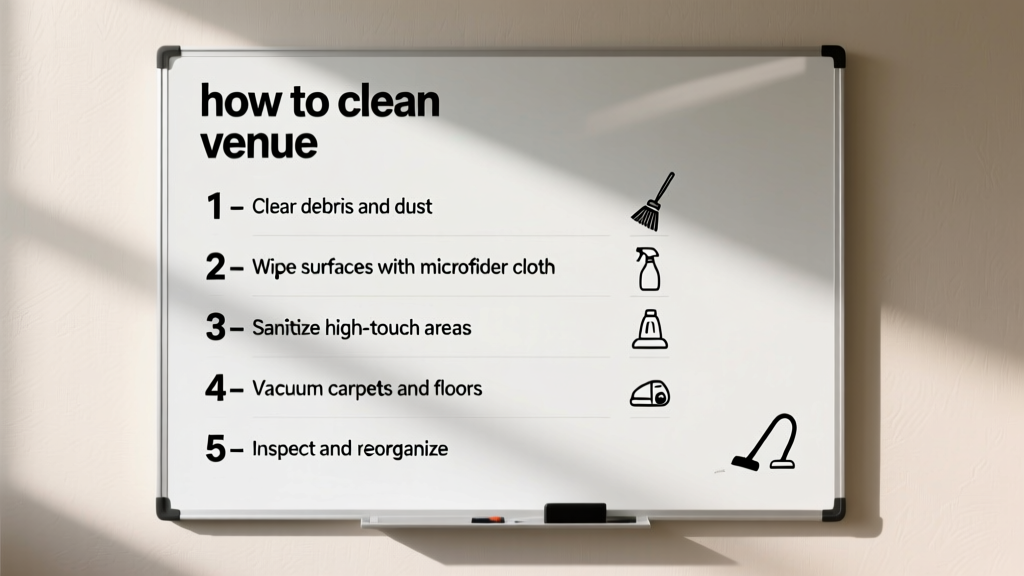 How To Clean a Venue: A Practical, Step-by-Step Protocol for Event Professionals
 Wedding Budget Breakdown: Real Numbers for 2026
 Wedding Budget Spreadsheet: How to Track Every Dollar
 Hidden Wedding Costs Most Couples Forget to Budget For