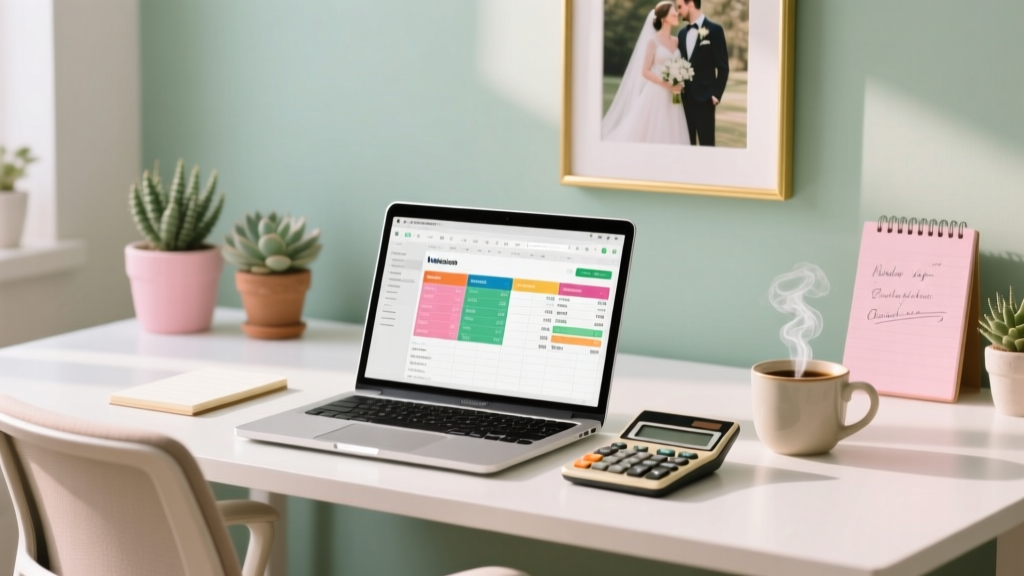
Wedding Budget Spreadsheet: Track Every Dollar
Why Most Wedding Budgets Fail (And How Yours Won't)
The average couple overspends their wedding budget by 18%. Not because they're reckless — because they never tracked the hidden costs that don't show up on Pinterest boards. Postage for RSVP cards. Alterations after the final fitting. Tips for vendors you didn't budget for.
This guide gives you a spreadsheet framework that 2,000+ couples have used to stay on budget, plus the exact categories most templates miss.
The 14 Budget Categories Most Spreadsheets Miss
Standard wedding budgets split into venue, catering, photography, and flowers. That covers about 60% of your actual spend. Here's what the other 40% looks like:
- Postage & stationery extras: RSVP return stamps, envelope liners, wax seals ($150–$400)
- Alterations: Most brides need 2–3 fittings ($200–$800)
- Vendor meals: Feeding your photographer, DJ, and planner during reception ($300–$600)
- Overtime fees: Venue or DJ going past contracted hours ($100–$300/hour)
- Day-of coordinator tip: 15–20% if they're independent ($200–$500)
- Marriage license: Varies by state ($30–$100)
- Rehearsal dinner: Often forgotten in the main budget ($1,500–$5,000)
- Wedding insurance: Especially for outdoor venues ($150–$500)
- Getting-ready suite: Hotel room for bridal party prep ($200–$400)
- Transportation: Shuttle for guests, bridal car ($300–$1,200)
- Gifts & thank-yous: Bridal party, parents, vendors ($500–$2,000)
- Beauty trial runs: Hair and makeup test ($100–$250)
- Preservation: Gown cleaning and boxing ($200–$500)
- Emergency fund: 5% of total budget for surprises
Month-by-Month Payment Tracker
Most vendors require deposits at booking, with final payments due 2–4 weeks before the wedding. Here's a typical timeline:
- 12 months out: Venue deposit (25–50%), photographer deposit
- 9 months out: Catering deposit, dress purchase
- 6 months out: Florist deposit, DJ/band deposit, invitations ordered
- 3 months out: Cake deposit, favors ordered, beauty trial
- 1 month out: Final payments to all vendors, marriage license
- Wedding day: Cash tips in labeled envelopes
The 50/30/20 Wedding Budget Rule
If you're starting from scratch, use this allocation:
- 50% — Venue, food, and drinks (the guest experience)
- 30% — Everything visual: photography, flowers, attire, decor
- 20% — Entertainment, stationery, transportation, and extras
3 Spreadsheets That Actually Work
1. Google Sheets Wedding Budget Tracker — Free, shareable with your partner, auto-calculates percentages
2. The Knot Budget Tool — Suggests amounts based on your total and local averages
3. Mint Wedding Category — Links to your bank accounts for real-time tracking
Final Tip: The 5% Emergency Buffer
Set aside 5% of your total budget the day you start planning. You will need it — for last-minute alterations, extra guests, weather contingencies, or that one decor piece you can't resist. Couples who build this buffer report 94% budget satisfaction vs. 61% for those who don't.
More Articles
 How To Choose Planning: A Budget Expert’s Framework for Strategic Resource Allocation
 Wedding Flower Budget: What Couples Actually Spend in 2026
 How to Negotiate with Wedding Vendors
 Natural Planning: Sustainable Wedding Budget
 $5K Wedding: Real Couples Who Did It
 Wedding Invitations Cost in 2026: Real Budget Numbers
 How Much Does a Wedding Event Planner Cost: The Real Numbers
 How to Save for a Wedding Without Going Broke in 2026
 Theme Jewelry Essentials: Building a Cohesive, Purpose-Driven Collection
 How To Clean Really: A Budget Expert’s No-Nonsense, Science-Backed Protocol