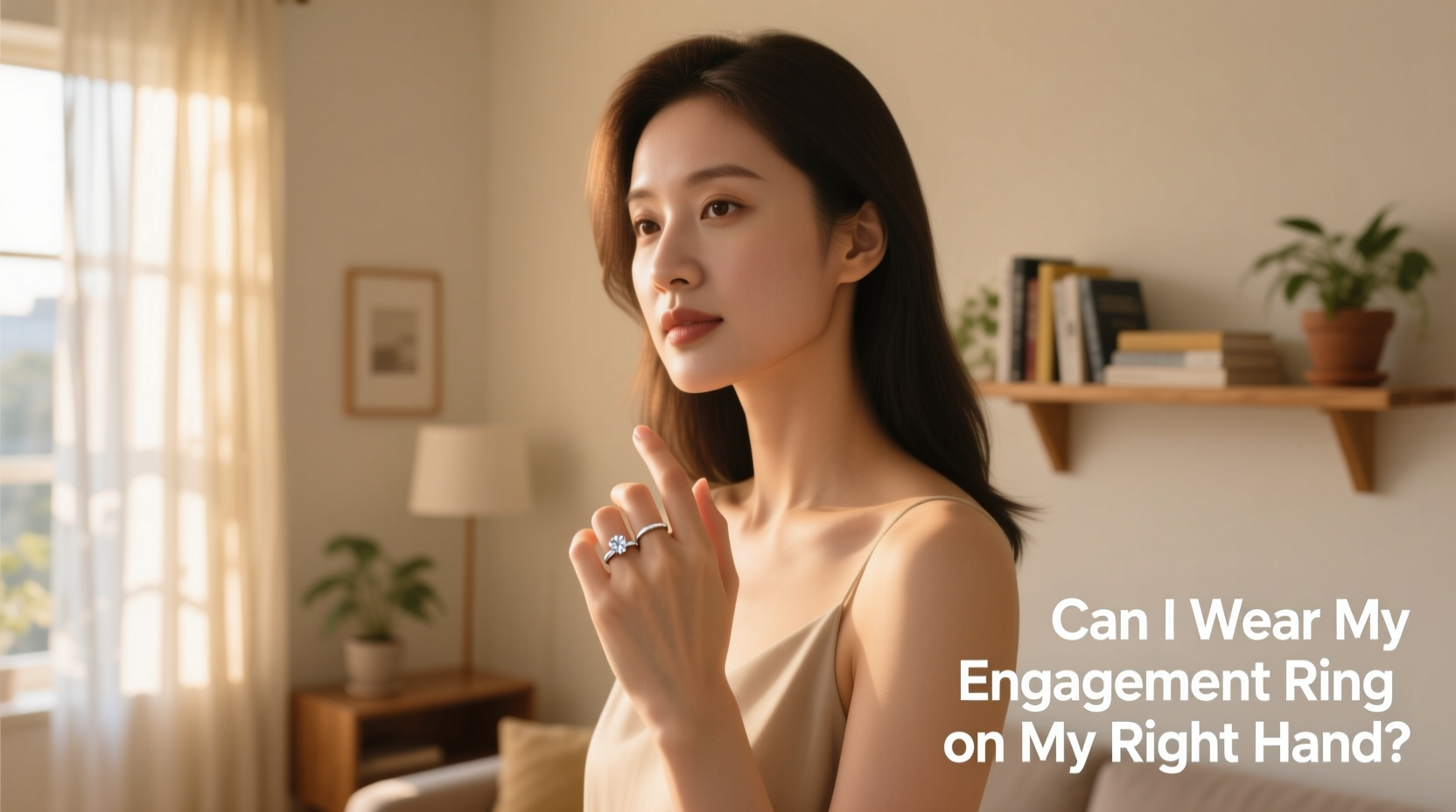
Engagement Ring on Right Hand: Why It’s Okay
Yes, you absolutely can wear your engagement ring on your right hand, and many people around the world do so for cultural, religious, or personal reasons. Whether you're wondering about traditional etiquette, considering comfort, or honoring your heritage, choosing to wear your engagement ring on the right hand is a valid and increasingly common practice. This guide will explore everything you need to know about wearing an engagement ring on the right hand, including global customs, symbolic meanings, practical considerations, and how it affects wedding ring stacking.
Understanding Engagement Ring Traditions by Culture
The tradition of wearing an engagement ring on the left-hand ring finger—specifically the fourth finger—is most commonly associated with Western cultures, particularly in the United States, Canada, and the United Kingdom. This custom stems from an ancient Roman belief that the vena amoris, or 'vein of love,' runs directly from this finger to the heart. However, this anatomical claim has long been debunked, and modern choices are more influenced by culture, religion, and individual preference than medical fact.
In contrast, several countries and traditions place the engagement and wedding rings on the right hand. For example:
- Germany and Austria: Betrothal and wedding rings are traditionally worn on the right ring finger.
- Russia, Poland, Norway, and Denmark: Couples also wear their engagement and wedding bands on the right hand.
- India: While some urban couples follow Western customs, many women wear toe rings or bangles as symbols of marriage, and engagement rings may be worn on either hand based on family tradition.
- Eastern Orthodox Christians: In countries like Greece and Ukraine, the wedding band is placed on the right hand during the ceremony.
This global variation shows that there is no single 'correct' way to wear an engagement ring. The decision often reflects deeper cultural identity or familial values.
Religious Influences on Ring Placement
Religion plays a significant role in determining which hand receives the engagement or wedding ring. Understanding these beliefs can help couples make informed decisions that align with their faith.
Christian Denominations: While many Protestant and Catholic traditions use the left hand, Eastern Orthodox churches typically bless and place the wedding ring on the right hand. Some couples choose to keep both engagement and wedding rings on the right after such ceremonies.
Jewish Weddings: During a Jewish wedding ceremony, the ring is placed on the bride’s right index finger (according to halacha), though many modern Jewish couples switch it to the left ring finger afterward for daily wear. An engagement ring itself isn't required in Jewish tradition but has become popular through cultural assimilation.
Islamic Practices: There is no prescribed hand for wearing engagement rings in Islam. However, men are discouraged from wearing gold, while women may wear gold rings on either hand. Many Muslim couples adopt local customs—whether European-style left-hand wear or regional right-hand practices.
Personal Preference and Practical Reasons
Beyond tradition and religion, many individuals choose to wear their engagement ring on the right hand simply because it feels more natural or comfortable. Here are several practical motivations:
- Dominant Hand Protection: Left-handed individuals may prefer wearing their ring on the right hand to reduce wear and tear, especially if they work with their hands frequently.
- Finger Size Differences: Fingers on one hand may be slightly larger or smaller due to muscle use. Some find a better fit on the right hand.
- Medical Conditions: Arthritis, carpal tunnel syndrome, or past injuries might make wearing a ring on the left hand uncomfortable or impractical.
- Aesthetic Choice: Some people enjoy balancing jewelry across both hands or creating a unique look with mixed metals and styles.
There's also growing acceptance of non-traditional expressions of love and commitment. Choosing the right hand can be a subtle yet meaningful way to assert individuality within a relationship.
Does Wearing Your Engagement Ring on the Right Hand Affect the Wedding Ceremony?
Not necessarily. Many couples who wear their engagement ring on the right hand still follow traditional ring exchange protocols during the ceremony. It's common for the wedding band to be placed on the left hand initially—even if only temporarily—and then adjusted later.
For example:
- A couple might have the officiant place the wedding band on the left ring finger during the vows (to honor tradition), then move both rings to the right hand after the ceremony.
- Alternatively, some officiants are open to placing the wedding ring directly on the right hand if requested in advance.
If you plan to wear your engagement ring on the right hand permanently, discuss your intentions with your wedding officiant early in the planning process. Most are happy to accommodate personalized rituals as long as they’re communicated clearly.
Ring Stacking: How to Combine Engagement and Wedding Bands on the Right Hand
One concern couples raise is how engagement and wedding rings look when stacked on the right hand. Fortunately, design options today make this easy and stylish.
Consider these tips for successful right-hand stacking:
- Choose Complementary Designs: Select engagement and wedding bands that fit together seamlessly. Many jewelers offer 'ring sets' designed specifically for stacking.
- Mind the Metal Type: Mixing metals (e.g., rose gold and white gold) can create visual interest, but ensure the combination suits your overall aesthetic.
- Check Comfort Fit: Thicker bands or intricate settings may cause discomfort when worn together. Try them on before finalizing your choice.
- Use a Ring Guard or Spacer: If your rings rub against each other or rotate, consider adding a small guard or engraved spacer band.
You can even opt for a mismatched bridal set—where the engagement ring and wedding band are intentionally different in style—to highlight the uniqueness of your journey.
What About After Marriage? Should You Move Your Rings?
After the wedding, some couples choose to move both the engagement ring and wedding band to the same finger on the right hand. Others keep the wedding band on the left and the engagement ring on the right—a practice sometimes called 'split-ring wearing.'
While unconventional, split-ring wearing is becoming more accepted, especially among professionals (like surgeons or artists) who remove rings during work hours and want flexibility.
Ultimately, consistency matters less than meaning. As long as both partners feel comfortable and connected to the symbolism, there’s no wrong way to wear your rings.
Common Misconceptions About Right-Hand Engagement Rings
Despite increasing openness, several myths persist about wearing engagement rings on the right hand:
| Myth | Reality |
|---|---|
| Wearing an engagement ring on the right hand means you're not serious about marriage. | False. The hand choice reflects culture or preference, not commitment level. |
| It confuses guests at weddings. | Most guests won’t notice unless told. Clear communication avoids confusion. |
| You must switch to the left hand after getting married. | No rule requires this. You can keep your ring on the right permanently. |
| Only divorced or widowed people wear rings on the right. | In some regions, this applies, but it’s not universal. Context varies widely. |
Tips for Communicating Your Choice to Family and Guests
If you anticipate questions or concerns from relatives—especially those from traditional backgrounds—it helps to communicate your reasoning gently and confidently.
- Explain Cultural Heritage: If your choice honors your ancestry, share stories about your family’s customs.
- Highlight Practical Benefits: Mention comfort, safety, or convenience without framing it as a rejection of tradition.
- Include It in Your Vows or Program: Add a brief note in your ceremony program explaining your ring-hand choice as part of your personalized wedding narrative.
- Stay Consistent: Once you decide, stick with it to avoid mixed signals.
Final Thoughts: Your Love Story, Your Rules
The question 'can I wear my engagement ring on my right hand' ultimately comes down to personal meaning rather than rigid rules. While traditions provide guidance, modern relationships celebrate authenticity and inclusivity. Whether driven by heritage, faith, comfort, or self-expression, choosing the right hand for your engagement ring is a perfectly acceptable option.
As wedding customs continue to evolve, more couples are redefining what symbols mean to them. What matters most is that your ring represents your bond—not someone else’s expectations.
Frequently Asked Questions
Can I wear my engagement ring on the right hand if I’m getting married in a church?
Yes, many churches allow flexibility. Discuss your preference with the officiant beforehand, especially in non-denominational or interfaith ceremonies.
Is wearing an engagement ring on the right hand bad luck?
No, there is no universal superstition against it. Any belief about bad luck is culturally specific and not widely held.
Do men ever wear engagement rings on the right hand?
Yes, especially in countries like Germany and Greece. Male engagement rings are less common globally but growing in popularity.
Should my wedding ring go on the same hand as my engagement ring?
Ideally, yes, for symbolic unity. But you can wear them on different hands if needed—for practical or personal reasons.
Will people think I’m not married if I wear my ring on the right hand?
Possibly in certain regions where left-hand wear is standard, but awareness is increasing. A simple explanation usually clears up any misunderstanding.
More Articles
 How to Plan a Proposal at a Hidden Waterfall
 How to Plan a Proposal at a City Skyline Overlook
 Proposal During a Starlit Beach Walk Ocean Romance
 2026 Engagement Ring Trends: What's Popular Now
 How to Plan a Destination Proposal Vacation
 How to Plan a Proposal That Reflects Your Relationship
 How to Propose During a Romantic Dinner at Home
 Proposal During a Bamboo Forest Walk Serene Beauty
 Proposal at a Lighthouse at Sunset Coastal Romance
 How to Plan a Proposal at a Rooftop Wine Cellar