## Do You Really Need Both an Engagement Ring and Wedding Ring?
You've just gotten engaged — congratulations! But now comes a question nobody warned you about: do you actually need *both* an engagement ring and a wedding ring? With the average engagement ring costing $5,500 and wedding bands adding another $1,000–$2,500, this isn't just a sentimental question. It's a financial one. The short answer: no, you don't *need* both — but understanding why people wear them will help you decide what's right for you.
---
## The Difference Between an Engagement Ring and a Wedding Ring
These two rings serve distinct symbolic roles, even if they end up stacked on the same finger.
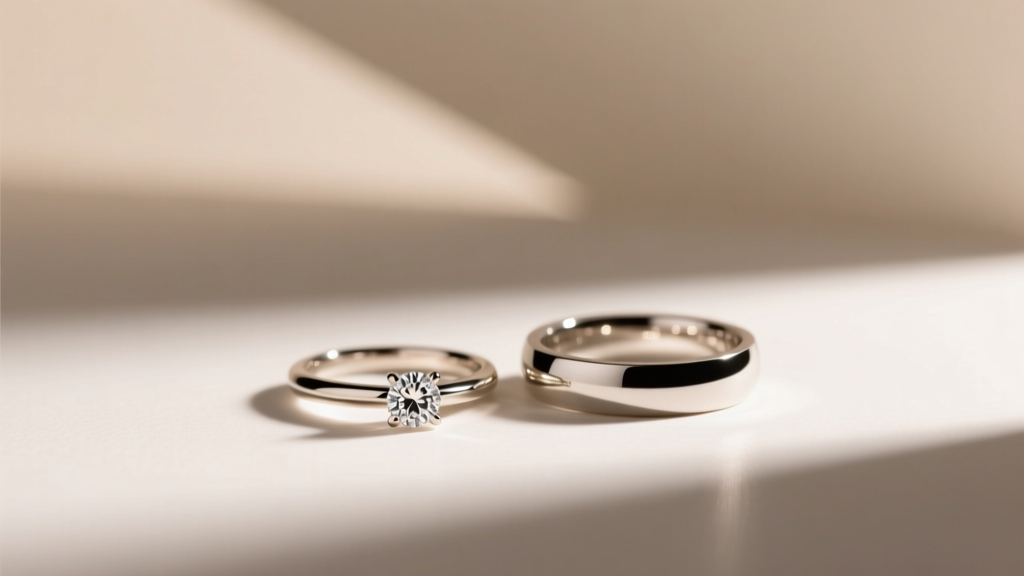
- **Engagement ring**: Given at the proposal, it symbolizes the *promise* to marry. Typically features a center stone (diamond or otherwise) and is worn on the left ring finger.
- **Wedding ring (wedding band)**: Exchanged during the wedding ceremony itself, it symbolizes the *completion* of that promise. Usually a simpler band — plain metal, pavé, or eternity style.
Tradition holds that the wedding band is worn closest to the heart (innermost position), with the engagement ring stacked on top. Some people solder them together; others wear them separately.
---
## Do You Have to Wear Both? Your Real Options
There's no legal or universal requirement. Here's how couples actually handle it:
### Option 1: Wear Both (Most Common)
The classic approach. You get engaged with a solitaire or halo ring, then add a matching or complementary band at the ceremony. Jewelers often sell **bridal sets** — a pre-matched engagement ring and wedding band designed to nest together — which can save 10–20% versus buying separately.
**Best for**: Those who love the layered look and want to honor both milestones with distinct jewelry.
### Option 2: Wedding Band Only
Skip the engagement ring entirely and invest in a single, meaningful wedding band. This is increasingly popular among minimalists, people with active lifestyles (nurses, athletes, tradespeople), and couples prioritizing budget.
**Best for**: Practical wearers, those who dislike protruding stones, or couples redirecting funds toward a honeymoon or home.
### Option 3: Engagement Ring Only
Some people wear their engagement ring as their sole wedding ring — especially if it's already a significant piece. At the ceremony, the partner simply places it back on the finger after briefly removing it, or the couple skips exchanging bands altogether.
**Best for**: Those who love their engagement ring and don't want to add visual clutter.
### Option 4: Alternative Rings
Tattooed rings, silicone bands, family heirlooms, or non-diamond stones are all valid. The wedding jewelry market has shifted — a 2024 The Knot survey found that 31% of couples now choose non-traditional stones for engagement rings.
---
## Cost Breakdown: What Are You Actually Paying For?
| Item | Average Cost (US, 2024) |
|---|---|
| Diamond engagement ring | $5,500 |
| Plain metal wedding band | $500–$1,000 |
| Diamond/pavé wedding band | $1,500–$3,000 |
| Bridal set (both together) | $3,000–$7,000 |
If budget is a concern, a bridal set is the most cost-effective way to get both rings with a cohesive look. Alternatively, lab-grown diamonds offer the same visual quality as mined diamonds at 50–70% less cost — a meaningful way to stretch your ring budget.
---
## Common Myths About Engagement and Wedding Rings
### Myth 1: "You Must Have a Diamond Engagement Ring"
The diamond engagement ring tradition was largely popularized by a 1947 De Beers marketing campaign ("A Diamond is Forever"). It's a beautiful tradition — but not a rule. Sapphires, moissanite, emeralds, and plain bands are all legitimate engagement rings. Queen Elizabeth II's engagement ring was a sapphire. Choose what resonates with *you*, not a marketing slogan.
### Myth 2: "The Wedding Band Has to Match the Engagement Ring Perfectly"
Matching sets look polished, but mismatched metals and styles are a major trend. Rose gold engagement ring with a yellow gold band? Absolutely done. A diamond band with a plain solitaire? Classic contrast. The only rule is that *you* like how they look together.
---
## What's Right for You: A Simple Decision Framework
Ask yourself three questions:
1. **Do I want to mark both milestones with separate jewelry?** If yes, consider both rings.
2. **Is my engagement ring something I'd be proud to wear as my sole wedding symbol?** If yes, one ring may be enough.
3. **What's our realistic jewelry budget without financial stress?** Let that number guide the style and materials, not the other way around.
There's no wrong answer. A $200 silicone band exchanged with genuine love carries more meaning than a $10,000 set bought under social pressure.
---
## The Bottom Line
You do not need both an engagement ring and a wedding ring — but many couples find deep meaning in wearing both. The engagement ring marks the promise; the wedding band marks the fulfillment. If you choose to wear both, a bridal set offers the best value. If you prefer simplicity, a single meaningful band is entirely sufficient.
**Your next step**: Before shopping, have an honest conversation with your partner about budget, lifestyle, and what symbolism matters most to you. That conversation will tell you everything you need to know about which rings — if any — belong on your finger.
 How To Repair Size: A Practical, Data-Driven Guide for Apparel Brands and Retailers
 Proposal During a Full Moon Night Luminous Romance
 How to Plan a Proposal at a Rooftop Candlelit Dinner
 How to Plan a Proposal at a Rooftop Astronomy Deck
 How to Plan a Proposal at a Historic Train Car
 How to Propose at Disney or a Theme Park
 How to Plan a Proposal During the Holidays
 Unique Proposal Ideas for the Adventurous Couple
 Proposal With a Drone Aerial Photography Ideas
 How to Secretly Get Her Ring Size for the Proposal