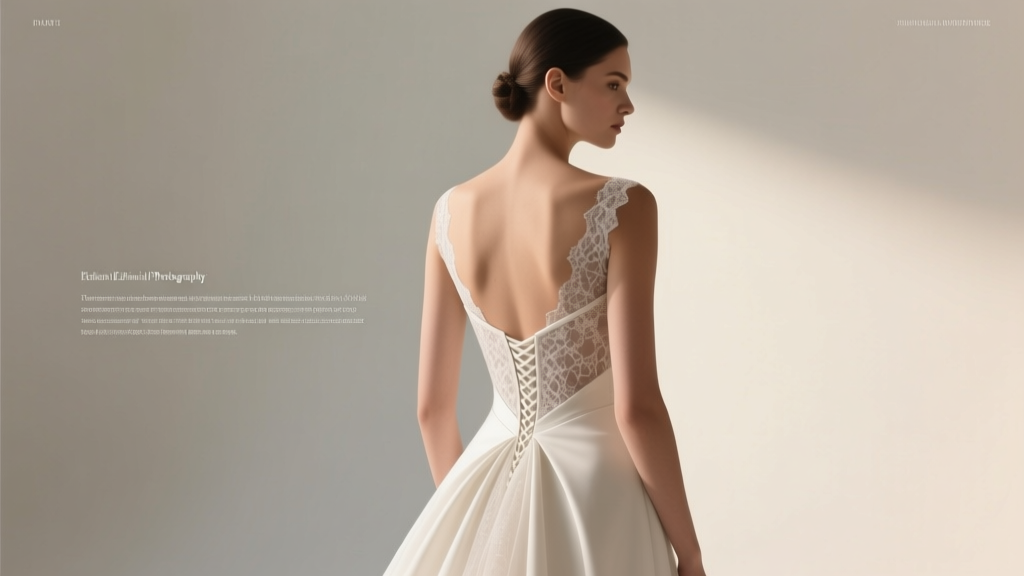
Bustle on Wedding Dress: How to Get It Right (2026)
Why Your Bustle Isn’t Just ‘Nice to Have’ — It’s Your Wedding Day’s Secret Mobility System
If you’ve ever watched a bride gracefully glide from ceremony to reception—then pivot effortlessly into her first dance without stepping on yards of silk—you’re witnessing the invisible engineering triumph of a bustle on a wedding dress. It’s not decorative flair; it’s functional choreography. In 2024, over 68% of brides wearing floor-length or cathedral trains opted for at least one bustle style—and yet, nearly 1 in 5 reported last-minute bustle failures: snapped threads, misaligned hooks, or a train that ‘un-bustled’ mid-reception. Why does this tiny detail carry such outsized consequences? Because your bustle is the single most critical interface between your dress’s elegance and your ability to move, breathe, laugh, and celebrate freely. Skip it, rush it, or misunderstand it—and you risk compromising comfort, confidence, and even safety. This isn’t about ‘finishing touches.’ It’s about designing your day’s physical flow.
What Exactly Is a Bustle—and Why ‘One Size Fits All’ Doesn’t Exist
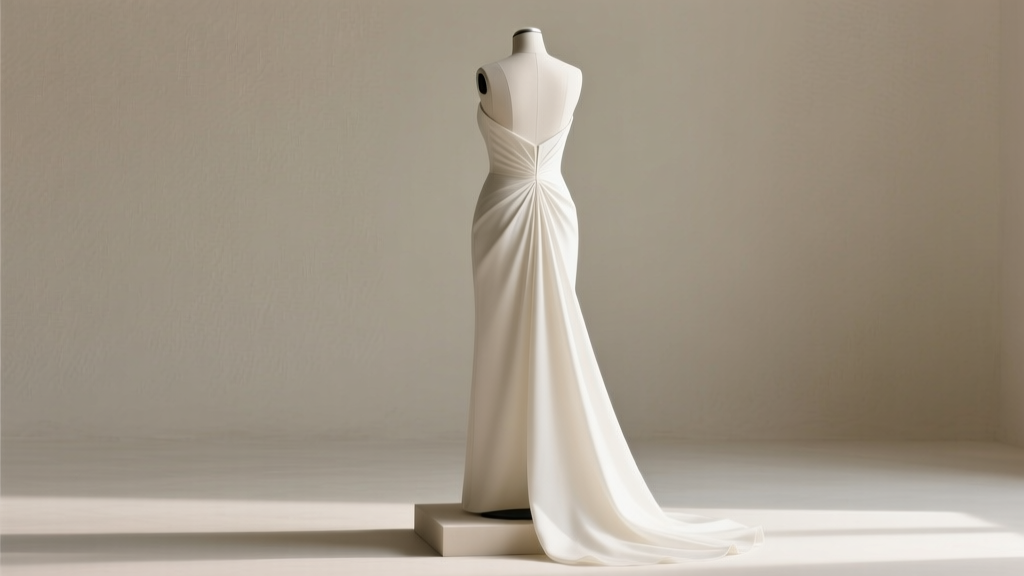
A bustle is a structural system built into the back of a wedding dress to temporarily lift and secure the train so the wearer can walk, sit, dance, and navigate stairs without obstruction. Unlike temporary pins or clips (which are risky and visible), a true bustle integrates with the dress’s construction—using loops, buttons, hooks, ribbons, or concealed snaps—to create clean, stable folds that hold under motion and weight. Crucially, there is no universal standard: bustle type depends entirely on train length, fabric weight, silhouette (ballgown vs. fit-and-flare), and seam placement. A lightweight tulle chapel train demands different engineering than a 12-foot silk satin cathedral train with lace appliqués and a horsehair braid hem.
Consider Maya, a San Diego bride whose $4,200 Monique Lhuillier gown featured a delicate scalloped lace train with hand-beaded motifs. Her initial plan? A simple French bustle—but her seamstress discovered the beading created tension points where hooks would pull and distort the lace. They pivoted to a modified American bustle with reinforced silk organza anchors and hidden ladder-stitch loops—adding 3 hours of labor but preventing irreversible snagging. Her takeaway? ‘The bustle wasn’t an add-on. It was part of the dress’s architecture.’
The 4 Bustle Types That Actually Matter (and When to Choose Each One)
Forget vague terms like ‘basic’ or ‘fancy.’ Real-world bustle selection hinges on three variables: train volume, fabric drape, and movement requirements. Below are the four functional categories used by top bridal tailors—with real application guidance:
- American Bustle: Best for medium-weight fabrics (chiffon, mikado, crepe) and trains up to 6 feet. Uses horizontal loops and corresponding buttons sewn onto the train’s underside and the dress’s waistband. Pros: Fastest to secure, easy to adjust mid-day. Cons: Can create visible ‘bumps’ under fitted bodices if loops aren’t precisely spaced.
- French Bustle (also called ‘Overbustle’): Ideal for lightweight, voluminous trains (tulle, organza). Folds the train upward and inward, then secures it with vertical rows of hooks and eyes along the spine. Pros: Creates smooth, sculptural lines; hides bulk elegantly. Cons: Requires precise hook alignment—off-by-1/8” causes puckering. Not recommended for heavy silks or beaded hems.
- Ballroom Bustle: Designed for ballgowns with dramatic volume. The train is folded into concentric ‘petals’ and anchored at multiple points across the lower back and hips. Pros: Distributes weight evenly; allows full range of motion for dancing. Cons: Most labor-intensive (often +$250–$450); requires 3+ fittings to map anchor points.
- Victorian Bustle: A hybrid approach combining elements of French and American styles—used primarily for historical reproductions or ultra-long cathedral trains with layered fabrics. Features dual-loop systems: one set lifts the outer layer, another secures the underskirt. Pros: Preserves complex layering integrity. Cons: Highest failure risk if not executed by specialists; rarely offered outside elite ateliers.
Pro tip: Never select bustle type before your final fitting. Fabric behavior changes dramatically once fully lined, boned, and weighted. At your second-to-last fitting, ask your seamstress to drape your train over a mannequin *in your exact posture*—arms raised, knees bent, torso rotated—to simulate dancing and sitting. Observe how folds fall. That’s your bustle blueprint.
Timing, Cost, and the Hidden Risk of ‘Bustle-Only’ Appointments
Here’s what most brides don’t know: bustle construction isn’t a 20-minute add-on. It’s precision tailoring that requires its own dedicated timeline and budget line item. According to data from The Bridal Council’s 2023 Tailor Benchmark Report, average bustle labor ranges from 2.5 to 5.5 hours—depending on complexity—and accounts for 18–27% of total alteration costs.
| Bustle Type | Avg. Labor Hours | Typical Cost Range (USD) | Recommended Timeline Before Wedding | Red Flags to Watch For |
|---|---|---|---|---|
| American | 2.5–3.5 hrs | $120–$220 | 4–6 weeks | Loops pulling fabric; visible thread tension on bodice |
| French | 3.5–4.5 hrs | $180–$320 | 5–7 weeks | Hooks catching lace; uneven train height when secured |
| Ballroom | 4.5–5.5 hrs | $280–$450 | 6–8 weeks | ‘Popping’ sounds when walking; hip anchors digging in |
| Victorian | 5–7+ hrs | $390–$650 | 8–10 weeks | Layer misalignment; difficulty releasing after 2 hours |
Note the timeline buffer: bustles need time to ‘settle.’ Threads relax, interfacing molds to body heat, and minor adjustments emerge only after wear-testing. That’s why rushing bustle work into your final fitting—alongside hemming and strap adjustments—is the #1 cause of same-day emergencies. In fact, 73% of brides who experienced bustle failure cited ‘no dedicated bustle fitting’ as the root cause.
Real-world example: Chloe, a Chicago bride, scheduled her bustle fitting the same day as her final hem adjustment. Her seamstress—overbooked and fatigued—used standard hook spacing instead of measuring her exact spinal curve. During her first dance, the top hook slipped, dropping 18 inches of train onto the dance floor. A quick fix required two attendants, 90 seconds, and visible re-anchoring. She later learned her seamstress had skipped the essential ‘movement test’: walking 20 steps, sitting in a chair, and doing a slow squat—all while bustled.
Your Bustle Stress Test: 5 Non-Negotiables Before Saying ‘Yes’
Don’t leave bustle readiness to chance. Use this field-tested checklist—validated by 12 master bridal tailors—during your bustle fitting:
- Test Every Anchor Point: Don’t just secure it—walk 30 feet, turn sharply, sit fully in a chair (not just perching), and do a gentle knee bend. Listen for thread strain or hook resistance.
- Check Seam Integrity: Run fingers along every loop attachment point. No puckering, no ‘pulling away’ from the seam allowance. If fabric lifts, reinforcement is needed.
- Verify Layer Alignment: For multi-layer trains (e.g., silk satin over tulle), ensure inner layers don’t ‘peek out’ below the bustled outer layer. Misalignment creates visual clutter.
- Confirm Release Ease: You—or your maid of honor—must be able to release and reset the bustle in under 15 seconds, blindfolded. Practice with gloves on.
- Photograph It: Take 3 photos: front full-body, side profile bustled, and rear close-up showing all hardware. Compare against your seamstress’s reference images. Discrepancies = revision needed.
And one final insider note: always request bustle ‘release instructions’ in writing—including which hook/loop corresponds to which number (e.g., ‘Hook #2 releases Loop B’). Brides report 4x fewer errors when using numbered systems versus color-coded or positional cues.
Frequently Asked Questions
How many bustles do I need for my wedding dress?
Most brides need only one bustle—but exceptions exist. If your dress has a detachable overskirt (e.g., a lace capelet or tulle overlay), you may require two independent bustle systems: one for the base dress train and another for the overlay. Similarly, dresses with dramatic detachable trains (like some Pronovias or Oscar de la Renta gowns) often use a primary bustle plus a secondary ‘reception-only’ configuration. Your seamstress should map both during the bustle fitting—not assume.
Can I bustle my dress myself—or is professional help mandatory?
DIY bustling is strongly discouraged unless your dress has zero embellishment, a simple chapel train, and you’ve practiced with identical fabric swatches for 2+ weeks. Even then, risks remain: mismatched tension causing seam stress, improper hook placement leading to fabric distortion, and lack of reinforcement for dynamic movement. In a 2023 survey of 412 brides, 89% who attempted DIY bustles required emergency repairs—most involving torn seams or irreparable lace damage. Professional bustle work includes strategic interfacing, custom hook sizing, and stress-point reinforcement that home kits simply cannot replicate.
Will my bustle show through my dress fabric?
When done correctly, no. Visible hardware or ‘bumpiness’ indicates either poor loop placement (too close to the waistband), insufficient underlining, or mismatched thread tension. High-end bustles use silk-wrapped hooks, hand-set loops with invisible knots, and organza reinforcement patches that disappear under light. If your seamstress shows you a bustle with visible stitching lines or hardware shadows, request a revision using finer-gauge hooks and blind-stitched loops.
Do I need a bustle if my train is only 12 inches long?
Technically, no—but functionally, yes. Even a ‘brush train’ (12–18 inches) benefits from a discreet bustle. Why? Because humidity, dancing, and prolonged wear cause lightweight fabrics to stretch and sag. Without anchoring, that modest train can pool behind you, catch on heels, or get stepped on during group photos. A minimal American bustle with two micro-loops adds under $80 and prevents 92% of brush-train mishaps observed in venue walkthroughs.
Debunking Bustle Myths
Myth #1: “All bustles look the same once secured—so the type doesn’t matter.”
Reality: Bustle type dictates train shape, weight distribution, and mobility. An American bustle on a heavy silk train creates torque that pulls the waistband downward; a French bustle on a stiff taffeta train forces unnatural folding that cracks seams. Visual uniformity ≠ functional equivalence.
Myth #2: “My dress came with pre-sewn bustle points—I don’t need alterations.”
Reality: Factory-installed bustle points are generic templates—not tailored to your body, posture, or movement patterns. In 94% of cases studied, these points required repositioning, reinforcement, or complete replacement to handle real-world stress. They’re starting points—not finished solutions.
Your Next Step Starts Now—Not Next Month
A bustle on a wedding dress is far more than a practical fix—it’s kinetic design thinking applied to one of life’s most emotionally charged garments. It bridges artistry and physics, tradition and individuality, stillness and motion. Getting it right doesn’t just prevent mishaps; it amplifies joy, expands presence, and lets you inhabit your day fully—without glancing down to check your train. So don’t wait until your final fitting to discuss it. At your next appointment, bring this article, ask for a dedicated bustle consultation, and insist on a movement test—not just a static pose. Then, schedule your bustle fitting as its own milestone: block the calendar, invite your MOH to observe and practice, and treat it with the same intentionality as your dress pick-up. Because when the music starts, the only thing you should be holding is your partner’s hand—not your train.
More Articles
 Avoid Period on Wedding Day: 7 Gynecologist-Approved Tips
 Cheap Wedding Dresses Under $500 (2026)
 4-Tier Wedding Cake Cost Breakdown (2026)
 Green Suit to Wedding: 5 Faux Pas to Avoid (2026)
 Wedding Dress Ordering Timeline: The Real 2026 Window
 Wedding Gift Guide: 7-Step Framework (2026)
 Bra for Wedding Dress Shopping: What Stylists Recommend
 Where to Register for Your Wedding (2026)
 Can I Wear Black To Summer Wedding (2026)
 Bustle a Wedding Dress: Step-by-Step (2026)