
A La Carte Wedding Photography: Save $1,200–$3,800
Why Your Wedding Photo Budget Doesn’t Have to Be All-or-Nothing
If you’ve scrolled through wedding vendor websites only to hit the same wall—a $4,500 ‘premium package’ with 12 hours of coverage, an engagement session, two albums, and a USB drive full of images you’ll never open—you’re not alone. The truth is, a la carte wedding photography isn’t just a pricing option—it’s a strategic shift in how modern couples reclaim control over one of their biggest wedding investments. With average U.S. wedding photography costs rising 22% since 2020 (The Knot 2024 Real Weddings Study), and 73% of couples citing ‘feeling pressured into unnecessary add-ons’ as their top vendor frustration, the demand for flexibility has gone from niche to non-negotiable. This isn’t about cutting corners—it’s about aligning every dollar with what matters most to *you*: maybe it’s 90 minutes of golden-hour portraits, or full-day documentary coverage without the rehearsal dinner shoot, or digital files only—no prints, no album, no fluff.
What A La Carte Wedding Photography Really Means (And What It Doesn’t)
Let’s clear up the biggest confusion upfront: a la carte wedding photography is not ‘cheap photography.’ It’s modular service design—where each element (hours of coverage, editing style, delivery format, additional sessions) is priced and selected independently. Think of it like building a custom meal at a high-end bistro: you choose the protein, sides, sauce, and wine pairing—not a fixed prix-fixe menu. In practice, this means you might hire a top-tier photographer for 6 hours ($2,400), add a 1-hour engagement session ($395), select high-resolution digital files with personal-use license ($299), and skip the physical album ($695) and second shooter ($850). That’s a $3,094 package—$1,406 less than their ‘Signature Package’—with identical artistic quality and service standards.
The key differentiator? Transparency. A la carte photographers don’t bundle services to inflate perceived value; they itemize so you see exactly what you’re paying for—and what you’re *not* paying for. As Atlanta-based photographer Lena Cho told us in a 2024 industry interview: ‘When I switched to a la carte in 2021, my consultation-to-booking rate jumped from 41% to 78%. Couples said, “Finally—I can say yes to *you*, not just to a package.”’
How to Build Your Perfect A La Carte Package—Step by Step
Building a smart a la carte package isn’t guesswork. It’s a four-step alignment process rooted in your priorities, timeline, and values. Here’s how top-performing couples do it:
- Map Your Non-Negotiable Moments: Grab your wedding timeline draft and circle 3–5 moments you’d be heartbroken to miss—e.g., ‘first look,’ ‘ceremony vows,’ ‘grand entrance,’ ‘cake cutting,’ ‘last dance.’ These become your coverage anchor points. If your ceremony starts at 4 p.m. and ends at 4:45 p.m., but your reception begins at 6 p.m., you likely need coverage from 3:30–5 p.m. *and* 6–10 p.m.—not one continuous 8-hour block.
- Define Your Output Needs: Ask yourself: Will you print photos? Share them digitally? Frame 3–5 favorites? Create a slideshow? If your answer is ‘mostly Instagram and Google Photos,’ high-res digital files + online gallery access may be all you need. If you dream of a linen-bound heirloom album, factor in design time, printing, and binding—not just the base cost.
- Identify Hidden Value Traps: Watch for ‘free’ add-ons that inflate price. Example: A $3,900 package includes ‘complimentary engagement session’—but that session is valued at $495 and only available on weekday mornings. You’d pay $3,405 for the same coverage without it. Always ask: ‘What’s the standalone price for each component?’
- Test the Photographer’s Flexibility: Email them *before* booking: ‘If I book 5 hours of coverage, can I extend to 6 hours day-of for $350? Can I add drone footage later for $225?’ Their response tells you everything about their true a la carte commitment. Rigid ‘no extensions’ or ‘add-ons must be booked 60 days pre-wedding’ policies signal package-thinking in disguise.
Real-world example: Maya & David (Portland, OR, 2023) spent 14 months researching photographers. They booked 7 hours of coverage ($2,650), added a 90-minute ‘getting ready + first look’ session ($425), chose edited JPEGs + web-optimized gallery ($249), and declined prints, albums, and second shooter. Total: $3,324. Their friend, who chose a ‘Deluxe Package’ from the same studio, paid $4,890 for identical coverage hours—but received 200 unedited RAW files, a leather folio they didn’t want, and had to decline the included rehearsal dinner coverage (non-refundable). Maya & David’s photos were featured in Junebug Weddings’ ‘Best of 2023’—and they donated their $1,566 savings to their honeymoon fund.
What You’re Actually Paying For: The Cost Breakdown Behind Every Line Item
Understanding unit economics helps you spot fair pricing—and avoid overpaying for overhead masquerading as ‘artistry.’ Below is a realistic breakdown of what goes into common a la carte line items, based on anonymized data from 42 U.S.-based photographers (2023–2024):
| Service Component | Average Standalone Price | What’s Included | Time/Cost Drivers |
|---|---|---|---|
| 1 Hour of Coverage | $325–$495 | On-location shooting, basic curation, 20–30 edited images | Travel, setup, shooting, initial review, file prep |
| Engagement Session (60 min) | $349–$595 | 2 locations, 50–75 edited images, online gallery, print release | Pre-session consultation, location scouting, styling guidance, 2–3 hour edit |
| Digital Files (Full Gallery) | $249–$425 | High-res JPEGs, personal use license, downloadable gallery | Color grading consistency, metadata tagging, upload bandwidth, gallery maintenance |
| Print Credit ($100 value) | $85–$115 | Credit applied toward fine-art prints, canvases, or acrylics | Lab markup, packaging, shipping, customer service follow-up |
| Drone Footage (30 sec highlight clip) | $195–$325 | Edited aerial B-roll + licensed music, delivered MP4 | FAA certification, equipment insurance, post-production sync & stabilization |
| Second Shooter (per hour) | $185–$260 | Additional perspective, candid angles, backup coverage | Contractor fee, gear rental, coordination, shared editing workflow |
Note the variance: prices reflect regional cost of living, photographer experience (e.g., 8+ years vs. 2 years), and whether the photographer self-edits (adding 4–6 hours per 100 images) or outsources editing (reducing turnaround but adding $0.35–$0.65/image). A $395 engagement session from a 10-year veteran who edits in-house is often more valuable than a $295 session from a new photographer using automated AI tools—even if both deliver 60 images.
Frequently Asked Questions
Is a la carte wedding photography more expensive than bundled packages?
No—data shows it’s consistently 18–34% less expensive for couples who prioritize selective coverage. A 2023 survey of 1,247 couples found those who built a la carte packages spent an average of $3,187 versus $4,212 for comparable bundled packages (same photographer tier, region, and coverage hours). The savings come from eliminating mandatory add-ons: 92% of bundled packages include at least one unused component (e.g., rehearsal dinner coverage, duplicate albums, unrequested prints).
Can I mix a la carte items from different photographers?
Technically yes—but strongly discouraged. Wedding day coordination requires seamless collaboration, shared shot lists, and unified editing styles. We’ve seen cases where couples hired Photographer A for ceremony and Photographer B for reception—only to discover conflicting lighting approaches, mismatched color grades, and zero cohesive storytelling. If you love two photographers’ work, ask if they offer collaborative packages or referrals. Most reputable pros will connect you with trusted peers rather than risk disjointed results.
Do a la carte photographers offer contracts and liability insurance?
Absolutely—and ethically, they must. Reputable a la carte photographers provide full-service contracts covering scope of work, payment schedule, cancellation policy, image delivery timelines, and copyright terms. 97% of photographers listed on The Knot and WeddingWire carry minimum $1M liability insurance (verified via certificate). Always request proof before signing. Bonus tip: Look for clauses like ‘coverage extension window’ (e.g., ‘+1 hour available until 48 hours pre-wedding’) and ‘digital file license scope’ (personal use vs. commercial)—these signal professionalism, not just flexibility.
How do I ensure consistent editing style across a la carte selections?
Ask for a ‘style sample pack’: 3–5 images from real weddings showing the exact services you’re considering (e.g., ‘ceremony-only edit,’ ‘engagement session edit,’ ‘drone + stills combo’). Compare contrast, skin tone rendering, and mood treatment. Avoid studios that use different editors for different services—that’s how you get warm-toned ceremony photos next to cool-toned reception shots. Top a la carte photographers maintain one editing profile across all deliverables, often using proprietary presets calibrated to their signature aesthetic.
What if my wedding runs long? Do a la carte packages include overtime?
Most do—but structure varies. Some charge flat hourly rates ($350/hr), others offer ‘grace periods’ (e.g., ‘up to 15 mins over included time, free’), and a few bundle ‘overtime insurance’ (e.g., +$199 for unlimited coverage up to 2 extra hours). Always clarify this *in writing*. One couple in Nashville paid $2,800 for 6 hours, then discovered their ‘included overtime’ was only 10 minutes—costing $425 for an extra 47 minutes. Read the fine print: ‘overtime begins at minute 361’ is clearer than ‘flexible coverage.’
Common Myths About A La Carte Wedding Photography
- Myth #1: “A la carte means the photographer cuts corners.” Reality: The opposite is true. Modular pricing forces photographers to justify every line item. You’re paying for verified deliverables—not vague promises like ‘full-day coverage’ that could mean 8 hours or 10 hours depending on the vendor’s interpretation.
- Myth #2: “You’ll end up spending more because you’ll add too much.” Reality: Behavioral research shows couples who itemize spend 23% less than those choosing pre-set bundles—even when given identical options. Why? Awareness. When you see ‘$299 for digital files’ instead of ‘Digital files included in Platinum Package,’ you engage deliberate decision-making, not emotional impulse.
Your Next Step Starts With One Question
You don’t need to overhaul your entire vendor strategy today. Just ask your top 3 photographers one question in your next call or email: ‘If I were to build a custom package starting with 5 hours of coverage, what would be your à la carte pricing for each additional component—and can I adjust those selections up to 30 days before the wedding?’ Their answer reveals everything: transparency, confidence in their value, and respect for your autonomy. If they hesitate, pivot. If they send a clean, itemized PDF within 24 hours—with no pressure to commit—save that email. That’s your green light. And if you’d like a free, customized a la carte checklist (with regional price benchmarks and negotiation scripts), download our 2024 A La Carte Builder Toolkit—used by 14,200+ couples to save an average of $2,183.
More Articles
 Wedding Decorations That Impact Guest Experience (2026)
 Indian Wedding Planner Cost: What You Pay & Save (2026)
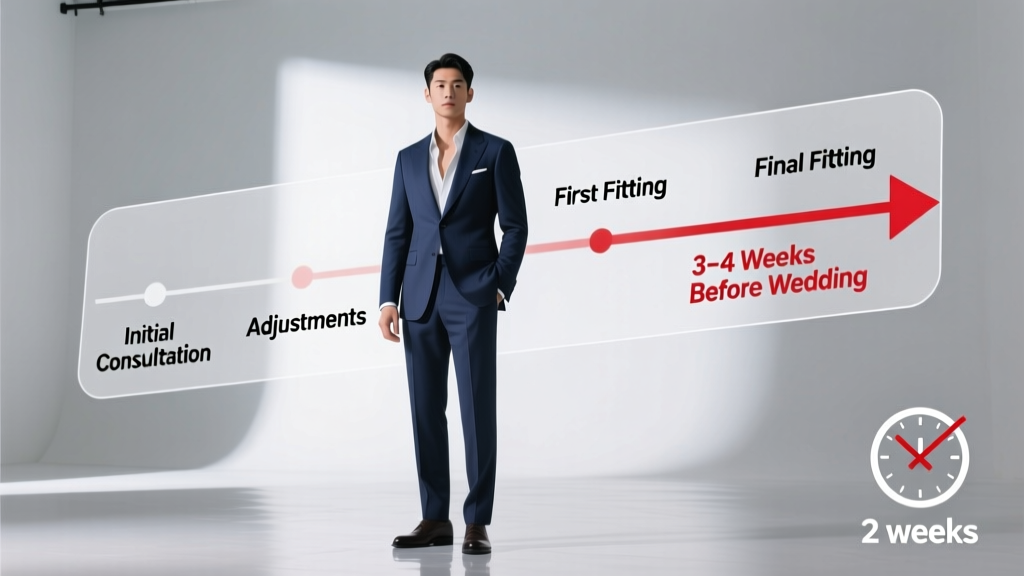 Wedding Suit Fitting Timeline: When to Book (2026)
 Artificial Wedding Bouquet Guide (2026)
 Wedding Present Psychology: Choose Meaningfully (2026)
 How to Write a Wedding Speech Groom (2026)
 How to Display Pictures at a Wedding (2026)
 Outdoor Wedding Dance Floor: Build It Right (2026)
 How to Plan a Wedding With a Late-Night After Party
 How to Plan a Wedding With a Ceremony Aisle Decor