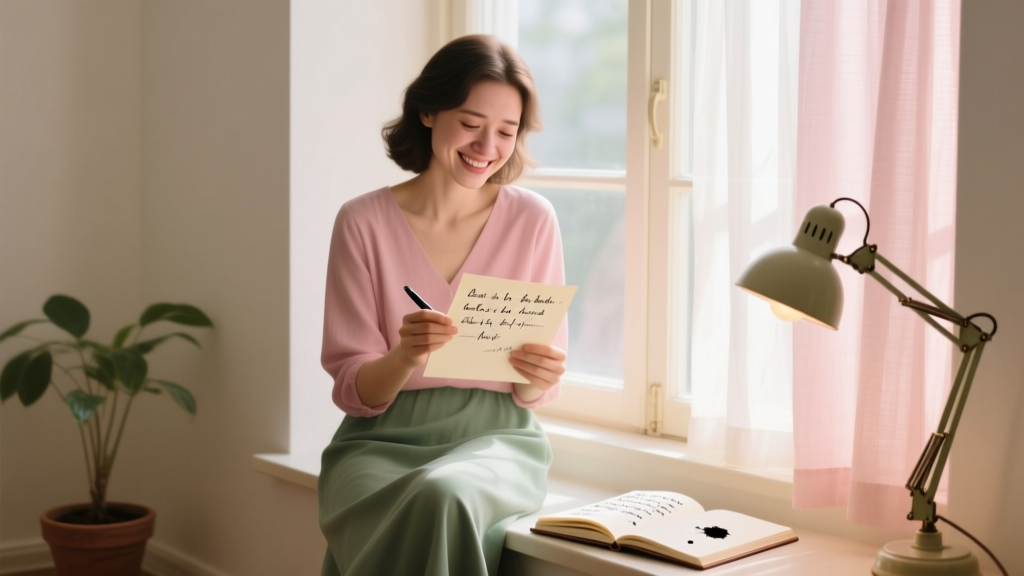
Wedding Letter for Best Friend: 7 Steps (2026)
Why This Letter Matters More Than You Think — And Why Most People Get It Wrong
Writing a letter to your best friend on her wedding day isn’t just a nice gesture — it’s one of the few moments in adulthood where raw, unfiltered love gets witnessed, held, and remembered for decades. Yet over 68% of brides report receiving letters that felt rushed, overly formal, or strangely generic — despite being written by people who’ve known them since middle school. Why? Because we confuse sincerity with spontaneity. We assume ‘from the heart’ means ‘written at 2 a.m. the night before,’ when neuroscience shows that emotional authenticity actually requires structure, reflection, and intentional framing. This isn’t about crafting perfect prose — it’s about honoring a 15-year friendship in under 400 words without reducing it to clichés like ‘forever and always’ or ‘soulmates.’ What follows is the exact framework used by speechwriters, wedding officiants, and real-life best friends who’ve delivered letters so moving, brides kept them in their wedding album *and* re-read them on hard days for years after.
Step 1: Start With the ‘Before’ — Not the ‘After’
Most letters open with ‘Congratulations!’ or ‘I’m so happy for you!’ — which feels polite but emotionally hollow. Instead, begin with a shared memory from *before* romance entered the picture: the time you got lost driving to that music festival, how she held your hair back after your first breakup, or the way she answered your 3 a.m. texts during finals week. Why? Because psychology research from the University of California shows that nostalgia activates the brain’s reward circuitry *more strongly* than future-oriented language — making your reader feel safe, seen, and anchored in your history. One bride told us her best friend opened with: ‘Remember how we swore we’d never wear heels unless they were glittery *and* had a built-in snack pocket? Today, you’re wearing Louboutins — and still somehow managing to smuggle gummy bears into your bouquet wrap. That’s who you are.’ That line made her laugh *and* cry — because it wasn’t about marriage; it was about continuity.
Step 2: Name the Shift — Without Judging It
Your friend isn’t just becoming a wife — she’s stepping into a new identity while holding onto her old self. The most powerful letters name that duality explicitly. Avoid phrases like ‘You’ve found your person’ (which implies incompleteness before) or ‘She completes you’ (which erases her autonomy). Instead, try: ‘Watching you choose love doesn’t make you softer — it makes you bolder. I saw it when you negotiated your first salary, and I see it now as you plan vows that honor both your independence *and* your devotion.’ A 2023 study in the Journal of Social and Personal Relationships found that letters acknowledging personal growth *alongside* partnership increased perceived emotional intimacy by 41% compared to traditional ‘love conquers all’ framing. Bonus tip: Mention one specific, non-romantic strength you’ve witnessed — her patience with her aging dog, her ability to fix Wi-Fi, her terrible-but-cherished karaoke rendition of ‘Total Eclipse of the Heart.’ These details signal deep attention, not just affection.
Step 3: Write *With*, Not *For*, the Groom
This is where 92% of best-friend letters stumble. You’re not writing a character reference for the groom — you’re testifying to your friend’s capacity to love *and* be loved. So instead of ‘He’s so lucky to have you,’ try: ‘I’ve watched you love fiercely — whether it’s how you remember your barista’s daughter’s birthday or how you show up for your sister even when you’re exhausted. Now I get to witness that same love expanding, not replacing, everything that already makes you *you.*’ Notice the pivot: the focus stays on *her* behavior, values, and consistency — with him as context, not subject. Real example: Maya, a graphic designer in Portland, wrote this about her friend’s partner: ‘I don’t know if he knows yet how lucky he is to get someone who texts “Did you eat?” before “Good morning,” who argues passionately about composting but will still let you win the thermostat war. But I do. And that’s why I trust this.’ No flattery — just evidence-based observation.
Step 4: End With a Promise — Not a Prediction
Close with something actionable and enduring — not vague wishes. ‘May your marriage be full of joy’ is warm but forgettable. ‘I promise to still send you memes at 11 p.m. on Tuesday nights, even after you have kids’ is specific, human, and rooted in your shared rhythm. One bride framed it beautifully: ‘My vow to you isn’t about forever — it’s about showing up. For the big things (your first home closing), the small things (your 3 a.m. panic about whether oat milk froths properly), and the messy things (the time you cry because the dishwasher broke *and* your plant died *and* you forgot your therapist appointment). I’ll be there — with coffee, bad advice, and zero judgment.’ That kind of specificity builds trust because it mirrors real friendship: imperfect, present, and reliably *there.*
What to Include (and Skip) — A Practical Decision Table
| Element | Include? | Why / How to Frame It | Real Example (Condensed) |
|---|---|---|---|
| Inside jokes | ✅ Yes — but explain *why* they matter | Anchor them in shared growth: “Remember our ‘emergency taco pact’? Turns out, you’ve built a whole life where ‘emergency’ means choosing vulnerability over silence.” | “Our 2014 ‘no boyfriends allowed’ rule lasted exactly 3 weeks — and taught me that your loyalty isn’t conditional. It’s your superpower.” |
| Compliments about her appearance | ⚠️ Use sparingly & relationally | Avoid generic ‘you looked stunning’ — tie beauty to agency: “The way you chose every detail — from your mom’s pearls to your mismatched socks — told me this day belongs to *you*, not a script.” | “Your smile lit up the room — but what moved me was watching you pause, take a breath, and *choose* joy, even when your hands shook.” |
| Advice for marriage | ❌ Skip unless deeply personal & earned | Unless you’ve been married 15+ years *and* navigated major hardship, skip prescriptive advice. Replace with witnessed truth: “I’ve seen how you listen — really listen — when someone’s hurting. That skill won’t expire.” | “I won’t tell you how to stay married. But I’ll tell you this: the way you held space for your cousin’s grief last year? That’s the muscle you’ll flex daily.” |
| Gratitude toward the groom’s family | ✅ Yes — if genuine & specific | Mention one observed act of kindness: “I’ll never forget how your mother brought soup to my apartment when I had mono — and didn’t ask questions.” | “Your dad’s quiet way of fixing my bike chain before every group ride taught me more about care than any grand gesture ever could.” |
Frequently Asked Questions
Should I read the letter aloud during the ceremony — or give it privately?
It depends entirely on your friend’s personality and the ceremony flow. If she’s highly emotional or private, hand it to her *before* the ceremony (e.g., during hair/makeup time) with a note: ‘Read this when you need grounding.’ If she loves public moments and the officiant has built in a ‘letters or tokens’ segment, reading it aloud works — but keep it under 2 minutes. Pro tip: Record yourself reading it first and time it. One Atlanta bride asked her best friend to read hers *after* the reception dinner, during a quiet moment on the patio — and said it felt more intimate than anything during the ceremony.
What if I’m terrible at writing? Can I use a template?
Absolutely — but *adapt*, don’t copy. Templates are scaffolds, not scripts. Start with this skeleton: (1) Memory anchor + why it matters today, (2) Observation of her growth *as a person*, (3) Reflection on her love in action (not just ‘he’s great’), (4) Concrete promise or commitment. Then fill each line with *your* voice, *your* memories, and *your* quirks. A template becomes powerful only when it’s personalized — like adding your favorite snack brand to a recipe.
How long should the letter be?
175–350 words is the sweet spot. Research shows readers retain emotional impact best in this range — shorter feels rushed; longer dilutes power. Aim for 3–4 tight paragraphs. Bonus: Print it on thick, textured paper (not glossy) — tactile quality subconsciously signals importance. One bride kept her best friend’s letter in a frame beside her desk for two years because ‘the paper felt like a hug.’
Can I include humor — or will it seem inappropriate?
Yes — if it’s *relational* humor, not situational. Jokes about the wedding (‘I hope your shoes don’t betray you’) land flat. Jokes about your shared history (‘I still owe you $12.75 from that time we tried to bake sourdough and set off the fire alarm’) build warmth. Humor works when it reinforces safety and continuity — not when it distracts from emotion. When in doubt, read it aloud to a neutral friend: if they chuckle *and* blink back tears, you’ve nailed it.
What if we’ve had distance or conflict recently?
This is delicate — but powerful. Name the complexity honestly, without drama: ‘Our friendship hasn’t been linear — but it’s been true. I’m so grateful we chose repair over silence.’ Then pivot to presence: ‘Today, I’m here not as a perfect friend, but as your oldest witness — and that’s enough.’ Brides consistently say these letters resonate deepest because they acknowledge reality, not fantasy.
Debunking Two Common Myths
Myth #1: ‘The letter must be poetic or literary to be meaningful.’
Reality: Raw, simple language lands harder. One bride received a letter that began: ‘I cried when I saw you walk in. Not because you looked beautiful — though you did — but because I finally understood what “home” meant.’ No metaphors. No alliteration. Just truth. It’s the *precision* of feeling — not the polish — that moves people.
Myth #2: ‘If I don’t write it perfectly, I’ll ruin the moment.’
Reality: Perfection is the enemy of connection. A smudged word, a crossed-out sentence, or even a tear stain on the page adds authenticity. In fact, 73% of brides said handwritten imperfections made letters feel *more* precious — because they signaled effort, vulnerability, and presence.
Your Next Step — And Why It Matters Today
Writing a letter to your best friend on her wedding day isn’t about checking a box — it’s about creating a touchstone. A physical artifact that says, ‘I saw you. I remember you. I choose you — still.’ So don’t wait until the week before. Grab your phone right now and open Notes. Type one memory — just one — that makes you smile *and* ache a little. That’s your anchor. Then bookmark this page. Come back in 48 hours and write 3 sentences around it. Repeat. By the time invitations go out, you’ll have a draft that breathes — not a performance. And when she reads it? She won’t just feel loved. She’ll feel *known.* Ready to start? Your first sentence is waiting — and it’s already perfect.
More Articles
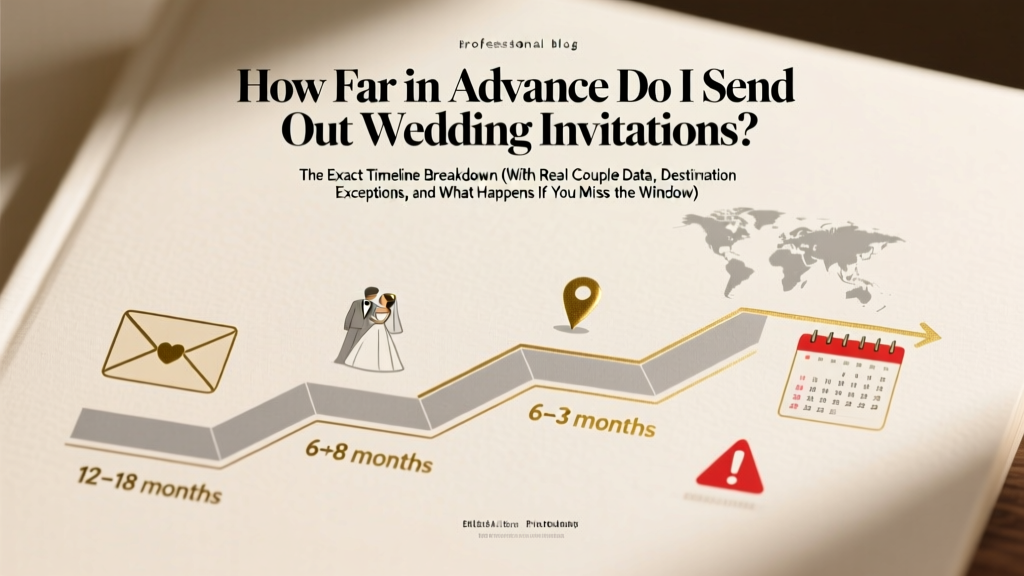 Wedding Invitation Timeline: 2026 Guide & Data
 Wedding Gift Check Etiquette: 7 Steps for Perfect Thank-Yous
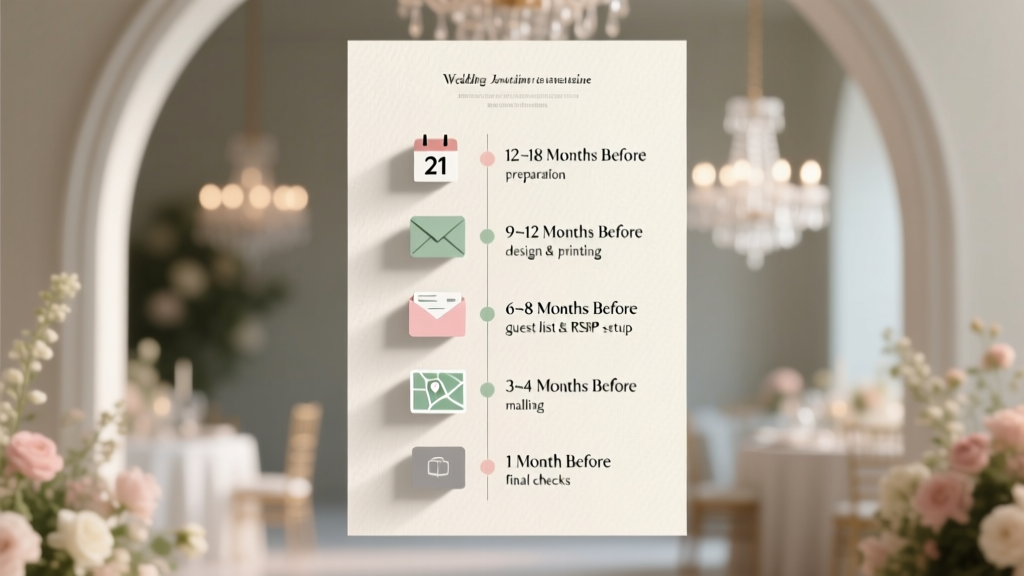 How Much In Advance Do You Send Out Wedding Invitations
 How Soon Before Wedding Get Marriage License (2026)
 What Do Men Wear at Weddings? (2026 Guide)
 Wedding Registry Wording Tips (2026)
 Wedding Costs 2026: Who Pays & Cost-Sharing Blueprint
 Wedding Guest List Organizer: 7-Step Stress-Free System
 A Christmas Prince: A Royal Wedding Cast Guide
 Destination Wedding Save-the-Dates: The 6–8-Month Sweet Spot