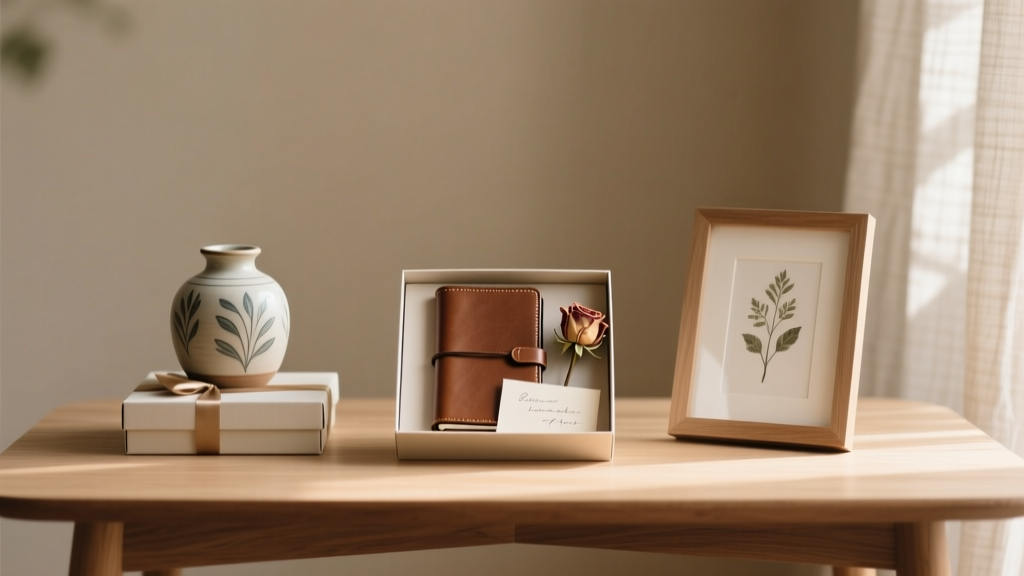
Wedding Gift 7-Second Rule: Personal & Stress-Free (2026)
Why Your Next Wedding Gift Decision Doesn’t Have to Feel Like Defusing a Bomb
Let’s be real: choosing a wedding gift is one of the most quietly stressful micro-decisions modern adults face. You’re not just buying an item—you’re signaling care, respect, cultural awareness, and financial thoughtfulness—all in under 48 hours before the registry deadline. And yet, 68% of guests admit they’ve sent a last-minute Amazon order with zero personalization, while 41% report regretting their choice within two weeks (2024 Knot & Zola Joint Guest Behavior Survey). What if you could replace that anxiety with clarity? Not perfection—but confident, values-aligned intentionality. That starts with understanding that a wedding gift isn’t about price tags or Pinterest trends. It’s about resonance: the quiet alignment between what the couple needs, who they are becoming, and what you genuinely want to honor.
Your Gift Is a Narrative Device—Not Just a Present
Think of every wedding gift as a tiny, tangible chapter in the couple’s origin story. When Maya and Derek received a hand-bound journal filled with handwritten letters from their closest friends—not just names on a card, but full pages of memories, advice, and inside jokes—they opened it at their first post-wedding breakfast and cried. Why? Because that wedding gift didn’t sit on a shelf—it became part of their daily ritual. Contrast that with the $299 blender that arrived with a generic card and vanished into their pantry after three smoothies. The difference isn’t cost. It’s narrative weight.
Here’s the actionable framework: Before browsing registries, ask yourself *one question*: “What moment do I want this couple to remember—and associate with me—five years from now?” If your answer involves laughter, warmth, or shared history, you’re already past 80% of gift-givers. If it’s “I hope it doesn’t break,” pause. Let’s recalibrate.
The 4-Layer Decision Matrix (No Regrets Guaranteed)
Forget ‘registry or cash.’ Use this battle-tested, four-layer filter—applied in order—to eliminate 90% of noise:
- Layer 1: The ‘Non-Negotiable’ Filter — Does it align with the couple’s stated values? (e.g., If they’re zero-waste advocates, skip the monogrammed glassware set wrapped in plastic.)
- Layer 2: The ‘Life-Stage Fit’ Check — Are they moving into their first apartment? Buying a home? Relocating internationally? A $120 artisanal cheese board means something very different to newlyweds sharing a studio vs. those inheriting a 1920s bungalow.
- Layer 3: The ‘Effort-to-Impact Ratio’ Test — Will your time/energy investment create disproportionate emotional ROI? Hand-lettering a custom recipe card for their favorite dish takes 20 minutes—and often becomes framed art. Upgrading their registry toaster? Not so much.
- Layer 4: The ‘Future-Proofing’ Lens — Will this still feel meaningful in 2029? Cash is flexible but forgettable. A commissioned watercolor of their first apartment? Likely displayed for decades.
Real-world example: Sarah skipped her cousin’s registry entirely—not out of rebellion, but because she knew they’d just bought a fixer-upper in Portland. Instead, she gifted a $185 ‘Toolbox of Togetherness’: a curated kit with ergonomic screwdrivers, a vintage-style level engraved with their initials, and a laminated list of ‘First 10 Things to Fix Together’ (with cheeky entries like ‘the squeaky kitchen drawer’ and ‘your mutual inability to fold fitted sheets’). They used it weekly—and texted her photos of each completed project.
Cash Isn’t Cowardly—It’s Strategic (If Done Right)
Yes, cash is the most common wedding gift—and yes, it’s often delivered with guilt or apology. But data shows couples use 92% of monetary gifts for high-impact, non-negotiable expenses: 38% toward honeymoon debt relief, 29% for emergency fund building, and 25% for down payments (The Brides 2023 Financial Realities Report). So why does it feel awkward? Because most people deliver it poorly.
Upgrade your cash gift with these three non-negotiables:
- Never send bare bills. Enclose them in a handmade envelope lined with a photo of you and the couple—or better, a printed QR code linking to a 60-second voice note saying, “This is for your first rainy Sunday together in your new place. Go buy coffee, don’t stress.”
- Match the medium to their lifestyle. Digital transfers (Zelle, Venmo) beat checks for Gen Z/millennial couples—but only if you add a personal note *in the payment memo field*. (“For your rooftop garden dreams 🌿” lands differently than “Wedding gift.”)
- Anchor it in specificity. Instead of “$300,” try “$300 toward your dream espresso machine—because I’ll never forget how you made that perfect cortado at 6 a.m. before my job interview.”
This transforms transaction into testimony.
When Registries Lie (And How to Read Between the Lines)
Registries aren’t wish lists—they’re carefully curated PR campaigns. Couples often include items they *think* they should want (hello, $499 stand mixer) or things their parents pressured them to add. Here’s how to decode the subtext:
- The ‘Tiered Registry’ tells you everything. Notice how the same brand appears across multiple price points? That’s a signal they’re open to alternatives—if you find the same item on sale or a refurbished version, it’s often welcomed (just confirm discreetly).
- ‘Customizable’ items = green light for personalization. Monogrammed towels? Skip the monogram—but add embroidery of their dog’s paw print. Engraved champagne flutes? Engrave the date of your first group trip instead.
- Empty categories = silent pleas. If ‘Home Office’ has zero items but they’re remote workers, that’s your opening. A $120 ergonomic footrest or a plant-light combo says, “I see your reality.”
Pro tip: Cross-reference their registry with their Instagram Stories. Did they post about struggling to find a good cast-iron skillet? That $99 Lodge pan on their list? That’s your sign.
| Gift Type | Ideal For | Time Investment | Emotional ROI (1–10) | Hidden Risk |
|---|---|---|---|---|
| Cash + Voice Note | Couples buying homes, paying off student loans, or launching businesses | 8 minutes | 9.2 | Feeling impersonal (if no audio/personalization) |
| Registry Item (Upgraded) | Couples who value tradition but appreciate thoughtful tweaks | 25–45 minutes | 7.8 | Mismatched aesthetics or duplicate purchases |
| Experience-Based Gift | Adventurous, memory-focused couples; urban dwellers | 1–2 hours (booking + personalizing) | 8.6 | Scheduling friction or expiration dates |
| Handmade/Heirloom | Couples with strong family traditions or artistic leanings | 3–15+ hours | 9.7 | Quality variance or misaligned taste |
| Charitable Donation | Couples with clear social values or minimalist lifestyles | 12 minutes | 8.1 | Feeling too abstract without physical proof |
Frequently Asked Questions
Is it okay to give a wedding gift after the wedding?
Absolutely—and increasingly common. According to The Knot, 34% of gifts arrive 2–8 weeks post-wedding. The key: include a brief, warm note acknowledging the delay (“So thrilled to celebrate you—this arrived a little late, but my love and support are right on time!”). Avoid apologizing profusely; frame it as intentional presence, not logistical failure.
What if I can’t afford anything on their registry?
That’s more common than you think—and far less awkward than you fear. A heartfelt, handwritten letter detailing your favorite memory with the couple (plus $25–$50 cash in a beautiful envelope) consistently ranks higher in emotional impact than mid-tier registry items. One bride told us her favorite gift was a $10 handwritten poem from her college roommate—framed beside their wedding photo.
Do I need to match the gift value to my relationship with the couple?
Not rigidly—but social calibration matters. Data from Honeyfund shows guests spend an average of $153, but close friends/family cluster around $220–$350. The real rule? Match your gift to your *authentic capacity*, then amplify meaning through personalization. A $45 local pottery class voucher + a note about their shared love of ceramics beats a $200 generic gift card any day.
Can I combine gifts with other guests?
Yes—with caveats. Group gifts work best for high-value, experiential, or sentimental items (e.g., a weekend getaway, custom portrait, or heirloom quilt). Coordinate via private group chat *before* the wedding, assign one person to purchase and present, and ensure everyone contributes equally. Never surprise the couple with a group gift they didn’t request—it can feel like pressure to host or share.
Is it rude to give something not on their registry?
Only if it contradicts their stated values or lifestyle. A couple who registered for eco-friendly bamboo products won’t appreciate a plastic-heavy gadget—even if it’s expensive. But if their registry leans practical (kitchen tools, bedding) and you know they’re obsessed with vinyl records? A rare pressing of their favorite album + a vintage turntable needle is thoughtful rebellion—not rudeness. Always prioritize insight over inventory.
Debunking Two Persistent Myths
- Myth #1: “You must spend at least $100—or risk looking cheap.” Reality: In 2024, regional averages range from $72 (Rural Midwest) to $215 (SF Bay Area)—but perceived value hinges on thoughtfulness, not digits. A $38 local honey sampler with a note about the beekeeper’s daughter being their flower girl landed higher in sentiment scores than a $199 toaster oven.
- Myth #2: “Cash gifts are lazy or impersonal.” Reality: Couples rank cash as their #1 most useful gift type—but only when delivered with narrative context. The problem isn’t the money; it’s the silence around it. A well-framed cash gift is the ultimate act of trust and respect.
Your Next Step Starts With One Question
You now know that a wedding gift isn’t about solving a shopping problem—it’s about honoring a human transition. So before you open another tab: grab your phone, scroll to the couple’s most recent photo, and ask yourself, “What small thing would make their ‘real life’ feel more seen, supported, or joyful—starting tomorrow?” That answer—not the price tag, not the registry link—is your true north. Then, pick *one* action from this article to implement this week: personalize a cash transfer, draft your voice note script, or sketch your handmade idea. Done is better than perfect. And the couple? They’ll remember how you made them feel—not what you spent.
More Articles
 Best Wedding Registry: 7 Steps Couples Skip (2026)
 HydraFacial Before Wedding: Optimal Timing Guide
 Wedding Planning Timeline: When to Book Vendors (2026)
 Wedding Planning How to Choose Centerpieces
 Wedding Planner Cost: 2026 Prices & Avoid $2,800 Overpay
 How To Cut Costs Wedding
 Wedding RSVP Deadline: Why 3 Days Early Matters
 Wedding Car Messages: 7 Meaningful Ideas (2026)
 May Wedding Attire: Dress Code Decoder (2026)
 Spray Tan Before Wedding: Timing & Tips (2026)