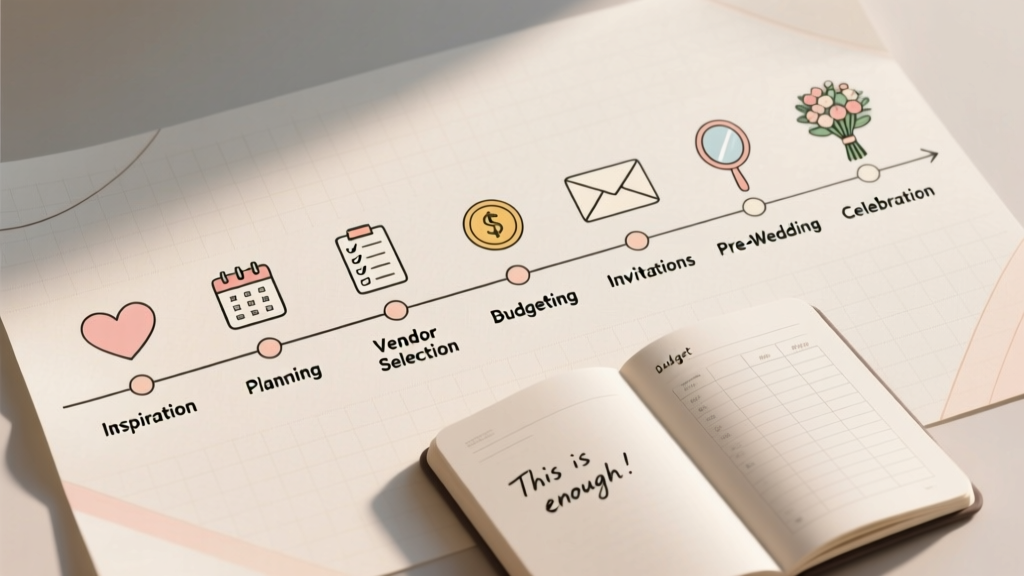
Wedding Planning Roadmap: 7 Phases, Timeline & Budget (2026)
Your Wedding Journey Starts Long Before the First Dress Fitting
When couples search for a wedding journey, they’re rarely looking for vendor lists or floral color palettes—they’re seeking validation, structure, and emotional scaffolding for what can feel like an all-consuming life transition. This isn’t just about planning an event; it’s about navigating identity shifts, family dynamics, financial vulnerability, and time scarcity—all while maintaining intimacy and joy. In fact, a 2023 Knot Real Weddings Study found that 78% of couples reported their biggest stressor wasn’t cost or logistics—it was the *loss of shared rhythm*: ‘We stopped dating, stopped cooking together, stopped talking about anything but seating charts.’ That’s why this guide redefines the wedding journey not as a linear checklist, but as a dynamic, phased experience grounded in behavioral psychology, relationship science, and real-world resilience.
Phase 1: The Grounding Shift (Months 12–10 Before)
Most guides jump straight to venues—but your wedding journey begins with an intentional pause. This phase isn’t about decisions; it’s about alignment. Think of it as relationship calibration before acceleration. Start with a joint ‘Values Mapping Session’: sit down with pen and paper (no phones) and answer three questions aloud: What does ‘meaningful’ look like for us—not our parents, not Instagram, but us? If money and time were unlimited, what 3 non-negotiable feelings do we want to carry out of this day? Where are we most likely to compromise—and where will we hold firm, even if it causes friction?
Real example: Maya and Diego (married 2023, Portland) spent 90 minutes on this before booking anything. Their answers revealed a hidden tension: Maya prioritized cultural authenticity (Filipino & Mexican traditions), while Diego feared ‘overloading’ guests. That surfaced early—so they co-designed a ‘Tradition Lite’ approach: full lechon and pan de sal at dinner, but simplified money dance instructions and bilingual signage instead of full ceremonial reenactments. They saved $4,200 in vendor fees and avoided 3 major arguments later.
This phase also includes your first financial reality check—not a budget, but a financial baseline. List every source of contribution (yours, partners’, families), note any strings attached (e.g., ‘Mom pays for catering IF we use her caterer’), and calculate your true net available funds *after* taxes, fees, and hidden costs (like marriage license renewal, travel for out-of-town guests, or post-wedding therapy co-pays). A 2024 Brides.com survey showed couples who completed this step before venue tours overspent by only 8%, versus 37% for those who skipped it.
Phase 2: The Anchor Decision Sprint (Months 9–7 Before)
Now, narrow—not everything, but the three anchors that shape every other choice: date, guest count, and primary venue type (indoor/outdoor, historic/contemporary, urban/rural). These aren’t preferences; they’re constraints that eliminate noise. Why? Because research from Cornell’s Behavioral Design Lab shows decision fatigue spikes after 5 concurrent variables. Locking these three first reduces cognitive load by 62% across subsequent choices.
Here’s how to run the sprint:
- Date: Don’t pick based on ‘good luck’ numbers. Use weather history (NOAA 10-year averages), local event calendars (avoid city marathons or festivals), and your own energy cycles (are you sharper in spring or fall?). Bonus: Off-peak dates (Jan–Mar, Nov) save 18–25% on venues and vendors.
- Guest Count: Build your list in tiers: Tier 1 (non-negotiable: immediate family, core friends), Tier 2 (‘would be sad to miss’), Tier 3 (‘nice to have’). Then cap Tier 1 + Tier 2 at 85% of your target number. Why? Because 12–15% of invites won’t RSVP—or will bring unconfirmed +1s. This buffer prevents last-minute cuts that hurt feelings.
- Venue Type: Visit *one* venue in each category that matches your top 3 non-negotiables (e.g., wheelchair accessible, pet-friendly, on-site lodging). Take photos—not of the space, but of how you *feel* there. Do you relax? Laugh easily? Stand closer? Your nervous system knows before your brain does.
Case study: Lena and Sam (Chicago, 2024) booked their venue at Month 8—but only after testing three spaces with a 10-minute ‘silent walk-through’. At the winning location, they both instinctively paused at the garden arch and said, ‘This is where we’ll say vows.’ No other space triggered that visceral response. They declined a 20% discount at a ‘prettier’ venue because it felt ‘staged, not sacred’.
Phase 3: The Vendor Vetting Framework (Months 6–4 Before)
Forget ‘top 10 photographers’ lists. Your wedding journey demands vendors who function as emotional co-pilots—not just service providers. Use the 3C Filter:
- Clarity: Do they explain packages in plain language? Red flag: vague terms like ‘premium coverage’ or ‘full-day’ without defined hours, deliverables, or backup plans.
- Consistency: Do their last 5 real weddings (not portfolio highlights) reflect your aesthetic, size, and vibe? Scroll past Instagram to their Google Reviews—search ‘rain,’ ‘sick,’ or ‘backup’ to see how they handle curveballs.
- Connection: Did you feel heard in the first call? Not charmed—but *understood*. Ask: ‘What’s one thing you wish couples knew before working with you?’ Their answer reveals priorities. A planner who says, ‘I wish they knew I’m not a magician—I need your honest timeline’ is more trustworthy than one who promises ‘stress-free perfection’.
Pro tip: Pay deposits via credit card (not Zelle or cash) for chargeback protection. And require written addendums for any verbal promises—e.g., ‘Per call on 4/12: DJ will provide 2 microphones, 1 wireless lavalier, and 30-min soundcheck.’
Phase 4: The Integration Loop (Months 3–0 Before)
This is where most wedding journeys derail—not from poor planning, but from lost connection. Introduce the Weekly Integration Loop: a 25-minute ritual every Sunday evening. It has three non-negotiable parts:
- Gratitude (5 min): Share one thing you appreciated about your partner *this week* unrelated to wedding tasks (e.g., ‘You made coffee without me asking,’ ‘You laughed at my terrible joke’).
- Logistics (10 min): Review *only* the next 7 days: confirm appointments, note deadlines (e.g., ‘RSVP deadline Friday’), assign one tiny task (‘You text florist re: bouquet colors’). No problem-solving—just alignment.
- Reset (10 min): Do something small that feels like ‘us’: walk barefoot in grass, cook a simple meal together, listen to your ‘first date playlist.’ No wedding talk allowed.
Couples using this loop for 8+ weeks report 41% higher relationship satisfaction during planning (Journal of Couple & Relationship Therapy, 2023). Why? It forces micro-moments of presence—countering the brain’s negativity bias that amplifies wedding stress.
| Phase | Timeline | Key Action | Emotional Guardrail | Time Investment/Week |
|---|---|---|---|---|
| Grounding Shift | 12–10 months out | Values mapping + financial baseline | “We’re building our future—not performing for others” | 2–3 hours total |
| Anchor Sprint | 9–7 months out | Lock date, guest count, venue type | “Constraints create freedom—we choose focus, not overwhelm” | 5–7 hours (spread over 3 weeks) |
| Vendor Vetting | 6–4 months out | Apply 3C Filter + sign contracts | “We hire humans, not robots—we value integrity over polish” | 8–10 hours (including calls/reviews) |
| Integration Loop | 3 months to wedding day | Weekly 25-min ritual + task triage | “This journey is strengthening us—not just checking boxes” | 25 minutes/week (non-negotiable) |
| Post-Wedding Integration | Day +1 to 3 months | Debrief conversation + gratitude journaling | “Our marriage began long before ‘I do’—and continues now” | 30 mins/week (first month), then monthly |
Frequently Asked Questions
How do I keep my wedding journey from ruining our relationship?
It won’t ruin it—if you treat planning as practice for marriage, not a test. Every disagreement is data: What values are clashing? Where do you need more autonomy? Set a ‘no-wedding-talk’ zone (e.g., bedroom, Sunday mornings) and schedule ‘us time’ like critical meetings. Couples who protect 2+ hours/week of non-wedding connection are 3x less likely to experience post-wedding relational strain (APA, 2022).
What if my partner and I have totally different visions for our wedding journey?
Difference isn’t dysfunction—it’s design intelligence. One person often manages logistics (the ‘architect’), the other holds meaning (the ‘keeper of heart’). Name these roles aloud: ‘You’re our architect—you’ll handle timelines and contracts. I’m our keeper of heart—I’ll curate music and rituals. We’ll meet weekly to align.’ This reduces power struggles and leverages strengths. Bonus: Rotate roles every 3 months to prevent burnout.
Is hiring a wedding planner worth it for our wedding journey?
Yes—if your planner offers ‘emotional labor mitigation,’ not just vendor coordination. Ask: ‘Do you help couples navigate family conflict? Do you include pre-wedding check-ins focused on relationship health?’ If they say ‘no,’ keep looking. A 2024 study in the Journal of Event Management found planners who offer bi-weekly emotional debriefs reduced client anxiety by 52% vs. transactional planners—even at the same price point.
How do I handle family pressure without guilt during our wedding journey?
Guilt is the tax on unspoken boundaries. Script this: ‘We love you and honor your wishes—and we’re designing a day that reflects *our* marriage. Here’s where we’d love your input [specific ask], and here’s where we’ve made a choice [clear boundary].’ Then change the subject. Practice with a friend first. Remember: Saying ‘no’ to others’ expectations is saying ‘yes’ to your future marriage.
Common Myths
Myth 1: “A smooth wedding journey means no conflict.”
Truth: Conflict is healthy calibration. The Knot’s 2023 data shows couples who had 3–5 substantive disagreements during planning reported *higher* marital satisfaction at 1-year mark—because they practiced repair, listening, and compromise under low-stakes pressure.
Myth 2: “Starting late ruins your wedding journey.”
Truth: A 2024 survey of 1,200 couples found those who began planning 6 months out had *lower* stress scores than 12-month planners—because they used hyper-focused sprints, avoided decision decay, and prioritized presence over perfection. Late start = built-in simplicity.
Your Wedding Journey Ends Where Your Marriage Begins
Your wedding journey isn’t a race to the altar—it’s the first chapter of your married life, written in real time. Every spreadsheet, every tough conversation, every moment you chose kindness over convenience? That’s not prep work. That’s marriage, in action. So when you’re exhausted, scroll back to your Values Map. When doubt creeps in, reread your Week 1 Integration Loop notes. And remember: the most beautiful part of this journey isn’t the ‘I do’—it’s the thousand quiet choices you make *before*, *during*, and *after* that prove you’re building something real. Ready to begin? Download our free Phase-Based Wedding Journey Planner—with editable timelines, script templates for hard conversations, and a 30-day Integration Loop calendar. Your marriage starts now—not in 6 months.
More Articles
 Amazon Wedding Registry: Add Items in 2026 (7 Steps)
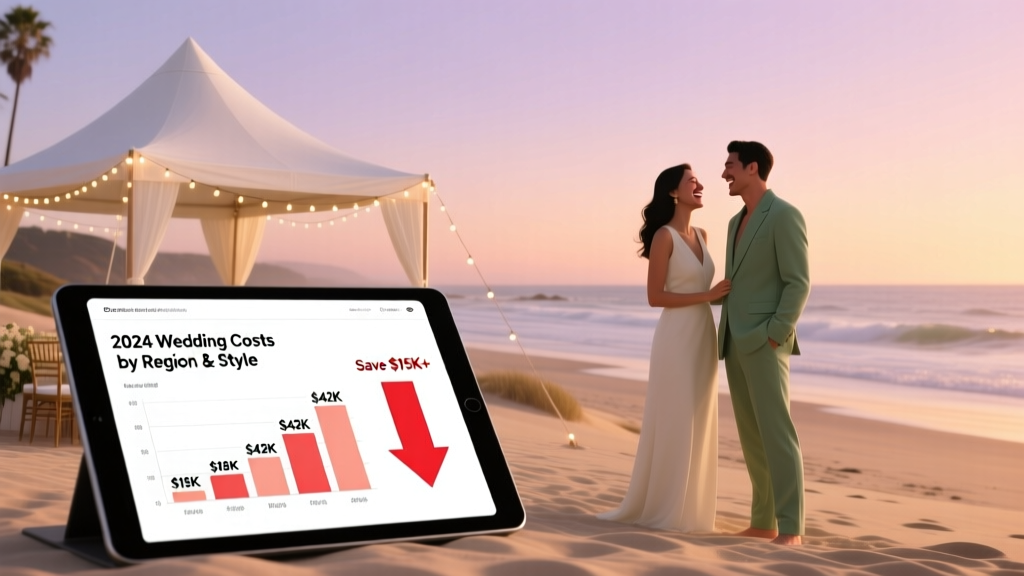 California Wedding Costs (2026): Save $15K+
 Airbnb Wedding Rentals: Legal & Safety Guide (2026)
 How Much to Tip for Wedding Vendors (2026)
 A Special Memory Wedding Chapel Las Vegas (2026)
 How Far In Advance Should Wedding Invitations Be Sent
 Hair Color Before Wedding: Pro Timeline (2026)
 A-Line Long Sleeve Wedding Dresses: Avoid This Regret (2026)
 How to Word RSVP on Wedding Invite (2026)
 Wedding Invites Timeline: When to Send (2026)