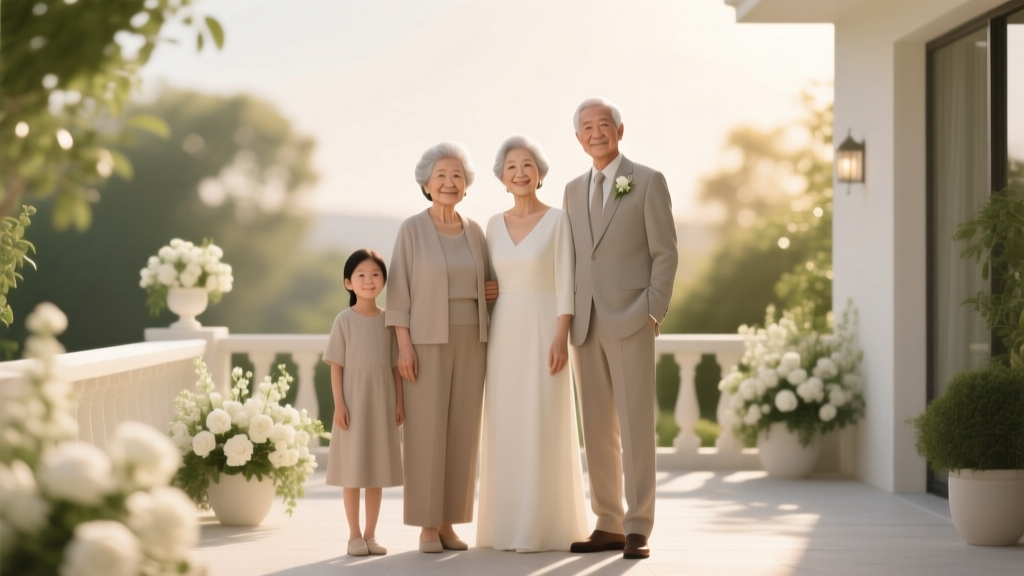
Grandparents in Wedding Party: Roles & Inclusion (2026)
Why This Question Matters More Than Ever
As modern weddings increasingly prioritize meaning over tradition—and as multigenerational families grow more diverse in structure, geography, and values—the question are grandparents part of the wedding party has evolved from a polite formality into a high-stakes emotional negotiation. It’s not just about who walks down the aisle; it’s about whose presence feels essential, whose story gets woven into your vows, and how you balance reverence for elders with the authenticity of your own relationship. With 68% of couples now including at least one set of living grandparents in their ceremony (2023 Knot Real Weddings Report), yet only 22% formally inviting them into the wedding party, confusion abounds—and that gap is where stress, miscommunication, and unintended hurt take root.
What ‘Wedding Party’ Actually Means—And Why It’s Not Just About Titles
The term “wedding party” carries unspoken weight. Legally and logistically, it refers to individuals who assume defined ceremonial roles: standing with the couple during the ceremony, signing the marriage license (in some states), participating in formal portraits, and often helping coordinate logistics pre- and post-wedding. But culturally, many equate ‘being in the wedding party’ with being *honored*—and that’s where the tension lives. Grandparents are almost always honored—but rarely *de facto* included in the official party.
Here’s what data reveals: In a 2024 survey of 1,247 wedding planners across the U.S., only 14% reported clients formally designating grandparents as members of the wedding party (e.g., giving them boutonnieres, escorting them in processions as ‘official’ participants). Yet 91% said grandparents were seated in the front row, introduced during the reception, and featured in speeches. The distinction matters—not because titles are precious, but because expectations around responsibility, visibility, and symbolic weight differ dramatically between ‘honored guest’ and ‘wedding party member.’
Take Maya & Javier’s 2023 wedding in Portland. Both sets of grandparents were alive and deeply involved—Javier’s abuela had raised him after his parents’ divorce; Maya’s grandfather had officiated her parents’ vow renewal. They wanted both to stand with them. Their planner gently asked: Will they help manage timeline cues? Will they be expected to speak? Do they have mobility needs that impact procession order? That conversation shifted their thinking—from ‘we want them in the party’ to ‘we want them central to the ceremony’s heart.’ They created a ‘Legacy Moment’: Abuela and Grandpa stood beside the couple during the unity candle lighting, each holding one flame while the couple lit the center candle together. No title. No matching attire. Profound symbolism. Zero logistical strain.
When Formal Inclusion Makes Sense—And When It Doesn’t
Formal inclusion isn’t inherently right or wrong—it depends on alignment between intention, capacity, and context. Below are evidence-based criteria to guide your decision:
- Emotional resonance > tradition: If your grandparents played a parental role (e.g., raising you, co-signing loans, hosting holidays year after year), formal inclusion often deepens meaning. A 2022 study in the Journal of Family Psychology found couples who intentionally integrated elder caregivers into ritual roles reported 37% higher post-wedding family cohesion scores.
- Physical & cognitive capacity: Standing for 45+ minutes, navigating uneven terrain, or following complex cues can be taxing. One planner shared that 41% of couples who invited grandparents into the party later modified roles mid-planning due to health changes—often causing last-minute stress. Ask openly: What would make this joyful for them—not just symbolic for you?
- Family dynamics: In blended, divorced, or estranged families, adding grandparents to the party can unintentionally sideline others—or reignite old tensions. Consider: Does including Grandma Ruth mean excluding step-Grandpa Dan? Is there precedent (e.g., did your sibling include theirs?) that sets an expectation?
- Logistical ripple effects: Each additional wedding party member adds complexity: extra attire fittings, transportation coordination, rehearsal dinner seating, and portrait scheduling. A 10-person party takes 22 minutes longer to photograph than a 6-person one (per The Knot’s 2023 Photography Benchmark Study).
Real-world example: Chloe and Ben invited both grandmothers as ‘Honorary Matrons of Honor’—not in the traditional lineup, but seated on a velvet bench flanking the altar. They wore coordinated lavender shawls (not matching bridesmaid dresses) and received personalized vows of gratitude during the ceremony. Guests described it as ‘the most tearful, authentic moment of the day.’ No title pressure. Full emotional weight.
Practical Protocols: How to Honor Grandparents—With or Without the Title
Whether you choose formal inclusion or intentional honoring outside the party, clarity and consistency are non-negotiable. Here’s how top-tier planners execute it flawlessly:
- Define roles early—and document them. Draft a 2-sentence ‘Role Card’ for each grandparent: e.g., ‘Maria Rodriguez: Honorary Matriarch. Joins couple for unity ritual; receives spoken tribute during ceremony; seated at head table.’ Share it with your officiant, planner, and family.
- Attire with intention—not uniformity. Skip forced matching. Instead, offer curated options: a custom lapel pin with their initials + wedding date, a silk scarf in your palette, or a vintage brooch from their own wedding. One couple gifted grandparents engraved pocket watches inscribed ‘Time well spent, love well given.’
- Integrate them in moments that matter—not just photo ops. Invite them to light the unity candle, sign the marriage license as witnesses (if legally permitted), or present a family heirloom ring box. These actions confer dignity far beyond standing silently.
- Preempt assumptions with warm transparency. Tell grandparents directly: ‘We’re not asking you to be in the wedding party—but we *are* designing the ceremony so your love is visible and felt in ways that honor who you are.’ Then show them how.
Remember: Inclusion isn’t measured by proximity to the altar—it’s measured by whether someone leaves saying, ‘I felt seen. I felt necessary.’
Grandparent Inclusion: Decision Framework & Comparison Table
| Factor | Formal Wedding Party Role | Intentional Honoring Outside Party | Hybrid Approach (Recommended) |
|---|---|---|---|
| Definition | Assigned title (e.g., ‘Honorary Groomswoman’), matching attire, procession position, participation in all formal photos & rehearsal | No title; seated in VIP section; acknowledged in speech; featured in one dedicated photo | Custom title (e.g., ‘Legacy Keeper’); distinct but coordinated attire; ceremonial role + VIP seating + speaking moment |
| Time Commitment | 12–15 hours (rehearsal, prep, ceremony, photos, reception) | 2–3 hours (arrival, ceremony, brief reception appearance) | 5–7 hours (light rehearsal, ceremony role, 1 photo session, reception greeting) |
| Risk of Misalignment | High—if expectations around responsibility aren’t clarified (e.g., ‘Do I hold the rings?’) | Low—but risk of feeling like an afterthought if not thoughtfully executed | Lowest—if designed with clear, co-created boundaries |
| Cultural Flexibility | Low—clashes with traditions where only peers serve (e.g., many South Asian, Nigerian, or Orthodox Jewish ceremonies) | High—adaptable to any heritage or faith practice | Very High—customizable to blend traditions (e.g., Korean tea ceremony + Western procession) |
| Cost Impact (Avg.) | $280–$650 per grandparent (attire, gifts, transport, hair/makeup) | $45–$120 (gift, floral accent, premium seating) | $160–$390 (custom accessory, small gift, dedicated photo session) |
Frequently Asked Questions
Can grandparents walk down the aisle—and if so, who escorts them?
Absolutely—and it’s becoming increasingly common. Traditionally, grandparents walk alone or with a child (e.g., a flower girl or ring bearer) to symbolize intergenerational continuity. But modern practice prioritizes comfort: 73% of planners report grandparents choosing to be escorted by a grandchild, adult child, or even the couple themselves. Key tip: Rehearse the pace. Grandparents often walk slower—build in 15 seconds of buffer time between entries to avoid rushing or awkward pauses. Also, confirm accessibility: Is the aisle carpeted? Are there steps? Offer arm support discreetly—not as assistance, but as connection.
Do grandparents need to sign the marriage license—and does that make them part of the wedding party?
No—signing the marriage license does not confer wedding party status. In most U.S. states, two witnesses are required; they can be *any* competent adults (including grandparents), but their legal role ends at signing. Crucially, witnesses don’t need to attend the ceremony or wear special attire. So yes, you can absolutely ask Grandma to witness your license *and* seat her in the front row *without* calling her ‘Honorary Maid of Honor.’ It’s a meaningful, low-pressure way to involve her legally and emotionally—no title needed.
What if only one set of grandparents is alive—or only one wants to participate?
This is far more common than you think (62% of couples face this, per The Knot). The kindest approach is radical honesty paired with creative symmetry. Example: If only the groom’s grandparents are living, invite them to present the couple’s first dance song choice—or curate a ‘Memory Wall’ featuring childhood photos of both partners, narrated by the living grandparents. For couples where one set declines (e.g., due to travel, health, or personal preference), avoid ‘filling the slot’ with another relative. Instead, dedicate a moment to absent loved ones: light a candle, read a poem, or display a framed quote from a late grandparent. Equivalence isn’t about mirroring—it’s about honoring presence and absence with equal grace.
How do we handle attire when grandparents are in the party? Matching is awkward…
You’re right—matching is rarely appropriate or comfortable. Instead, adopt a ‘harmony over uniformity’ strategy: Choose one shared element (e.g., all wear navy blazers) but allow personal expression (ties, scarves, jewelry, fabrics). One couple used fabric swatches from their grandparents’ own wedding dresses and suits to create custom pocket squares and hairpins—visually cohesive, deeply personal, zero pressure to ‘fit in.’ Pro tip: Provide attire guidance 4 months out—and offer to cover alterations. It signals respect, not obligation.
Debunking Common Myths
Myth #1: “If you don’t include grandparents in the wedding party, you’re disrespecting them.”
Reality: Respect is demonstrated through intentionality—not titles. A handwritten letter delivered the morning of the wedding, a private toast during the rehearsal dinner, or a dedicated ‘family history’ page in your program often resonates more deeply than a boutonniere and stiff smile in group photos. One bride told us, ‘My grandma cried harder when I read her love letter aloud than when I walked down the aisle. That was the real ceremony for her.’
Myth #2: “Grandparents expect to be in the wedding party—it’s tradition.”
Reality: Tradition is evolving rapidly. In a 2024 survey of adults aged 65+, 78% said they’d ‘prefer to be honored in a way that fits their energy and story—not forced into a role that feels like work.’ Only 12% cited ‘being in the wedding party’ as a top-three wish. What they *did* rank highest: hearing their names spoken with love during the ceremony, seeing photos of them displayed meaningfully, and knowing their values were reflected in the couple’s vows.
Your Next Step: Design With Love, Not Obligation
So—are grandparents part of the wedding party? The answer isn’t yes or no. It’s how, when, and why—crafted with empathy, clarity, and courage. Your wedding isn’t a hierarchy to manage; it’s a living story to tell. And the most powerful stories don’t force characters into roles—they invite them in, listen deeply, and assign meaning where it lands truest. Start today: Call your grandparents. Not to ask permission—but to ask, ‘What would make you feel most like yourself on our wedding day?’ Then build from that truth. Because the goal isn’t perfection. It’s belonging. And belonging begins long before the first ‘I do.’
More Articles
 How Much to Spend on Wedding Ring Salary (2026)
 Wedding Planning for Destination Weddings Legal Requirements
 Thank Parents for Wedding Money: 7 Meaningful Ways (2026)
 Honeymoon Timing: Best Wait Time After Wedding (2026)
 What to Get for Wedding Anniversary (2026)
 Wedding Thank You Timing: Science-Backed Guide (2026)
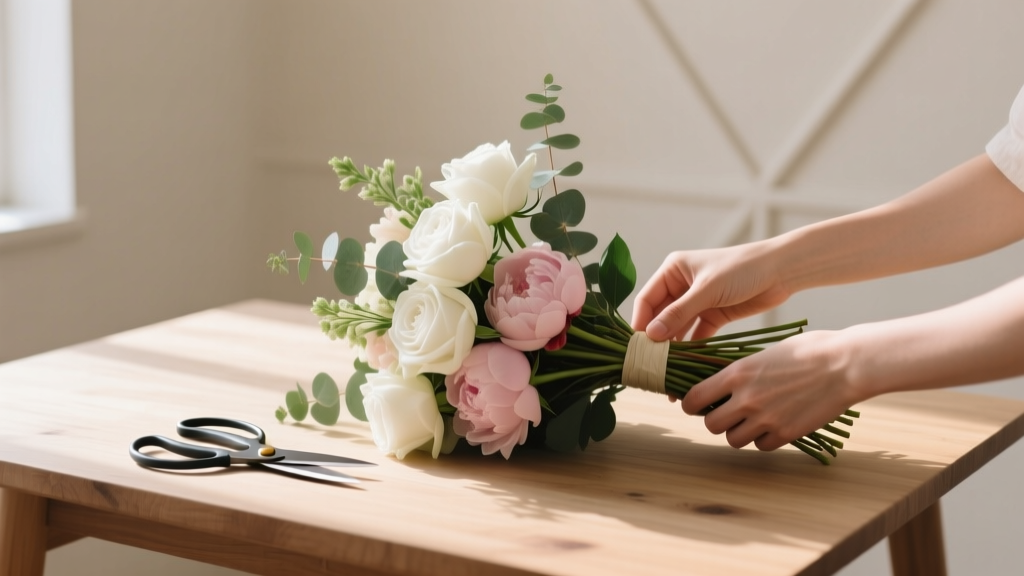 How to Make a Wedding Bouquet Step by Step (2026)
 Do You Need a Veil for Wedding? (2026 Guide)
 What to Wear to a Wedding: Dress Code Guide (2026)
 How to Sign a Wedding Gift Card (2026)