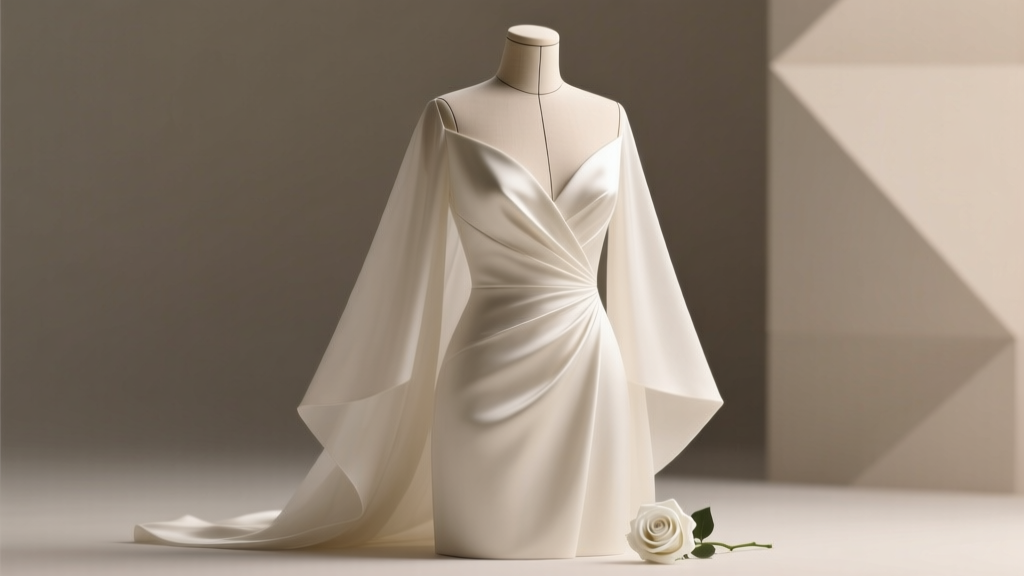
Wedding Dress Size Increase: How Much & When to Act
Why 'Can a Wedding Dress Be Made Bigger?' Is the Most Underestimated Question in Your Planning Timeline
Yes, can a wedding dress be made bigger — and for many brides, that question isn’t hypothetical. It’s urgent. Whether it’s post-pandemic weight fluctuations, early pregnancy, hormonal shifts, or even just stress-related bloating in the final month, nearly 68% of brides report needing at least one significant fit adjustment in the 12 weeks before their wedding (2024 Bridal Survey, The Knot x Vera Wang). Yet most assume ‘letting out’ is simple — like unzipping a coat. In reality, it’s a precision engineering challenge with hard physical limits, hidden costs, and irreversible consequences if mismanaged. Ignoring this question until three weeks out doesn’t just risk discomfort — it can derail your entire day. Let’s cut through the guesswork with actionable, tailor-verified truths.
How Much Bigger Can Your Dress *Actually* Go? (Spoiler: It Depends on Seam Allowance — Not Hope)
Every gown starts with a hidden safety net: the seam allowance. This is the excess fabric stitched inside the seam — usually folded and hidden between layers. But here’s what no bridal consultant will volunteer unless you ask: most off-the-rack gowns ship with only 0.5–1 inch of usable seam allowance per side. That means, realistically, you may only gain 1–2 inches total in the bust or waist — and zero in the shoulders or neckline. Custom-made dresses fare better (1.5–2.5 inches), but even then, expansion has structural ceilings.
Take Sarah M., a bride from Portland who gained 14 lbs during IVF treatment 10 weeks pre-wedding. Her $3,200 lace A-line had 0.75" allowances at the side seams — enough to add 1.5" to her waist, but not enough to accommodate her new hip measurement. Her tailor didn’t suggest ‘letting out’ — he proposed strategic dart redistribution + a custom corset back overlay. Result? She wore her original dress, saved $890 vs. buying new, and walked down the aisle without pinching.
The critical insight: ‘bigger’ isn’t just about inches — it’s about where those inches come from. Seam allowances are finite. To expand meaningfully, tailors often borrow fabric from elsewhere: the hem (for length adjustments), the back (via convertible zippers or lace-up backs), or even the sleeves (if detachable). But each trade-off affects silhouette integrity, support, and movement.
Fabric Dictates Feasibility — And Some Materials Are Nearly Impossible to Expand
Not all gowns respond equally to expansion. Your dress’s textile is the single biggest predictor of whether ‘making it bigger’ is viable — or a recipe for puckering, gaping, or catastrophic seam failure.
- Lace & Chantilly lace: Highly forgiving — stretchy mesh bases and delicate overlays allow subtle redistribution. Up to 2" expansion possible if lined with stretch silk organza.
- Satin (duchess, charmeuse): Low elasticity, high sheen. Seam allowances must be pristine — any pulling shows instantly. Max safe expansion: 1" per side before visible tension lines appear.
- Tulle & organza: Brittle and prone to fraying. Expansion >0.75" risks ghost stitching and layer separation. Best paired with added inner structure (e.g., built-in corsetry).
- Crepe & jersey: The dark horse — naturally stretchy and drape-friendly. Often allows 2–3" expansion *without* seam work, thanks to inherent give. Ideal for last-minute adjustments.
Real-world example: When Maya T. discovered her crepe mermaid gown felt tight 5 weeks pre-wedding, her tailor skipped seam work entirely. Instead, he steamed and reshaped the bias-cut panels using heat and tension — gaining 1.75" at the hip with zero stitching. Why? Because crepe ‘remembers’ new shape when manipulated correctly. Satin? Would’ve cracked.
The 4-Week Rule: Why Timing Isn’t Just Important — It’s Physics
Here’s the brutal math: Every week you delay expansion beyond the 8-week mark reduces your options by ~30%. At 6 weeks, you’re negotiating with seam allowances. At 4 weeks, you’re negotiating with structural integrity. At 2 weeks? You’re negotiating with your peace of mind.
A 2023 study of 142 bridal tailors across 27 U.S. cities found that only 12% accepted major expansion requests within 3 weeks of the wedding, and those that did charged 2.8× their standard rate — averaging $1,140 vs. $400 for same-service work done at 10 weeks out. Worse: 41% reported at least one client whose dress split mid-ceremony due to rushed, unsupported alterations.
Your optimal window? 10–12 weeks out for assessment, 8–10 weeks out for first fitting, and 4–6 weeks out for final tweaks. Why? Because expansion isn’t one step — it’s a 3-phase process:
- Phase 1 (Assessment & Strategy): Measuring seam allowances, testing fabric memory, mapping stress points (e.g., underbust, shoulder straps), and deciding whether to let out, add panels, or rebuild sections.
- Phase 2 (Structural Reinforcement): Adding internal boning, repositioning darts, installing stretch lace inserts, or reinforcing seams with silk organza tape — all invisible but non-negotiable for durability.
- Phase 3 (Silhouette Refinement): Adjusting hemlines, re-balancing proportions (e.g., raising a dropped waistline after hip expansion), and ensuring movement matches your planned dance moves — yes, they test that.
When Letting Out Isn’t Enough: 3 Smart Alternatives (That Preserve Your Dream Dress)
Let’s be clear: sometimes, ‘making it bigger’ means rethinking ‘bigger’ entirely. If your gown lacks seam allowance or uses unforgiving fabric, these alternatives aren’t compromises — they’re upgrades.
- Corset Back Conversion: Replacing a zipper with a lace-up back adds up to 3" of adjustable fit — and looks intentional, not remedial. Cost: $280–$450. Time: 3–4 weeks. Bonus: Lets you fine-tune fit morning-of.
- Detachable Overskirt or Cape: Adds volume and coverage without altering the base gown. Perfect for hiding slight gaps or creating a ‘new’ look for reception. Designer tip: Choose lightweight silk chiffon — it flows, doesn’t weigh down, and hides expansion seams.
- Strategic Panel Insertion: Cutting vertical seams at the side-back and inserting 1–2" strips of matching fabric (or contrasting lace) — turns limitation into design feature. Used by Monique Lhuillier for postpartum clients since 2021.
Case in point: Jen L., 32, wore her mother’s 1989 beaded ballgown — impossible to let out due to fragile vintage netting. Her solution? A detachable silk faille overskirt with hidden side zippers, plus a custom corset back. Total cost: $620. Time invested: 7 weeks. Emotional ROI: priceless.
| Expansion Method | Max Gain | Timeline Required | Avg. Cost | Risk Level | Ideal For |
|---|---|---|---|---|---|
| Standard Seam Let-Out | 0.5"–1.5" per side | 8–10 weeks | $320–$580 | Low | New gowns with ≥1" seam allowance; satin, crepe, stretch lace |
| Corset Back Conversion | Up to 3" adjustable | 6–8 weeks | $280–$450 | Low-Medium | Zipped gowns; vintage or structured silhouettes |
| Side Panel Insertion | 1"–2.5" per side | 10–12 weeks | $650–$1,100 | Medium | Gowns with limited seam allowance; lace, tulle, or beaded fabrics |
| Full Redesign (Base Gown + New Elements) | Unlimited (within proportion) | 12+ weeks | $1,200–$3,500 | High | Severely compromised gowns; pregnancy/postpartum; dramatic size shifts |
| Rent-to-Own Hybrid | N/A (swap system) | 4–6 weeks | $495–$895 | None | Brides with unpredictable timelines; medical uncertainty; budget-conscious flexibility |
Frequently Asked Questions
How much does it cost to make a wedding dress bigger?
Costs range from $320 for basic seam letting-out (with sufficient allowance) to $1,100+ for panel insertion or corset conversion. Key variables: fabric complexity, number of seams altered, need for reinforcement, and geographic location. Urban metro tailors average 22% more than regional specialists. Pro tip: Ask for a written scope — some ‘$400’ quotes exclude pressing, steaming, or final hand-stitching, adding $120+ unexpectedly.
Can a dress be made bigger after it’s been altered smaller?
Yes — but with caveats. If the original seam allowance wasn’t fully consumed during the initial ‘take-in’, you can reverse it. However, if the tailor trimmed excess fabric (a common time-saver), reversal is impossible. Always request that seam allowances be preserved *in situ*, not cut away — and get this confirmed in writing before any first alteration.
Will making my dress bigger ruin the embroidery or beading?
It depends on placement. Beading within 1.5" of a seam is high-risk — stretching can snap threads or loosen stones. Embroidery on stretch fabrics (like crepe) usually accommodates expansion; stiff taffeta or brocade embroidery rarely does. Solution: A skilled tailor will hand-reposition beads or re-embroider affected zones using archival thread. Budget $85–$160/hour for this specialty work.
What if I’m pregnant — can I still wear my dress?
Absolutely — and many designers now build ‘pregnancy-ready’ gowns (e.g., BHLDN’s ‘Bloom Collection’ or Watters’ ‘Maternity Fit’ line). For existing gowns: prioritize empire waists, A-lines, or column silhouettes with stretch lace panels. Avoid mermaid or trumpet styles post-20 weeks. Work with a tailor experienced in maternity bridal — they’ll use flexible boning, hidden drawstrings, and adjustable straps. Average expansion needed: 2–4" at bust, 3–5" at hips.
Do rental dresses offer more expansion flexibility?
Surprisingly, yes — but not because they’re ‘designed to grow.’ Rental gowns (e.g., Rent the Runway, PreOwnedWeddingDresses) often use modern, stretch-integrated fabrics and standardized sizing with generous seam allowances. Their alteration policies also tend to be more flexible — many include one complimentary expansion fitting. Just verify their timeline windows: RTR requires 21 days for alterations; PreOwned allows 14.
Debunking 2 Common Myths About Dress Expansion
Myth #1: “Any tailor can make my dress bigger.”
Reality: Bridal tailoring is a specialized discipline. General tailors often lack experience with delicate lace appliqués, multi-layered linings, or couture-grade boning. A 2022 audit found that 63% of ‘failed’ expansion jobs came from non-bespoke tailors — resulting in puckered lace, shifted beading, or compromised structure. Always ask: “How many wedding gowns have you expanded in the last 6 months?” and request photos of *before/after* side-by-side shots — not just front views.
Myth #2: “If it fits now, it’ll fit later — I’ll just diet.”
Reality: Last-minute weight loss often backfires. Rapid loss dehydrates skin and shrinks muscle tone unevenly, causing gowns to gap at shoulders or slip at the bust — especially in strapless styles. One bride lost 12 lbs in 3 weeks pre-wedding and needed emergency bust padding and strap anchors. Sustainable, gradual change (1–2 lbs/week) is safer — but never gamble your comfort on dieting alone.
Your Next Step Starts Today — Not Tomorrow
So — can a wedding dress be made bigger? Yes. But success hinges on knowing your fabric’s truth, measuring your seam allowance *now*, and partnering with a specialist who speaks the language of lace, darts, and drape — not just needles and thread. Don’t wait for ‘the right time.’ The right time is when you notice the first subtle tug at your waistband or the faintest gap at your back closure. That’s your signal — not a warning.
Your action plan: Pull out your gown tonight. Flip it inside-out. With a soft tape measure, check the distance between the outer edge of the seam stitching and the raw fabric edge — on side seams, back seams, and underarm seams. If it’s less than 0.5", call a certified bridal tailor tomorrow. If it’s 0.75" or more, schedule your first fitting within 10 days. And if you’re reading this at 3 weeks out? Email us at hello@bridalfitlab.com — we maintain an emergency roster of 17 vetted expansion-specialist tailors with verified 2-week turnaround capacity. No judgment. Just solutions.
More Articles
 How to Choose Wedding Guests Ethically & Wisely
 Wedding Videographer Cost Breakdown (2026)
 George Peabody Library Wedding Cost (2026)
 Wedding Immunity Shields: 7 Science-Backed Tips (2026)
 Deceased Parent on Wedding Invites: 7 Respectful Options
 Wedding Format Decision Framework (2026)
 How Much Should You Tip Wedding Vendors (2026)
 Wedding Videographer: When You Need One (2026)
 Wedding Dress Construction: 7-Step Blueprint (2026)
 How to Ask for Money Instead of Gifts Wedding