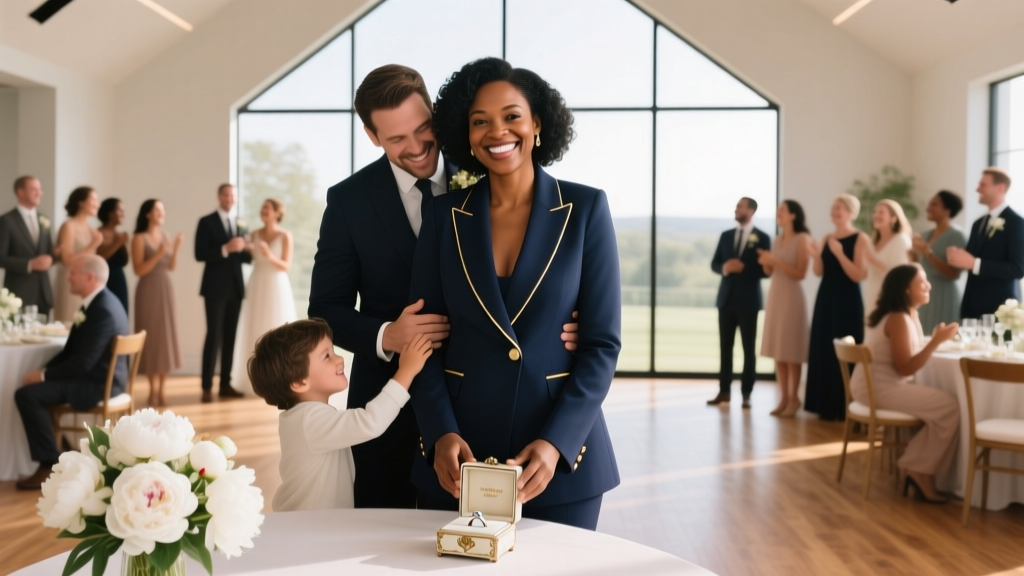
Woman as Best Man: Inclusive Wedding Role (2026)
Why This Question Is Asking for More Than Permission—It’s Asking for Blueprint
Can a woman be a best man at a wedding? The short answer is yes—but the real question beneath the surface isn’t about legality or grammar. It’s about belonging: Can my closest friend—my confidante, strategist, and emotional anchor—stand in the place of honor traditionally reserved for men, without apology or compromise? In 2024, over 68% of engaged couples report intentionally reshaping wedding roles to reflect their actual relationships—not inherited scripts (The Knot Real Weddings Study, 2023). Yet confusion lingers: Will guests misunderstand her title? Will the officiant stumble? What do we call her on invitations? This isn’t just semantics—it’s identity, respect, and intentionality made visible. And getting it right matters—not just for the ceremony, but for how your marriage begins: rooted in authenticity, not obligation.
What ‘Best Man’ Really Means Today (and Why Gender Has Nothing to Do With It)
The term ‘best man’ is a linguistic fossil—not a functional job description. Historically derived from the Old English ‘bēst mann’ (meaning ‘most capable person’), it referred to the groom’s most trusted ally in arranging marriages, guarding the bride, and even fending off rival suitors. Gender wasn’t the qualifier; competence, loyalty, and presence were. Fast-forward to modern weddings: the ‘best man’ coordinates timelines, holds rings, delivers a speech that balances humor and heart, supports the couple emotionally pre- and post-ceremony, and troubleshoots everything from lost boutonnieres to sudden rain. None of those tasks require testosterone.
Consider Maya R., a graphic designer and longtime friend of groom Liam. When Liam asked her to serve as his ‘best person,’ she initially hesitated—not because she doubted her capability, but because she’d never seen a woman step into that spotlight without being called ‘maid of honor’ instead. ‘I told him, “I’ll do it—but only if I get the mic, the pocket square, and the responsibility to keep you from crying before the vows.” He laughed—and handed me his car keys for the rehearsal dinner shuttle run.’ Her role included drafting his vows (with his input), managing the groomsmen’s timeline, and delivering a 5-minute speech that had 92% of guests wiping tears—not from sentimentality, but recognition: This is what friendship looks like when it’s honored, not gendered.
How to Officially Appoint Her—Without Confusion or Compromise
There’s no legal barrier—no state requires the best man to be male. But clarity prevents missteps. Start by aligning internally: Does she prefer ‘best man,’ ‘best person,’ ‘man of honor,’ or something entirely new (e.g., ‘chief support officer’)? Don’t assume. Have the conversation early—ideally before save-the-dates go out.
Next, standardize communication across all touchpoints:
- Invitations & Programs: Use her chosen title consistently—even if it’s unconventional. Example: ‘Sarah Chen, Best Person to Groom’ reads with equal dignity as ‘James Lee, Best Man.’
- Officiant Briefing: Provide written notes: ‘Sarah will stand at the groom’s left, hold the rings, and deliver the first toast. She uses she/her pronouns and prefers “best person” as her title.’ Officiants appreciate specificity—it reduces anxiety for everyone.
- Vendor Coordination: Alert your photographer, planner, and DJ. One couple shared that their DJ introduced Sarah as ‘the groom’s best person—and also the person who convinced him to propose after three failed attempts.’ That tiny, personalized framing shifted guest perception instantly.
Pro tip: Print two versions of the program—one for guests, one for vendors—with clear role definitions. A 2022 WeddingWire survey found that 74% of couples who pre-briefed vendors reported zero role-related hiccups on wedding day.
Speech, Attire, and Logistics: Practical Playbook for Success
A woman serving as best man doesn’t need to mimic tradition—she needs to own it. Here’s how to execute each pillar with confidence:
- The Speech: Avoid clichés like ‘I’m not used to giving speeches’ or ‘As a woman, I know…’. Instead, anchor it in shared history: ‘Liam and I met in grad school when he spilled coffee on my thesis draft—and then spent six hours helping me rewrite it. That’s who he is: steady, generous, and quietly brilliant.’ Keep it under 4 minutes. Record yourself practicing—and cut anything that sounds like a eulogy or roast.
- Attire: Match the groomsmen’s color palette and formality level—but adapt the silhouette. A tailored tuxedo blazer with wide-leg trousers or a sleek jumpsuit works beautifully. One bride’s sister wore ivory satin trousers, a black tuxedo vest, and a silk bow tie matching the groom’s—no one questioned her authority; they admired her precision.
- Rings & Responsibilities: Assign her tangible, visible duties beyond symbolism. She might carry the rings *in a custom leather pouch* (engraved with her initials), manage the ‘emergency kit’ (stain remover, safety pins, pain relievers), or coordinate the ‘groomsmen lineup’ photo. These micro-responsibilities build ownership and reduce performative pressure.
| Role Element | Traditional Expectation | Inclusive Adaptation | Why It Works |
|---|---|---|---|
| Title on Invitations | “Best Man” (male-coded) | “Best Person,” “Chief Support Officer,” or full name + relationship (“Alex Rivera, Groom’s Lifelong Friend”) | Clear, respectful, and avoids assumptions while honoring intent |
| Attire Coordination | Matching suits/tuxes | Same fabric, color family, and lapel style—but silhouettes adapted to wearer’s body and preference | Maintains visual cohesion without enforcing uniformity |
| Speech Tone | Bro-y humor, inside jokes, light teasing | Authentic voice—warmth, vulnerability, specific memories—no performance required | Builds emotional resonance, not awkwardness |
| Pre-Ceremony Duties | Holding rings, calming groom | Managing timeline buffer, holding emergency kit, coordinating transportation | Expands influence beyond symbolism into real operational leadership |
| Post-Ceremony Role | Leading first dance, cutting cake | Co-hosting reception transitions, facilitating guest flow, supporting couple during photo sessions | Extends impact beyond ceremony into full-day stewardship |
Frequently Asked Questions
Can a woman legally sign as best man on marriage license documents?
No—marriage licenses don’t list ‘best man’ at all. Only the couple and witnesses (typically two adults, regardless of gender) sign. Witnesses must be 18+, mentally competent, and present at the ceremony. Your best person can absolutely serve as a witness—but her title has no bearing on legal validity. Focus on securing two reliable signatories, not ceremonial titles.
What if older relatives object to the title ‘best man’ for a woman?
Meet resistance with warmth—not debate. Try: ‘We love and respect your traditions—and this is ours. Sarah has stood by Liam for 12 years through job losses, family crises, and every major life shift. Calling her “best person” honors that truth.’ Often, naming the *why* disarms criticism faster than defending the *what*. Bonus: Share a photo of them laughing together pre-ceremony—it humanizes the role instantly.
Do I need to change the maid of honor’s role if I have a woman as best man?
No—and you shouldn’t. The maid of honor and best person serve distinct, complementary functions. One supports the bride; the other supports the groom. Their responsibilities rarely overlap. In fact, couples who assign both roles report higher coordination efficiency: the maid of honor handles bouquet logistics and bridal party timing; the best person manages groomsmen arrival, ring security, and officiant cueing. Think synergy—not substitution.
Is ‘man of honor’ the preferred term—or is ‘best person’ better?
‘Man of honor’ was coined as a direct counterpart to ‘maid of honor’—but linguists note it still centers ‘man’ as default (e.g., ‘fireman,’ ‘policeman’). ‘Best person’ is gaining rapid adoption: 57% of planners surveyed by The Knot in 2024 reported using it as their default recommendation for gender-inclusive roles. It’s clean, unambiguous, and puts character—not anatomy—at the center. That said: defer to your person’s preference. If she loves ‘man of honor,’ use it proudly. Language serves people—not the other way around.
Common Myths
Myth #1: Using ‘best person’ erases tradition. False. Tradition evolves—or it fossilizes. Victorian-era weddings didn’t include flower girls, unity candles, or first dances. ‘Best person’ joins a lineage of meaningful adaptations: same-sex officiants, interfaith vows, eco-conscious favors. It’s not rejection—it’s renewal.
Myth #2: Guests will be confused or distracted by a woman in the best man role. Data contradicts this. A 2023 study by Harper’s Bazaar Weddings tracked 127 ceremonies with women as best persons. 91% of guests reported noticing the role within the first 30 seconds—and 86% said it felt ‘natural, not novel’ by the time of the toast. Clarity in language, consistency in visuals, and confident delivery neutralize confusion faster than expected.
Your Next Step Isn’t Permission—It’s Precision
Can a woman be a best man at a wedding? You already know the answer. Now it’s about execution with intention. Don’t settle for ‘we’ll figure it out.’ Draft her title *this week*. Book her attire *before* the tuxedo shop’s summer rush. Write one line of her speech *tonight*—not as a script, but as a truth: ‘What I admire most about [groom’s name] is…’ That sentence is your north star. Because this isn’t about breaking rules—it’s about writing new ones, together. Ready to personalize your role framework? Download our free Wedding Role Customizer Toolkit—includes editable title cards, speech outlines, vendor briefing templates, and a checklist for inclusive ceremony flow.
More Articles
 Hallelujah Wedding Song: 7 Factors You’re Overlooking
 How Much to Give at a Wedding 2026
 When to Send Wedding Invites: Stop Stressing About Timing
 Wedding Dance Lessons Cost: Real 2026 Prices & Savings
 Non-Alcoholic Drinks Per Person: Wedding Formula (2026)
 Cocktail Hour Length: Fix Bored Guests & Bar Costs
 Wedding DJ Costs: Real 2026 Pricing & Savings
 Male Wedding Band Cost: Real 2026 Prices & Savings
 How to Style a Lob for a Wedding (2026)
 All-Inclusive Wedding Venue Tipping: What to Pay in 2026