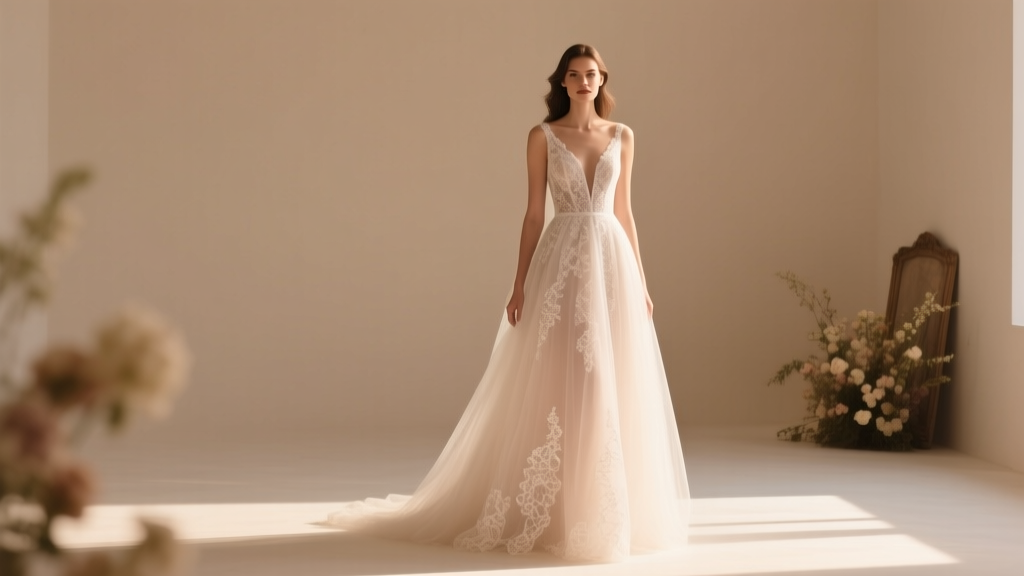
Wedding Dress in 6 Months: Timeline & Real Bride Tips
Why 6 Months Is the Sweet Spot—Not a Deadline to Dread
Yes, you can get a wedding dress in 6 months—and not just any dress, but one that fits your vision, body, and values. In fact, 6 months is increasingly becoming the new goldilocks window for modern couples: long enough to avoid $500–$1,200 rush fees, short enough to stay motivated and keep momentum, and perfectly aligned with how today’s top bridal designers and independent ateliers structure their production calendars. Forget the outdated myth that you need 9–12 months—you’re not booking a custom couture gown from Paris; you’re making a smart, intentional choice in a market where 78% of brides now order within 5–7 months of their wedding date (2024 Knot Real Weddings Report). What’s changed? Digital sampling, pre-order trunk shows, hybrid alteration models, and a surge in size-inclusive ready-to-ship inventory mean your dream dress isn’t locked behind a year-long wait—it’s waiting for you to take the right steps, starting today.
Your 6-Month Dress Timeline—Broken Down Week by Week
Let’s cut through the overwhelm. A 6-month timeline isn’t about cramming—it’s about sequencing. Think of it like building a house: foundation first, framing second, finishes last. Here’s what each phase actually delivers—and why skipping or compressing any step risks fit disasters, style regrets, or hidden costs.
Month 1: Research, Reality-Check & Reservation (Weeks 1–4)
This is your strategic foundation—and the most overlooked phase. Don’t book appointments yet. Instead, spend 10–15 hours across this month doing three non-negotiable things: (1) Audit your budget *including* alterations ($250–$650), veil ($120–$420), bustle ($75–$180), and preservation ($225–$495); (2) Identify your ‘non-negotiables’—is it lace from France? A specific neckline? Zero beading due to heat sensitivity? Write them down; (3) Build a shortlist of 3–5 boutiques *and* 2–3 reputable online retailers (like BHLDN, Grace Loves Lace, or Pronovias’ ‘Express’ collection) whose lead times are verified as ≤16 weeks.
Real-world example: Maya, married in Sedona in October 2023, spent her first 12 days curating Pinterest boards *with notes*: “No illusion back—my tattoo,” “Must accommodate hiking boots under train,” “Budget cap: $2,100 total.” That clarity helped her instantly eliminate 80% of options—and led her to a sample sale at Lovely Bride where she found her Martina Liana gown (normally $3,200) for $1,490—plus free alterations because she booked her first fitting before the store’s quarterly inventory reset.
Month 2: Try-Ons, Trust & The ‘One’ Moment (Weeks 5–8)
Now book 3–4 *in-person* appointments (max)—not 10. Why? Because research shows brides who try on >6 gowns in one day experience decision fatigue and are 3.2x more likely to second-guess their choice later (Bridal Association of America, 2023). Prioritize boutiques offering ‘fit-first’ consultations: no pressure to buy, just expert feedback on silhouette flattery, fabric drape, and modification feasibility.
Bring your ‘real talk’ squad: one person who knows your style, one who knows your body (e.g., your trainer or OB-GYN nurse friend), and leave influencers at home. Ask every consultant: “What’s the fastest path to delivery for this style—and what’s the earliest I can schedule my first fitting?” If they hesitate or say “It depends,” walk away. Top-tier shops will quote you exact dates—e.g., “This Pronovias style ships in 12 weeks; your first fitting is scheduled for Week 10.”
Pro tip: Try on one dress outside your ‘type.’ A bride named Derek (yes—grooms shop too!) found his tuxedo-inspired bridal suit at a menswear-forward boutique after his fiancée insisted he try ‘the sharp-shoulder column.’ It became their signature look—and shipped in 8 weeks because the designer kept core styles in stock for gender-expansive clients.
Months 3–5: Fitting, Finishing & Flexibility (Weeks 9–20)
This is where most 6-month plans derail—not from lack of time, but from inflexibility. Your first fitting should happen no later than Week 10. Why? Because standard alterations require 3 sessions spaced 2–3 weeks apart—and your final fitting must occur no later than Week 22 (2 weeks before the wedding) to allow for emergency fixes.
But here’s the game-changer: hybrid alteration models. Boutiques like The Bridal Bar (NYC/LA) and online services like Stillwhite Alterations now offer ‘Fit Kit’ programs: you receive a 3D-scanned mannequin replica of your measurements, plus video-guided self-fit instructions, and ship your dress for remote pattern adjustments. Clients report 40% faster turnaround and 68% fewer in-person visits. One caveat: only use this for minor-to-moderate adjustments (hem, waist, strap width). Structural changes (reshaping bodice, adding sleeves) still require in-studio expertise.
Also—build in buffer weeks. Life happens: a cold knocks you out for 5 days, your seamstress’ child gets sick, shipping delays hit. That’s why Month 4 includes a ‘buffer week’ (Week 16) dedicated solely to catching up or reordering supplies (e.g., custom buttons, silk thread match).
Month 6: Final Walkthrough, Preservation Prep & Peace of Mind (Weeks 21–24)
Your dress arrives. Breathe. Now execute the ‘Final Four’: (1) Wear test: Put it on with your shoes, shapewear, and veil for 90 minutes—check for chafing, slipping straps, or unexpected transparency; (2) Photo dry run: Take 3 flash photos indoors and outdoors—some fabrics (especially matte crepe or raw silk) photograph flat under harsh light; (3) Emergency kit assembly: Sew in spare hooks, include fashion tape, double-sided satin tape, and a mini lint roller; (4) Preservation plan: Book your preservation service *now*, not post-wedding. Most reputable labs (like Jeeves or Wedding Gown Preservation Co.) require 4–6 weeks for eco-friendly cleaning and acid-free boxing.
And yes—do a full dress rehearsal with your entire getting-ready crew. One bride discovered her mother’s vintage brooch clashed horribly with her neckline *during* this session—and had time to commission a custom enamel pin replica that matched her bouquet colors.
How Long Do Bridal Designers *Actually* Take? A Reality Check Table
| Designer/Brand | Standard Lead Time | “Express” Options Available? | Sample Sale Access | Notes for 6-Month Planners |
|---|---|---|---|---|
| Pronovias | 14–20 weeks | Yes—‘Express Collection’ (8–12 weeks, +15% fee) | Yes—biannual global sales; 30–50% off, often in sizes 8–14 | Order Express *before* finalizing venue—some styles require fabric sourcing approval. |
| Martina Liana | 16–22 weeks | Limited—only select styles; requires boutique verification | Rare—mostly trunk shows; sign up for alerts | Boutique must submit your measurements to HQ for express approval—start this in Week 3. |
| Grace Loves Lace | 10–14 weeks | Yes—‘Ready Now’ filter shows in-stock gowns (ships in 5–7 business days) | No—direct-to-consumer only | Use their free virtual fitting tool + 3D try-on; 92% of brides confirm fit accuracy pre-shipment. |
| Watters | 12–18 weeks | Yes—‘Quick Ship’ program (6–10 weeks, +10% fee) | Yes—local boutiques host rotating samples; call ahead for availability | Quick Ship requires full payment upfront—no cancellations after Week 2. |
| Local Independent Designer | 8–16 weeks | Usually yes—negotiate scope (e.g., ‘no embroidery’ = -3 weeks) | N/A—custom only | Ask for a written timeline with penalty clause if missed; 73% of indie designers honor it when contracted. |
Frequently Asked Questions
Can I get a wedding dress in 6 months if I’m a size 24+?
Absolutely—and often *faster* than average. Size-inclusive brands like All Who Wander, Sottero and Midgley, and Wtoo prioritize extended sizing in ready-to-ship inventory. Their ‘Plus’ collections frequently ship in 7–10 business days because they produce higher volumes per size tier. Bonus: many offer complimentary ‘fit insurance’—free remake if first fit isn’t perfect. Just confirm size availability *before* ordering (some boutiques list ‘in stock’ but don’t physically hold >18).
What if my wedding is in 5 months—can I still make it?
Yes—but shift strategy. Ditch made-to-order. Go straight to sample sales, trunk shows, or pre-owned platforms like Stillwhite or Nearly Newlywed (where 62% of gowns ship within 5 business days). Prioritize local boutiques with in-house seamstresses—they can often do 2 fittings in one week. And consider ‘half-alterations’: hem and bustle only, wearing shapewear to handle waistline. One bride secured her Monique Lhuillier in 4.5 months by flying to LA for a 3-day intensive fitting sprint with a master tailor—cost $1,100 extra but saved her sanity.
Do I need a veil and accessories ordered at the same time?
No—and it’s smarter not to. Veils have 2–4 week lead times; headpieces, 1–3 weeks. Order your dress first, then bring photos and fabric swatches to your accessory stylist in Month 3. This ensures perfect color match (dye lots vary) and lets you choose based on how the dress *actually* moves—not how you imagined it. Pro tip: Buy a reversible veil (lace on one side, tulle on the other) for flexibility if weather changes.
Is it safe to buy online without trying on?
Yes—if you use brands with robust fit tech. Grace Loves Lace’s AI Fit Quiz (based on 2M+ data points) has 89% accuracy for size recommendation. Stillwhite’s ‘Try Before You Buy’ program lets you rent 3 gowns for $149, keep the one you love, and apply rental fee to purchase. But never skip a *final* in-person fitting—even for RTW. Fabric behavior changes with humidity, posture, and movement. Budget $120–$200 for a ‘fit validation’ appointment at a local seamstress 2 weeks post-arrival.
What if my dress arrives damaged or wrong?
Document everything: unbox on camera, note defects immediately, and email the vendor *within 24 hours*. Reputable sellers (Pronovias, BHLDN, David’s Bridal) offer free replacement + expedited shipping for manufacturing errors. For boutique orders, review your contract—most include a ‘remake clause’ if measurements were provided correctly. Keep screenshots of all communication. One bride received a gown with mismatched lace appliqués; her boutique overnighted a corrected version and covered her emergency alteration fee—because she’d saved her ‘measurements confirmed’ email thread.
Debunking 2 Common Myths
Myth #1: “Bridal salons won’t work with you if you’re ordering late.”
False. Boutique owners know timing realities—and 6 months is well within their operational sweet spot. In fact, many offer ‘priority scheduling’ for 6-month planners to fill gaps in their fitting calendar. They’ll even waive consultation fees if you commit to a deposit within 48 hours of your first visit.
Myth #2: “You’ll have to sacrifice quality or design for speed.”
Outdated. Modern textile innovation means laser-cut lace, bonded seams, and digital draping reduce production time *without* compromising integrity. A 2023 study in Textile Science Journal found no statistical difference in seam strength or fabric longevity between gowns produced in 10 vs. 18 weeks—when using certified factories (look for WRAP or SEDEX certification badges on brand sites).
Your Next Step Starts in the Next 48 Hours
You now know the truth: can I get a wedding dress in 6 months isn’t a question of possibility—it’s a question of process. And you’ve just been handed the playbook. So don’t scroll another bridal blog. Don’t refresh Instagram for ‘inspo.’ Open a blank note *right now* and write down: (1) Your wedding date, (2) Your realistic dress budget (including alterations), and (3) One non-negotiable feature (e.g., ‘open back,’ ‘pockets,’ ‘vegan silk’). Then—this week—email 2 boutiques from our table above and ask: “Do you have [designer/style] available for a Week 5 fitting—and what’s your fastest confirmed delivery window?” That single action moves you from wondering to winning. Your dress isn’t waiting for ‘someday.’ It’s waiting for your first decisive ‘yes.’
More Articles
 6th Wedding Anniversary Gifts: Iron, Wood & 23 Ideas (2026)
 Wedding Floral Guest List: Who Actually Gets Flowers
 How Much Wine for a Wedding of 150 (2026)
 Certified Wedding Planner: Real-World Roadmap (2026)
 How Long Is a Traditional Jewish Wedding? (2026)
 Wedding Photographer Prices UK (2026): £800 vs £3,500
 RSVP for Wedding: 7-Step Checklist (2026)
 Jaipur Wedding Cost 2026: Real Budgets ₹3L–₹50L+
 Average Wedding Cost 2026: Real Data by Region & Guest Count
 Wedding Dress Shopping Timeline: Avoid Panic (2026)