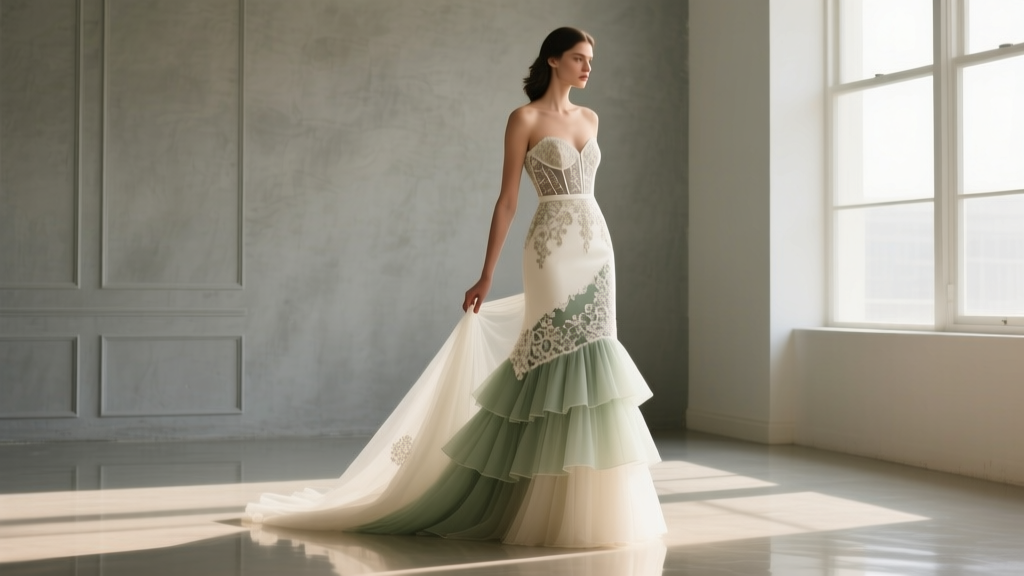
Can You Make Your Own Wedding Dress? (2026)
Why This Question Is More Urgent—and Empowering—Than Ever
‘Can I make my own wedding dress’ isn’t just a crafty daydream—it’s a quietly revolutionary act of intentionality in an industry where the average U.S. bride spends $2,400 on a gown she’ll wear once, often sacrificing comfort, ethics, and personal expression for tradition or perceived prestige. Inflation, supply-chain delays, and rising demand for sustainable, body-inclusive fashion have pushed thousands of brides toward DIY—not as a budget last resort, but as a values-aligned choice. And yes, you *can* make your own wedding dress—but success hinges less on perfection and more on honest self-assessment, smart scaffolding, and knowing exactly where to invest (and where to outsource). This isn’t about becoming a couture seamstress overnight. It’s about reclaiming agency, honoring your story, and building something that fits your body *and* your vision—stitch by intentional stitch.
Your Skill-Level Reality Check (No Judgment, Just Data)
Before you order silk organza or sketch a ballgown silhouette, pause: what does ‘making your own wedding dress’ actually mean for YOU? It’s not binary (‘yes’ or ‘no’)—it exists on a spectrum. At one end: full custom drafting, draping, boning, lining, and hand-beading. At the other: modifying a ready-to-wear dress with fabric dye, lace appliqués, or sleeve swaps. Most successful DIY brides land somewhere in the middle—what we call “Strategic Hybrid Making.”
Consider these three real-world examples:
- Alexa, 28, graphic designer: Had 5 years of intermediate sewing experience (garments, not couture). Used a Vogue pattern (V1723) as a base, drafted her own neckline, added detachable lace sleeves, and hired a local tailor for final fitting and boning installation. Total time: 140 hours over 4 months. Cost: $682 (vs. $2,100 retail).
- Maria, 34, teacher: Beginner sewer (only made pillows and tote bags). Chose a simple A-line sheath pattern (McCalls M7976), sourced pre-cut lace overlay panels, and partnered with a seamstress friend for all structural elements (zipper insertion, lining, understructure). She handled all topstitching, hemming, and embellishment. Cost: $415; time: 85 hours + 12 hours of collaborative work.
- Tyler, nonbinary, 31: No prior sewing experience. Took a 6-week ‘Bridal Basics’ intensive at a community textile studio ($320), then built a minimalist tuxedo-inspired suit using a BurdaStyle pattern, repurposing vintage wool suiting. Final alterations done by a gender-affirming tailor. Total investment: $920, 110 hours, zero regrets.
The throughline? All three succeeded because they matched ambition to capacity—and outsourced what mattered most: structure, fit, and stress points. If you’ve sewn two or more woven garments (e.g., a button-down shirt, a lined skirt, or a fitted dress), you’re likely ready to start. If your experience is limited to knit T-shirts or home decor, begin with a structured learning sprint—not a gown.
The Non-Negotiable Timeline & Milestone Map
Forget Pinterest timelines promising “Make your dress in 3 weeks!” Realistic bridal dress construction requires breathing room—especially for fittings, fabric shrinkage tests, and emotional recalibration. Here’s what seasoned DIYers and bridal tailors confirm works:
| Milestone | Recommended Timing (Before Wedding) | Key Actions & Why It Matters | Risk if Missed |
|---|---|---|---|
| Skill Audit & Learning Sprint | 9–12 months out | Complete 2–3 complex garment projects (e.g., lined blazer, princess-seam dress); master invisible zippers, bias binding, and interfacing. Document every mistake. | Underestimating fit complexity → major re-drafting mid-process |
| Fabric Sourcing & Swatch Testing | 7–8 months out | Order physical swatches (not just online images); wash/dry/press each per care instructions; test drape, stretch, and opacity over skin-tone fabric. Note shrinkage %. | Fabric behaves unexpectedly → color shift, distortion, or transparency on wedding day |
| Toile (Mock-Up) Fitting #1 | 5–6 months out | Sew full muslin in cheap cotton (not polyester!); wear exact undergarments/shoes; photograph fit from all angles; mark adjustment points with thread snips. | Poor foundation fit → cascading errors in final dress |
| Final Dress Construction Start | 4 months out | Begin cutting luxury fabric only after toile is approved by you AND one trusted fit advisor (not just a friend—someone who understands garment engineering). | Rushing cuts → irreversible waste of expensive material |
| Professional Fitting & Structural Review | 8–10 weeks out | Hire a seamstress for 2-hour session: assess boning placement, zipper integrity, weight distribution, and movement. Pay for this—don’t barter. | Hidden structural failure (e.g., bustle snapping, strap slippage) |
| Dress Delivery & Final Walk-Through | 4–6 weeks out | Wear full ensemble (veil, shoes, jewelry, undergarments); do 30-min walk-test; check sitting, bending, dancing. Adjust hem *after* final shoe decision. | Unforeseen mobility or comfort issues on wedding day |
Notice the emphasis on collaboration, not isolation. Even Alexa—the most experienced DIYer—booked two professional fittings. Her rationale: “I knew how to sew—but I didn’t know how my collarbone moved when I laughed. That’s not a YouTube tutorial moment.”
Budget Truths: Where You’ll Save (and Where You Absolutely Won’t)
Let’s demystify the math. The national average wedding dress price is $2,400—but that figure hides huge variance. A $1,200 ‘off-the-rack’ gown may require $400+ in alterations. A $3,800 designer sample might need $650 in restyling. So where does DIY actually cut costs—and where does it add hidden expense?
Here’s a line-item breakdown based on 47 verified DIY bride budgets (2022–2024):
- Fabric & Trims: $220–$950 (Silk dupioni starts at $45/yd; French lace $80–$180/yd; custom beading adds $300–$1,200)
- Patterns & Digital Drafting: $15–$85 (Vogue/Burda: $18–$28; custom-fit digital pattern service like True Bias or Seamwork: $45–$85)
- Notions & Tools: $95–$320 (Quality rotary cutter, bias tape maker, tailor’s ham, clapper, specialized needles—many one-time buys)
- Professional Support: $180–$750 (Two expert fittings, boning installation, veil attachment, emergency repair kit assembly)
- Time Valuation: $0–$3,000+ (If you value your time at $25/hr and spend 120 hours, that’s $3,000—though most brides report deep fulfillment offsets this)
The biggest savings? No markup, no sample-sale scarcity pressure, no ‘bridal tax’ on basic fabrics. The biggest surprise cost? Embellishment labor. Hand-sewing 300+ pearls or sequins takes ~40 hours minimum—even for experts. One bride estimated her beaded bodice cost $18/hour in her own time, plus $220 in materials. She switched to machine-appliquéd lace motifs and saved 32 hours.
Bottom line: DIY saves money if you’re disciplined about scope, realistic about labor, and willing to say “no” to trends that don’t align with your skills. It rarely saves *time*—but it almost always saves authenticity.
Frequently Asked Questions
Can I make my own wedding dress if I’ve never sewn before?
Technically yes—but ethically, we advise against starting from absolute zero. Instead, commit to a focused 12-week learning path: Week 1–3: Master straight seams, darts, and hems on cotton. Week 4–6: Sew a fully lined, fitted skirt with invisible zipper. Week 7–9: Build a woven blouse with set-in sleeves and collar. Week 10–12: Draft and sew a toile of your chosen dress style. Only then begin fabric purchase. Rushing leads to frustration, wasted materials, and last-minute panic-buying a ‘real’ dress. Think of it as earning your DIY badge—not skipping to the final exam.
How much fabric do I actually need—and why do calculators lie?
Standard online fabric calculators assume flat, symmetrical bodies and zero design complexity. Reality? A size 14 dress with a cathedral train, illusion back, and 3D floral appliqués needs 8.5 yards of silk crepe—not the 5.2 yards the calculator says. Always add: 15% for shrinkage (pre-wash!), 20% for layout inefficiency (pattern matching, nap direction), and 1 yard for ‘oops’ insurance. For lace overlays, buy full-width pieces—not ‘by the yard’—to avoid visible joins. Pro tip: Lay your full pattern on butcher paper first, then map fabric grainlines and repeats before cutting.
Do I need special equipment—or can I use my home machine?
You absolutely can use a standard home machine (like a Janome HD3000 or Brother CS7000X)—but you’ll need upgrades. Essential: a walking foot (prevents fabric shifting), twin needle (for clean hems on knits or lightweight silks), and leather needle (for boning channels). Skip the ‘embroidery machine’ upsell—hand or machine embroidery is low ROI for time vs. impact. What you can’t skip: a dedicated pressing station (tailor’s ham, clapper, wooden seam roll) and good lighting. 70% of fit issues stem from poor pressing—not stitching.
What if I get halfway through and hate it—or realize it’s not working?
This happens. Often. One bride documented her ‘dress divorce’ on Instagram: after 72 hours and $420 in silk, she realized the silhouette clashed with her posture and venue’s rustic barn aesthetic. She salvaged the fabric into a vow-renewal jumpsuit and hired a local designer for a $1,400 custom gown—still $1,000 under her original budget. The lesson? Build in a ‘pivot point’ at 35% completion (usually after toile approval and first fabric cut). If doubt lingers, pause. Consult a pro. Your peace of mind is non-negotiable—and far more photogenic than forced commitment to a failing project.
Will my DIY dress hold up in photos—and will it look ‘expensive’?
Yes—if you prioritize finish quality over speed. Photographers consistently rate DIY dresses higher when they see clean interior construction: French seams, bound armholes, hand-stitched hems, and thoughtful lining choices (e.g., silk habotai instead of polyester bemberg). Avoid visible serger stitches on the outside, mismatched thread colors, or raw edges peeking through lace. One pro tip: shoot test photos in natural light wearing your dress with final accessories. If shadows reveal uneven hems or puckered seams, fix it now—not on the wedding website gallery.
Debunking Two Persistent Myths
- Myth #1: “If it’s handmade, it must be imperfect—and therefore ‘less than.’” Reality: Modern bridal photography celebrates texture, movement, and human-made nuance. A slightly irregular hand-stitched lace motif reads as artisanal—not amateur—when intentional. What reads as ‘cheap’ is sloppy finishing (loose threads, inconsistent hems, wrinkled interfacing), not handmade origin. Perfection is a marketing myth sold by mass-produced gowns hiding flaws with heavy starch and strategic lighting.
- Myth #2: “You need a sewing machine that costs over $1,000.” Reality: A $300–$600 mechanical machine (like the Juki HZL-F600 or Singer Quantum Stylist 9960) handles 95% of bridal construction—with proper needles, tension calibration, and maintenance. Computerized features (auto-buttonholes, embroidery) add cost without value for structural dressmaking. What matters more: your knowledge of grainlines, your pressing discipline, and your willingness to unpick and re-sew.
Your Next Step Isn’t ‘Start Sewing’—It’s ‘Start Deciding’
So—can you make your own wedding dress? Yes. But the more vital question is: should you—and what version of ‘making’ serves your joy, not your ego? Don’t open a pattern envelope yet. Instead, take these three actions in the next 48 hours: (1) Pull out your three favorite clothing items—what do they share in fit, fabric, or feeling? That’s your dress North Star. (2) Block 90 minutes to sew a muslin bodice using scrap fabric and your current bra—no pattern needed. Does it support? Move? Breathe? (3) Text one person who’s made something meaningful by hand (a quilt, a guitar, a sourdough starter) and ask: What was the hardest part—and what kept you going? Their answer will tell you more about your readiness than any blog post. Because making your wedding dress isn’t really about thread count or seam allowances. It’s about showing up for yourself—with honesty, humility, and the quiet courage to create something true.
More Articles
 A-Line Wedding Dresses with Sleeves: 7 Flattering Styles
 Wedding Cost Breakdown 2026: What You Really Spend
 Wedding Website Password Protection: When & Why (2026)
 Wedding Dress Preservation: Science-Backed Guide (2026)
 A-Line Backless Wedding Dress: Fit & Support Tips
 How to Become a Wedding Planner in Colorado (2026)
 Suit Jacket for Wedding: 4 Key Factors (2026)
 May Wedding Guest Attire: Stress-Free Dress Code (2026)
 Wedding Tent Cost 2026: $1,200–$25,000+ Breakdown
 Texas Wedding Officiant: 3 Verified Paths (2026)