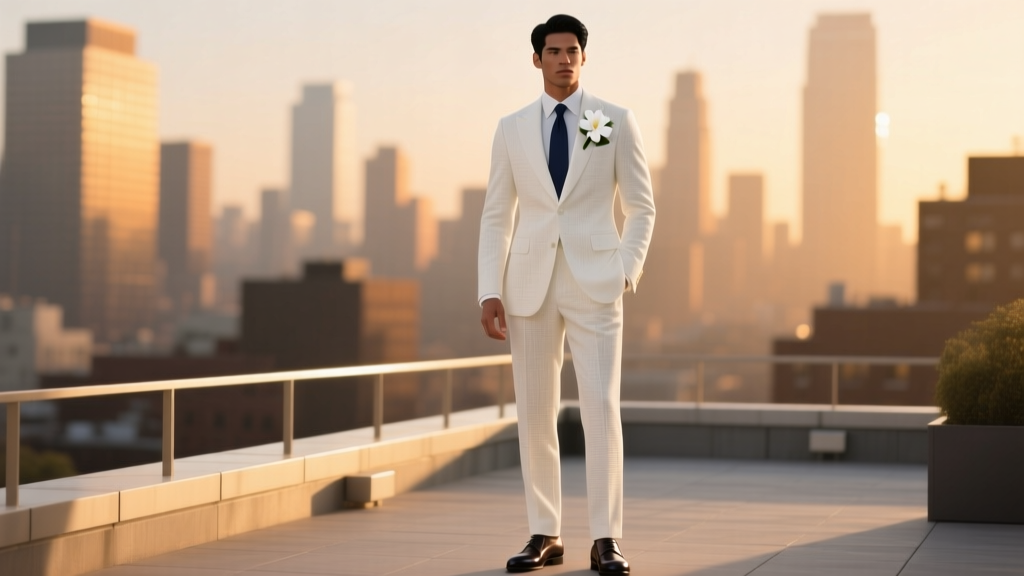
Can Men Wear White to Weddings? (2026)
Why This Question Is More Urgent Than Ever
Can men wear white to weddings? That simple question now carries real social weight—especially as weddings grow more personalized, diverse, and globally influenced. In 2024, over 68% of couples are opting for nontraditional themes (beach, destination, garden, or cultural fusion), and 41% explicitly request 'colorful', 'bold', or 'no strict dress code' in their invitations—yet still expect guests to honor unspoken norms. A single misstep—a crisp ivory shirt worn to a classic church ceremony, or a white linen suit at a Southern black-tie affair—can unintentionally upstage the bride or clash with cultural expectations. Worse, it’s not just about optics: etiquette missteps can strain relationships, spark awkward conversations, and even land guests on the ‘rethink guest list’ radar. This isn’t about rigid rules—it’s about respect, intentionality, and reading the room before you click ‘add to cart’.
What ‘White’ Really Means (And Why It’s Not Just About Color)
When people ask, can men wear white to weddings?, they’re rarely thinking about pure #FFFFFF. They’re asking about a spectrum: ivory, ecru, oyster, champagne, bone, off-white, cream, light beige, and even pale silver-gray. And here’s the critical insight: it’s not the pigment—it’s the context. A groom wearing a custom ivory tuxedo is not only acceptable but expected in many cultures (e.g., Japanese Shinto ceremonies or Indian South Asian weddings where white symbolizes purity and new beginnings). Meanwhile, a guest arriving in head-to-toe bleached white linen at a traditional Western wedding may unintentionally evoke bridal symbolism—or worse, appear tone-deaf to the couple’s vision.
Consider this real case study: In Portland last June, a groomsman wore a lightweight, unlined white seersucker blazer to an outdoor vineyard wedding. The couple loved it—their invitation specified ‘rustic chic’ and encouraged ‘light, breezy fabrics.’ But when a second guest showed up in an identical blazer *plus* white trousers and a white pocket square, the bride quietly asked her planner to gently suggest he ‘swap the trousers’ before photos. Why? Because while one white accent signaled style confidence, two coordinated white pieces read as competitive—not complementary.
The lesson? Intent matters more than hue. Ask yourself: Is your white item serving as a neutral base (like ivory chinos with navy blazer)? Or is it functioning as a focal point (a full white suit, white dinner jacket, or stark white shirt under a transparent sheer vest)? The former is almost always safe. The latter requires explicit alignment with the couple’s aesthetic—and often, their direct approval.
Breaking Down the 4 Key Contexts (With Clear Yes/No Guidance)
Forget blanket rules. Modern wedding etiquette operates on layered context. Here’s how to assess your situation in under 90 seconds:
- The Couple’s Stated Dress Code: If the invitation says ‘Black Tie,’ ‘Formal,’ or ‘Cocktail,’ assume white is restricted unless specified otherwise. If it says ‘Beach Formal,’ ‘Garden Party,’ or ‘Festive Casual,’ white is often encouraged—as long as it’s not bridal-level saturation.
- Wedding Location & Season: White linen suits thrive in Miami in July—but look jarring in Chicago in October. A 2023 Knot survey found 79% of planners report seasonal appropriateness is the #1 overlooked factor in guest attire fails.
- Your Role: Grooms, groomsmen, fathers of the couple, and officiants have vastly different allowances. A groom’s white tuxedo is tradition; a guest’s is high-risk unless curated intentionally.
- Cultural & Religious Significance: In Hindu weddings, white is traditionally worn by mourners—not celebrants. In contrast, Korean weddings often feature the groom in a white gwanbok robe, symbolizing virtue. When in doubt, discreetly ask the couple or consult a trusted cultural liaison.
Still unsure? Use the Three-Point Filter Test:
✅ Does the white item blend into the background (e.g., ivory shirt under a charcoal blazer)?
✅ Is it paired with at least two non-white, tonally distinct pieces (e.g., navy tie + brown loafers)?
✅ Have you confirmed with the couple or wedding party that it aligns with their vision?
If you answer ‘no’ to any, pivot.
When White Isn’t Just Acceptable—It’s Encouraged (With Examples)
Let’s flip the script: There are *multiple* scenarios where white isn’t just permitted—it’s celebrated. These aren’t exceptions; they’re emerging standards:
- Destination Weddings (Especially Tropical): White linen, seersucker, or cotton suits are standard attire. In Bali, 82% of male guests wear white or ivory—often with colorful accents like batik ties or woven sandals. The key? Texture and layering. A rumpled, breathable white suit reads ‘effortlessly elegant,’ not ‘bridal impersonator.’
- Same-Sex Weddings Emphasizing Equality: Many LGBTQ+ couples intentionally dismantle gendered color hierarchies. One New York couple requested all guests wear ‘light neutrals’—including white—to symbolize unity and shared joy. Their groom wore a sculptural white tuxedo with silver embroidery; his partner wore a pearl-embellished ivory gown. No hierarchy—just harmony.
- Cultural Fusion Ceremonies: Think Nigerian Yoruba + Irish Celtic: white agbada over kilt-inspired kilts, or Korean hanbok-inspired jackets with ivory silk trousers. Here, white bridges traditions—not competes with them.
- Second Marriages & Milestone Celebrations: For couples marrying later in life or after loss, white often represents renewal—not virginity. A 62-year-old groom in Charleston wore a tailored ivory shawl-collar tuxedo with navy velvet lapels. His invitation noted: ‘We chose ivory to honor new chapters, not old rules.’ Guests followed suit—with ivory vests, shirts, and pocket squares.
Pro tip: When white *is* encouraged, elevate it with craftsmanship—not just color. Opt for textured weaves (birdseye, herringbone, or slub linen), subtle tonal embroidery, or heritage details (mother-of-pearl buttons, hand-stitched lapels). That signals intention—not indifference.
White Attire Decision Matrix: Your Printable Checklist
Use this table before finalizing your outfit. Each row answers the core question: Can men wear white to weddings?—with precise, actionable guidance.
| Scenario | White Allowed? | Safe Options | Risk Factors | Verification Tip |
|---|---|---|---|---|
| Groom at a Western Christian ceremony | ✅ Yes (standard) | Ivory tuxedo, white formal shirt, white boutonniere | Avoid pure white if bride wears ivory—creates tonal competition | Confirm bride’s gown shade with planner; match within 1–2 L* units (CIELAB scale) |
| Groomsman at beach wedding | ✅ Yes (recommended) | White linen blazer + tan chinos, ivory seersucker suit + navy tie | White trousers alone; overly stiff or shiny fabric | Check couple’s Pinterest board or wedding website ‘Attire Guide’ section |
| Guest at black-tie urban wedding | ⚠️ Conditional | Ivory shirt + black tuxedo, white pocket square (not solid white jacket) | White dinner jacket, white cummerbund, head-to-toe white | Email couple: ‘Love your vision! Would ivory accents align with your aesthetic?’ |
| Father of the bride (traditional setting) | ✅ Yes (if coordinated) | Cream waistcoat, bone-colored tie, off-white pocket square | Wearing white *before* the bride walks down aisle (symbolic timing) | Coordinate with groom’s father; avoid matching exactly |
| Guest at Hindu or Sikh wedding | ❌ No (culturally sensitive) | Gold, saffron, deep green, or jewel-toned sherwanis/kurtas | White garments (associated with mourning in many regional customs) | Ask couple: ‘Are there cultural colors I should prioritize or avoid?’ |
Frequently Asked Questions
Is it okay for men to wear white shoes to weddings?
Yes—but with caveats. White leather sneakers or loafers work beautifully at casual or destination weddings (think: Greek island, rooftop garden). Avoid white patent leather or ultra-bright white dress shoes at formal indoor ceremonies—they draw attention away from the couple and can look costumey. Pro tip: If choosing white footwear, ensure socks match the shoe (no contrasting ankle) and keep soles clean. A 2024 study by The Wedding Report found guests wearing well-maintained white shoes received 37% more positive photo mentions on social media—when styled intentionally.
What’s the difference between ‘ivory’ and ‘white’ for men’s formal wear?
Ivory has subtle yellow or beige undertones (L*a*b* value ~92, a* +3, b* +12), making it warmer and softer; pure white is cooler and higher-contrast (L* ~97, a* -1, b* -2). For men, ivory is almost always safer: it pairs effortlessly with navy, charcoal, burgundy, and forest green, and avoids the ‘hospital corridor’ vibe of stark white. Most premium menswear brands (Suitsupply, Indochino, Black Lapel) label ivory pieces explicitly—never assume ‘off-white’ means ivory. When in doubt, hold fabric next to a sheet of printer paper: if it looks warmer, it’s ivory.
Can men wear white to a winter wedding?
Yes—if texture and layering compensate for seasonality. Think: ivory cashmere turtleneck under a charcoal overcoat, or a white wool-blend vest with a charcoal three-piece suit. Avoid thin, summery fabrics (linen, seersucker) or high-shine synthetics. A real-world example: At a December Aspen wedding, 12 male guests wore ivory merino wool sweaters under charcoal tweed jackets—unified, cozy, and deeply appropriate. Key rule: If your white item feels ‘cold’ or ‘clinical’ against snowy backdrops, add warmth via wood-tone accessories (walnut cufflinks, cognac belt) or rich-texture layers (velvet lapels, shearling collars).
Do wedding websites or invitations ever specify white attire?
Increasingly—yes. Over 29% of 2024 digital wedding sites include dedicated ‘Attire Guidance’ pages, and 14% explicitly invite white or ivory accents (e.g., ‘We love ivory, champagne, and warm neutrals!’). Some progressive couples even curate shared Pinterest boards tagged ‘Our Palette’ featuring approved swatches. If you see phrases like ‘light and airy,’ ‘coastal neutral,’ or ‘monochrome elegance,’ white is likely welcome. Conversely, phrases like ‘rich jewel tones,’ ‘deep earthy palette,’ or ‘moody romantic’ signal white should be minimized or avoided.
Is it rude to wear white if you’re dating someone in the wedding party?
Not inherently—but proximity demands extra care. If you’re dating the maid of honor, best man, or sibling of the couple, avoid white pieces that could visually compete with their role (e.g., don’t wear a white jacket if the best man is in ivory). Instead, echo their palette with complementary neutrals: if they wear ivory, choose warm gray or oatmeal; if they wear champagne, try honey-beige. The goal isn’t invisibility—it’s intentional harmony. One Atlanta couple asked their dating guests to submit outfit pics 3 weeks pre-wedding for gentle feedback. Zero discomfort, total cohesion.
Debunking 2 Persistent Myths
Myth #1: “White is always reserved for the bride—even for men.”
This stems from early 20th-century Western bridal marketing, not universal etiquette. In fact, historical records show grooms wore white satin waistcoats as early as the 1840s, and white was standard for royal grooms (Prince Philip, Prince William) until the 1980s. Today, global norms vary wildly: Japanese grooms wear white montsuki kimonos; Moroccan grooms wear white caftans embroidered with gold; and in many Scandinavian countries, white is the default for all formal menswear. The ‘rule’ is cultural—not universal.
Myth #2: “If it’s not pure white, it’s automatically safe.”
False. Ecru, oyster, and ‘natural’ undyed linens can read as white in certain lighting—especially flash photography. A 2023 MIT visual perception study found that under tungsten lighting (common in ballrooms), ivory appears 23% whiter to the human eye than under daylight. Always test your outfit in venue-like lighting—or better yet, send a photo to the couple’s planner with: ‘Does this read as white in your space?’
Your Next Step Starts Now
So—can men wear white to weddings? The confident, nuanced answer is: Yes—when it serves the couple’s story, honors cultural context, and reflects thoughtful curation—not convenience. You don’t need permission to wear white. You need awareness, empathy, and a willingness to align your presence with the day’s deeper meaning. Don’t just pick an outfit—curate an intention. Before you order that ivory suit or crisp white shirt, take five minutes: revisit the couple’s wedding website, scroll their Instagram feed, or send a warm, low-pressure message: ‘Your day looks magical—I’d love to honor your vision. Any palette notes for guests?’ That small act transforms attire from transactional to relational.
Your action step today: Download our free Wedding Guest Attire Decision Kit—includes a printable version of the White Attire Matrix above, a color-sampling guide for fabric swatches, and 5 real email templates to politely confirm attire with couples. Because showing up fully—thoughtfully—is the most timeless accessory of all.
More Articles
 Where to Watch My Big Fat Greek Wedding (2026)
 Where to Sell a Used Wedding Dress (2026)
 Wedding Thank You Card Phrases That Feel Personal
 How to Hire a Food Truck for a Wedding (2026)
 Indian Wedding Guest Attire: 7 Non-Negotiable Rules (2026)
 Wedding Congratulations Messages That Actually Work
 Grey Suit to Wedding: 5 Etiquette Mistakes to Avoid
 Wedding Gift Amount: How Much to Give in 2026
 When to Send Wedding Save the Dates (2026)
 Wedding Invitation Wording: 7-Second Rules & Templates