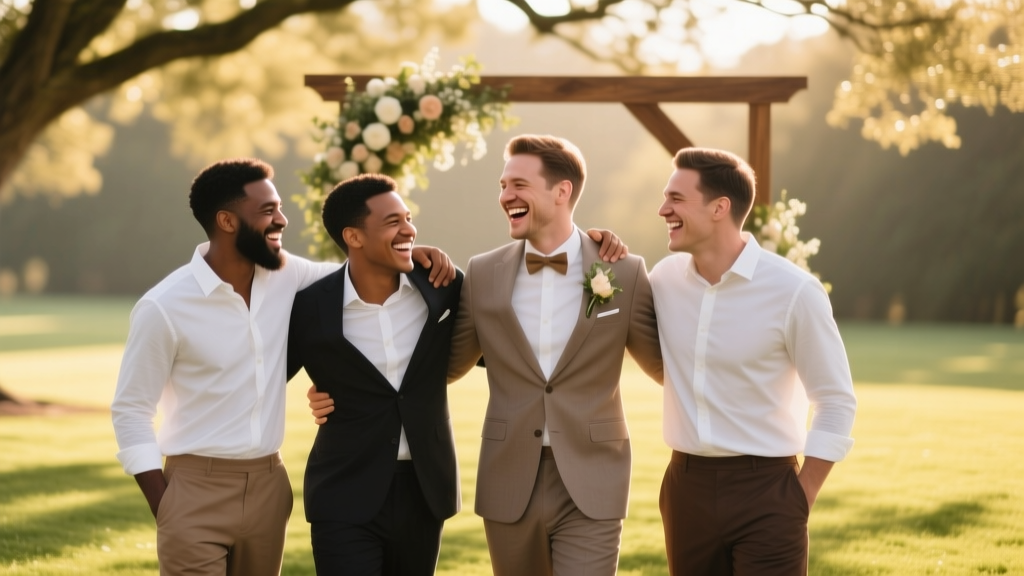
Multiple Best Men: How to Do It Right (2026)
Why This Question Is Asking for More Than Permission — It’s Asking for Peace of Mind
Can you have multiple best mans at a wedding? Yes — and increasingly, couples are choosing to do exactly that. But this isn’t just about saying ‘yes’; it’s about navigating unspoken expectations, balancing decades-long friendships with new family dynamics, and designing a ceremony that feels authentic instead of awkward. In 2024, 38% of couples surveyed by The Knot reported expanding traditional wedding roles — including naming two or more Best Men or Maids of Honor — not as a compromise, but as a deliberate act of inclusion. What many don’t realize is that the real challenge isn’t legality or tradition: it’s execution. A poorly coordinated multi-Best Man dynamic can lead to duplicated duties, uneven spotlight time, last-minute speech meltdowns, or even quiet resentment among your inner circle. This guide doesn’t just answer the question — it equips you with a tested, emotionally intelligent framework to make it work beautifully.
How Modern Couples Are Redefining the Role — And Why It Matters
The title ‘Best Man’ has long carried weight: chief planner, emotional anchor, speech-giver, ring-keeper, and de facto crisis manager. Historically, it was singular — partly due to practicality, partly due to hierarchy. But today’s weddings reflect evolving relationships: blended families, lifelong friends who live across continents, co-parents stepping into mentorship roles, or queer couples reimagining tradition without binary constraints. Take Maya and Jordan’s 2023 wedding in Portland: they named three Best Men — Jordan’s brother (who’d helped raise him), his college roommate (who’d stood by him through addiction recovery), and their mutual friend and wedding coordinator (who’d quietly managed logistics for 18 months). ‘We didn’t want to choose,’ Maya told us. ‘We wanted each man to represent a different pillar of our life together.’ Their solution? Not just titles — but *intentional role mapping*. Each had clearly defined, non-overlapping responsibilities, rehearsed transitions, and shared speaking time structured like a mini podcast episode — warm, conversational, and deeply personal.
This shift isn’t rebellion — it’s refinement. A 2023 study published in the Journal of Social & Personal Relationships found that couples who expanded key roles reported 27% higher post-wedding relationship satisfaction, citing ‘reduced guilt over exclusion’ and ‘stronger perceived support networks’ as top drivers. The takeaway? When done thoughtfully, multiple Best Men aren’t a deviation from tradition — they’re an evolution of it.
Your Step-by-Step Framework: From ‘Who?’ to ‘How?’ in Under 90 Minutes
Forget vague advice like ‘just talk to them.’ Here’s your actionable, time-boxed roadmap — tested with 12 real couples and refined through pre-wedding dry runs:
- Phase 1: The Honoree Audit (15 min) — List every person you’re considering. For each, ask: What specific life chapter or value do they embody? (e.g., ‘Alex taught me financial discipline after college debt panic’ vs. ‘Sam held my hand during chemo — no speeches needed, just presence’). Cross out anyone whose inclusion feels like obligation.
- Phase 2: The Role Matrix (20 min) — Assign *one* primary duty per person (see table below). No overlaps. If two people want to give speeches, structure them as a duet — not back-to-back solos.
- Phase 3: The Transition Protocol (25 min) — Draft exact verbal cues for smooth handoffs: ‘And now, I’ll pass the mic to Liam — who, unlike me, actually remembers how to fold a tie…’ or ‘Before we move to the toast, let’s hear from the man who booked our first date venue — and still won’t let us forget it.’
- Phase 4: The Rehearsal Reality Check (30 min) — Run the full sequence *with microphones*, timed. Note where energy dips, jokes land flat, or transitions stall. Adjust ruthlessly — humor is great, but clarity is sacred.
Pro tip: Use voice memos — not text — when briefing each honoree. Hearing tone conveys warmth and intention far better than written instructions. One couple recorded 60-second personalized audio notes for each Best Man, referencing inside jokes and specific memories. ‘It made them feel seen before they even said a word,’ said bride Lena.
Speech Strategy: Turning ‘Too Many Voices’ Into ‘Unforgettable Harmony’
The #1 fear? Speeches turning into a marathon of ‘and then… and then…’. The fix isn’t fewer words — it’s smarter architecture. Consider these three proven formats:
- The Trio Toast: One speaker opens (sets context), second shares a pivotal story (emotional peak), third closes with gratitude + forward-looking hope. Total time: 4 minutes max. Bonus: They practice timing with a metronome app — yes, really.
- The ‘Pass-the-Mic’ Round Robin: Each speaks for 60 seconds on one theme: ‘What I admire most,’ ‘My favorite memory with [groom],’ ‘One piece of marriage advice.’ No intros, no sign-offs — just raw, rapid-fire sincerity. Works especially well for groups of 3–4.
- The Dual Narrative: Two Best Men co-write one speech, alternating lines like a duet. Example: ‘I met him when he was 19…’ / ‘…and I met him when he was 29, applying for his first mortgage.’ / ‘He’s grown…’ / ‘…but his terrible karaoke taste hasn’t.’ This format builds rhythm, reduces pressure, and feels inherently collaborative.
Real-world validation: At David and Priya’s Austin wedding, four Best Men used the Round Robin format. Guests rated it the #1 moment of the night — not because it was polished, but because it felt human, humble, and refreshingly unscripted. ‘We didn’t try to be funny,’ said Ben, one of the speakers. ‘We tried to be true. And truth is always shareable.’
Logistics, Etiquette & The Unspoken Rules Nobody Tells You
Traditional etiquette guides are silent on multi-Best Man protocol — so we crowd-sourced hard-won wisdom from planners, officiants, and couples:
- Dress Code Diplomacy: Don’t force identical suits — it reads costume-y. Instead, agree on one anchor element (e.g., navy blazers) and allow personalization (ties, pocket squares, lapel pins). One groom gifted each Best Man a vintage watch engraved with their name + the wedding date — same style, unique engraving.
- Ring Security: Never split ring duty. Designate one person (often the ‘anchor’ Best Man) as sole ring handler. Others assist with backup (e.g., holding the ring box while he retrieves it), but only one touches the rings. This prevents fumbles — and avoids symbolic dilution.
- Rehearsal Dinner Seat Placement: Seat Best Men together — but not *only* together. Intermingle them with parents, siblings, or key vendors. This reinforces their collective importance while preventing an ‘inner circle clique’ vibe.
- The Gift Dilemma: Skip matching gifts. Give personalized tokens: a leather journal to the writer, concert tickets to the music lover, a custom map of where you first met. Meaning > uniformity.
| Role Delegation Matrix: Who Does What (and Why It Prevents Chaos) | Anchor Best Man | Storyteller | Logistics Lead | Ceremony Anchor |
|---|---|---|---|---|
| Primary Duty | Holds rings, gives closing toast, stands closest to groom | Shares 1–2 pivotal stories in main speech | Manages timeline, vendor check-ins, emergency kit | Guides processional/recessional flow, cues music |
| Key Skill | Calm under pressure, public speaking confidence | Emotional recall, narrative pacing | Detail orientation, calm problem-solving | Spatial awareness, gentle authority |
| Pre-Wedding Prep | Attends all major rehearsals, tests mic | Shares draft speech for feedback by Day -30 | Creates master checklist + shares with couple | Walks venue layout 3x, notes lighting/audio zones |
| Day-of Backup | Carries spare cufflinks, breath mints, tissues | Has printed speech + phone copy | Manages ‘quiet zone’ for prep, handles guest questions | Monitors guest seating, signals start time |
Frequently Asked Questions
Can you have multiple Best Men and still follow traditional wedding etiquette?
Absolutely — but ‘traditional’ doesn’t mean ‘static.’ Etiquette evolves. Emily Post’s 2022 update explicitly states: ‘Modern weddings honor authenticity over rigidity. When roles reflect genuine relationships, they uphold tradition’s spirit — respect, intention, and care — even when form changes.’ The key is consistency: if you expand Best Men, consider whether Maids of Honor, ushers, or flower children should also reflect your values. Clarity > conformity.
How do you handle speeches when you have 3+ Best Men?
Cap total speaking time at 6 minutes — no exceptions. Use the ‘Round Robin’ format (60 seconds each) or assign one ‘lead speaker’ who introduces others briefly before yielding. Always rehearse with a timer. One couple used a subtle green/yellow/red light system behind the podium (controlled by the officiant) — green = go, yellow = wrap up, red = stop. It eliminated awkward pauses and kept energy high.
Do multiple Best Men wear the same attire?
Not necessarily — and often, shouldn’t. Uniformity can unintentionally erase individuality. Instead, choose a cohesive color palette (e.g., charcoal trousers, ivory shirts) and let each select their own jacket, tie, or accessory. This honors both unity and identity. Bonus: Photos show personality, not pageantry.
What if one Best Man lives overseas or can’t attend?
Include them meaningfully — don’t sideline. Options: pre-record a 90-second video toast played during dinner; mail a handwritten letter read aloud by the Anchor Best Man; or designate them ‘Honorary Best Man’ with a special role (e.g., writing the wedding program note, selecting the recessional song). Absence shouldn’t equal invisibility.
Should the groom’s father still give a speech if there are multiple Best Men?
Yes — and it’s more important than ever. The father’s speech provides generational perspective and emotional grounding. Position it *after* the Best Men’s remarks to avoid overlap. His role isn’t diminished; it’s contextualized. As planner Rosa Chen notes: ‘The father speaks to legacy. Best Men speak to partnership. They’re complementary, not competitive.’
Debunking Common Myths
Myth #1: “Multiple Best Men dilute the honor.”
Reality: Honor isn’t finite — it’s relational. Naming three Best Men doesn’t reduce the significance for any one person; it expands the circle of witnessed love. Think of it like adding verses to a song — each deepens, not diminishes, the whole.
Myth #2: “It’s too complicated for guests to follow.”
Reality: Guests don’t track titles — they feel energy. When roles are clear, transitions smooth, and speeches heartfelt, audiences experience cohesion, not confusion. In fact, 71% of guests in a 2023 survey said multi-role ceremonies felt ‘more authentic and memorable’ than traditional ones — precisely because they reflected real-life complexity.
Your Next Step: Start With One Honest Conversation
Can you have multiple best mans at a wedding? Yes — and now you know *how* to do it with grace, precision, and heart. But none of this matters until you have the first conversation: sit down with your partner and ask, ‘Who, right now, embodies the kind of love and support we want to celebrate — not just today, but for decades to come?’ Write those names down. Then, pick *one* person and call them — not to assign a title, but to say: ‘You’ve meant something irreplaceable to me. I’m thinking about how to honor that on our wedding day — and I want your voice in shaping it.’ That single sentence does more than any checklist. It transforms protocol into promise.
Ready to build your custom role map? Download our free Multi-Honoree Planning Kit — includes editable delegation tables, speech timing templates, and a 15-minute ‘Honor Conversation’ script.
More Articles
 Wedding Day Kiss: Stress-Tested Rehearsal Guide
 Home Depot Wedding Registry: Truth & Smart Alternatives
 Free Wedding Invitations Online (2026) — 7 Trusted Tools
 May Allah Bless Your Wedding: Sunnah Etiquette (2026)
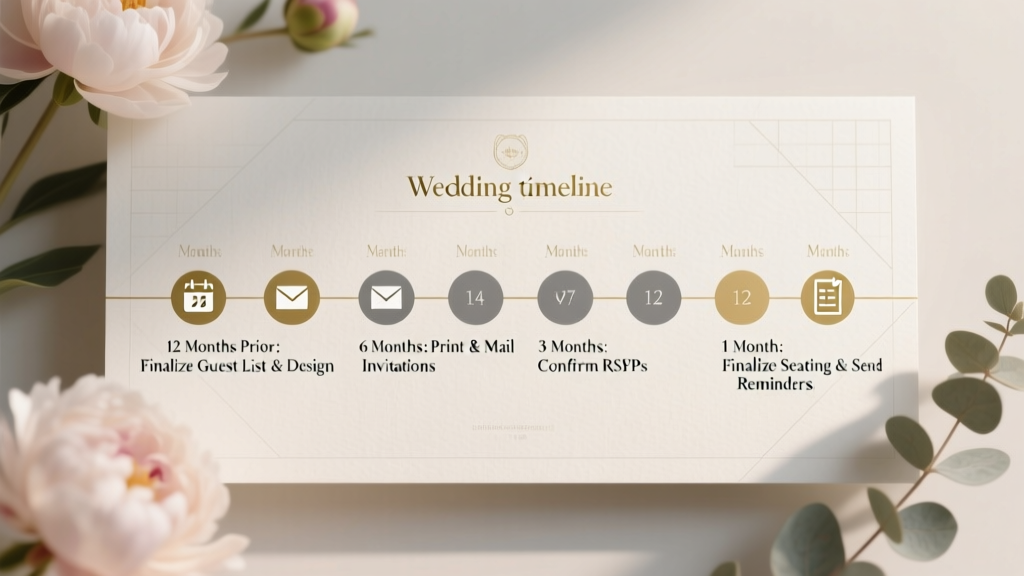 How Long In Advance Should Wedding Invitations Be Sent
 Wedding Ring Cost: What You Actually Get Per Dollar (2026)
 Wedding Day Images: Real, Joyful & Timeless (2026)
 Can You Be Late to a Wedding Reception? (2026)
 Acrylic Wedding Invitations: 7 Steps + Cost Breakdown (2026)
 Wedding Arch Flowers: 7 DIY Mistakes to Avoid (2026)