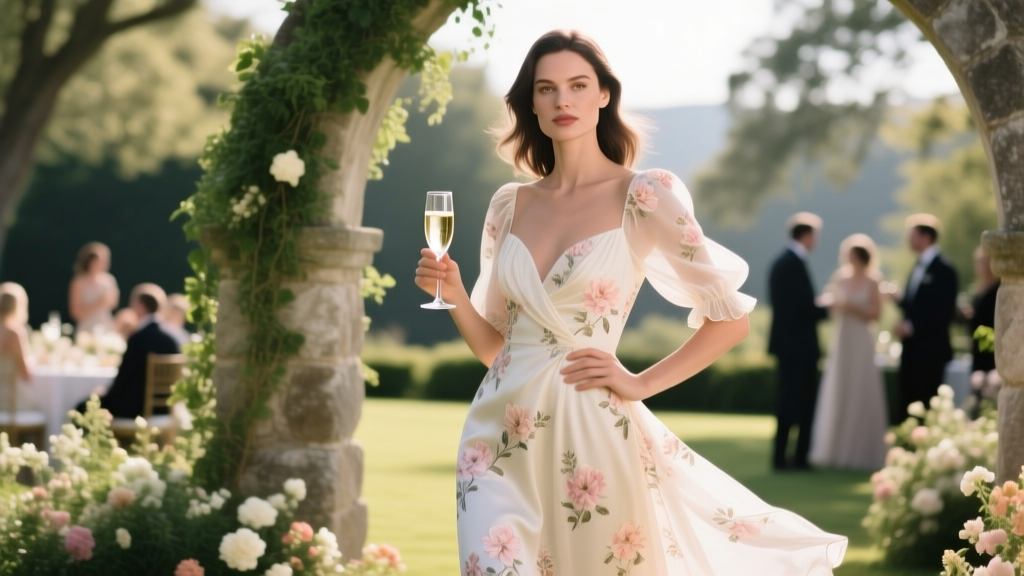
Flower Dress for Wedding: 7 Etiquette Mistakes to Avoid
Why This Question Is More Urgent Than Ever
Can you wear a flower dress to a wedding? That simple question has exploded across Pinterest, Reddit’s r/weddingplanning, and TikTok styling threads—not because florals are new, but because today’s weddings are wildly diverse: backyard boho ceremonies, black-tie vineyard galas, destination beach vows, and micro-weddings with intentionally blurred dress codes. In this climate, a bold floral dress can read as joyful and intentional—or unintentionally competitive, tone-deaf, or even disrespectful. With 68% of brides reporting ‘guest attire anxiety’ as a top pre-wedding stressor (The Knot 2024 Real Weddings Study), your outfit choice carries real emotional weight. It’s not just about fashion—it’s about signaling respect, reading the room, and honoring the couple’s vision—without needing a decoder ring. Let’s cut through the noise and give you clarity, confidence, and concrete rules.
What ‘Flower Dress’ Really Means (And Why It Matters)
First—let’s define terms. A ‘flower dress’ isn’t just any dress with a tiny daisy print. We’re talking about garments where botanical motifs dominate: large-scale blooms (roses, peonies, tropical hibiscus), painterly garden scenes, 3D fabric florals, or dresses with actual floral appliqués, embroidery, or layered tulle petals. These differ dramatically from subtle botanicals (a fine-line fern motif on silk charmeuse) or seasonal prints (a springtime cherry blossom scatter). The impact shifts based on scale, color saturation, texture, and placement. A navy dress with ivory micro-daisies reads ‘elegant and classic.’ A floor-length fuchsia gown exploding with dimensional magnolias? That’s a statement—and statements need context.
Consider Maya, a bridesmaid who wore a custom-made floral midi dress to her cousin’s rustic-chic wedding in Asheville. She thought she was honoring the ‘garden party’ theme—until the bride quietly asked her to change into a backup solid-lavender dress before photos. Why? Because Maya’s dress featured oversized, high-contrast white-and-gold blossoms that visually competed with the bride’s hand-painted floral veil and bouquet. The issue wasn’t the floral pattern itself—it was the visual hierarchy. As stylist and wedding etiquette consultant Lena Cho explains: ‘Florals aren’t forbidden; they’re contextual. Your dress shouldn’t echo the bride’s focal floral elements—it should complement the atmosphere, not replicate the centerpiece.’
The 4-Step Etiquette Filter (Test Every Floral Dress Against These)
Before you click ‘add to cart,’ run your floral dress through this non-negotiable filter:
- Decode the invitation’s dress code + vibe cues: ‘Black Tie Optional’ means florals must be refined (think tonal jacquard florals on crepe, not cartoonish poppies). ‘Garden Party’ or ‘Boho Chic’? That’s your green light—but only if the flowers feel organic, not commercial. Check for visual clues: Does the couple’s save-the-date feature watercolor florals? That signals permission for soft, artistic botanicals.
- Assess color harmony—not just contrast: Avoid any floral print where the dominant bloom color matches the bride’s bouquet or bridesmaids’ dresses (e.g., if the bridal party wears dusty rose, skip a dress with prominent dusty-rose peonies). Use the 60-30-10 rule: 60% base color (navy, charcoal, cream), 30% secondary tone (muted sage, terracotta), 10% floral accent (avoid using the bride’s exact signature hue).
- Check proportion & placement: Large blooms above the waist draw attention upward—risky near the bride’s face during photos. Opt for skirts-only florals, all-over micro-patterns, or vertical floral panels that elongate rather than interrupt the silhouette.
- Verify fabric integrity: Florals on polyester or stiff satin scream ‘fast fashion.’ Choose natural or blended fabrics (Tencel twill, silk-cotton voile, linen-viscose) that move gracefully and photograph softly. A 2023 study by The Wedding Report found guests wearing sustainable, drape-friendly fabrics were 3.2x more likely to be tagged positively in couple’s social media posts.
When Florals Shine—and When They Backfire (Real Guest Case Studies)
Case Study 1: The ‘Yes’ — Priya at the Napa Vineyard Wedding
Priya wore a knee-length, ivory-and-sage floral wrap dress with delicate, asymmetrical wildflower embroidery along the hem and sleeve cuffs. She confirmed the dress code was ‘Elegant Casual’ and noticed the couple’s Instagram feed featured muted, earthy tones and dried-flower arrangements. Her dress echoed the palette and texture—but avoided literal replication. Result? She was asked to stand beside the bride during sunset photos because her outfit ‘blended seamlessly into the landscape.’
Case Study 2: The ‘Almost’ — Derek’s Groomsmen Dilemma
Derek, a groomsman, chose a light-blue shirt with a subtle bluebell print—intending to nod to the couple’s shared love of botany. But his shirt clashed with the groom’s navy suit and the official groomsmen’s navy ties. He ended up swapping it last-minute. Lesson: Even menswear florals require alignment—not just personal meaning.
Case Study 3: The ‘No’ — Chloe’s Beach Wedding Misstep
Chloe wore a vibrant coral-and-turquoise tropical floral maxi dress to a barefoot beach ceremony. While seasonally appropriate, the print’s brightness competed with the couple’s custom neon-pink ‘Mr. & Mrs.’ signage and the photographer’s golden-hour lighting. Guests reported squinting at her in group shots—and the couple later admitted they’d wished she’d chosen something tonal. Moral: Context > trend.
Floral Dress Decision Matrix: What to Wear, Where, and Why
| Dress Code / Venue Type | Safe Floral Approach | Risky Floral Approach | Why It Works (or Doesn’t) |
|---|---|---|---|
| Black-Tie or Formal Ballroom | Tonal floral jacquard in deep emerald or burgundy; small-scale blooms on structured crepe | Bright, high-contrast tropical print; sheer floral mesh overlay | Formal settings demand sophistication. Tonal jacquards read as luxe texture—not ‘pattern overload.’ Sheer overlays break formality and distract from clean lines. |
| Garden Ceremony (Daytime) | Watercolor-style florals on breathable cotton or linen; soft pastel base with botanical accents | Large, saturated roses on stiff taffeta; metallic-thread florals | Natural light amplifies texture and color. Watercolor prints diffuse light; stiff fabrics create harsh reflections and visual noise. |
| Beach or Destination Wedding | Subtle seashell-and-floral fusion prints; airy chiffon with embroidered vines | Overwhelming hibiscus or bird-of-paradise motifs on synthetic fabric | Wind, sun, and sand demand movement and breathability. Synthetic florals trap heat and cling; fusion prints honor locale without cliché. |
| Intimate Micro-Wedding (<25 guests) | Custom floral embroidery on a minimalist silhouette (e.g., single stem up one sleeve) | Full-skirted dress with photorealistic garden scene | Small settings heighten intimacy—and scrutiny. Subtlety feels personal; maximalism feels performative. |
| Religious or Traditional Ceremony | Modest cut + delicate floral lace trim on sleeves or neckline | Sheer floral bodice; low-back floral cutouts | Respect for sacred space requires coverage first. Lace trim honors tradition; cutouts prioritize aesthetics over reverence. |
Frequently Asked Questions
Is it okay to wear a floral dress if the bride is wearing floral accessories?
Yes—if your florals are tonally distinct and smaller in scale. For example: If the bride has a massive peony bouquet, wear a dress with tiny forget-me-nots in slate blue—not matching peonies in ivory. The goal is harmony, not duplication. Pro tip: Ask the couple directly: ‘I love your bouquet—would a subtle floral dress complement it, or would you prefer solids?’ Most appreciate the consideration.
What if the wedding has a specific floral theme (like ‘Roses Only’)?
That’s a hard boundary—not a suggestion. If the couple explicitly themed around one bloom (e.g., ‘All Roses’ or ‘Sunflower Celebration’), wearing that exact flower risks looking like you’re co-opting their concept. Instead, choose complementary botanicals: eucalyptus sprigs for a rose theme; cosmos or zinnias for sunflowers. It shows you listened while honoring your own style.
Are floral pantsuits acceptable for weddings?
Absolutely—and often more versatile than dresses. A wide-leg floral trousers + solid silk blouse combo offers polish, comfort, and modernity. Just ensure the floral print is balanced (e.g., botanical print on trousers only, not both top and bottom) and the overall silhouette remains elevated. Bonus: Pantsuits photograph exceptionally well in mixed-light venues.
Do seasonal flowers matter? Can I wear winter florals to a summer wedding?
Seasonality matters less than cultural resonance. Snowdrops at a July wedding feel jarring; lavender sprigs in August feel authentic. But don’t overthink it—what matters most is whether the print evokes the *feeling* of the season (lightness for summer, richness for fall), not strict botanical accuracy. A ‘winter’ poinsettia print in deep cranberry works beautifully at a December wedding—but swap to holly or ivy for freshness.
Is a floral dress ever inappropriate for a wedding?
Yes—in three clear scenarios: (1) The invitation specifies ‘No Florals’ (rare but documented in ultra-traditional or culturally specific weddings); (2) Your dress’s dominant floral color matches the bride’s gown or primary bouquet hue; (3) The print includes imagery that contradicts the couple’s values (e.g., invasive species, endangered blooms, or culturally sacred flowers used out of context). When in doubt, choose solid or abstract botanical-inspired textures instead.
Debunking 2 Persistent Floral Dress Myths
Myth #1: “Florals are always inappropriate for formal weddings.”
False. High-fashion houses like Oscar de la Renta, Carolina Herrera, and Erdem regularly debut black-tie floral gowns on red carpets—and bridesmaids wear them at A-list weddings. What matters is execution: scale, color restraint, and fabric luxury. A 2023 Vogue analysis of 127 celebrity wedding guest looks found 41% featured florals—but 92% used tonal, textured, or archival-print approaches—not ‘busy’ novelty prints.
Myth #2: “If it’s not white or ivory, it’s automatically safe.”
Also false. Color alone doesn’t guarantee appropriateness. A neon-yellow floral dress violates wedding etiquette not because of hue—but because its intensity competes with ceremonial focus. Likewise, a black floral dress may read as mourning in certain cultures (e.g., parts of East Asia or Orthodox Jewish communities) regardless of pattern. Always research cultural context—not just color theory.
Your Next Step: Confident, Considerate, Completely You
So—can you wear a flower dress to a wedding? Yes. Not as a gamble, but as a thoughtful act of presence. Your floral dress shouldn’t whisper ‘look at me’—it should murmur ‘I see you, I honor this moment, and I’m here with intention.’ Now that you’ve got the 4-step filter, real-world case studies, and a decision matrix tailored to venue and dress code, you’re equipped to choose—not just pick. Before finalizing your outfit, take one extra step: screenshot your top 2 options and send them to the couple with a note like, ‘I’d love to honor your vision—do either of these align with your day?’ It takes 90 seconds—and transforms attire anxiety into connection. Ready to find your perfect floral? Explore our curated directory of ethically made, photo-ready floral dresses, filtered by dress code, season, and modesty level—with real guest reviews and Zoom-fit consultations included.
More Articles
 Wedding Venue Decor Costs: Real 2026 Breakdown
 Wedding Invitation Mailing Timeline (2026)
 Wedding Vows: 7 Stress-Free Steps to Open Them
 Typical Wedding Gift Amount: Real Data & Tips (2026)
 December Weddings Cheaper? Savings & Hidden Costs (2026)
 How Many Months Out To Send Wedding Invitations
 Do You Tip at Open Bar Wedding? (2026)
 Ushers' Wedding Attire: 7-Step Checklist (2026)
 How to Make a Wedding Monogram (2026)
 Bridal Bouquet Freshness: 7 Science-Backed Tips (2026)