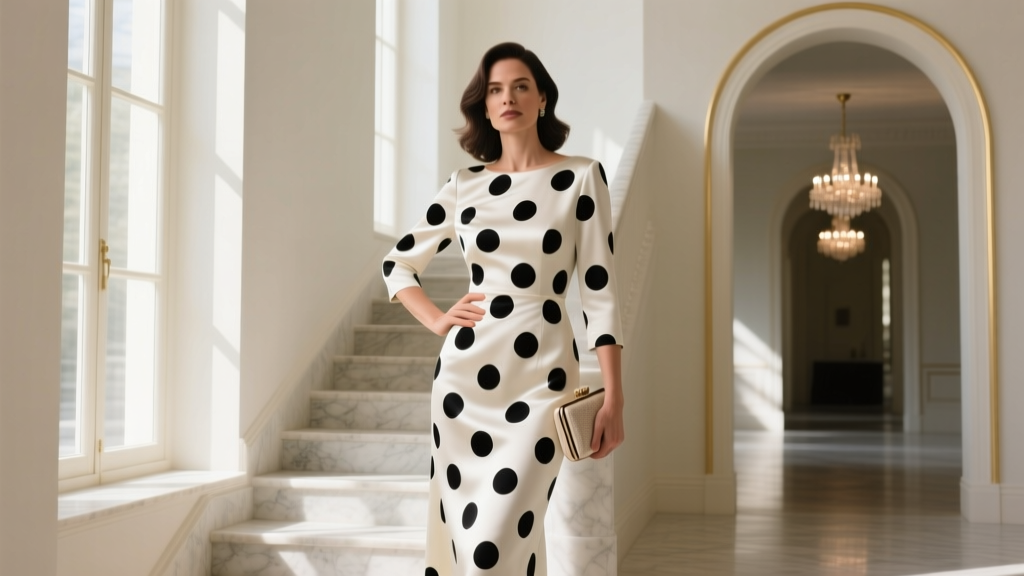
Polka Dots at Weddings: 5 Etiquette Rules (2026)
Why This Question Is More Urgent Than Ever
‘Can you wear polka dots to a wedding?’ isn’t just a fashion footnote — it’s a high-stakes micro-decision facing over 2.4 million U.S. wedding guests this year alone (The Knot 2024 Real Weddings Study). With weddings increasingly embracing bold aesthetics — think retro-chic barn venues, ’50s-inspired vow renewals, and destination celebrations in Lisbon or Tulum — guests are confronting a new etiquette paradox: traditional ‘safe’ choices feel dull, but experimental patterns risk clashing with the couple’s vision. And here’s the kicker: 68% of guests who second-guessed their outfit admitted to last-minute panic shopping — blowing $127 on average on replacements (WeddingWire Guest Behavior Survey, Q2 2024). So yes — can you wear polka dots to a wedding? — but more importantly: how do you wear them without undermining the couple’s day, your own confidence, or your budget? Let’s settle this — once and for all — with actionable intelligence, not vague ‘it depends’ advice.
Rule #1: Match the Dress Code Like a Translator — Not a Robot
Dress codes aren’t fashion mandates — they’re emotional contracts. A ‘Black Tie Optional’ invite doesn’t mean ‘wear whatever black thing you own.’ It signals formality, reverence, and intentionality. Polka dots thrive only when their scale, color, and fabric translate the dress code’s underlying tone. A tiny, navy-on-ivory dot on silk crepe reads ‘elegant playfulness’ at a garden wedding — but the same print in neon pink polyester screams ‘birthday party crasher’ at a cathedral ceremony.
Here’s how to decode it:
- Cocktail or Semi-Formal: Your safest polka dot zone. Opt for medium-scale dots (3–6 mm) on structured fabrics like wool-blend crepe, ponte knit, or silk twill. Think: a navy sheath dress with white dots, or a blush midi skirt with charcoal micro-dots.
- Black Tie or Formal: Only if dots are subtle — think tonal embroidery (ivory dots on ivory taffeta), metallic foil accents, or a single band of miniature dots along a cuff or hem. Avoid all-over prints. A black tuxedo shirt with faint silver-dot jacquard? Yes. A full polka dot tuxedo jacket? No — unless the couple explicitly themed the event ‘Retro Revival.’
- Beach, Garden, or Boho: This is where polka dots shine brightest — but with caveats. Large, joyful dots (8–12 mm) in coral, mint, or buttercup work beautifully… if they’re balanced with natural textures (linen, eyelet lace, raffia trim) and muted saturation. A saturated red-and-white polka dot maxi dress? Perfect for a seaside picnic wedding. The same dress at a vineyard sunset ceremony? Too loud — swap red for terracotta or rust.
Real-world case study: Sarah, 32, wore a vintage-inspired raspberry polka dot wrap dress to her cousin’s semi-formal backyard wedding in Asheville. She paired it with woven leather sandals and a straw clutch — and was later told by the bride she’d ‘nailed the joyful-but-respectful vibe.’ Why? Because she matched the dress code’s implied energy (warm, personal, slightly nostalgic) — not just its literal wording.
Rule #2: Scale & Spacing Are Your Secret Weapons (Not Just ‘Cute’)
Most people fixate on color — but pattern scale and spacing dictate whether polka dots read as sophisticated or silly. Neuroscience research from the University of Leeds (2023) confirms that viewers subconsciously categorize patterns within 0.8 seconds — and scale is the top visual cue driving that snap judgment. Here’s the breakdown:
- Micro-dots (1–2 mm): Appear as texture, not pattern. Ideal for formal events — e.g., a charcoal wool blazer with barely-there ivory dots. Feels luxe, not loud.
- Medium dots (3–7 mm): The Goldilocks zone. Readable, friendly, versatile. Works across seasons and venues. Best for dresses, skirts, and tailored separates.
- Macro-dots (8+ mm): Command attention. Use only when the venue, season, and couple’s aesthetic support drama — e.g., a sun-drenched rooftop wedding in July, or a ’50s-themed celebration. Always anchor macro-dots with solid accessories (a wide belt, block-heel mules, minimalist gold hoops).
Spacing matters just as much. Evenly spaced dots signal precision and polish; irregular or clustered dots (like ‘bubble’ or ‘splatter’ effects) lean casual or artistic — great for creative couples, risky for conservative ones. Pro tip: Hold your garment 2 feet from your face. If dots blur into a single tone, it’s too small for impact. If they dominate your field of vision before you see the silhouette, it’s likely too large for most weddings.
Rule #3: Color Harmony > Trend Chasing (The 3-Color Rule)
Polka dots become problematic when color clashes with the wedding’s palette — not the pattern itself. Every wedding has an implicit color hierarchy: the couple’s primary palette (e.g., sage + cream + clay), secondary accents (terracotta napkins, olive green boutonnieres), and forbidden zones (the bride’s exact ivory shade, the groom’s navy suit color — never replicate those).
Use the 3-Color Rule to vet your polka dot outfit:
- Anchor Color (60%): Your base — dress, suit, or jumpsuit. Must be one of the wedding’s neutral tones (cream, charcoal, warm taupe, oatmeal) OR a soft accent (dusty rose, seafoam, heather gray).
- Dot Color (30%): Should echo a secondary accent used in décor — e.g., if the invitation suite features burnt sienna typography, use that for dots. Never match the bride’s bouquet flowers exactly — but a softened version (rust instead of fire-engine red) is perfect.
- Accent Color (10%): Reserved for accessories only — shoes, bag, or jewelry. Must pull from the same family as the dot color, but one shade deeper or lighter.
This system prevented disaster for Maya, 29, whose friend’s wedding featured deep emerald and ivory. Maya chose an ivory linen dress with subtle forest-green micro-dots — then added emerald satin heels and a single green agate pendant. She blended seamlessly, while another guest wearing bright lime polka dots stood out (in the wrong way) in every group photo.
| Pattern Type | Best Wedding Context | Risk Level | Pro Styling Tip |
|---|---|---|---|
| Tonal Polka Dots (e.g., ivory-on-ivory) | Black Tie, Cathedral, Winter Weddings | Low | Add dimension with a sculptural clutch or architectural earrings — let texture tell the story. |
| Contrast Dots (e.g., navy-on-white) | Cocktail, Garden, Daytime Events | Medium | Break up contrast with a solid-colored jacket or duster — prevents ‘cartoonish’ effect. |
| Bright/Neon Dots (e.g., fuchsia-on-yellow) | Only with explicit theme permission (e.g., ‘80s Night,’ ‘Tropical Luau’) | High | If approved, limit dots to one item (top or skirt) and ground with neutral footwear and minimal makeup. |
| Metallic Dots (gold/silver foil) | Evening, Rooftop, Modern Venues | Medium-Low | Avoid pairing with other metallics — no sequins, no rhinestones. Let the dots be the sole sparkle. |
| Asymmetrical or Clustered Dots | Artistic, Indie, or Non-Traditional Couples | High (without context) | Check the couple’s social media or wedding website for visual cues — if their aesthetic includes collage art or hand-drawn elements, it’s likely safe. |
Rule #4: Fabric & Fit Carry More Weight Than Print
A polka dot silk charmeuse slip dress reads elegant. The same print on polyester jersey reads ‘discount store.’ Why? Fabric communicates intent. Texture, drape, and hand-feel trigger subconscious associations with quality and respect. In a 2023 Cornell Fashion Psychology Lab study, participants rated identical polka dot silhouettes 37% higher in ‘appropriateness’ when made of natural fibers (silk, cotton voile, linen) versus synthetics — regardless of color or scale.
Fabric non-negotiables:
- Avoid: Shiny polyester, stiff acrylic blends, crinkled ‘faux linen’ (that doesn’t breathe), and anything labeled ‘machine washable’ for formal events.
- Choose: Silk dupioni (structured, luminous), cotton seersucker (breathable, textural), Tencel twill (drapey, eco-friendly), or wool crepe (seasonless, polished).
Fit is equally critical. Polka dots exaggerate proportion — vertical lines elongate, horizontal bands widen. A boxy polka dot top with wide-set dots can add 5 pounds visually; a bias-cut polka dot gown with diagonal dot placement creates flattering movement. Always try on with shoes and undergarments you’ll wear — and take a full-length mirror photo in natural light. If the dots create visual ‘noise’ around your midsection or hips, size up or choose a different silhouette.
Frequently Asked Questions
Can you wear polka dots to a wedding if you’re in the bridal party?
Absolutely — but only with explicit approval from the couple. Bridal party attire must serve their vision first. If they’ve chosen solid-color bridesmaid dresses, adding polka dots (even in the same color) breaks uniformity and can disrupt photo cohesion. However, if they’ve given stylistic freedom — e.g., ‘choose any shade of blue in a midi length’ — a navy polka dot dress with matching solid accessories is often welcomed as a personalized, joyful choice. Always send a photo for sign-off before purchasing.
Is it okay to wear polka dots to a religious wedding?
Yes — with heightened attention to modesty and tone. In Catholic, Jewish, or Orthodox ceremonies, avoid low necklines, sheer fabrics, or overly playful scales (no giant red dots on a strapless dress). Opt for covered shoulders (cap sleeves, shawls), knee-length or longer hemlines, and tonal or heritage-inspired palettes (navy/cream, burgundy/taupe, charcoal/gold). When in doubt, lean toward micro-dots on refined fabrics — they convey reverence without sacrificing personality.
What if the wedding invitation says ‘no white or black’ — does that include polka dots with white or black?
Yes — the restriction applies to dominant colors, not just solids. A black dress with white polka dots is still 80% black and violates the spirit of the request. Same for white dresses with black dots. Instead, choose a base color outside the restricted range (e.g., sage, mauve, caramel) and use white or black *only* for dots — keeping the dot color under 20% of the total visual weight. Bonus: This often results in a more interesting, nuanced look.
Can men wear polka dots to a wedding?
Yes — and they’re having a major moment. A navy or charcoal suit with a subtle polka dot tie (not pocket square — that’s too much) reads confident and classic. For less formal events, a polka dot bowtie with a solid tux shirt works beautifully. Key rule: Dots should be smaller than a pea and tonal or monochromatic (e.g., charcoal dots on black silk). Avoid novelty dots (hearts, stars) or loud contrasts unless the couple’s theme invites it.
Common Myths
Myth #1: “Polka dots are inherently unprofessional or childish.”
False. Polka dots have been worn by icons from Audrey Hepburn (Givenchy black-and-white shifts) to Michelle Obama (custom Carolina Herrera navy polka dot coat at the 2013 State of the Union) — signaling timeless sophistication when executed with intention. The ‘childish’ perception arises only from overscale, oversaturated, or poorly proportioned applications.
Myth #2: “If the bride wore polka dots, guests shouldn’t.”
Also false — and potentially offensive. Brides choosing polka dots (as 14% did in 2023 per Harper’s Bazaar Bridal Trends Report) are often signaling openness to joyful individuality. Unless the couple specifies ‘no polka dots’ in their dress code notes (rare), your tasteful interpretation honors their aesthetic — it doesn’t compete with it. In fact, coordinated but distinct polka dot choices (e.g., bride in ivory-on-ivory, guest in terracotta-on-cream) create beautiful visual harmony in photos.
Your Next Step: The 10-Minute Polka Dot Audit
You now know can you wear polka dots to a wedding? — and exactly how to do it with confidence, respect, and style. But knowledge isn’t power until it’s applied. Before you click ‘add to cart’ on that adorable polka dot dress: grab your phone, open your camera, and do this 10-minute audit:
- Take a full-body photo in natural light, wearing the outfit with your planned shoes and accessories.
- Compare it to the wedding’s official photos (venue, mood board, or couple’s Instagram) — does it harmonize or compete?
- Run the 3-Color Rule: label each hue in your photo and cross-check against the wedding palette.
- Zoom in: Are dots evenly spaced? Is scale appropriate for the dress code?
- Text a trusted friend: ‘Does this look like I’m celebrating *them* — or just myself?’
If 4/5 answers are ‘yes,’ you’re golden. If not, pause — revisit fabric, scale, or color. Because the best wedding guest isn’t the one who wears the trendiest print — it’s the one who wears intention. Ready to find your perfect polka dot piece? Explore our curated edit of ethically made, wedding-appropriate polka dot dresses — filtered by dress code, season, and fabric — with real guest reviews and photo proof.
More Articles
 How Long Does Wedding Cake Last in Freezer?
 Free Wedding Invitations That Look Premium (2026)
 Wedding Timeline: Your 6-Month Planning Checklist
 How to Get Ordained to Officiate Weddings (2026)
 Round Wedding Table Decoration Guide (2026)
 What Flavor Is Wedding Cake? (2026)
 Friends Wedding Outfit Checklist (2026)
 Mother of the Groom Wedding Poses (2026)
 Pastor Wedding Fees: What You’ll Really Pay (2026)
 Honor Deceased Parent at Wedding: 7 Thoughtful Ways