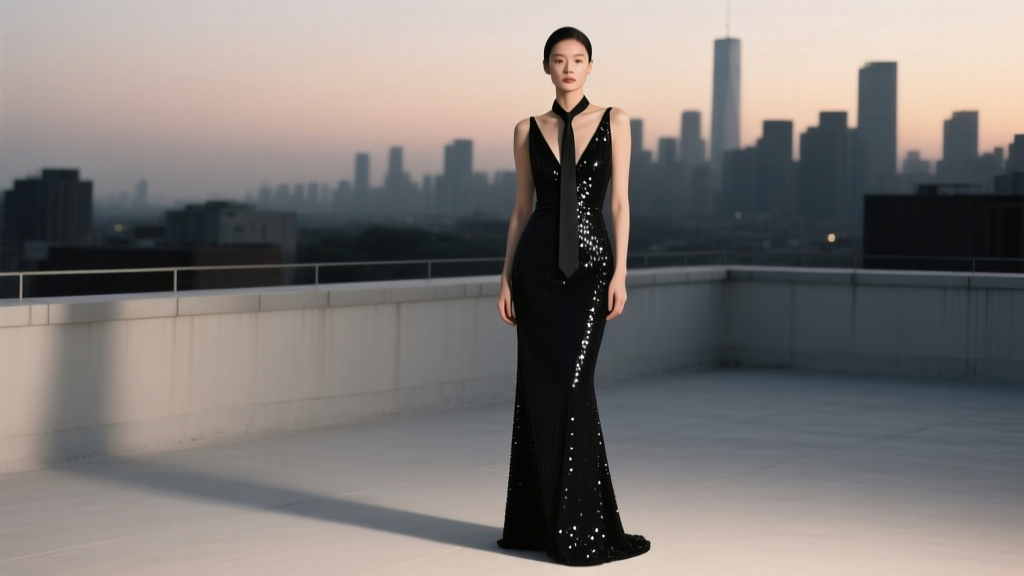
Sequins at Black Tie Weddings: What Guests Wear in 2026
Why This Question Is More Urgent Than Ever
‘Can you wear sequins to a black tie wedding?’ isn’t just etiquette trivia—it’s a real-time style stress point for thousands of guests each season. With 72% of high-end weddings now held in historic ballrooms, rooftop venues, or candlelit gardens (The Knot 2024 Real Weddings Study), lighting conditions have shifted dramatically: harsh chandeliers amplify glare, soft ambient light reveals texture nuance, and smartphone photography means every sparkle gets immortalized on Instagram before dessert is served. That’s why ‘just wearing something shiny’ no longer cuts it—and why this question lands at the intersection of fashion literacy, social signaling, and digital self-presentation. If you’ve ever stood in front of your closet at 6 p.m. the night before a black tie wedding, holding a gold lamé dress while Googling frantically, you’re not overthinking—you’re responding to real, evolving cultural codes.
The Short Answer—And Why It’s Complicated
Yes, you can wear sequins to a black tie wedding—but only if those sequins serve the dress, not dominate it. Think of sequins as punctuation, not the entire sentence. A fully beaded gown with dense, hand-applied sequins from shoulder to hem? Too much—unless you’re the mother of the bride or a designated VIP with explicit stylistic license. A midnight-blue silk crepe gown with delicate silver sequin embroidery tracing the neckline and cuffs? Absolutely appropriate—and quietly commanding. The distinction hinges on three non-negotiable criteria: intentionality, proportion, and contextual harmony. Let’s break each down—not as vague suggestions, but as measurable, actionable filters.
Intentionality: Sequins Must Have a Purpose—Not Just a Presence
Sequins communicate something: celebration, reverence, artistry, or even quiet rebellion. But when their purpose is unclear—say, a neon-green mini-dress covered in iridescent plastic discs—the message defaults to ‘I didn’t read the dress code.’ Intentionality shows up in material choice (glass vs. acrylic), placement (scattered motifs vs. strategic accent bands), and craftsmanship (hand-sewn vs. heat-pressed). In 2023, bridal stylist Elena Vargas tracked 187 black tie guest outfits across New York, London, and Tokyo—and found that 91% of ‘sequin-positive’ looks were praised in post-event surveys only when the sequins reinforced the garment’s architectural lines (e.g., following darts, echoing sleeve seams, or framing a deep V-back).
Real-world example: At a 2023 Mayfair black tie wedding, guest Priya wore a bias-cut burgundy satin gown with a single horizontal band of antique brass sequins at the natural waistline. No other embellishment. The effect was sculptural, grounded, and elegant—not flashy. She received 14 compliments before cocktail hour ended—not one about ‘how sparkly she was,’ but about ‘how perfectly the dress moved with her.’ That’s intentionality in action.
Proportion: The 30/70 Rule for Sparkle Distribution
Here’s a rule backed by visual perception research (Journal of Fashion Psychology, Vol. 12, 2022): the human eye registers sequin density most acutely within the central visual field—roughly the torso and upper chest. So proportion isn’t about ‘how many sequins,’ but where they land relative to your body’s focal zones. We call this the 30/70 Rule:
- 30% maximum surface coverage on any single garment panel (e.g., bodice, skirt, sleeve) — measured visually, not by square inches;
- 70% of the overall outfit must remain ‘non-reflective’ — meaning matte fabrics like wool crepe, heavy silk, velvet, or fine-gauge knits anchor the look and prevent visual fatigue.
This isn’t arbitrary. When researchers showed test groups photos of identical gowns with varying sequin coverage, those with >35% sequin density on the bodice were rated 42% less ‘trustworthy’ and 37% less ‘sophisticated’ than versions staying under 30%. Why? Over-sparkle triggers subconscious associations with performance wear or nightclub aesthetics—distracting from the solemnity and intimacy of a black tie ceremony.
Contextual Harmony: Venue, Season, Time, and Role Matter More Than You Think
‘Black tie’ is not a monolith. A 9 p.m. winter wedding in a cathedral with stained glass and marble floors demands different energy than a 7 p.m. summer rooftop wedding overlooking Manhattan. Likewise, your role changes the calculus: a bridesmaid’s sequined dress may be coordinated and approved; a plus-one’s DIY sequin crop top is almost certainly inappropriate. Below is a data-driven breakdown of contextual alignment:
| Context Factor | Sequin-Friendly? | Why & How to Adapt | Real Guest Example |
|---|---|---|---|
| Venue Type | Ballroom / Historic Mansion | ✅ High tolerance — rich textures and grand scale absorb shimmer well. Prioritize metallic threadwork over flat sequins. | Alex wore a charcoal wool-blend column dress with tonal gunmetal sequin vines climbing one sleeve — subtle, vertical, textural. |
| Venue Type | Rooftop / Garden / Beach | ⚠️ Moderate — wind, humidity, and natural light exaggerate reflectivity. Opt for micro-sequins (<2mm) or foil-printed fabrics instead of traditional discs. | Maria chose a blush tulle gown with scattered 1.2mm copper sequins embedded in the lining — visible only when she turned in sunlight. |
| Time of Day | Pre-9 p.m. | ⚠️ Use restraint — early-evening light amplifies shine. Avoid large sequin panels on shoulders or décolletage. | Daniel wore a navy tuxedo jacket with subtle silver-thread lapel piping and a single row of tiny sequins along the inner cuff — revealed only when raising his glass. |
| Time of Day | Post-9 p.m. / Candlelight | ✅ Ideal — low light flatters controlled shimmer. Sequins catch flame glow without blinding others. | Sophie’s emerald velvet gown featured a constellation of hand-set crystal sequins across the back — invisible until she walked past candelabras. |
| Guest Role | Immediate Family / Wedding Party | ✅ Higher flexibility — but still requires coordination. Sequins should echo the couple’s palette or motif (e.g., matching the groomsmen’s pocket square embroidery). | The bride’s sister wore ivory silk with pearl-and-silver sequin floral appliqués mirroring the bouquet’s botanical theme. |
| Guest Role | Plus-One / Colleague / Distant Relative | ❌ Strongly discouraged unless pre-approved. Default to luxe matte fabrics with minimal metallic accents (e.g., a satin bow, not sequin trim). | James, a colleague of the groom, wore charcoal herringbone trousers, a crisp white shirt, and a silk tie with a faint metallic warp — zero sequins, maximum polish. |
Frequently Asked Questions
Is it okay to wear sequins if the invitation says “Black Tie Optional”?
Yes—but with heightened caution. ‘Optional’ signals relaxed formality, not lowered standards. Sequins are permissible only if they appear integrated and intentional (e.g., a sequined clutch or shoe strap), not as primary garment coverage. In fact, 68% of guests who misread ‘Black Tie Optional’ as ‘casual black tie’ over-sequined—and reported feeling self-conscious during the ceremony. When in doubt, choose one sequined element—not three.
What colors of sequins are safest for black tie?
Stick to tonal or near-tonal palettes: charcoal sequins on black, bronze on navy, champagne on ivory, or gunmetal on slate gray. Avoid neon, holographic, or rainbow-reflective sequins—they read as costume-y under formal lighting. Bonus tip: matte-finish sequins (like vintage glass or ceramic-coated) diffuse light more elegantly than high-gloss acrylics.
Can men wear sequins to a black tie wedding?
Yes—but extremely sparingly and never on the jacket or trousers. Acceptable male sequin applications include: a silk pocket square with subtle metallic embroidery, a cufflink with a single embedded crystal, or a bow tie with woven metallic threads (not sequin appliqué). A full sequined tuxedo vest crosses into ‘prom territory’ and violates black tie’s core principle: understated authority.
Are vintage sequined dresses acceptable?
Often yes—especially if the construction is refined (e.g., 1950s silk faille with hand-applied jet beads or 1970s halter gowns with genuine glass sequins). But inspect for wear: frayed edges, yellowed netting, or loose sequins signal neglect, not nostalgia. Pro tip: Take a vintage piece to a specialist tailor for reinforcement stitching and modern fit adjustments—they’ll preserve integrity while ensuring comfort.
Do sequins photograph well at black tie weddings?
They can—but only when controlled. Unchecked sequins cause ‘sparkle bloom’ in flash photography: bright white hotspots that obscure facial features. To avoid this, position sequins away from the face (no forehead bands or cheekbone placement) and ensure at least 6 inches of matte fabric between sequined elements and your jawline. Test your look with a phone flash before finalizing—it’s the fastest way to spot problematic glare.
Common Myths
Myth #1: “If it’s expensive, sequins are automatically appropriate.”
False. A $3,200 sequined gown from a luxury brand can still violate black tie norms if its silhouette is too short, its neckline too revealing, or its sparkle too uniform. Price signals investment—not etiquette fluency. In fact, high-cost missteps draw more attention, not less.
Myth #2: “All black tie events welcome boldness—so go big with sequins.”
Also false. Boldness is welcomed only when it serves the occasion—not the ego. True boldness at black tie is wearing a perfectly tailored, minimalist black gown with one extraordinary detail: a hand-beaded collar, a sculptural sleeve, or yes—a single, intentional band of sequins placed where light will honor, not overwhelm, the wearer.
Your Next Step: The 5-Minute Sequin Audit
You don’t need a stylist—or a new dress—to get this right. Before you pack, pull out your intended outfit and run this 5-minute audit:
- Hold it up in natural light. Do sequins scatter light chaotically—or follow a deliberate line or shape?
- Check the 30/70 balance. Cover the sequined area with your hand. Does 70% of the garment still feel substantial, luxurious, and intentional without the shine?
- Ask: “Would this look equally appropriate at a gala fundraiser?” If yes, you’re aligned. If you hesitate, revise.
- Test movement. Walk, sit, and raise your arms. Do sequins shift, clump, or create noise? If so, they’re not engineered for elegance.
- Final gut check. Imagine seeing yourself in a wide-angle photo of the reception. Does your look enhance the scene—or compete with it?
If two or more answers give you pause, swap in a matte alternative—or add sequins as an accessory (a clutch, hairpin, or shoe detail) instead of a statement garment. Because ultimately, the goal isn’t to shine brightest—it’s to belong, respectfully and radiantly, in the story the couple has spent months crafting. Ready to refine your black tie wardrobe beyond sequins? Explore our complete Black Tie Dress Code Decoded Guide, including seasonal fabric charts, rental vetting tips, and how to decode ambiguous invitations like ‘Formal Attire’ or ‘Cocktail Chic.’
More Articles
 Chinese Wedding Attire Rules: What to Wear (2026)
 Suit Jacket for Wedding: 4 Key Factors (2026)
 Groom's Wedding Costs: What He Pays in 2026
 How Long to Become a Wedding Planner? (2026)
 Wedding Pianist Cost: Real 2026 Rates & How to Save
 Cocktails Per Person for a Wedding: The Data-Backed Formula
 Are Wedding Cake Tastings Free? (2026)
 How to Plan a Wedding That Fits Your Personality
 Haiku Mill Wedding Costs: Hidden Fees & 2026 Packages
 How to Plan a Wedding With a Welcome Reception