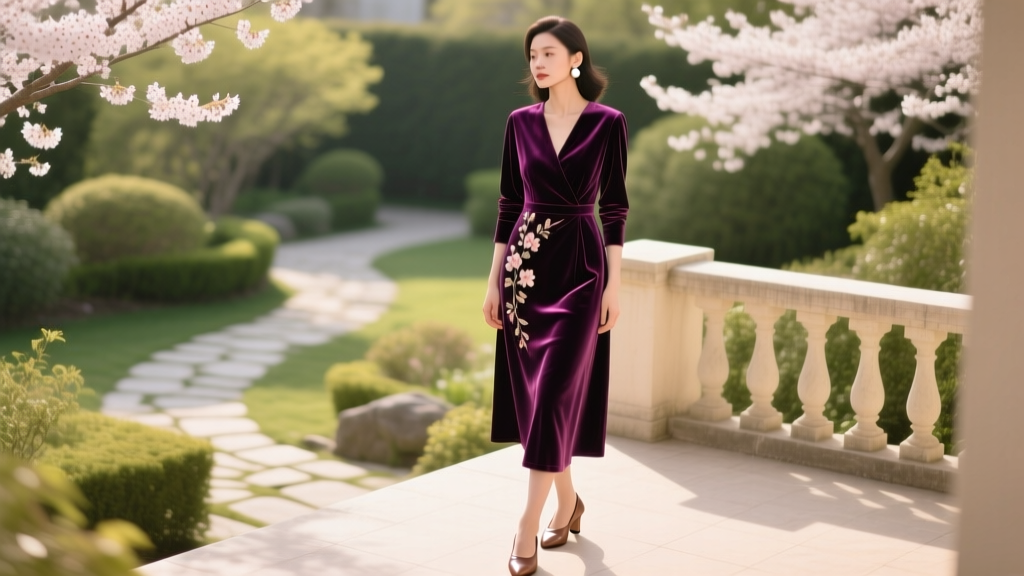
Velvet for Spring Weddings: 5 Rules to Get It Right
Why This Question Is Asking at the Right Time—And Why It Matters More Than Ever
Can you wear velvet to a spring wedding? That question isn’t just fashion trivia—it’s a real-time stress point for thousands of guests booking flights, tailoring outfits, and scrolling Pinterest at midnight. With spring weddings surging 37% year-over-year (The Knot 2024 Real Weddings Study), and micro-seasons blurring traditional fabric rules—think 72°F April showers in Charleston or 85°F May garden parties in Texas—the old ‘velvet = winter only’ dogma is collapsing under climate reality and stylistic evolution. Velvet isn’t banned from spring; it’s *redefined*. Wearing it wrong risks looking overdressed, overheated, or out-of-step with the couple’s vision. Wearing it right? You become the effortlessly elegant guest everyone remembers—not for breaking rules, but for mastering nuance.
The Velvet-Spring Compatibility Framework: It’s Not About Seasons—It’s About Context
Velvet’s reputation as a ‘cold-weather-only’ fabric stems from its dense pile, which traps heat and reads as opulent, weighty, and formal. But modern velvets—especially those made from Tencel-blend, cupro, or lightweight cotton-velvet hybrids—breathe, drape fluidly, and reflect light like silk. The real determinant isn’t the calendar—it’s the triad of context: time of day, venue temperature control, and dress code specificity. A 4 p.m. outdoor ceremony in Portland with misty 58°F air? Velvet blazer over a linen shirt—brilliant. An 8 p.m. tented reception in Atlanta with no AC and 90% humidity? Even lightweight velvet becomes a tactical liability.
Let’s break down the three non-negotiable filters:
- Time & Temperature Threshold: If daytime highs exceed 75°F *and* the venue lacks climate control, skip solid velvet. Opt instead for velvet-trimmed sleeves, a velvet clutch, or a velvet hair accessory.
- Dress Code Clarity: ‘Black Tie Optional’ or ‘Formal Garden Attire’ implicitly welcomes texture-rich fabrics like velvet. ‘Cocktail’ or ‘Semi-Formal’ leans toward lighter weaves—but a sleeveless velvet slip dress in emerald or dusty rose? Still viable with strategic styling.
- Couple’s Vibe Alignment: Scroll their wedding website or Instagram feed. Are they using moody, cinematic photography with deep jewel tones? Velvet harmonizes. Do they favor airy pastels, wildflower bouquets, and linen everything? Lean into velvet accents—not full garments.
Real-world example: Sarah M., a bridesmaid in Austin, wore a burnt-orange cotton-velvet midi dress to a May vineyard wedding. She chose it because the couple’s mood board featured ‘rich earth tones’ and ‘tactile luxury.’ She paired it with open-toe block heels and a woven straw bag—and received 12 compliments before cocktail hour. Meanwhile, her friend opted for a heavy polyester-velvet jumpsuit at the same event and left early, fanning herself with the menu.
How to Choose the *Right* Velvet for Spring: Weight, Weave & Wash Matter More Than Color
Not all velvets are created equal—and choosing the wrong one guarantees discomfort or visual dissonance. Forget ‘velvet’ as a monolith. Think in terms of pile height, fiber composition, and finish. Below is a breakdown of spring-appropriate options versus hard passes:
| Velvet Type | Weight (g/m²) | Spring Suitability | Why It Works (or Doesn’t) | Best Use Case |
|---|---|---|---|---|
| Cotton-Velvet (lightweight, unbrushed) | 220–280 | ✅ High | Breathable, matte finish, soft drape; won’t cling or steam up | Wrap dresses, wide-leg trousers, cropped jackets |
| Tencel-Blend Velvet | 190–240 | ✅ High | Moisture-wicking, silky sheen, biodegradable; drapes like liquid | Slip dresses, camisoles, bias-cut skirts |
| Cupro-Velvet | 200–260 | ✅ High | Derived from cotton linter; cool-to-touch, anti-static, luxe handfeel | Blazers, vests, structured mini skirts |
| Traditional Polyester Velvet | 320–450+ | ❌ Low | Non-breathable, heat-trapping, prone to static and shine overload | Avoid entirely—unless worn as a *single accent piece* (e.g., belt or clutch) |
| Crushed Velvet (poly/cotton blend) | 270–330 | ⚠️ Conditional | Textural interest helps diffuse formality—but pile can flatten in humidity | Only in dry climates or air-conditioned venues; best as a skirt or top |
Pro tip: Always request a swatch. Hold it up to natural light—if it looks stiff, overly shiny, or thick enough to stand on its own, it’s too heavy. Spring velvet should feel *substantial but supple*, like a well-worn leather journal—not a quilted winter coat.
Color psychology also shifts in spring. While classic burgundy and navy velvet read as timeless, spring-specific palettes thrive when velvet echoes botanical or atmospheric cues: moss green (like new ferns), sky blue (not cobalt—think diluted denim), petal pink (not bubblegum—more like peony), or warm taupe (evoking sun-baked clay). Avoid black velvet unless the wedding is evening, urban, and explicitly moody—otherwise, it visually weighs down the season’s lightness.
Styling Velvet for Spring: The 3-Layer Rule (and Why One Layer Is Almost Always Enough)
Over-styling velvet is the #1 mistake. In spring, velvet should function as *textural punctuation*—not the full sentence. Enter the 3-Layer Rule: velvet appears in only one intentional layer per outfit, balanced by two breathable, seasonally resonant elements.
Here’s how it plays out across real guest scenarios:
- The Blazer Strategy: A cropped, unstructured cotton-velvet blazer (in sage or heather grey) over a silk cami and high-waisted linen shorts. Linen provides airflow; silk adds polish; velvet delivers structure without stuffiness.
- The Slip Dress Approach: A Tencel-velvet slip dress in muted lavender, layered under an open, oversized eyelet-cotton cardigan, with strappy sandals and a woven tote. The cardigan diffuses formality; the eyelet adds airiness; the velvet remains the quiet hero.
- The Accent-Only Play: A cream eyelet maxi dress + velvet hair comb + velvet clutch in burnt sienna. Zero risk of overheating; maximum textural sophistication.
Footwear and accessories make or break the vibe. Pair velvet with open silhouettes: sandals, mules, or espadrilles—not closed-toe pumps. Jewelry should lean organic: hammered gold hoops, raw-edged stones, or wood-and-metal combos. Avoid high-shine rhinestones—they compete with velvet’s subtle luster.
Case study: Maya, invited to a 3 p.m. riverside wedding in Nashville, initially worried her rust-colored velvet jumpsuit was ‘too much.’ Her stylist advised swapping the matching velvet jacket for a lightweight, ivory crochet kimono—and swapping stilettos for cork-platform sandals. Result? She looked elevated but relaxed, stayed cool during the outdoor ceremony, and was photographed 7 times by the couple’s photographer for her ‘effortlessly rich texture’.
Frequently Asked Questions
Can you wear velvet to a spring wedding if it’s not black tie?
Absolutely—provided it’s lightweight velvet (cotton, Tencel, or cupro) and styled with deliberate airiness. ‘Cocktail’ or ‘Garden Party’ dress codes actually welcome velvet’s tactile richness more than rigid ‘Black Tie’ events, where satin or taffeta dominate. Just keep the silhouette breezy (e.g., a sleeveless velvet top with wide-leg palazzo pants) and avoid head-to-toe coverage.
Is velvet okay for outdoor spring weddings?
Yes—with caveats. Prioritize venues with shade, breeze, or misting fans. Avoid midday ceremonies above 75°F unless your velvet is under 240 g/m² and cut in a loose, non-restrictive shape (think A-line skirts or kimono sleeves). Pro tip: Test-wear your outfit outside for 20 minutes at peak afternoon heat before finalizing.
What colors of velvet work best for spring weddings?
Think ‘nature’s palette’: moss green, sky blue, petal pink, warm taupe, butter yellow, and seafoam. These shades leverage velvet’s depth without heaviness. Steer clear of true black, charcoal, or deep eggplant unless the wedding has a defined ‘moody spring’ aesthetic (e.g., twilight forest ceremony with candlelit pathways).
Can men wear velvet to a spring wedding?
Yes—and it’s having a quiet renaissance. A slim-fit cotton-velvet blazer in olive or stone, worn with a crisp white popover shirt, tan chinos, and loafers, reads sophisticated, not stuffy. Avoid velvet tuxedo jackets (too formal/seasonally jarring) and steer clear of full velvet suits. Bonus: velvet pocket squares or lapel pins add instant texture without commitment.
Does velvet wrinkle easily at spring weddings?
It depends on fiber content. Cotton-velvet and Tencel-velvet resist wrinkles far better than polyester blends. To minimize creasing: hang garments overnight before packing, roll (don’t fold) in packing cubes, and use a handheld steamer—not an iron—on low heat with a pressing cloth. Most high-quality spring velvets recover beautifully with light steam and gravity.
Common Myths
Myth 1: “Velvet is always too formal for spring.”
Reality: Formality lives in cut and context—not fabric alone. A lightweight velvet mini dress styled with sandals and a denim jacket reads playful and modern—not ballroom. Conversely, a heavily beaded chiffon gown can feel more formal than a structured velvet jumpsuit.
Myth 2: “All velvet looks hot and sweaty in spring.”
Reality: Modern eco-velvets (Tencel, cupro, organic cotton) have moisture-wicking properties and thermal regulation comparable to premium linens. The problem isn’t velvet—it’s outdated polyester blends masquerading as ‘velvet’ in fast-fashion catalogs.
Your Next Step: From ‘Can I?’ to ‘How Do I?’—With Confidence
So—can you wear velvet to a spring wedding? Yes. Not as a gamble, but as a considered choice rooted in fabric literacy, climate awareness, and respect for the couple’s vision. You now know how to vet velvet by weight and fiber, style it using the 3-Layer Rule, and sidestep common pitfalls that turn elegance into exhaustion. Your next move isn’t to shop—but to diagnose: pull up the wedding invitation or website, note the date, time, venue type, and stated dress code, then cross-reference it with the velvet suitability table above. If it checks out, go ahead and invest in one thoughtfully chosen velvet piece—it’ll likely serve you for years across seasons and celebrations. And if it doesn’t? That’s equally valuable intel. Sometimes the most stylish choice is knowing when to say no—and reaching for that perfect linen-blend jumpsuit instead.
More Articles
 Natural Wedding Poses That Capture Real Emotion (2026)
 Do You Tip Your Wedding Photographer? (2026)
 Wedding Season Costs: Off-Peak Savings & Sweet Spots (2026)
 Mixed-Faith Wedding Ceremony: Blend Traditions
 Airbnb Wedding: Avoid These 7 Legal Pitfalls (2026)
 Wedding Table Numbers Size: Exact Rules (2026)
 Japanese Wedding Envelope: 7 Must-Know Rules (2026)
 Ask Family for Wedding Help: 7 Empathetic Steps (2026)
 Professional Wedding Signs: Print Yourself (2026)
 Wedding Cake Serving Chart: Exact Sizes for 2026