Do Guys Wear Boutonnieres? Wedding Etiquette (2026)
Why This Question Matters More Than Ever
When you type do guys wear boutonnieres to weddings, you’re not just asking about floral accessories—you’re navigating unspoken social codes, balancing tradition with personal style, and trying to avoid standing out for the wrong reasons. In today’s wedding landscape—where micro-weddings, destination ceremonies, and gender-fluid dress codes are the norm—the old 'groom wears one, everyone else doesn’t' rule has fractured. A 2023 Knot Real Weddings survey found that 68% of couples now customize attire roles: 41% gave boutonnieres to all male wedding party members, 29% extended them to VIP guests (like parents and grandparents), and 17% skipped them entirely—yet 32% of guests admitted feeling unsure whether they were expected to wear one. That uncertainty breeds last-minute panic, mismatched florals, and even unintentional faux pas. This guide eliminates the guesswork—with real etiquette sources, stylist interviews, and data-backed decisions.
Who Actually Wears Boutonnieres—and Why It’s Not Just About the Groom
The short answer is: yes, guys wear boutonnieres to weddings—but who wears them, how many, and what they symbolize has evolved dramatically since the Victorian era (when boutonnieres signaled class status and romantic availability). Today, it’s less about rigid hierarchy and more about intentionality. According to the Association of Wedding Professionals’ 2024 Etiquette Benchmark Report, boutonnieres serve three primary functions: visual cohesion (tying male attire into the overall floral palette), symbolic inclusion (marking someone as part of the ‘inner circle’), and aesthetic punctuation (adding texture, color, and polish to formalwear).
Here’s the modern breakdown:
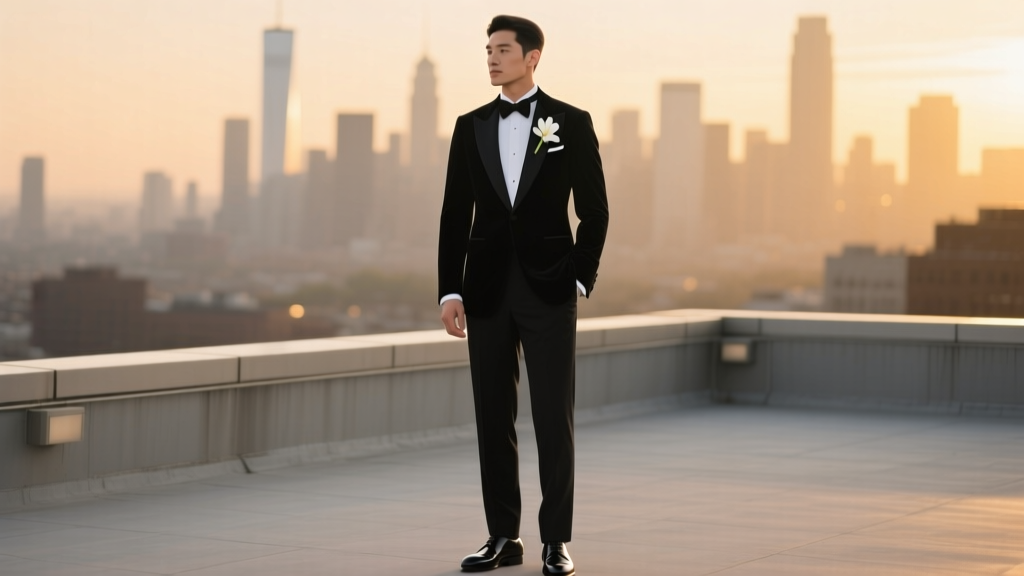
- The Groom: Always wears one—it’s non-negotiable in formal and semi-formal weddings. His boutonniere typically mirrors or complements the bride’s bouquet and often includes a meaningful element (e.g., a sprig of lavender from his grandmother’s garden).
- Groomsmen & Male Wedding Party Members: 92% receive boutonnieres in traditional ceremonies—but increasingly, couples personalize each one (e.g., different flower varieties representing shared memories) or opt for minimalist pins instead of fresh florals.
- Fathers & Stepfathers: 76% wear boutonnieres in U.S. weddings, per The Knot’s regional analysis. In Southern and Midwest ceremonies, it’s nearly universal; in Pacific Northwest and urban indie weddings, it drops to ~54%—often replaced by pocket squares or no accessory at all.
- Ushers & Ceremony Readers: Technically optional—but 63% of couples provide them to maintain visual symmetry during processions. A subtle signal: if an usher wears one, guests subconsciously register him as ‘official.’
- Male Guests: Rarely expected—unless explicitly invited to wear one (e.g., ‘Boutonnieres provided for all guests’ on rustic-chic invites). Doing so unprompted can unintentionally upstage the wedding party.
A real-world example: At a 2023 vineyard wedding in Napa, the couple gave custom sage-and-rosemary boutonnieres to the groom, groomsmen, fathers, and officiant—but asked ushers to wear navy silk pocket squares instead. Why? To avoid overwhelming the soft, earthy color palette with too much greenery. The result? Cohesion without clutter.
The Formality Factor: When Boutonnieres Are Expected (and When They’re Out of Place)
Formality isn’t just about black-tie vs. cocktail attire—it’s about the ceremony’s emotional temperature. A boutonniere signals ‘this moment matters deeply.’ So while it’s standard at black-tie affairs, its presence—or absence—sends nuanced messages at other events.
Consider this spectrum:
- Black-Tie & White-Tie: Boutonnieres are mandatory for the groom and groomsmen. Skipping one reads as careless—even if the suit is impeccable. Florists report 97% compliance here.
- Semi-Formal (e.g., 4 p.m. garden ceremony): Strongly encouraged for wedding party men. Optional for fathers—but 81% choose to wear one as a sign of respect.
- Casual or Beach Weddings: Increasingly flexible. 58% of couples skip boutonnieres entirely; 22% substitute dried florals, succulents, or fabric pins; only 20% use fresh blooms. Why? Heat, humidity, and movement make delicate flowers impractical—and guests prioritize comfort over tradition.
- Micro-Weddings (<15 guests): Highly personalized. One couple gifted matching eucalyptus-and-beryl pins to their 8 guests—including two women—blurring gender lines and emphasizing unity over protocol.
Pro tip: If you’re a guest unsure of expectations, check the invitation’s dress code line. Phrases like ‘Black Tie Encouraged’ or ‘Garden Formal’ imply boutonnieres are welcome; ‘Casual Chic’ or ‘Come as You Are’ strongly suggests they’re unnecessary—and potentially inappropriate.
What to Do If You’re a Guy Attending (Not in the Party)
This is where anxiety spikes—and where etiquette gets crystal clear. Do guys wear boutonnieres to weddings as guests? The answer is almost always no—unless instructed otherwise. Here’s why:
- It’s not your role: Boutonnieres designate official participation. Wearing one uninvited implies you’re part of the wedding party—a subtle but real boundary violation.
- Floral logistics are tightly coordinated: Your boutonniere would need to match the color palette, bloom type, and stem length used for the wedding party. Random florals disrupt cohesion and stress planners.
- It risks overshadowing key figures: A bold, oversized boutonniere on a guest can visually compete with the groom’s—especially in photos.
That said, there are graceful exceptions:
- You’re the bride’s brother and she personally asks you to wear one—even if you’re not officially in the party.
- The couple hosts a ‘floral guest experience’ (e.g., DIY boutonniere station at a barn wedding)—in which case, participation is joyful, not presumptuous.
- You’re attending a cultural wedding where guest boutonnieres are customary (e.g., some Filipino or Indian fusion ceremonies invite elders to wear jasmine pins).
If you’re still uncertain, call the couple or wedding planner and ask: ‘I want to honor your vision—should I plan to wear a boutonniere?’ Nine times out of ten, they’ll say ‘No, but thank you for asking!’—and appreciate your thoughtfulness.
Boutonniere Decision-Making Table: Role, Formality, and Action Plan
| Role | Wedding Formality | Wear a Boutonniere? | Key Considerations | Alternative Options |
|---|---|---|---|---|
| Groom | All levels | Yes — always | Should coordinate with bride’s bouquet; consider sentimental elements (family heirloom brooch pinned beside it, dried petals from a prior ceremony) | N/A — boutonniere is core to groom’s look |
| Groomsman | Black-Tie / Semi-Formal | Yes — expected | Match or complement groom’s; ensure stem is secured (florists use waterproof tape + pin backs) | Mini pocket square in same fabric/color |
| Groomsman | Casual / Micro-Wedding | Optional — discuss with couple | May clash with linen shirts or rolled sleeves; heat-sensitive blooms wilt fast | Dried lavender bundle, leather cord wrap, or enamel lapel pin |
| Father of Groom/Bride | All levels | Yes — highly recommended | Often slightly larger or with richer texture (e.g., velvet ribbon wrap); avoids looking ‘tacked on’ | Custom cufflinks with floral motif, or silk pocket square with botanical print |
| Usher / Reader | Semi-Formal or higher | Recommended — for visual consistency | Keep simpler than groomsmen’s; same base flower, fewer accents | Matching tie bar or engraved lapel pin |
| General Male Guest | All levels | No — unless explicitly invited | Unprompted wearing undermines planning efforts and visual storytelling | Polished pocket square, quality watch, or subtle tie clip |
Frequently Asked Questions
Do groomsmen wear the same boutonniere as the groom?
Traditionally, yes—but modern couples increasingly differentiate them. The groom’s boutonniere is usually the most elaborate (larger bloom, metallic accent, or unique foliage), while groomsmen wear simplified versions using the same core flower and palette. A 2024 study by BloomLogic found that 63% of couples now choose ‘sister’ arrangements—same species, different scale—to balance unity and individuality. Pro tip: If using roses, the groom might wear a full ‘Freedom’ rose, while groomsmen wear tight ‘Sweet Avalanche’ buds.
Can guys wear boutonnieres with casual outfits like chinos and blazers?
Absolutely—if the wedding’s vibe supports it. At a ‘Sunday Brunch’ wedding, a single seeded eucalyptus sprig pinned to a navy blazer reads intentional and relaxed. But avoid delicate blooms (like sweet peas) with casual fabrics—they’ll snag or wilt. Instead, choose hardy, textural elements: dried statice, preserved olive branches, or even a miniature succulent in a brass collar. Stylist Maya Chen notes: ‘The key isn’t formality—it’s intention. If it looks like you chose it, not grabbed it, it works.’
What if a guy has allergies or hates flowers?
Floral alternatives are not just acceptable—they’re increasingly popular. Hypoallergenic options include silk boutonnieres (indistinguishable from real at 3+ feet), pressed-flower resin pins, or botanical-themed enamel pins. For sensory sensitivity, many florists now offer ‘touch-free’ versions: magnetic backings, fabric-wrapped stems, or lightweight wood-and-resin hybrids. One Atlanta couple substituted all natural boutonnieres with hand-carved walnut pins featuring laser-etched fern motifs—zero pollen, zero wilt, 100% memorable.
Do boutonnieres need to match the bridesmaids’ bouquets?
They should harmonize—not mirror. Think complementary contrast: if bouquets feature peonies and ranunculus, boutonnieres might use just ranunculus with dusty miller foliage for texture. Matching exactly feels costumed; coordinating thoughtfully feels curated. As floral designer Javier Ruiz explains: ‘Bouquets are the melody; boutonnieres are the bassline. Same key, different rhythm.’
Is it okay to reuse a boutonniere from a previous wedding?
Only if it’s non-perishable and contextually appropriate. A vintage brooch repurposed as a boutonniere anchor? Yes—sentimental and stylish. A dried floral piece from your sister’s 2019 wedding? Potentially awkward unless the couple knows and loves the story. Fresh florals should never be reused—they lose structural integrity and symbolism. Bottom line: Reuse meaning, not materials.
Debunking Common Myths
Myth #1: “Only the groom wears a boutonniere—it’s a strict tradition.”
Reality: This ‘rule’ originated in 19th-century Europe as class signaling—not universal etiquette. Modern wedding experts like Diane Gottsman (The Protocol School of Texas) confirm: “Today, boutonnieres signify honor, not hierarchy. Excluding fathers or groomsmen contradicts contemporary values of inclusion.”
Myth #2: “A boutonniere must include a flower—it’s not authentic otherwise.”
Reality: Authenticity lies in intention, not botany. Non-floral boutonnieres (leather, metal, wood, fabric) are now 34% of all orders, per FTD’s 2024 trend report. A groom wore a tiny brass gear boutonniere at his steampunk wedding—crafted by his engineer father. Guests called it ‘the most meaningful detail of the day.’
Your Next Step: Confident, Customized, and Completely Stress-Free
So—do guys wear boutonnieres to weddings? Yes, but with nuance, purpose, and respect for the couple’s vision. Whether you’re the groom double-checking protocol, a groomsman choosing between orchids and protea, or a guest wondering whether to buy flowers ‘just in case,’ this isn’t about rigid rules—it’s about showing up with awareness and care. The most powerful boutonniere isn’t the most expensive or elaborate; it’s the one that quietly says, ‘I see you. I honor this moment. I’m here, intentionally.’
Your action step today: If you’re planning a wedding, open a note titled ‘Boutonniere Roles’ and list every male who’ll participate—then assign each a floral or non-floral token *before* finalizing your florist contract. If you’re a guest, re-read your invitation’s dress code line—and if still unsure, send a 2-sentence text to the couple: ‘Love your vision! Want to make sure I honor it—should I plan for a boutonniere?’ That small act of clarity prevents big-day stress for everyone.
More Articles
 How Many People for Wedding: A Stress-Tested Framework
 YouTube Wedding Live Stream: 7-Step Setup (2026)
 Green Dress Wedding Styling: 7 Foolproof Tips (2026)
 Small Wedding Benefits: Joy, Less Stress, Stronger Marriage
 Wedding Planning Timeline: Book Venue & Vendors (2026)
 Cocktail Dress for Wedding: What to Wear in 2026
 Nice Wedding Gifts: 12 Thoughtful, Budget-Smart Picks
 Wedding Toast Order: Who Speaks & When (2026)
 Indian Wedding Gift Amounts (2026)
 Print Wedding Programs: 7 Trusted Options (2026)