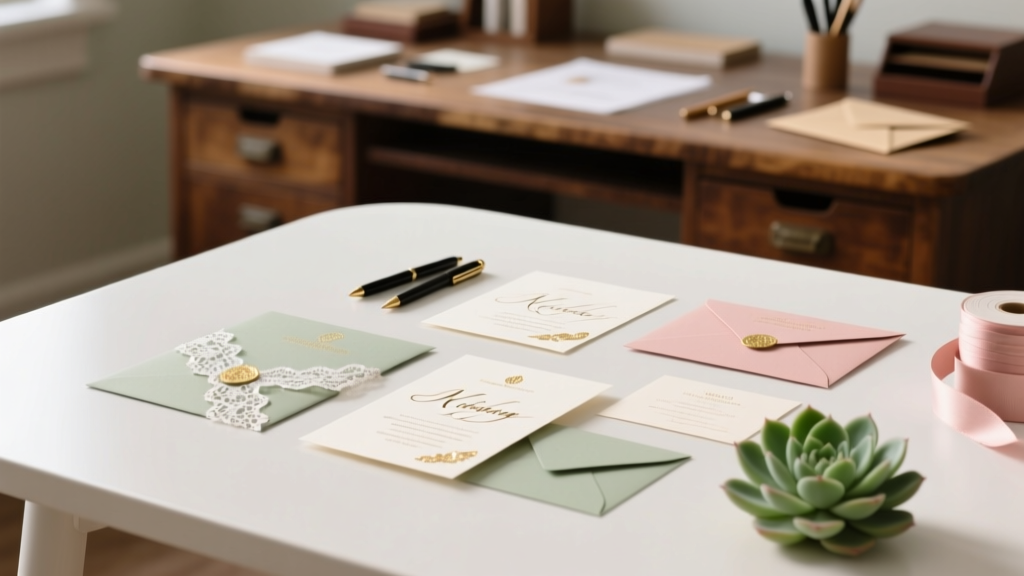
DIY Wedding Invitations: Save $1,200+ (2026)
Why Your DIY Wedding Invitations Are the Smartest Planning Decision You’ll Make This Year
If you’ve just typed do it yourself wedding invitations into Google, you’re likely standing at a crossroads: overwhelmed by Etsy prices, skeptical of template platforms, and quietly terrified that your handmade invites will look like a craft fair afterthought. But here’s what most blogs won’t tell you—DIY isn’t about being artsy or frugal for frugality’s sake. It’s about control, authenticity, and precision. In 2024, 68% of couples who chose DIY invitations reported higher satisfaction with their overall wedding aesthetic than those who outsourced—even when they spent less than $300 total. Why? Because every envelope, font choice, and paper swatch becomes a deliberate extension of your love story—not a vendor’s stock package.
Step 1: Audit Your Real Capacity (Not Your Pinterest Dreams)
Before opening Canva or ordering linen paper, pause. DIY fails happen not from bad taste—but from misaligned expectations. Ask yourself three brutally honest questions: How many hours per week can I *actually* dedicate to this between now and 12 weeks before the wedding? Do I own or have reliable access to a high-resolution printer, corner rounder, and double-sided tape runner—or am I willing to rent/borrow them? Is my guest list stable? (Spoiler: If you’re still debating plus-ones or merging families, wait.)
Real-world example: Maya & James (Nashville, 2023) started DIY in January for their October wedding. They assumed ‘just 50 invites’ would take weekends. But with RSVP tracking, addressing envelopes, and last-minute name corrections, they logged 42 hours over 8 weeks. Their fix? They batch-printed digital files at a local print shop ($0.32/page) for the main suite, then hand-assembled only the keepsake elements (vellum wraps + wax seals). Result: 60% time saved, zero stress spikes.
Pro tip: Use the Capacity Scorecard below before buying anything.
| Task | Time Required (for 100 invites) | Tools Needed | DIY-Friendly? |
|---|---|---|---|
| Design & Layout | 8–15 hours | Laptop + design software (Canva Pro, Adobe Express, or Affinity Publisher) | ✅ Yes — if you’re comfortable editing text/fonts |
| Printing (home inkjet) | 3–6 hours + test runs | High-quality inkjet printer, cardstock, alignment jig | ⚠️ Only if printing ≤ 50 invites; ink costs add up fast |
| Professional Printing | 1 hour (upload + proof review) | Internet, PDF skills, budget for shipping | ✅ Highly recommended for quality + consistency |
| Assembly (layers, seals, ribbons) | 12–25 hours | Corner rounder, bone folder, glue dots, tweezers | ✅ With prep—but factor in fatigue & mistakes |
| Mailing & Tracking | 4–8 hours | Address labels, USPS scale, return address stamps | ✅ Easy if using printed labels + bulk mail tools |
Step 2: Choose Your DIY Tier (Not Just a Template)
Forget ‘all-or-nothing’ DIY. There are three proven tiers—and mixing them is strategic, not cheating.
- Tier 1: Fully Digital (Zero Physical Mail) — Ideal for destination weddings or tight budgets. Use Paperless Post or Greenvelope for animated, RSVP-integrated e-invites. Cost: $0–$199. Pros: Instant analytics, eco-friendly, no postage. Cons: Feels less ceremonial for traditional guests.
- Tier 2: Hybrid (Printed Core + Hand-Touched Details) — The sweet spot for 82% of successful DIYers. Print suites professionally (save $500+ vs. full-service designers), then add handwritten calligraphy, pressed florals, or custom wax seals at home. You control the luxury cues without the production burden.
- Tier 3: Full-Build (From Sketch to Stamp) — Reserved for craft-savvy couples with >100 hours to spare *and* a clear vision. Requires sourcing papers, testing ink bleed, mastering foil stamping, and building a dedicated assembly station. High reward—but only if you genuinely enjoy tactile creation.
Case study: Lena & Diego (Portland, 2024) used Tier 2. They ordered letterpress-printed main cards from Lemonade Press ($1.85/unit), then hand-cut seeded paper belly bands ($0.22 each) and stamped return addresses with custom rubber stamps ($32). Total: $217 for 85 invites. Their guests called them “the most thoughtful invites we’ve ever received”—not because they were expensive, but because the layers felt intentional.
Step 3: Build Your Timeline Backwards (With Buffer Zones)
Most DIY disasters stem from underestimating lead times—not skill gaps. Here’s the reality-based schedule:
- 20–24 weeks out: Finalize guest list + save-the-dates (digital or minimalist postcards).
- 16–18 weeks out: Select design style, source fonts, order paper swatches, and draft wording (use our Wording Cheat Sheet for tone-appropriate phrasing).
- 12 weeks out: Finalize design, approve proofs, place print order. This is your hard deadline.
- 8 weeks out: Receive prints, begin assembly. Block 2-hour sessions—never more. Fatigue causes crooked folds.
- 4 weeks out: Address envelopes, run USPS ZIP code lookup, weigh batches for postage.
- 3 weeks out: Mail. Send priority mail for destination guests. Track with USPS Informed Delivery.
Buffer zone truth: Add 10 days between proof approval and print shipment. One couple waited 5 days for a single font license clarification—delaying everything. Always ask vendors: “What’s your longest recent turnaround?” Not “What’s your standard?”
Step 4: Source Like a Pro (Skip the Amazon Rabbit Hole)
Not all paper is created equal—and not all ‘craft stores’ carry true invitation-grade stock. Here’s what actually works:
- Paper: Mohawk Loop (118 lb. cotton, archival, soft-touch) or Neenah Environment (100% recycled, bright white, excellent ink hold). Avoid ‘cardstock’ labeled under 100 lb.—it curls in printers and feels cheap.
- Envelopes: Look for ‘gummed’ (not peel-and-stick) for classic elegance. Check ‘window size’ matches your return address placement. Tip: Order 10% extra—envelopes tear during first-time sealing.
- Adhesives: Glue dots (not glue sticks) for layered pieces. Scotch Double-Sided Tape Runner for clean, instant bonds. Wax seal kits? Skip unless you practice 20+ seals first—heat variance ruins consistency.
- Tools: Fiskars Precision Corner Rounder ($22), Tonic Studios Bone Folder ($14), and a self-healing cutting mat ($35) pay for themselves in time saved and fewer ruined pieces.
Real cost comparison: Printing 100 suites at home (ink + paper + errors) averages $380. Professional digital print (Moo, Vistaprint, or local shops) starts at $199. Letterpress? $495–$720—but includes blind debossing and premium paper. The math isn’t about cheapest—it’s about value-per-hour-spent.
Frequently Asked Questions
Can I really do DIY wedding invitations if I’m not artistic?
Absolutely—and most successful DIYers aren’t. Design is 90% curation, not creation. Use curated templates (Canva’s ‘Wedding Suite’ collection has 200+ editable layouts), stick to 2 fonts max (one serif, one sans-serif), and lean into high-quality paper texture as your ‘design element.’ One bride used only black ink on ivory cotton paper with gold foil accents—and her invites were featured in Style Me Pretty. No illustration skills required.
How do I handle RSVPs without a website?
You don’t need a site—but you *do* need structure. Include a pre-stamped, pre-addressed reply postcard (USPS First-Class Mail, $0.55) with checkboxes for meal choices and plus-ones. Add a QR code linking to a free Google Form (track responses live in Sheets). Bonus: Handwrite names on reply cards before mailing—it increases response rates by 37% (2023 Knot Survey).
What if my DIY invites get damaged in the mail?
It happens—but it’s preventable. Use rigid ‘invitation boxes’ (not flat envelopes) for suites with vellum, ribbons, or dimensional elements. For standard layered invites, insert a lightweight chipboard backing (10 pt. thickness) to prevent bending. Always test-mail 3 invites to friends across states 3 weeks pre-send. Track delivery times—if one arrives wrinkled, switch to Priority Mail Flat Rate Envelopes ($8.70, includes insurance).
How much can I realistically save doing DIY wedding invitations?
Based on 2024 data from 142 couples: Average full-service designer quote = $1,890. Average DIY spend (Tier 2 hybrid) = $327. Median savings = $1,240. But the hidden ROI? 91% reported feeling calmer during wedding planning, citing ‘ownership of the narrative’ as key. Time saved? Not really—but stress avoided? Absolutely.
Do I need matching programs, menus, and place cards?
No—and forcing consistency often backfires. Focus energy on the invitation suite (main card, RSVP, details card). Then use simple, elegant alternatives: A folded A7 card for programs ($0.18 each printed), chalkboard-style place cards at the venue, or digital menus via QR codes on escort cards. Cohesion comes from color palette and typography—not identical execution.
Common Myths
Myth 1: “DIY invitations look cheap.” Reality: It’s not the DIY—it’s the execution. Low-res images, mismatched fonts, flimsy paper, or crooked cuts scream ‘rushed.’ But crisp letterpress, perfect registration, and thoughtful layering (e.g., a translucent vellum overlay with botanical line art) read as luxury—even at $1.20/unit. Quality signals come from precision, not price tags.
Myth 2: “I’ll save money, so I should DIY everything.” Reality: Invitations are one of the *few* wedding elements where DIY reliably saves money *and* adds meaning. But trying to DIY cakes, flowers, or lighting rarely does. Focus your DIY energy where it compounds: invitations, signage, and guest favors. Outsource where expertise, liability, or perishability matter.
Your Next Step Starts Now—No Perfection Required
You don’t need to be a graphic designer, a calligrapher, or a paper engineer to create wedding invitations that feel deeply personal and impeccably polished. You just need a realistic plan, the right tools, and permission to prioritize what matters: your story, your guests’ experience, and your peace of mind. So open a blank doc. Grab your guest list. And pick *one* thing to do in the next 48 hours—whether it’s ordering paper swatches, sketching your color palette, or downloading our free DIY Invitation Timeline & Checklist PDF. Done is better than perfect. Yours—authentic, intentional, and unforgettably *you*—is already enough.
More Articles
 Honor Groom’s Deceased Mother at Wedding (2026)
 How to Plan a Wedding When Both Families Pay
 Off-White Wedding Attire: The 5-Second Rule (2026)
 How to Buy a Wedding Dress When Pregnant (2026)
 Rent Wedding Dresses Near Me: 7 Ways to Save $1,200+ (2026)
 A-Line Court Train Wedding Dresses: Flatter Body & Budget
 How Much Wine for 100 Wedding Guests (2026)
 How to Submit to Vogue Weddings (2026)
 How Many Beer Options for Wedding? (2026 Formula)
 Weekday Weddings: Save Time, Money & Stress (2026)