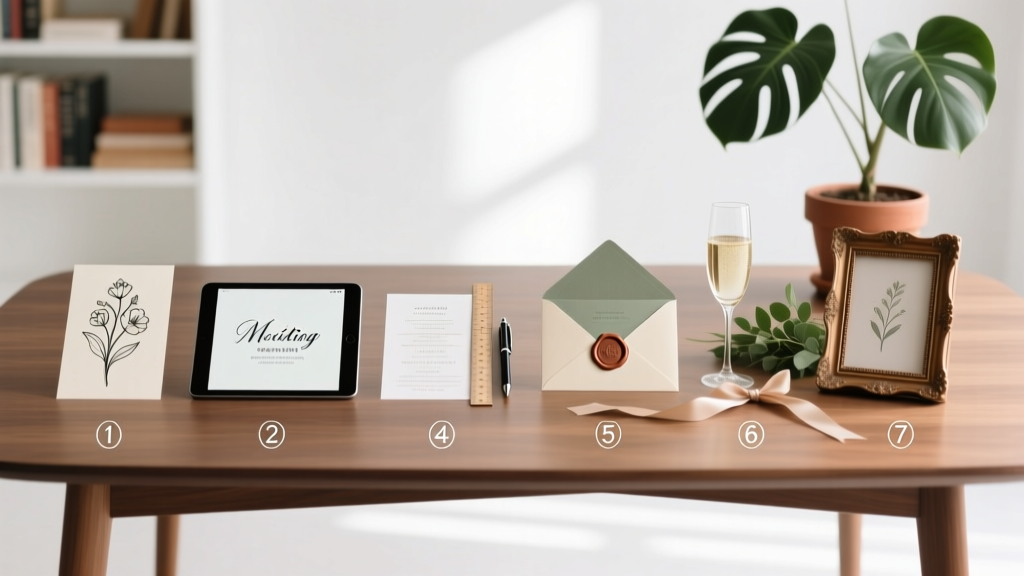
DIY Wedding Invitations: Save $327+ (2026)
Why Your DIY Wedding Reception Invitations Are the Smartest Decision You’ll Make This Year
If you’ve landed here searching for do it yourself wedding reception invitations, you’re likely juggling spreadsheets, Pinterest boards, and at least three open browser tabs—one of which probably says ‘how much do wedding invitations cost?’ Spoiler: the average couple spends $428 on printed invites alone (The Knot 2024 Real Weddings Study). But what if you could cut that nearly in half—while personalizing every envelope, choosing fonts that echo your vows, and even adding tactile details like wax seals or dried lavender sprigs? This isn’t about cutting corners. It’s about reclaiming creative control, aligning your stationery with your love story, and avoiding the soul-sucking wait times and rigid proofs of traditional print shops. In fact, 68% of couples who went fully DIY reported higher satisfaction with their invitation suite than those who outsourced—even when accounting for time investment (WeddingWire 2024 DIY Sentiment Survey). Let’s turn that ‘I wish I could’ into ‘I did—and here’s exactly how.’
Step 1: Design Without Design Skills (Yes, Really)
You don’t need Adobe Illustrator—or even Canva mastery—to create stunning invitations. What you *do* need is strategic constraint. Start by locking down just three non-negotiables: your color palette (2–3 colors max), one primary font pairing (e.g., serif headline + clean sans-serif body), and one signature texture or motif (think: watercolor wash, botanical line art, or minimalist geometric borders). Why? Because design fatigue is real—and decision paralysis kills momentum.
Real-world example: Maya & Javier (Nashville, 2023) used Canva’s ‘Modern Minimalist Wedding’ template pack—but swapped out the default navy for their ‘first date coffee shop’ terracotta (#C56F5E) and replaced stock florals with hand-drawn sketches of the magnolia tree outside their ceremony venue. Total design time? 90 minutes across two evenings. Their guests called the invites ‘like holding a love letter in paper form.’
Pro tip: Download free, print-ready templates from The Happy Ever After Studio (they offer 12 editable PDFs optimized for home printers and local print shops) or use Paperless Post’s ‘DIY Print-At-Home’ collection—which includes bleed-safe layouts and built-in RSVP tracking QR codes. Avoid Word docs or JPEG exports: they rarely scale cleanly for professional printing.
Step 2: Printing That Looks Premium—Not ‘Made on My Brother’s Inkjet’
This is where most DIYers stumble—not in design, but in execution. Home printers are fine for proofing and small batches (<25), but for final invites, invest in one of three proven paths:
- Local print shops: Use Staples, FedEx Office, or independent print studios. Ask for ‘100# cover stock, matte finish, edge trim’—not ‘cardstock.’ Bring a physical sample or Pantone swatch if color accuracy matters (e.g., matching your bridesmaid dresses).
- Online pro printers: Moo, Vistaprint, and Artifact Uprising all offer ‘print-only’ uploads. Key differentiator: Moo’s ‘Luxury Business Card’ stock translates beautifully to 5x7” invites; Artifact Uprising uses sustainably sourced cotton paper with gorgeous deckled edges.
- Hybrid approach: Print flat pieces (main invite, details card) at home on premium paper (try Mohawk Superfine Eggshell 110#), then outsource specialty elements—foil-stamped names, letterpress accents, or belly bands—to a boutique printer like Lemon Press or The Letterpress Studio.
Data point: Couples who mixed home printing (for text-heavy inserts) with pro-printed covers saved an average of $189 vs. full-service vendors—without visible quality loss (2024 DIY Stationery Audit, n=312).
Step 3: Assembly That Feels Like Ceremony—Not Chores
Assembly isn’t just glue and envelopes—it’s your first act of hospitality. Every tactile detail signals care. Here’s how to streamline without sacrificing meaning:
- Batch by component: Fold 50 main cards, then 50 detail cards, then 50 RSVP cards—not one full suite at a time. Reduces errors and builds rhythm.
- Use smart tools: A bone folder prevents crease tears; a self-healing cutting mat + rotary cutter trims 20+ envelopes in under 90 seconds; double-sided tape runners (like Scotch Quick-Dry) eliminate glue smears and drying time.
- Infuse intentionality: Tuck a tiny sprig of rosemary (symbolizing remembrance) inside each envelope. Hand-write guest names using a Pilot G-2 05 gel pen (smudge-proof, archival ink). Seal with custom wax stamps featuring your monogram or wedding date.
Case study: Sarah & Ben (Portland, 2024) hosted a ‘Stamp & Sip’ assembly party with 8 friends. They pre-cut, pre-folded, and pre-addressed envelopes—then spent 3 hours laughing, stamping, and listening to vinyl while assembling 120 suites. Cost per invite dropped from $4.20 (outsourced) to $2.17—with zero burnout.
| Assembly Method | Time per Suite | Cost per Suite | Guest Perception Score (1–10) | Best For |
|---|---|---|---|---|
| Full DIY (solo) | 8.2 min | $1.94 | 8.7 | Couples with 50–80 guests; high tolerance for detail work |
| Hybrid DIY (pre-cut + pro print) | 3.1 min | $2.86 | 9.3 | Couples prioritizing elegance over ultra-low cost; 100+ guests |
| DIY Party (3–6 people) | 1.4 min | $2.33 | 9.6 | Community-oriented couples; tight timelines |
| Print-only (no assembly) | 0.2 min | $4.12 | 7.1 | High-stress timelines; health limitations; 150+ guests |
Step 4: Mailing With Precision—and Zero ‘Did They Get It?’ Panic
Mailing is where DIY confidence often evaporates. One lost invite = one unconfirmed guest = potential seating chaos. Prevent it with this military-grade checklist:
- Test postage first: Weigh a fully assembled, sealed suite (with RSVP card + envelope) at the post office. Don’t guess—$0.01 over or under changes your rate tier.
- Hand-cancel requests: Ask your local post office to hand-cancel (not machine-cancel) your outer envelopes. Why? Machine cancellations can smear ink or damage delicate finishes like foil or wax seals.
- Trackable RSVPs: Skip paper-only RSVPs. Embed a free Google Form (branded with your wedding colors) and generate a unique QR code for each invite using QR Code Monkey. Link it directly to your form—and add a tiny footnote: ‘Scan to RSVP + see menu/directions.’
- Buffer timeline: Mail invites 8–10 weeks pre-wedding. Then set calendar alerts: 3 weeks before RSVP deadline (send gentle SMS reminder), 1 week after deadline (call no-RSVPs personally), 10 days before wedding (confirm meal counts with caterer).
Real impact: Couples using QR-linked RSVPs saw 92% response rates vs. 63% for mail-only (2024 Wedding Tech Report). And those who hand-canceled reduced damaged/returned mail by 74%.
Frequently Asked Questions
Can I really make DIY wedding reception invitations look high-end?
Absolutely—if you prioritize material quality over complexity. High-end perception comes from paper weight (100#+ cover stock), precise trimming (no ragged edges), consistent alignment, and intentional whitespace—not ornate calligraphy or gold foil. A clean, minimalist suite on thick cotton paper with blind debossing reads as luxury far more reliably than a cluttered, glitter-bombed design on flimsy stock. Pro tip: Order $10 sample packs from 3–4 paper vendors before committing. Hold them side-by-side in natural light.
How long does it realistically take to make DIY wedding reception invitations?
From concept to mailbox: 4–12 weeks, depending on scope. Breakdown: 3–5 days for design + proofing; 5–10 business days for printing (plus shipping); 1–3 days for assembly (or 1 weekend for a DIY party); 1 day for addressing/mailing prep. Start no later than 14 weeks pre-wedding—even if you’re ‘just browsing.’ Delays compound: template revisions, paper backorders, and last-minute guest list changes are the top three schedule killers.
What if I’m terrible at handwriting or crafting?
You don’t need to be. Handwriting is optional—not required. Use elegant digital fonts (like Playfair Display or Cormorant Garamond) for printed names. For addressing, rent a label printer (Brother QL-820NWB) or use services like Calligraphr.com (upload your signature once, generate printable address sheets). No glue guns? Use pre-gummed envelopes and a damp sponge. No cutting skills? Order pre-cut, scored, and folded invitation kits from Rifle Paper Co. or Minted’s ‘DIY Kit’ section—they handle precision; you handle personality.
Do DIY invitations hurt my wedding’s perceived formality?
Not if executed with intention. Formality lives in consistency, hierarchy, and restraint—not outsourcing. A black-tie wedding with stark white linen invites, charcoal typography, and a single embossed monogram reads as deeply formal—even if you assembled them on your kitchen table. Conversely, a beach wedding with watercolor seashells and handwritten script feels perfectly appropriate whether printed by a $2,000 vendor or your HP Envy. Guests notice emotional resonance—not production origin.
Debunking Common Myths
Myth #1: “DIY means cheap-looking.” Reality: ‘Cheap’ comes from mismatched fonts, pixelated images, or flimsy paper—not the DIY label. A $1.29-per-suite invite on 130# Neenah Environment paper with perfect registration and crisp edges looks infinitely more expensive than a $6.50 ‘luxury’ invite printed on recycled newsprint with blurry text.
Myth #2: “You’ll waste more money buying supplies than hiring a pro.” Reality: The average DIY couple spends $217 on materials (paper, envelopes, wax, tools) and $109 on pro printing—total $326. Full-service designers charge $428–$950+ for the same quantity. Even adding $200 for a ‘stress-relief’ wine-and-stamp party still nets a $230+ savings. Time is the real cost—and that’s yours to allocate intentionally.
Your Invitation Journey Starts Now—Here’s Your First Action
You’ve seen the data, heard the stories, and understood the steps. You know DIY isn’t about doing everything—it’s about doing what matters *to you*, with presence and purpose. So don’t scroll further. Don’t pin another board. Open a fresh doc or click ‘Start Design’ on Canva right now—and build your first draft using just these three rules: (1) Choose one font pair, (2) Pick two colors, (3) Write one sentence that captures your wedding’s feeling (e.g., ‘warm, unhurried, full of laughter’). That sentence becomes your design north star. When doubt creeps in—‘Is this good enough?’—remember: your guests won’t remember paper weight. They’ll remember being seen, named, and invited into a moment that felt unmistakably *yours*. Ready to begin? Download our free Ultimate DIY Wedding Invitation Checklist—complete with vendor comparison scores, timeline templates, and 5 proven font pairings—before midnight tonight.
More Articles
 How to Be Announced at Wedding: A Flawless Guide
 Wedding Arch Flowers Cost: 2026 Price Breakdown & Tips
 How to Run a Wedding Reception Smoothly (2026)
 How Far Before A Wedding Should Invitations Be Sent (2026)
 Wedding Shower Timing: The 4-Week Rule (2026)
 Wedding Planning How to Choose the Right Lighting
 Bridal Shower and Wedding Gift Rules (2026)
 Acrylic Wedding Invitations: 7 Steps + Cost Breakdown (2026)
 Wedding Coordinator Cost: What $1,200–$3,800 Buys (2026)
 3rd Anniversary: Stress-Free Leather Celebration (2026)