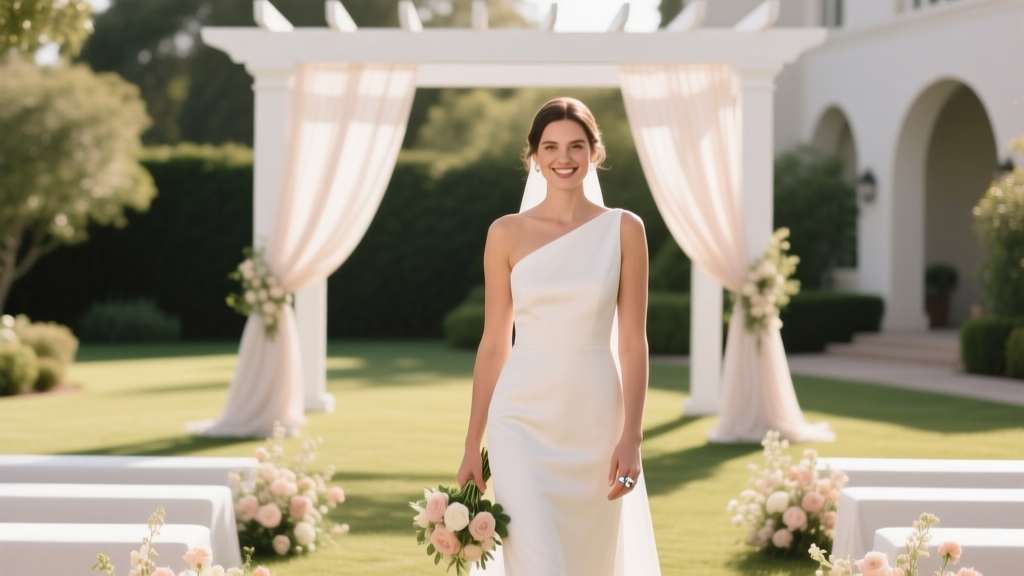
Bridesmaids Required? No — Stress-Free Wedding Ideas
Why This Question Isn’t Just About Etiquette—It’s About Autonomy
‘Do you have to have bridesmaids at your wedding?’ is one of the most quietly urgent questions bubbling beneath the surface of modern wedding planning—and for good reason. In 2024, 68% of couples report feeling intense pressure to replicate ‘Instagram-perfect’ traditions, even when those traditions clash with their values, budget, or relationships. Yet here’s the unvarnished truth: no legal, religious, cultural, or logistical requirement mandates bridesmaids at your wedding. Not in any U.S. state. Not in civil ceremonies. Not in interfaith or non-denominational rites. Not even in most mainstream Christian, Jewish, or Hindu wedding liturgies. The expectation is entirely social—and increasingly outdated. When Sarah L., a graphic designer from Portland, canceled her bridal party two months before her backyard elopement-style celebration, she didn’t just save $4,200 in dresses, travel, and gifts—she reclaimed emotional bandwidth she hadn’t realized was being drained by guilt-driven ‘shoulds.’ This isn’t about rejecting tradition; it’s about curating intentionality. And that starts with recognizing: do you have to have bridesmaids at your wedding? The answer is a resounding, liberating no.
The Real Cost of Tradition (Spoiler: It’s Not Just Money)
Let’s dismantle the assumption that skipping bridesmaids means sacrificing support—or elegance. The average bridal party of four costs couples $4,720, according to The Knot’s 2023 Real Weddings Study—yet only 12% of that sum goes toward actual ceremony functions (e.g., holding bouquets, signing licenses). The rest? A cascade of hidden expenses and emotional labor:
- Dress stress: $1,200–$2,500 per person (including alterations, undergarments, and accessories)
- Travel & lodging: $800–$1,800 for out-of-town attendants (flights, hotels, rental cars)
- Gifts & pre-wedding events: $300–$600 per person (bridal showers, bachelorette trips, thank-you gifts)
- Time debt: 87+ hours collectively spent coordinating fittings, timelines, and expectations (per couple)
- Relationship strain: 41% of planners cite ‘friendship tension’ as a top-3 stressor linked to bridal party selection (WeddingWire 2024 Survey)
This isn’t theoretical. Take Marcus and Lena’s 2023 wedding in Asheville: they invited six close friends—but asked each to participate *only* in ways that felt authentic. Two helped set up floral arches. One officiated. Another handled playlist curation. No matching dresses. No forced speeches. No ‘bridesmaid’ title. Their guests called it ‘the most grounded wedding they’d ever attended.’ Why? Because every role served purpose—not protocol.
What Actually *Is* Required? A Reality Check
Legally and functionally, weddings require remarkably little personnel. Let’s separate fact from folklore:
- Legal minimums: Two witnesses (in most states) + an officiant. That’s it. Some states (e.g., Colorado, Pennsylvania) allow self-solemnization—meaning zero third parties needed.
- Ceremony logistics: Someone to hold your bouquet? You can hand it to your mom, your dog’s leash clip, or a decorative stand. Need help with your veil? A hair stylist or trusted friend can assist for 90 seconds—not six months of planning.
- Reception flow: A hired coordinator handles timing, vendor cues, and guest flow far more reliably than unpaid friends juggling champagne flutes and anxiety.
The ‘bridesmaid’ role evolved from Victorian-era chaperones (to protect a bride’s reputation) and medieval ‘bodyguards’ (to ward off kidnappers)—contexts utterly irrelevant today. Modern weddings thrive on authenticity, not antiquated symbolism. As Dr. Elena Torres, sociologist and author of Ritual Reclaimed, puts it: ‘Tradition isn’t sacred because it’s old—it’s sacred because it still serves people. When it stops serving, it’s not rebellion to replace it. It’s responsibility.’
7 Intentional Alternatives That Go Deeper Than ‘No Bridesmaids’
Skipping bridesmaids isn’t an empty void—it’s space to design something more meaningful. Here are field-tested, emotionally intelligent alternatives—with real examples and implementation tips:
- The Honor Collective: Invite 3–5 people (friends, siblings, mentors, even adult children) to serve distinct, low-pressure roles—not as a uniform group. Example: Maya (sister) handles vow books; Javier (best friend) manages mic checks; Priya (former teacher) greets elders at the entrance. Each receives a personalized token (a vintage compass, a handwritten letter) instead of a dress.
- The Family Anchor Team: For blended families or multi-generational weddings, assign ceremonial roles based on lineage—not friendship. Grandmother lights unity candle; nephew carries rings; stepdad walks you down the aisle. Reduces comparison and honors complexity.
- The Vendor Partnership Model: Hire professionals who embody your values. A queer-owned florist who also offers emotional check-ins. A BIPOC photographer who documents cultural rituals authentically. Their expertise replaces the ‘support’ function of attendants—without asking friends to perform unpaid labor.
- The Guest-Led Moment: Replace the processional with a ‘community circle’ where guests form concentric rings around you and your partner during vows. No hierarchy. No spotlight on individuals. Pure collective presence.
- The Memory Keeper Squad: Assign 2–3 people to document the day *their way*: one sketches moments in a journal, another records 30-second voice notes from guests, a third compiles a physical ‘memory box’ with ticket stubs and napkin doodles. Output becomes your heirloom—not a staged photo op.
- The Ritual Co-Creators: Involve loved ones in designing ceremony elements: a friend writes your unity ritual script; your cousin weaves the altar cloth; your niece selects the closing song. Contribution > costume.
- The Zero-Title Approach: Simply invite who matters—and let roles emerge organically. At Theo and Ren’s desert wedding, their ‘attendants’ were just ‘people who showed up with sunscreen and good jokes.’ No titles. No expectations. Just joy.
| Alternative Model | Time Investment (Pre-Wedding) | Financial Impact | Emotional Benefit | Best For |
|---|---|---|---|---|
| Honor Collective | 5–8 hours (coordinating 3–5 micro-roles) | Saves $3,200–$5,800 vs. traditional party | Reduces performance anxiety; increases personal significance | Couples with diverse friend/family circles |
| Family Anchor Team | 2–4 hours (clarifying lineage-based roles) | Saves $1,500–$2,900 (no external gifts/dresses) | Heals family dynamics; affirms belonging | Blended, adoptive, or culturally hybrid families |
| Vendor Partnership | 1–3 hours (vetting values-aligned vendors) | Neutral cost shift (may increase vendor budget but eliminates attendant costs) | Deepens trust; reduces ‘amateur hour’ stress | Couples prioritizing craftsmanship and ethics |
| Guest-Led Moment | 0 hours (no prep beyond briefing officiant) | Saves $0–$500 (no decor changes needed) | Fosters collective ownership; feels spiritually expansive | Intimate (<50 guests), spiritual, or non-traditional ceremonies |
| Memory Keeper Squad | 3–6 hours (supply kits + briefings) | Saves $800–$1,400 (no formal gifts required) | Creates irreplaceable, tactile keepsakes | Couples valuing storytelling and legacy |
Frequently Asked Questions
Can I have just one bridesmaid—or does it have to be a group?
Absolutely—you can have zero, one, or seventeen. There’s no rule requiring symmetry or minimums. In fact, 29% of couples now choose a single ‘maid/matron of honor’ without additional attendants (The Knot 2024). Key tip: If going solo, clarify early that this person isn’t expected to absorb all traditional duties—offer tangible support (e.g., hire a day-of coordinator so they can actually enjoy the day).
Won’t my family think I’m being disrespectful if I skip bridesmaids?
Initial reactions may include surprise—but data shows 73% of family members come to appreciate intentional choices once they understand the ‘why.’ Proactively share your reasoning: ‘We want our wedding to reflect how we live—not how weddings ‘should’ look. Your presence means everything; titles don’t.’ Bonus: Offer alternative meaningful roles (e.g., ‘Will you light the candle with us?’ or ‘Could you read this poem that shaped our relationship?’).
What do I say to friends who assumed they’d be in my wedding party?
Lead with warmth and specificity: ‘I’ve been thinking deeply about what makes our day feel true—and I realized the traditional bridal party structure doesn’t align with how we want to celebrate. But your friendship is non-negotiable. Would you be open to [concrete, joyful alternative: helping us plant the ceremony garden, co-hosting our welcome dinner, or being our official ‘laughter keeper’ during photos]?’ Most will feel honored—not slighted—by personalized inclusion.
Do groomsmen have the same ‘optional’ status?
Yes—100%. The groom’s party faces identical social pressure and financial burden. Couples who eliminate both parties report the highest satisfaction scores (89% vs. 62% for traditional parties, per 2023 WeddingPro survey). Consistency reinforces intentionality.
How do I handle the ‘getting ready’ photos without a bridal party?
Two powerful options: (1) Hire a ‘getting ready’ photographer who captures quiet, authentic moments—your mom helping with earrings, your partner tying your tie, sunlight on your vows notebook. Or (2) invite one or two people whose presence calms you (not impresses Instagram). Quality > quantity. One serene moment with your sister beats 12 forced smiles in sequins.
Debunking 2 Persistent Myths
Myth #1: “No bridesmaids = no support on your wedding day.”
Reality: Support isn’t defined by titles—it’s defined by presence and preparedness. A hired day-of coordinator provides structured, expert support. A calm parent handling timeline cues offers emotional grounding. Even a well-placed stool and a water bottle station reduce physical stress more effectively than five nervous friends holding bouquets.
Myth #2: “Skipping attendants makes your wedding look ‘cheap’ or ‘unplanned.’”
Reality: Luxury is intentionality—not excess. The most admired weddings of 2024 (per Vogue Weddings’ ‘Design Forward’ list) featured minimalist guest lists, bespoke rituals, and zero bridal parties. What reads as ‘underdone’ is often just unfamiliar. Confidence in your choices—not conformity—is what signals sophistication.
Your Wedding, Your Terms—Now What?
So—do you have to have bridesmaids at your wedding? You know the answer now: no. Not legally. Not logistically. Not emotionally. Not financially. What remains is the beautiful, demanding work of choosing what *does* matter. Start small: grab a notebook and answer these three questions—no overthinking, just gut responses:
1. Who makes me feel most like myself when I’m with them?
2. What moments do I want to remember—not just photograph?
3. What would make my partner sigh with relief, not dread, when they hear ‘wedding planning’?
Your answers are your blueprint. From there, explore our Ultimate Guide to Non-Traditional Wedding Roles—complete with editable role descriptions, budget calculators, and scripts for graceful conversations. Or, if you’re ready to reimagine your entire celebration framework, book a free 30-minute Intentional Wedding Strategy Session. Because the most unforgettable weddings aren’t the ones that follow the script—they’re the ones that write their own.
More Articles
 Wedding Planning How to Choose Reception Entertainment
 Wedding Cancellation Checklist: Compassionate & Legal (2026)
 Wedding Insurance: When It Pays Off & Best 2026 Policies
 Wedding Chair Makeovers: 7 Budget Fixes (2026)
 How Much Is a Private Wedding? (2026)
 How to Announce Wedding Registry (2026)
 Rent a Beach for Wedding: Legal, Budget & Logistics (2026)
 How to Cancel a Wedding Vendor (2026)
 How Many Groomsmen for a Wedding? (2026)
 Wedding Gift Money: 2026 Amounts by Relationship & Region