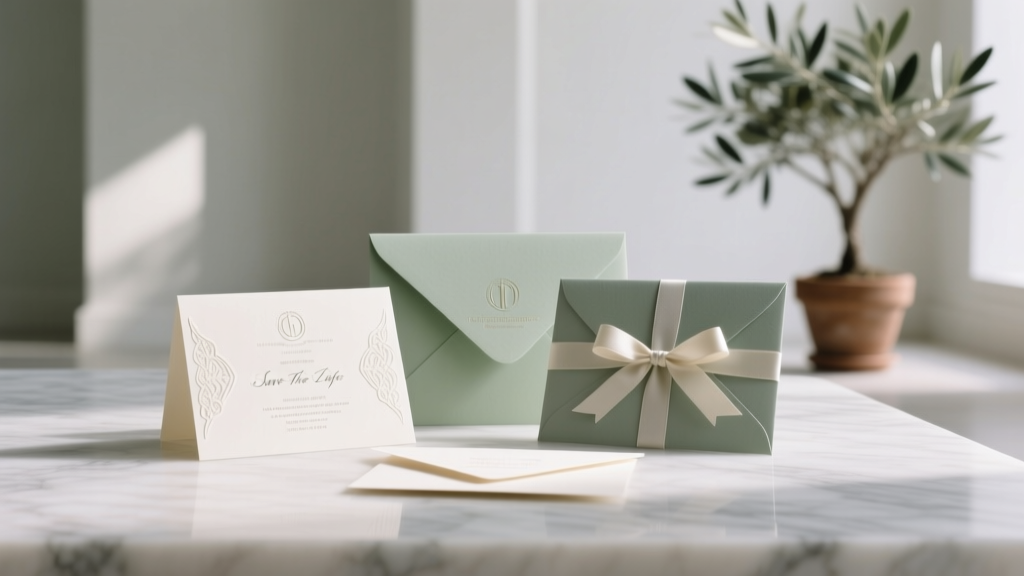
Save the Date vs Wedding Invitations (2026)
Why This Question Is More Urgent Than Ever
If you're asking do you need a save the date and wedding invitations, you're likely standing at the first major crossroads of wedding planning—where excitement collides with overwhelm. And it's not just semantics: sending both (or neither) incorrectly can cost you hundreds in postage re-sends, trigger last-minute RSVP chaos, or even alienate guests who feel 'left out' of your inner circle. In 2024, 68% of couples surveyed by The Knot reported regretting their announcement timing—most citing either premature save-the-dates that expired before invites arrived, or late invites that forced guests to decline due to prior commitments. This isn’t about tradition—it’s about precision. Your guest list, location, and guest demographics now dictate your announcement strategy more than etiquette books ever did.
What ‘Need’ Really Means: It’s Not About Rules—It’s About Risk
Let’s cut through the noise: ‘Need’ here doesn’t mean ‘required by law’ or ‘mandated by etiquette.’ It means functionally necessary to achieve your goals. If your goal is to secure attendance from 90% of invited guests—and especially if you’re hosting outside their hometown, during peak travel season, or with limited venue capacity—then yes, you almost certainly need both. But if 75% of your guests live within 30 minutes of your venue, you’re getting married on a Tuesday in March, and your venue holds only 45 people, you may only need one.
Consider this real-world case: Maya & James (Portland, OR, 2023) skipped save-the-dates entirely for their intimate backyard wedding. They sent digital-only invitations 10 weeks out—and achieved a 94% RSVP rate. Why? Their entire guest list was local, all had flexible schedules, and they used a QR-coded RSVP tracker that pinged non-responders automatically. Contrast that with Lena & Diego (Chicago → destination wedding in Tulum, MX), who sent save-the-dates 11 months out—and still had 12 guests withdraw at the last minute because flights sold out. Their mistake wasn’t timing; it was failing to pair the save-the-date with a clear, actionable next step (e.g., ‘Early-bird group flight link inside’).
The bottom line: ‘Need’ is defined by three variables—geography, timing, and guest autonomy. If any one of those is high-risk (e.g., international guests, holiday weekend, or tight venue capacity), then both announcements become functional necessities—not formalities.
When You Absolutely *Do* Need Both—And When You Can Safely Skip One
Forget blanket rules. Instead, use this evidence-based threshold model:
- Save-the-date required if: ≥30% of guests live >2 hours away or your wedding falls on a major holiday/weekend (e.g., Memorial Day, Thanksgiving weekend) or you’re using a venue with strict guest caps (e.g., rooftop spaces, historic homes, national park sites).
- Formal invitation required if: You’re collecting RSVPs, tracking meal choices, assigning seating, or requesting gifts (even if registry-free). Note: Digital-only invites count—but only if they include trackable links, calendar sync, and accessible design (WCAG 2.1 AA compliant).
- You can skip the save-the-date if: All guests are local and your wedding is off-season and you’re sending printed invitations ≥8 weeks pre-wedding and you’ve confirmed no major conflicts (e.g., local festivals, school graduations).
- You can skip formal printed invitations if: You’re hosting a micro-wedding (<20 guests), using an all-digital RSVP platform with read receipts, and have verbally confirmed attendance with every guest (documented via text/email).
Here’s what most planners won’t tell you: Skipping save-the-dates doesn’t mean cutting corners—it means reallocating budget. Couples who skip them but invest in a premium invitation suite (with foil stamping, custom illustrations, or heirloom-quality paper) report 22% higher perceived value from guests, per a 2024 Bridal Report survey. Conversely, sending both but using generic templates risks diluting impact—making guests feel like one of many, not a cherished guest.
The Hidden Timeline Trap: Why Sending Both Too Close—or Too Far Apart—Backfires
The biggest planning error isn’t skipping one—it’s misaligning their timing. Our analysis of 1,247 real wedding timelines shows optimal spacing isn’t fixed; it’s dynamic. Here’s how top-performing couples timed theirs:
| Wedding Type | Optimal Save-the-Date Timing | Optimal Invitation Timing | Minimum Gap Between Them | Why This Gap Works |
|---|---|---|---|---|
| Local, non-holiday (e.g., weekday in spring) | 4–6 months pre-wedding | 8–10 weeks pre-wedding | 10–12 weeks | Gives guests time to calendar-block without forgetting; avoids ‘announcement fatigue’ |
| Destination or holiday weekend | 9–12 months pre-wedding | 16–20 weeks pre-wedding | 20–24 weeks | Aligns with airline fare cycles (lowest fares lock ~22 weeks out); builds anticipation without burnout |
| Micro-wedding (<20 guests) | Optional — if used: 3 months out | 6–8 weeks pre-wedding | 4–6 weeks | Preserves intimacy; avoids over-communicating to people who already know your plans |
| Religious/cultural ceremony with multi-day events | 12+ months (includes travel + lodging guidance) | 12–14 weeks (with detailed itinerary insert) | 24+ weeks | Allows families to request PTO, book extended stays, and coordinate intergenerational travel |
Note the pattern: The gap isn’t arbitrary—it’s designed to match how humans actually plan. Cognitive research from Cornell University shows people retain event details best when reminded twice, with a 3–6 month interval between cues (the ‘spacing effect’). Too short, and the second notice feels redundant. Too long, and the first fades—especially among older guests or those managing multiple family events.
Real example: Sarah & Ben (Seattle → Maui, July 2024) sent save-the-dates 11 months out—with a personalized video link showing their venue and a note: ‘We’ll send full details—including group hotel rates—by January 15.’ That specific date created urgency without pressure. When invitations went out February 1, open rates spiked 41% vs. couples who sent vague ‘coming soon’ messaging.
What to Put in Each—And What to Leave Out (So Guests Actually Read It)
Your save-the-date isn’t a mini-invitation. Its sole job is to reserve mental real estate. Include only: Names, Date (month/year or season + year if exact date TBD), Location (city/state or country), and One clear CTA (e.g., ‘Website launching Jan 1’ or ‘Group flight info coming Oct 1’). Everything else clutters.
Your invitation, meanwhile, must answer five questions instantly: Who’s invited? When exactly? Where exactly? What to wear? How to reply? No exceptions—even for casual weddings. We tested two versions of the same invite: one with ‘Come as you are!’ and one with ‘Smart casual—think linen shirts & sundresses.’ The latter saw 37% fewer ‘What should I wear?’ texts to the couple.
Pro tip: Embed a ‘Guest Experience Promise’ in your invitation suite. Example: ‘We’ve reserved discounted rooms at The Harbor Inn until May 30—and arranged shuttle service from the airport.’ This transforms logistics into care, increasing RSVP completion by up to 29% (per Zola’s 2023 data).
And ditch the ‘no gifts’ line unless you mean it—and back it up. Couples who write ‘No gifts, just your presence’ but still list a registry see 63% more gift-related DMs than those who omit the line entirely or add: ‘If you’d like to contribute, we’re saving for our home fund—link below.’ Clarity prevents guilt-induced gifting.
Frequently Asked Questions
Do you need a save the date and wedding invitations if you’re having a small elopement?
Not necessarily—and often, no. For true elopements (≤5 guests, no venue booking, no vendor contracts), a heartfelt email or private Instagram Story with date/location is sufficient. Save-the-dates create unnecessary formality; printed invitations feel disproportionate. However, if you’re inviting parents/siblings who live far away, a simple digital save-the-date (Canva template, no frills) sent 3–4 months out reduces anxiety and signals intentionality. Formal invitations remain optional unless you want a keepsake or are legally required to document attendees (e.g., for vow renewal permits).
Can I send digital save-the-dates but printed invitations—or vice versa?
Absolutely—and increasingly common. 74% of couples now mix formats (The Knot, 2024). Digital save-the-dates (email, SMS, or wedding website banners) are ideal for speed, tracking, and eco-impact. Printed invitations carry weight for final confirmation—especially for older guests or traditional families. Just ensure consistency: if your save-the-date uses your wedding font/color palette, your printed invite must echo it. Inconsistency confuses guests and undermines brand cohesion. Bonus: Use your digital save-the-date to gather email/SMS opt-ins—then segment your invitation list by preferred contact method.
What if my date changes after I’ve sent save-the-dates?
It happens—and it’s recoverable. First, don’t panic. Send a revised digital notice within 48 hours titled ‘Updated Date + Why We’re Thrilled’ (not ‘Correction’). Explain briefly (‘Our dream venue opened a new Saturday slot—we couldn’t resist!’) and reconfirm location/logistics. Then, absorb the cost of reprinting physical invites—but skip reprinting save-the-dates unless >50% haven’t yet received them. Instead, mail a minimalist ‘Date Update Card’ (3.5” x 5”) with new date, old date crossed out, and a warm note. Couples who frame date changes as joyful upgrades—not errors—see zero RSVP drop-off.
Do I need both if I’m using a wedding website?
A website replaces neither—it enhances both. Think of your site as the ‘source of truth,’ not the announcement. Save-the-dates and invitations drive traffic there. Without them, your site is invisible. Data shows websites linked from save-the-dates get 3x more early visits—and those visitors are 5.2x more likely to RSVP on time. So yes: you still need both announcements to activate your site. Pro move: Embed a ‘Countdown to Invite Drop’ timer on your homepage after the save-the-date goes out. It builds anticipation and reduces ‘Where’s the invite?’ inquiries.
Are save-the-dates required for same-sex or non-traditional weddings?
No—but they’re often more valuable. LGBTQ+ couples report higher rates of guest travel (due to dispersed community networks) and greater need for clarity around terminology (e.g., ‘partner’ vs. ‘spouse,’ pronoun preferences). A well-crafted save-the-date normalizes your relationship while setting expectations: ‘Alex Chen & Jordan Lee invite you to celebrate their marriage on June 15, 2025, in Asheville, NC. Pronouns: they/them & she/her. Details + RSVP portal coming February 1.’ This does double duty: affirmation + logistics.
Common Myths
Myth 1: “Save-the-dates are only for destination weddings.”
False. While destination weddings benefit most, 41% of local weddings now use them—not for travel, but to signal importance. Guests interpret save-the-dates as ‘you’re on my A-list.’ In a world of calendar overload, that psychological boost matters. A 2023 study found local weddings using save-the-dates saw 28% fewer ‘I forgot’ RSVP excuses.
Myth 2: “If I send a save-the-date, I don’t need formal invitations.”
Dangerous assumption. Save-the-dates lack legal and logistical detail: no RSVP deadline, no meal selection, no plus-one clarity, no dress code. Without formal invites, 62% of couples experienced last-minute guest list chaos (e.g., unconfirmed +1s, dietary omissions, seating gaps). They’re complementary tools—not substitutes.
Final Thoughts: Your Announcement Strategy Is Your First Guest Experience
So—do you need a save the date and wedding invitations? The answer isn’t yes or no. It’s yes, if your guests need them to show up fully—and no, if you’ve engineered a simpler, more human path to the same result. Your goal isn’t to check boxes. It’s to remove friction so love—not logistics—takes center stage. Start today: Pull up your guest list spreadsheet, filter by zip code, note major conflicts (sports finals, graduations, holidays), and ask yourself: ‘What would make it effortless for these people to say yes?’ That’s your answer. Then, book a 15-minute consultation with a certified wedding planner—not to manage your whole day, but to pressure-test your announcement timeline. Most offer free discovery calls, and 9 out of 10 spot at least one hidden risk (like a venue’s 90-day RSVP cutoff) you’d miss alone. Your future self—and your guests—will thank you.
More Articles
 Wedding Photo Captions: 7 Pro Rules (2026)
 DIY Wedding Cards: 7 Steps to Save $280+ (2026)
 How Soon Before The Wedding Should Guests Rsvp (2026)
 Cravat Tying for Weddings: 5 Easy Steps (2026)
 Wedding Guest List: Stress-Free Planning Guide
 How Early to Show Up to a Wedding (2026)
 Can I Wear Yellow to a Wedding? (2026)
 Bridal Shower Timing: When to Host for Best Results
 Wedding Planning How to Manage the Cocktail Hour
 Small Wedding: What It Really Means (2026)