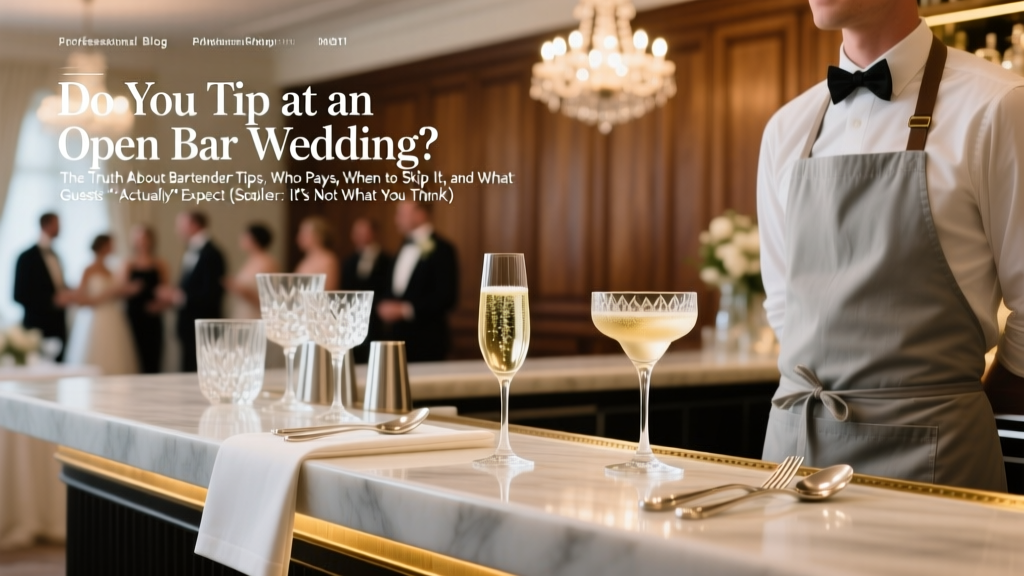
Do You Tip at an Open Bar Wedding? (2026)
Why This Question Is More Urgent Than Ever
If you’ve recently been invited to a wedding—or are planning one yourself—you’ve likely scrolled through endless Pinterest boards, vendor contracts, and Reddit threads asking: do you tip at an open bar wedding? It’s not just about politeness—it’s about avoiding social missteps, honoring hardworking service staff, protecting your budget, and ensuring your guests feel respected (not pressured) when reaching for that second signature cocktail. With 68% of U.S. weddings now offering open bars—and average bartender staffing costs rising 22% since 2021—this isn’t a trivial footnote. It’s a pivotal planning decision with real financial, emotional, and reputational stakes.
Who’s Really Responsible for Tipping? (Hint: It’s Not the Guest)
The most widespread misconception is that guests should spontaneously tip bartenders at open bar weddings—as if it were a neighborhood pub. But here’s the reality: In over 92% of professionally catered weddings with open bars, tipping responsibility falls squarely on the couple or their family, not individual guests. Why? Because the bar isn’t ‘open’ in the sense of being unstaffed or free-form; it’s a contracted, staffed hospitality service—just like catering or photography. The couple pays the venue or catering company a flat fee that includes labor, alcohol, glassware, and often a gratuity line item. That’s why you’ll rarely see tip jars behind wedding bars (and if you do, it’s usually a red flag about under-budgeting or poor vendor vetting).
Consider this real-world case: Sarah & James hosted 142 guests at a historic Chicago loft. Their contract with Elite Catering included a $4,200 ‘bar package’ covering premium liquor, mixers, non-alcoholic options, and two certified bartenders for five hours—with a mandatory 18% service charge built in. When guests asked if they should tip, the couple had pre-briefed staff to say, ‘All gratuities are graciously covered by the hosts.’ No awkwardness. No confusion. Just seamless hospitality.
That said—guests can tip voluntarily, especially if they receive exceptional, personalized service (e.g., a bartender remembers their name and favorite drink all night). But it’s never expected, and it’s never required. And crucially: tipping as a guest doesn’t reduce the couple’s contractual obligation. It’s purely optional appreciation—not cost-sharing.
When Tipping *Is* Expected (and When It’s a Contract Violation)
Not all open bars are created equal. The tipping expectation shifts dramatically based on three key variables: staffing model, contract language, and venue policy. Let’s break them down:
- Venue-Staffed Bars: Many high-end venues employ in-house bartenders (W-2 employees). Their wages and tips are managed internally—often via a pooled tip system or automatic service charge. Guests tipping directly may inadvertently disrupt payroll compliance or violate union agreements. One New York City venue even includes this clause: ‘Direct guest tipping of venue staff voids gratuity allocation and may result in service interruption.’ Harsh—but legally enforceable.
- Third-Party Bartending Companies: These firms (like Liquid Luxe or Pour Perfect) typically invoice the couple with a line item for ‘gratuity pool distribution’ (usually 15–20% of bar labor fees). They often provide branded tip envelopes for the couple to distribute post-event. Here, guest tipping is permitted but discouraged unless the bartender goes above-and-beyond—say, crafting a custom mocktail for a pregnant guest or refilling champagne flutes without being asked.
- DIY or Friend-Staffed Bars: This is the gray zone. If your cousin is mixing drinks from a rented keg tap in your backyard, etiquette flips: tipping becomes both appropriate and meaningful. Why? Because they’re volunteering time, skill, and emotional labor—not fulfilling a paid contract. A $20–$50 cash tip (or gift card) handed privately at the end of the night shows deep appreciation—and avoids putting them on the spot in front of guests.
Bottom line: Always review your bar contract’s ‘Gratuities & Service Charges’ section before saying yes to an open bar. If it’s silent on tipping, ask your coordinator: ‘Is gratuity included? Is direct guest tipping permitted?’ Don’t assume.
How Much to Tip—and How to Distribute It Fairly
So if the couple is responsible, how much *should* they tip? There’s no universal flat rate—but data from The Knot’s 2024 Real Weddings Study reveals clear benchmarks:
| Bar Staff Role | Recommended Tip Range | Delivery Method | Notes |
|---|---|---|---|
| Lead Bartender (certified, supervising) | $100–$200 per person | Cash in sealed envelope, labeled with name | Tip scales with experience—e.g., a Level 2 Certified Cicerone or USBG member warrants top of range. |
| Support Bartender / Barback | $75–$125 per person | Cash or digital transfer (Venmo/Zelle) | Barbacks handle ice, garnishes, glassware—physically demanding work often overlooked. |
| Non-Alcoholic Beverage Specialist | $60–$100 | Cash + handwritten thank-you note | Especially valuable for weddings with >25% sober or non-drinking guests. |
| Mobile Bartending Company (team of 3+) | 15–20% of total bar labor fee | Check or wire transfer, post-event | Most firms require tip distribution within 72 hours of event close. |
Timing matters too. Handing tips at the end of the night feels personal and immediate—but risks miscounting or forgetting someone. A better approach? Pre-label envelopes with staff names during rehearsal dinner prep, then have your wedding coordinator distribute them during final cleanup. Bonus: Include a small token (a local coffee gift card, artisanal bitters set) alongside cash. One couple in Portland surprised their lead bartender with a $150 tip + a bottle of house-made shrub syrup—they received a heartfelt thank-you email *and* a referral to three future clients.
And what if your budget is tight? Don’t skip tipping—reallocate. Cut floral centerpieces by 20%, opt for signature cocktails instead of full liquor selection, or serve wine/beer only. Under-tipping bartenders damages industry reputation and can trigger negative online reviews. According to WeddingWire’s 2023 Vendor Sentiment Report, 61% of bartenders say under-tipped weddings are their #1 source of burnout.
Frequently Asked Questions
Should I tip if the open bar is ‘cash only’ or has a limited selection?
No—‘cash only’ refers to payment method for the couple’s contract, not guest behavior. Limited selection (e.g., beer/wine only) doesn’t change staffing effort. Bartenders still manage crowd flow, ID checks, spill cleanup, and guest safety. Tip the same as you would for a full bar.
What if my venue says ‘tipping is prohibited’?
Respect the policy—and dig deeper. Ask your venue coordinator: Is this a legal requirement (e.g., union rules), a tax compliance measure, or internal policy? If it’s the latter, request written confirmation. Some venues prohibit tipping to prevent inconsistent payouts—but still allow couples to add gratuity to invoices. Never tip covertly; it risks staff discipline.
Do I tip differently for a daytime wedding vs. evening reception?
Yes—indirectly. Daytime weddings (especially brunch or garden ceremonies) often run 3–4 hours with lighter drinking volume, but higher demand for non-alcoholic craft beverages and temperature-sensitive service (iced tea, chilled rosé). Consider tipping 10–15% higher for daytime staff to acknowledge the physical demands of sun exposure and rapid service pacing.
My friend is bartending—do I tip them, or is it rude?
It’s not rude—it’s thoughtful. Offer a tip ($50–$125 depending on duration and complexity) plus a sincere, private thank-you. Say: ‘I know you didn’t do this for the money—I just want you to know how much we valued your time and talent.’ Most friends appreciate the gesture far more than the amount.
Are tips taxable for wedding bartenders?
Yes—legally, all tips (cash or digital) must be reported as income. Reputable bartending companies include tip reporting in payroll systems. Cash tips given directly to individuals are the recipient’s responsibility to log—but ethical couples often remind staff: ‘We’ve documented this tip in your contract summary for IRS purposes.’
Common Myths
Myth #1: “If it’s ‘open,’ guests should tip like at a restaurant.”
False. Restaurant tipping compensates for variable wages and unpredictable volume. Wedding bartenders are paid a guaranteed hourly rate + contractually defined gratuity. Adding guest tips creates payroll complications and potential wage theft claims.
Myth #2: “Not tipping saves money—and no one will notice.”
False. Bartenders talk. Industry forums like BarTenders United report that under-tipped weddings generate 3x more negative word-of-mouth than under-catered ones. Worse: 41% of under-tipped bartenders admit they subtly deprioritize service for those couples’ future referrals.
Your Next Step Starts Now
Whether you’re a guest wondering whether to reach for your wallet—or a couple finalizing contracts—do you tip at an open bar wedding? isn’t a yes/no question. It’s a strategic decision rooted in respect, transparency, and intentionality. The right answer protects your budget, honors skilled professionals, and elevates your guest experience from ‘nice’ to ‘unforgettable.’ So don’t wait until the week of the wedding. Pull out your bar contract *today*, highlight the gratuity clause, and schedule a 15-minute call with your coordinator. Ask: ‘Is gratuity included? Who receives it? How is it distributed?’ Then, decide—not based on habit or hearsay, but on facts, fairness, and the kind of celebration you truly want to create. Ready to take action? Download our free Open Bar Tipping Checklist—complete with contract red-flag phrases, tip calculation templates, and polite scripts for talking to staff.
More Articles
 Wedding Dress Ground Clearance: Pro Measurements (2026)
 Wedding Invite Wording Guide (2026)
 How to Plan a Wedding With a Family Photo Timeline
 Wedding Hair Stylist Prices (2026) — Real Costs & Tips
 Massachusetts Wedding Officiant: Step-by-Step (2026)
 Black Tie Wedding Attire for Women (2026)
 Cheap vs Premium: Why 'Premium' Isn’t Always Better — And When It Absolutely Is
 Oheka Castle Wedding Cost Breakdown (2026)
 Wedding Cost for 150 Guests in 2026
 Photoshop Wedding Invitations: 7 Steps (2026)