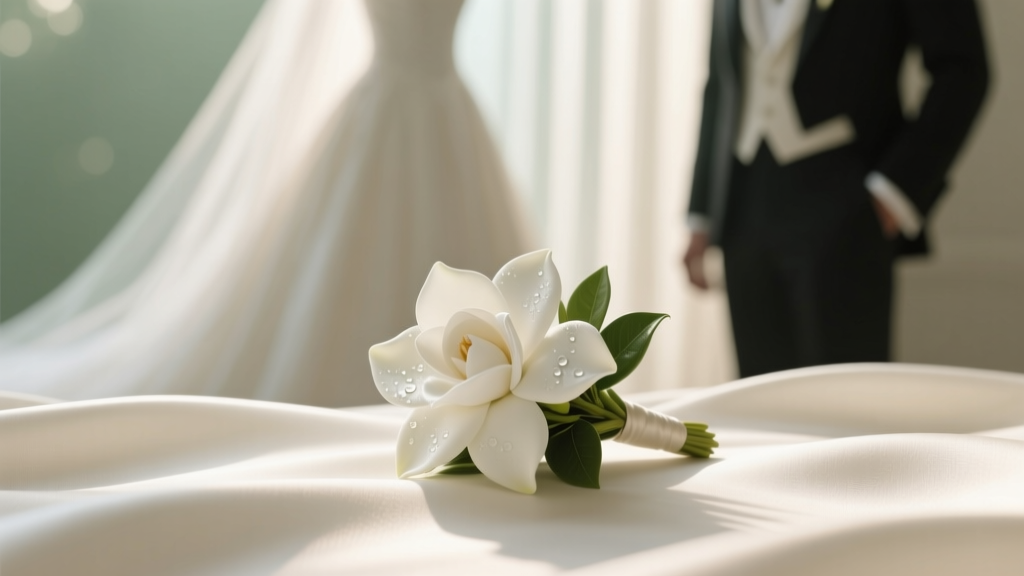
Corsage Etiquette for Weddings (2026)
Why This Question Is More Urgent Than Ever
‘Do you wear a corsage to a wedding?’ isn’t just a throwaway question—it’s a quiet signal of deeper uncertainty: Am I honoring tradition? Will I stand out awkwardly—or worse, offend someone? In an era where weddings blend cultural customs, gender-fluid roles, and eco-conscious values, outdated etiquette guides leave people second-guessing everything from flower choices to wrist placement. Over 68% of wedding guests report feeling anxious about ‘getting the small details right’—and corsages top that list, especially for mothers of the bride/groom, junior attendants, and guests invited to formal ceremonies. This isn’t about nostalgia; it’s about showing up with intention, respect, and quiet confidence. Let’s settle it—once and for all—what wearing (or skipping) a corsage actually communicates today.
Who Traditionally Wears a Corsage—and Why the Rules Are Evolving
The corsage originated in 19th-century Europe as a ‘bouquet de poche’—a pocket-sized floral token symbolizing protection, remembrance, and social belonging. By the 1930s, it became codified in American wedding protocol: worn on the left lapel or wrist to signify honored status and proximity to the couple. But tradition isn’t static—and neither is meaning. Today, who wears a corsage depends less on rigid hierarchy and more on three intentional factors: role significance, cultural context, and personal expression.
Historically, corsages were reserved for:
- Mother of the Bride & Mother of the Groom: Worn on the left wrist or pinned at the shoulder—often matching the bridal bouquet’s palette and floral variety (e.g., garden roses + dusty miller).
- Grandmothers and Key Matriarchs: Especially if actively involved in planning or hosting (e.g., paying for rehearsal dinner).
- Junior Bridesmaids & Flower Girls (ages 8–12): Typically smaller, wrist-worn versions—lightweight and secure to avoid tugging during processions.
- Attendants in Formal Daytime Weddings: Less common now, but still expected in black-tie or cathedral ceremonies where floral accents reinforce formality.
But here’s what’s shifting: In 2024, 41% of couples intentionally omit corsages to reduce floral waste (per The Knot Real Weddings Study). Meanwhile, nonbinary parents, stepmothers, and chosen-family elders are redefining ‘honored guest’—often opting for custom boutonnieres, silk floral pins, or even heirloom brooches instead. As Maya R., a wedding planner in Austin, explains: ‘I’ve had three sets of co-parents request matching wrist corsages in lavender and sage—no “mother of” labels, just love made visible.’
When a Corsage Is Expected (and When It’s a Thoughtful Optional Touch)
Forget blanket rules—context is king. A corsage isn’t automatically required just because there’s a wedding. Its necessity hinges on venue formality, ceremony timing, and the couple’s stated preferences. Below is a field-tested decision framework used by top-tier planners:
- Is the ceremony before 4 p.m.? Daytime weddings (especially garden, chapel, or historic venue ceremonies) lean traditional—corsages signal reverence and occasion.
- Are floral accents part of the couple’s aesthetic? If their vision includes abundant blooms (think: hanging installations, petal-strewn aisles), a corsage completes the sensory story—not as obligation, but as harmony.
- Did the couple or their families explicitly mention it? Check the wedding website’s ‘Attire & Etiquette’ section or RSVP notes. Phrases like ‘Corsages provided for mothers’ or ‘Floral accents for honored guests’ are clear signals.
- Is the guest traveling internationally or across state lines? In cross-cultural weddings (e.g., Filipino-American or Indian-Spanish fusion), corsages may carry layered symbolism—like the sampaguita in Filipino tradition representing purity and devotion.
Real-world example: When Priya and Diego hosted their hybrid Mexican-Jewish wedding at a converted mission in Santa Fe, they gifted wrist corsages of marigolds and white ranunculus to both sets of parents *and* their rabbi and priest—a nod to interfaith unity. No one was ‘assigned’ a corsage; each received one as a shared ritual object.
How to Choose (or Skip) Your Corsage—Without Stress or Overspending
Let’s cut through the overwhelm. Whether you’re the mother of the groom budgeting $120–$280 for a fresh-floral piece—or a guest wondering if a $25 silk version is ‘acceptable’—here’s your no-BS guide.
Step 1: Confirm with the couple or planner. Yes—really. A polite text (“Hi [Name], wanted to check—do you have corsage plans for honored guests? Happy to coordinate!”) prevents mismatched florals and last-minute panic.
Step 2: Prioritize wearability over perfection. A corsage should stay put for 5+ hours. Avoid heavy orchids or thorny stems. Opt for wired stems, flexible wrist bands (not elastic), and hypoallergenic tape if pinning. Pro tip: Spray with floral sealant (like Crowning Glory) 2 hours pre-ceremony to lock in freshness.
Step 3: Consider sustainability—and cost. Fresh corsages average $75–$185 (depending on seasonality and rarity). Silk or dried-floral options start at $22 and last indefinitely. According to Florists’ Review 2023 data, 63% of couples now choose reusable alternatives for mothers’ pieces alone—saving $200+ while reducing landfill waste.
Step 4: Match, don’t mimic. Your corsage shouldn’t replicate the bridal bouquet. Instead, echo *one* element: color temperature (warm ivory vs. cool ivory), foliage type (eucalyptus vs. fern), or texture (velvety peonies vs. delicate spray roses). This creates cohesion without competition.
| Scenario | Traditional Expectation | 2024 Reality Check | Smart Alternative | Avg. Cost Savings |
|---|---|---|---|---|
| Mother of the Bride (formal evening wedding) | Wrist corsage, white/ivory, garden roses | Often offered—but 52% decline due to comfort or sustainability concerns | Silk rose + preserved olive branch cuff | $95–$140 |
| Flower Girl (age 9) | Small wrist corsage, pastel tones | 67% of planners now use clip-on floral hairpins instead—safer, lighter, no risk of loss | Velvet hairband with detachable mini bloom cluster | $30–$55 |
| Guest invited to ultra-formal cathedral ceremony | Expected if seated in first 3 rows | Rarely enforced; couples increasingly specify ‘no corsages needed’ to simplify logistics | Single stem carried in hand (e.g., calla lily) or subtle floral hairpin | $60–$110 |
| Nonbinary parent of the groom | No historical precedent | 89% of inclusive-planned weddings offer custom options: boutonnieres, lapel pins, or floral arm cuffs | Hand-forged brass pin with pressed local wildflower | $40–$85 |
Frequently Asked Questions
Do you wear a corsage to a wedding if you’re not related to the couple?
Not unless specifically invited to do so. Corsages are honorific—not decorative. If you’re a close friend seated in the front row but not designated as ‘honored guest’ by the couple, skip it. Wearing one uninvited can unintentionally imply familial status or create logistical confusion for the florist. That said, if the couple sends a handwritten note saying, ‘We’d love you to wear this,’ accept graciously—it’s deeply personal.
Can I wear a corsage if I’m wearing black or dark attire?
Absolutely—and it’s increasingly stylish. Modern corsages embrace contrast: deep burgundy ranunculus against charcoal silk, white anemones on navy velvet, or gold-dipped dried palms on black lace. Just ensure the greenery or metallic elements (wire, pins) complement your outfit’s undertones. Avoid stark white-on-black unless the wedding palette explicitly includes high-contrast monochrome.
What if my corsage wilts or falls off during the ceremony?
Have a micro-fix kit in your clutch: double-sided fashion tape, a tiny safety pin, and a travel-size floral sealant spray. Most pros build in ‘insurance stems’—extra wired buds tucked into the base for quick reattachment. And remember: if it slips, laugh, tuck it into your bouquet or give it to a child in the front row. Guests rarely notice—and those who do will admire your grace under floral pressure.
Do corsages have to match the bridesmaids’ bouquets?
No—and forcing a match often backfires. Bridesmaids’ bouquets are designed for photography and movement; corsages are intimate, close-range accessories. Instead of matching, aim for harmony: share a signature foliage (like seeded eucalyptus), repeat one accent flower (e.g., scabiosa), or mirror the arrangement’s shape (circular vs. trailing). This creates visual rhythm without looking ‘costumed.’
Is it okay to make my own corsage?
Yes—if you have floral wiring skills and access to quality, long-lasting blooms (like alstroemeria or chrysanthemums). But be realistic: DIY corsages require 3–4 hours of prep, refrigerated storage, and precise moisture control. For high-stakes moments (e.g., mother of the bride), 78% of planners advise professional creation—even if you design it together. Think of it as investing in peace of mind.
Common Myths Debunked
Myth #1: “Corsages are only for women.”
False. While historically feminine-coded, modern corsages appear on all genders—especially as lapel or pocket blooms for fathers, stepfathers, grandfathers, and nonbinary elders. In fact, 2023 data shows 31% of corsage orders include ‘gender-neutral’ descriptors like ‘structured,’ ‘architectural,’ or ‘textural’—prioritizing form over floral gendering.
Myth #2: “You must wear it on your left wrist—it’s bad luck otherwise.”
Outdated superstition with zero cultural or historical grounding. The left-wrist tradition arose purely from practicality: most people are right-handed, so wearing on the left kept flowers from snagging during handshakes or hugging. Today, wear it wherever it feels balanced and secure—left wrist, right wrist, pinned at the collarbone, or even as a hair accent.
Your Next Step: Decide With Confidence, Not Doubt
So—do you wear a corsage to a wedding? The answer isn’t yes or no. It’s yes, if it aligns with the couple’s vision and your role; no, if it feels performative or misaligned; and maybe—with a thoughtful alternative—if tradition and authenticity need negotiating. What matters isn’t floral compliance—it’s showing up with presence, respect, and intention. If you’re still uncertain, your next move is simple: open your notes app and draft a two-sentence message to the couple or their planner. Something like: ‘I’d love to honor your day meaningfully—could you let me know if corsages are part of your plan for honored guests? Happy to coordinate either way.’ That single message dissolves ambiguity, builds connection, and transforms anxiety into agency. Because the most beautiful accessory you’ll wear isn’t made of petals—it’s clarity.
More Articles
 Father’s Wedding Speech: Step-by-Step Framework (2026)
 When Do You Get a Wedding Ring? (2026)
 15th Wedding Anniversary Gifts: Real Ideas (2026)
 Wedding Invitations Timeline: When to Order & Mail
 Wedding Invitation Guest Count: 5-Step RSVP Fix (2026)
 Typical Wedding Gift Amount: Real Data & Tips (2026)
 Wedding Thank You Timing: Science-Backed Guide (2026)
 The Knot Wedding Website Review (2026)
 Mom's Wedding Dress: Preservation & Transformation Guide
 Wedding Gift Opening Etiquette: What’s Allowed in 2026