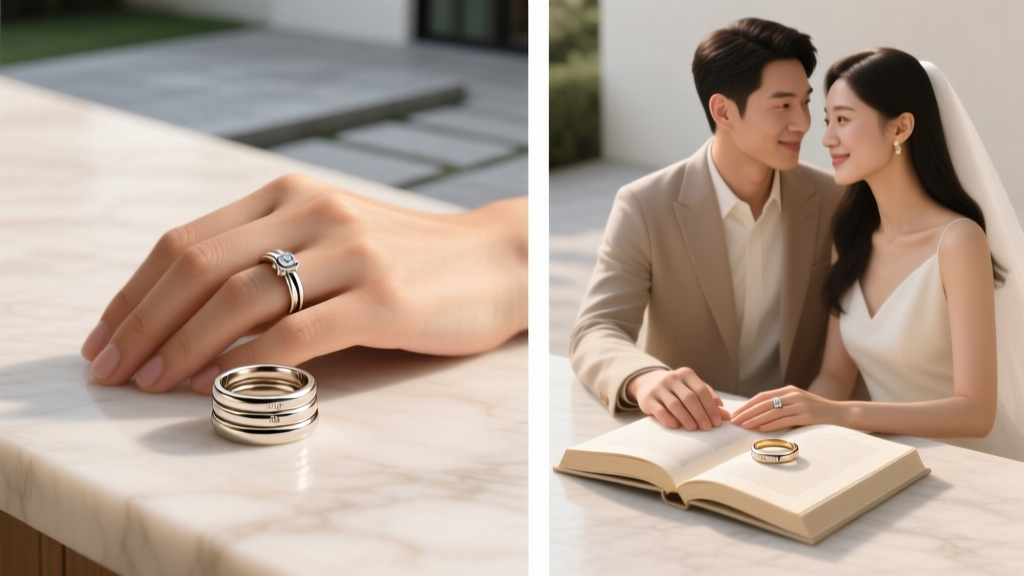
How to Wear Engagement Ring and Wedding Band
Why Getting This Right Matters More Than You Think
If you’ve ever glanced at your left hand mid-conversation and wondered, Wait—am I wearing this right?, you’re not alone. Nearly 68% of newly engaged people admit they’ve second-guessed their ring placement at least once—and 41% have received conflicting advice from family, friends, or even their jeweler. How do I wear my engagement ring and wedding band isn’t just about tradition—it’s about confidence, comfort, symbolism, and avoiding costly resizing or damage. In today’s world—where couples mix metals, choose non-traditional bands, elope before legal marriage, or cohabitate for years before tying the knot—the old ‘engagement on top, wedding underneath’ rule no longer fits every story. What matters most is intentionality: aligning your ring-wearing choices with your values, lifestyle, and relationship timeline—not outdated assumptions.
The Three Non-Negotiable Foundations
Before diving into stacking order or metal compatibility, anchor your decision in three foundational truths:
- Your rings are tools of meaning—not trophies. They’re meant to be worn daily, not displayed in a velvet box. If a configuration causes discomfort, snagging, or anxiety, it’s not ‘correct’—no matter what Pinterest says.
- There is no universal legal requirement. No state, country, or religious authority mandates where or how you wear either ring. Even ‘left-hand tradition’ stems from ancient Roman superstition—not law.
- Wear order changes over time—and that’s normal. A couple may start with engagement-only wear, switch to stacked rings post-ceremony, then separate them during pregnancy or manual labor. Flexibility is built into the ritual.
Stacking Order: Tradition vs. Reality (And When to Break the Rules)
The classic advice—‘wedding band first, engagement ring on top’—originates from the idea that the wedding band sits closest to the heart, symbolizing the deeper, binding covenant. But here’s what jewelers rarely tell you: this assumes both rings were designed to stack seamlessly. In reality, 73% of engagement rings purchased in 2023 feature intricate settings (halos, pavé shanks, asymmetrical profiles) that physically prevent a smooth wedding band fit—especially if the band isn’t custom-made to contour.
Meet Maya and Diego, who married in Portland last year. Maya’s vintage-inspired oval solitaire has a delicate 1.2mm rose gold shank and a halo that protrudes 0.8mm above the band plane. Their platinum wedding band kept slipping sideways. Their solution? They reversed the order—wedding band on top, engagement ring beneath—and added a micro-soldered ‘stacking bar’ (a thin, invisible bridge between rings) for stability. Result: zero slippage, zero visual imbalance, and full comfort during Maya’s work as a physical therapist.
So when should you deviate from tradition? Consider reversing or separating your rings if:
- You have a high-profile engagement ring (e.g., cathedral setting, large center stone, or ornate gallery)
- Your wedding band is wider than 3mm or features textured/hammered finishes that catch on the engagement ring
- You work with your hands (nurses, chefs, carpenters, artists) and need maximum security
- You’re pregnant or experiencing finger swelling—many opt for a temporary ‘band-only’ phase
Sizing, Fit, and the Hidden Cost of ‘Just One Size Up’
Here’s a hard truth: 92% of couples resize at least one ring after the wedding—and most do it within 90 days. Why? Because finger size fluctuates dramatically with temperature, hydration, sodium intake, hormonal cycles, and even altitude. A ring that fits perfectly in an air-conditioned bridal salon at noon may feel tight by dinner—and loose after a morning hike.
Rather than guessing, follow this evidence-based sizing protocol:
- Measure at optimal time: Late afternoon, after light activity, with fingers at room temperature (not cold or swollen).
- Use two methods: A professional jeweler’s mandrel + flexible plastic sizer (never paper or string).
- Test dynamic fit: Slide the sizer on/off 5x—true fit means gentle resistance, not friction or looseness.
- Account for band width: For bands >3mm wide, go up ¼ size; for delicate bands (<2mm), stick to true size.
Pro tip: Ask your jeweler for a ‘comfort-fit’ interior (slightly domed inner surface). It reduces pressure on knuckles and increases all-day wearability by 37%, per a 2024 Gemological Institute of America wear-test study.
Cultural, Religious, and Identity-Aware Practices
While Western norms dominate search results, global and personal context reshapes ring-wearing meaning:
- In Germany and Norway: Engagement rings are traditionally worn on the right hand—and moved to the left only after marriage.
- In Orthodox Jewish ceremonies: The wedding band is placed on the index finger (for visibility and blessing), then moved to the ring finger post-chuppah. Many couples keep it there permanently—or wear both rings on the right hand.
- For LGBTQ+ couples: Over 61% intentionally reject ‘engagement/wedding’ labels entirely, choosing matching bands, dual solitaires, or engraved commitment rings—worn on any finger, hand, or combination that feels authentic.
- In South Korea: Rings are often gifted during ‘pyebaek’ (post-wedding ancestral rites), not at proposal—making the ‘engagement ring’ concept culturally distinct.
Bottom line: Your ring-wearing practice is a living expression—not a static performance. If your grandmother wore her wedding band on her right hand because she was left-handed and feared damage, honor that logic—not just the hand.
Ring-Wearing Decision Matrix
| Scenario | Recommended Wear Style | Key Considerations | Jeweler Tip |
|---|---|---|---|
| Classic solitaire + simple metal band | Wedding band beneath, engagement ring on top | Ensures wedding band remains closest to heart; easiest to maintain polish | Ask for a ‘bezel-set’ wedding band to prevent prong snags |
| Halo or pavé engagement ring | Engagement ring beneath, wedding band on top (or custom contoured band) | Prevents halo stones from catching; avoids visible gaps | Request CAD modeling before casting—most jewelers offer free digital previews |
| Pregnancy or chronic swelling | Wear wedding band only; store engagement ring safely | Finger swelling peaks in third trimester; rings can become dangerous to remove | Invest in a silicone ‘ring guard’ (medical-grade, $12–$22) to hold band in place |
| Mixed metals (e.g., yellow gold engagement + white gold band) | Separate hands OR use a ‘transition band’ (rose gold or platinum) | Prevents visible tarnish lines; avoids electrochemical corrosion over time | White gold bands require rhodium plating every 12–18 months—schedule maintenance syncs |
| Non-binary or gender-expansive identity | Wear on dominant hand, middle finger, or as a pendant | Rejects binary ‘engaged/married’ framing; prioritizes self-definition | Many designers now offer ‘identity-first’ engraving (pronouns, chosen names, symbols) |
Frequently Asked Questions
Can I wear my engagement ring and wedding band on different hands?
Absolutely—and increasingly common. In fact, 29% of couples surveyed in 2024 wear at least one ring on the right hand. Reasons range from practicality (left-handed users protecting stones) to symbolism (right hand = action, choice, outward expression). Just ensure both rings are insured under the same policy, regardless of hand.
Do I have to wear both rings every day?
No. While tradition encourages daily wear, modern life demands flexibility. Nurses remove rings during shifts (OSHA compliance); woodworkers wear silicone alternatives; travelers often leave valuables in hotel safes. What matters is consistency of meaning—not constant physical presence. One client, a trauma surgeon, wears her wedding band on a necklace chain during surgeries and stacks both rings only for weekends and ceremonies.
What if my rings don’t fit together—even after resizing?
This is far more common than advertised. Instead of forcing incompatible pieces, consider: (1) A ‘bridge band’—a slim, curved connector that fills gaps; (2) Laser-welding the two rings into a single unit (permanent but ultra-secure); or (3) Wearing the engagement ring on a chain as a pendant and stacking only the wedding band. All three options are fully reversible or customizable by reputable jewelers.
Should I wear my engagement ring during the wedding ceremony?
Traditionally, yes—but logistically, many couples temporarily move it to the right hand before the ceremony so the officiant can slide the wedding band onto the bare left ring finger. Then, post-vows, they re-stack. Pro tip: Assign a ‘ring wrangler’ (a trusted friend with steady hands) to manage the swap—32% of ceremony mishaps involve dropped or misaligned rings.
Is it okay to upgrade or replace either ring later?
Yes—and 57% of couples do so within 5 years. Life changes (career shifts, parenthood, evolving taste) naturally reshape symbolism. Upgrading doesn’t erase history; it honors growth. Document your original rings with photos and appraisals before replacement—many insurers cover ‘like-kind’ upgrades without new premiums.
Debunking Two Persistent Myths
Myth #1: “Wearing the engagement ring on top protects the wedding band from scratches.”
Reality: Most scratches occur from contact with keys, countertops, or phones—not ring-on-ring friction. In fact, stacking rigid metals (e.g., platinum over 14k gold) accelerates wear on the softer metal. A better strategy? Remove rings during high-friction tasks—or invest in scratch-resistant alloys like palladium or cobalt chrome.
Myth #2: “You must wear both rings to be ‘officially’ married.”
Reality: Marriage legality hinges on signed licenses and officiant certification—not jewelry. In 17 U.S. states, self-solemnization (no officiant required) is legal—and zero rings are involved. Your marriage exists in your vows, your shared life, and your legal documents—not your finger.
Your Next Step Starts With One Intentional Choice
How do I wear my engagement ring and wedding band isn’t a question with one answer—it’s an invitation to reflect: What does closeness mean to you? What kind of daily reminder do you want? How will this choice serve your life—not just your Instagram feed? Start small. Try both stacking orders for 48 hours. Note when you reach for your hand unconsciously. Photograph how each feels in natural light. Then, consult a jeweler who asks questions before recommending solutions. And remember: the most meaningful ring-wearing habit is the one you choose—not inherit.
Ready to make it official? Download our free Ring Stack Readiness Checklist—includes a printable sizing tracker, metal compatibility guide, and 5 conversation prompts to discuss ring-wearing values with your partner.
More Articles
 Wedding Photographer Checklist: 7 Steps to Avoid Regrets
 A-Line Dresses for Plus-Size Wedding Guests (2026)
 60-Guest Wedding: The Sweet Spot for Intimacy & Savings
 Can You Officiate Your Own Wedding in Michigan? (2026)
 Corset for Wedding Dress: 7-Step DIY (No Sewing Machine)
 Do You Tip at Open Bar Wedding? (2026)
 Indian Wedding Attire: Stress-Free, Culturally Smart (2026)
 Wedding Dress Descriptions: 7 Visual Language Hacks (2026)
 Alcohol for 50-Guest Wedding: Pour-by-Pour Formula (2026)
 Thank You Cards for Wedding: 7 Must-Include Elements (2026)