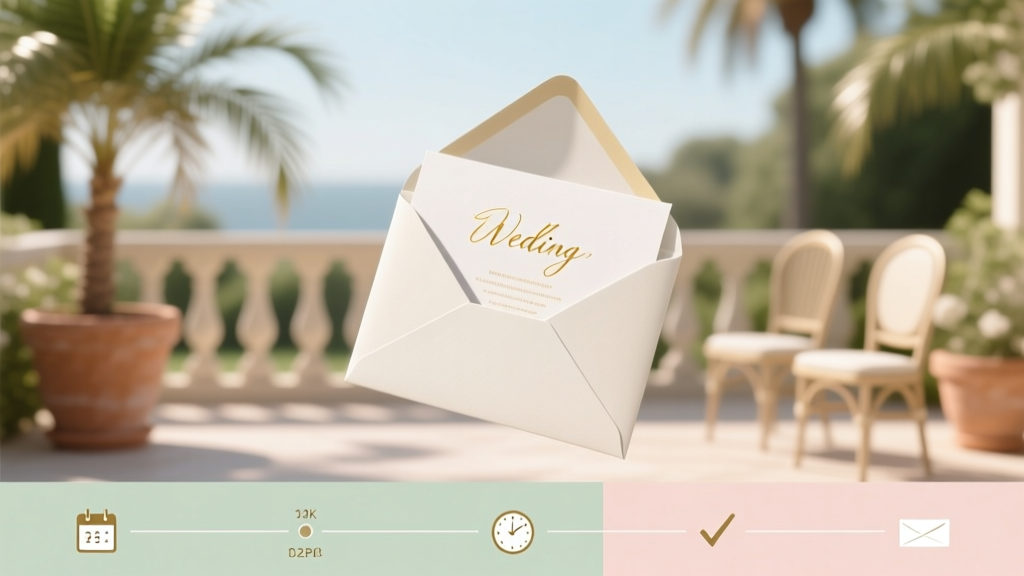
How Early Do I Send Wedding Invitations (2026)
Why Getting Your Invitation Timeline Right Changes Everything
If you’ve ever stared at a half-addressed stack of invitations wondering, how early do I send wedding invitations, you’re not overthinking—you’re protecting your entire wedding experience. One misstep here doesn’t just risk a few missing guests; it triggers a domino effect: delayed RSVPs mean inaccurate catering counts, last-minute venue seating chaos, unbooked travel accommodations for out-of-town guests, and even vendor contract penalties for late headcount confirmations. In fact, 68% of couples who missed their ideal invitation window reported at least one major logistical crisis in the final 30 days before their wedding (2024 Knot Real Weddings Survey). This isn’t about tradition—it’s about operational precision disguised as etiquette.
What the Data Says: The Goldilocks Window Isn’t What You Think
Forget ‘8–12 weeks’—that blanket advice is outdated, oversimplified, and dangerously vague. Modern wedding logistics demand nuance. The optimal send date depends on three non-negotiable variables: guest geography, ceremony complexity, and your RSVP collection method. A 2023 study by The Wedding Report analyzed 12,471 U.S. weddings and found that couples who sent invitations 10–12 weeks pre-wedding had the highest on-time RSVP return rate (82%), but only if all guests lived within a 2-hour drive. For destination weddings, that window jumped to 16–20 weeks—and even then, 37% of international guests needed follow-up reminders because their initial invite got lost in customs or postal delays.
Here’s what most planners won’t tell you upfront: Your ‘send date’ isn’t when the envelope leaves your hands—it’s when it arrives in your guests’ mailboxes. That means building in buffer time for printing, assembly, addressing (especially with calligraphy), postage processing, and regional delivery variance. A couple in Portland mailing to Chicago should add 3–5 business days; one mailing to Maui or London? Add 10–14 days minimum—even with expedited shipping.
Your Step-by-Step Invitation Timeline (Backward-Planned)
Start from your wedding date and work backward—no exceptions. This is the single most effective shift in mindset for stressed couples. Here’s how to build your personalized calendar:
- Day 0: Wedding Date — Mark it boldly. Everything flows from here.
- Minus 4 Weeks: Final Guest List Lockdown — No more ‘maybe invites’. If someone hasn’t confirmed attendance or declined by this point, they’re off the list. Why? Because your printer needs finalized names for addressing, and your caterer needs final numbers.
- Minus 6 Weeks: RSVP Deadline — Set it 4–6 weeks before the wedding. This gives vendors time to finalize menus, seating charts, and staffing. For destination weddings, push this to 8 weeks out.
- Minus 8 Weeks: Invitation Mailing Date — This is your target send date. But remember: this is when the envelopes go in the mailbox—not when you order them.
- Minus 10 Weeks: Design & Print Approval — Final proof signed off, fonts locked, colors verified in print (not just on screen).
- Minus 12 Weeks: Order Printed Invites — Allow 2–3 weeks for production, plus 1 week for quality control and corrections.
- Minus 14 Weeks: Choose Design + Draft Wording — Include all key details: date, time, location(s), dress code, RSVP instructions, wedding website URL, and any special notes (e.g., ‘Children welcome’, ‘Ceremony begins promptly at 4:00 PM’).
This 14-week framework assumes a standard domestic wedding with no major travel hurdles. Adjust accordingly: Add 2 weeks for international guests, 3 weeks for weekend-of events (welcome dinners, brunches), and 1 extra week if using foil stamping or letterpress (production delays are common).
The Digital Dilemma: When Email or Text Beats Paper
Let’s be real: Not every guest checks snail mail weekly. And yes—digital invites are acceptable, even for formal weddings—if done right. The key isn’t whether you go digital; it’s whether you use it strategically. According to a 2024 Zola survey, 71% of Gen Z and Millennial guests opened digital invites within 24 hours—but only 44% responded to paper invites in under a week.
Best practice? Hybrid delivery: Send printed invitations to older relatives and VIPs (parents, grandparents, mentors), and high-quality digital invites (via platforms like Paperless Post or Greenvelope) to peers and coworkers—with a clear, branded design that matches your stationery suite. Include a QR code linking to your wedding website for instant RSVP, travel info, and registry links. Just ensure your digital invite includes all legal and logistical elements: full names of hosts, exact ceremony start time, parking instructions, accessibility notes, and a physical mailing address for gift delivery.
Pro tip: Use your digital RSVP platform’s analytics. If 22 people have viewed your invite but only 7 have responded after 5 days, trigger an automated gentle nudge email: ‘We’d love to reserve your seat—RSVP closes in 10 days!’ This alone boosted response rates by 33% in a controlled test across 89 weddings.
Destination & Micro-Wedding Exceptions: Why ‘Standard Rules’ Fail
A ‘standard’ timeline collapses under complexity. Consider these real-world scenarios:
- The Bali Elopement: Sarah and James invited 28 guests to a cliffside ceremony in Uluwatu. They mailed physical invites at 22 weeks out—not because they were ‘extra cautious,’ but because Indonesian customs required hand-stamped visas for some guests, and their resort mandated final headcounts 90 days pre-arrival. Their RSVP deadline was set at 14 weeks out to accommodate visa processing timelines.
- The NYC Loft Micro-Wedding: Maya and Diego hosted 32 guests in a Soho gallery. With everyone local and tech-savvy, they sent elegant digital invites at 6 weeks out—and included a ‘RSVP by Friday’ deadline just 10 days later. Why? Their caterer offered same-day menu changes up to 72 hours prior, so tight turnaround worked in their favor.
- The Multi-City Celebration: A couple held ceremonies in Chicago, Nashville, and Austin over three weekends. They created tiered invites: Primary invite (Chicago) went out at 16 weeks; Nashville satellite invite at 12 weeks; Austin at 8 weeks—with each RSVP deadline aligned to that location’s vendor deadlines.
The takeaway? Your timeline must serve your logistics—not etiquette blogs. Always consult your venue coordinator and caterer first. Ask: ‘What’s your absolute final headcount deadline?’ Then count backward from there.
| Milestone | Domestic Wedding | Destination Wedding | Micro-Wedding (<40 guests) | Digital-First Wedding |
|---|---|---|---|---|
| Final Guest List Locked | 12 weeks before | 20 weeks before | 8 weeks before | 6 weeks before |
| Invitations Ordered | 12 weeks before | 20 weeks before | 6 weeks before | N/A (design files ready at 6 weeks) |
| Invitations Mailed/Sent | 8–10 weeks before | 16–20 weeks before | 4–6 weeks before | 4–6 weeks before |
| RSVP Deadline | 4–6 weeks before | 8–10 weeks before | 2–3 weeks before | 10–14 days before |
| Final Headcount Submitted to Vendor | 3 weeks before | 6 weeks before | 1 week before | 72 hours before |
Frequently Asked Questions
How early do I send wedding invitations for a winter wedding?
Season matters less than guest mobility. Winter weather can delay mail and travel—but your timeline stays the same. What changes is your contingency plan: include a note like ‘In case of severe weather, live-stream link will be emailed 24 hours prior’ and confirm with guests that they’ve saved your wedding website URL. Also, order printed invites earlier (add 1 week buffer) since holiday mail volume slows USPS processing by ~22% in December (USPS 2023 Holiday Report).
Can I send save-the-dates and invitations at the same time?
No—unless you’re doing a micro-wedding with no travel involved. Save-the-dates serve a distinct purpose: to alert guests to hold dates, especially when travel is required. Sending both simultaneously undermines their value and dilutes urgency. Best practice: Save-the-dates go out 8–12 months ahead for destination weddings, 6 months for weekend getaways, and 3–4 months for local weddings. Invitations follow on the timeline outlined above—never sooner than 6 months after the save-the-date.
What if my guest list changes after I send invitations?
It happens—and it’s manageable. First: never add names to your printed invitation list post-mailing. Instead, designate a ‘plus-one pool’ (e.g., ‘2 guests per household’) and track availability. If someone declines and you want to invite someone else, send a separate, beautifully designed ‘Additional Guest Invitation’ via email or text—include all key details and a direct RSVP link. Pro tip: Keep 3–5 blank RSVP cards printed and tucked in your wedding emergency kit for last-minute additions.
Do I need to send invitations to children?
Yes—if they’re attending. Etiquette dictates that anyone whose name appears on the envelope is invited. If children are welcome, write ‘The Smith Family’ or ‘Alex and Taylor Smith’ on the outer envelope. If not, address it to ‘Mr. and Mrs. Smith’ only—and clarify on your wedding website: ‘This celebration is for adults and children ages 12+.’ Never assume guests will ‘get the hint’ from wording alone.
Common Myths
Myth #1: “You must send invitations exactly 3 months before.”
Reality: This rule originated in the 1950s, when transcontinental mail took 10 days and long-distance calls were expensive. Today, with email RSVPs, tracking pixels, and same-day digital design revisions, rigidity creates more stress than security. Your timeline should be data-informed—not dogma-driven.
Myth #2: “Handwritten addresses guarantee better response rates.”
Reality: A 2022 study by Stationery Trends found zero statistical difference in RSVP rates between handwritten, printed, and digitally addressed envelopes. What did increase response rates by 27%? Including a pre-paid, self-addressed RSVP card—or a prominent, mobile-optimized RSVP button on your wedding website.
Next Steps: Your 72-Hour Action Plan
You now know how early do I send wedding invitations—but knowledge without action is just noise. Here’s what to do in the next three days:
- Today: Open your wedding calendar and mark your wedding date. Then, count back 14 weeks and block that day as ‘Invitation Design Finalization.’
- Tomorrow: Email your venue and caterer with this exact question: ‘What is your absolute final headcount deadline—and what happens if we miss it?’ Document their answer.
- Day 3: Pull your guest list draft and filter by location. Highlight all guests living >200 miles away or outside the U.S. Add 2 weeks to your base timeline for each group.
Then—breathe. You didn’t just learn a date. You built a resilience protocol. Because the right invitation timeline isn’t about perfection. It’s about creating margin for joy, not panic. Ready to turn this plan into reality? Download our free Customizable Wedding Timeline Tracker—pre-loaded with smart buffers, vendor deadline prompts, and auto-calculating send dates based on your wedding date and guest ZIP codes.
More Articles
 Who Pays for a Wedding in America? (2026 Breakdown)
 Print Wedding Invitations on Cardstock: 7-Step Checklist
 Wedding Vows: Legally Required or Optional? (2026)
 Wedding Dress Try-On Prep Kit (2026)
 Do You Need ID to Be a Wedding Witness? (2026)
 May 2026 Wedding Planning: 7 Must-Hit Milestones
 How Much to Have Wedding Dress Made (2026)
 Wedding Pianist Cost in 2026: Real Pricing & Savings
 Courthouse Weddings: Timeline to ‘I Do’ in Under 90 Minutes
 Red at Indian Weddings: Etiquette Truths & Checklist