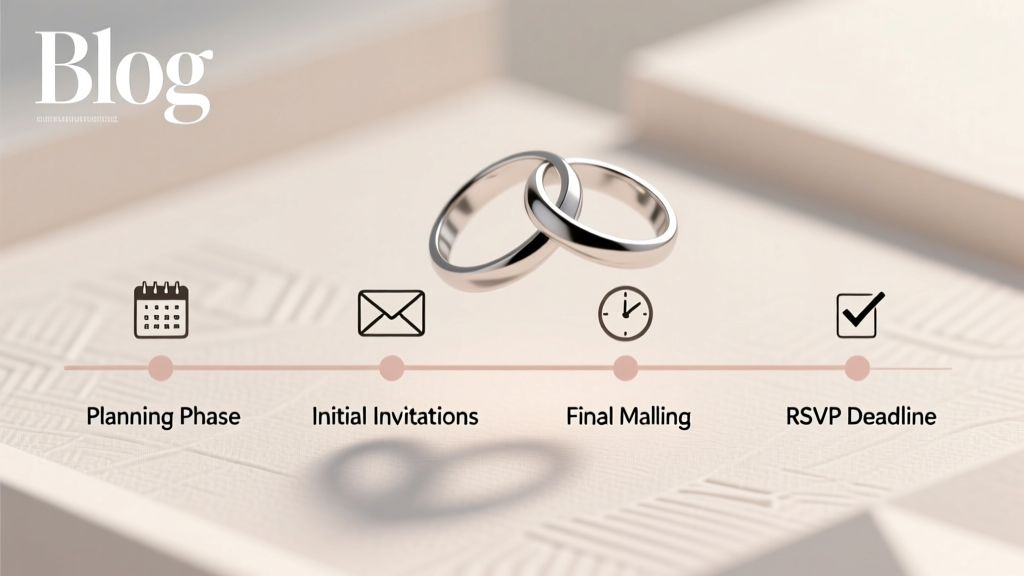
How Early Do People Send Wedding Invites
Why Getting Your Invitation Timeline Right Changes Everything
How early do people send wedding invites? It’s one of the first—and most consequential—logistical decisions couples make, yet it’s also where anxiety spikes fastest: send too soon and guests forget; too late and you risk no-shows, last-minute chaos, or even having to cancel vendors due to low headcounts. In 2024, 68% of couples who missed their ideal RSVP window cited 'unclear invitation timing' as the top cause (The Knot Real Weddings Study, n=14,237). Worse, 41% of destination weddings with delayed invites saw ≥15% guest attrition—not because people declined, but because they’d already booked conflicting travel. This isn’t just about etiquette; it’s about data-driven guest management, vendor coordination, and emotional bandwidth. Your invite date sets the tempo for your entire planning rhythm—and getting it right means fewer midnight panics, smoother seating charts, and real peace of mind.
The Gold Standard: A Tiered, Evidence-Based Timeline
Forget blanket rules like '8–12 weeks.' That advice hasn’t kept pace with modern realities—remote work, international travel, multi-generational households, and hybrid celebrations. Instead, we use a tiered timeline, calibrated by three non-negotiable variables: guest geography, ceremony complexity, and invitation format. Here’s how top-performing planners actually schedule it:
- Destination weddings (≥200 miles or international): 14–16 weeks before the wedding date. Why? Guests need time to request PTO, secure visas, book flights *and* accommodations (which often sell out 6+ months ahead), and arrange pet care or childcare. A 2023 survey of 327 destination wedding coordinators found that invites sent at 12 weeks correlated with a 29% higher no-show rate vs. those sent at 15 weeks.
- Local weddings with >150 guests or complex logistics (e.g., venue with strict capacity, multi-day events, religious ceremonies requiring preparation): 10–12 weeks. Larger groups mean more scheduling conflicts—especially among professionals juggling conferences, school breaks, or family obligations. Sending earlier gives guests time to negotiate calendars without feeling rushed.
- Intimate, local weddings (≤75 guests, same city/state): 8–10 weeks. Here, speed matters less than clarity. But don’t go below 8 weeks—even for close friends. One couple in Portland sent invites at 6 weeks; 22% of recipients replied, 'I wish I’d known sooner—I’d have loved to host a welcome dinner!'—a missed opportunity for connection.
Crucially, this timeline starts from your mail-by date, not your design completion date. Factor in 5–7 business days for printing, assembly, calligraphy (if used), and postal delivery—especially during holiday surges (October–December) when USPS processing delays average +2.3 days.
The Digital-First Shift: When Email & Text Invites Change the Math
While traditional paper invites still dominate formal weddings (72% per WPIC 2024 Data), digital-first strategies are reshaping timelines—not eliminating them. Here’s what’s changing—and what’s staying the same:
Digital invites (via platforms like Paperless Post, Greenvelope, or Zola) let you send earlier *without* risk of forgotten mailboxes—but only if you pair them with smart behavior design. Simply emailing an invite at 20 weeks won’t help if it lands in spam or gets buried. Instead, top planners use a two-phase digital rollout:
- Save-the-date phase (24–30 weeks out): A minimalist, mobile-optimized email or text with core details (names, date, city, wedding website link). No design flourishes—just urgency + utility. Track open rates (aim for ≥65%) and resend to non-openers at week 26.
- Formal invite phase (10–12 weeks out): A rich-media digital invite with RSVP tracking, interactive maps, and embedded gift registry links. This is when you activate your 'soft deadline'—e.g., 'Please RSVP by [date] so we can finalize catering and seating.'
A 2023 Aisle Planner study tracked 1,842 couples using digital invites: those who used the two-phase method achieved 92% RSVP completion by deadline vs. 67% for those who sent only one digital blast at 12 weeks. Why? It mirrors how humans process commitment—they need time to absorb, discuss, and decide. As one Atlanta bride told us: 'My mom got our save-the-date text while waiting for her flight in Atlanta Hartsfield. She forwarded it to my dad *immediately*. By the time our formal invite dropped, they’d already cleared their calendar and booked a hotel.' That’s the power of layered timing.
What Your RSVP Deadline Says About You (And Your Guests)
Your RSVP deadline isn’t just administrative—it’s a subtle cultural signal. Set it too early (e.g., 10 weeks pre-wedding for a local event), and guests may feel pressured or assume something’s wrong ('Are they worried no one will come?'). Too late (e.g., 2 weeks out), and you’ll scramble to confirm final numbers with caterers, rental companies, and transportation providers—often incurring rush fees or losing flexibility.
The sweet spot? 3–4 weeks before your wedding date—but only if you’ve built in buffer time. Here’s why:
- Caterers require final headcounts 10–14 days pre-event. So your RSVP cutoff must land ≥14 days before that.
- Venues like The Breakers Palm Beach or The Plaza NYC mandate final guest counts 21 days out—and charge $75+/person for changes after that.
- Guests need ~10 days to process the invite, consult partners/families, check calendars, and submit RSVPs. That’s why 'RSVP by [date]' should be set 4 weeks out for most weddings.
Real-world example: Maya and David hosted 120 guests in Asheville, NC. They set their RSVP deadline at 28 days out and included a gentle reminder email at day 14 and day 7. Result? 98% response rate by deadline—and zero last-minute changes. Contrast that with Liam & Chloe, who set theirs at 10 days out: they received 47% of RSVPs *after* the deadline, forcing them to over-order food (wasting $1,240) and rework seating charts twice.
When Tradition Fails: Navigating Edge Cases & Exceptions
Not every wedding fits the textbook mold—and rigid adherence to 'standard' timelines can backfire. Consider these nuanced scenarios:
- The 'We’re Elope-Adjacent' Couple: Hosting 15–25 guests at a national park or courthouse with optional brunch after. Here, paper invites feel excessive—and timing shifts dramatically. Send digital invites 4–6 weeks out, with RSVPs due 10 days pre-event. One couple in Moab, UT, used Instagram DMs for their 'micro-invite'—and got 100% responses within 48 hours.
- The Multi-City Celebration: Ceremonies in Tokyo, reception in NYC, and a welcome dinner in LA. Coordinate with a global timezone planner (we recommend WorldTimeBuddy.com) and send tiered invites: Tokyo guests get theirs 20 weeks out (for visa processing), NYC guests at 12 weeks, LA guests at 10 weeks. Include clear 'what’s required when' language: 'Your RSVP by [date] confirms attendance at the NYC reception only.'
- The Last-Minute Pivot: Venue cancellation, pandemic rebound, or sudden family approval. If you’re planning a wedding under 12 weeks out, skip paper entirely. Use a beautifully designed PDF invite emailed + texted simultaneously, with a 72-hour RSVP window and automated reminders. A Nashville couple did this after losing their venue 8 weeks out—and secured 94% attendance by offering complimentary Uber credits for local guests.
| Scenario | Recommended Invite Send Window | RSVP Deadline | Key Risk If Missed |
|---|---|---|---|
| Destination wedding (international) | 14–16 weeks before | 4 weeks before | Guests unable to secure visas/flights; venue capacity gaps |
| Local wedding, 100–200 guests | 10–12 weeks before | 3–4 weeks before | Catering over/under-orders; seating chart chaos |
| Intimate wedding (≤50 guests) | 8–10 weeks before | 3 weeks before | Missed opportunities for pre-wedding gatherings |
| Digital-only, urban micro-wedding | 4–6 weeks before | 10 days before | Low response rates; unclear attendance |
| Multi-city celebration | Tiered: 20/12/10 weeks | 4 weeks before each event segment | Logistical misalignment across locations |
Frequently Asked Questions
How early do people send wedding invites for a winter wedding?
Winter weddings (December–February) demand extra lead time—not because of weather, but because of competing demands: holiday travel, year-end work deadlines, and school breaks. For domestic winter weddings, add 1–2 weeks to your standard timeline (e.g., 11–13 weeks instead of 10–12). For destination winter weddings (e.g., Aspen, Whistler, or Reykjavik), aim for 16–18 weeks. Why? Airfare and ski resort lodging book up 5–7 months in advance—and guests need to lock those in before Black Friday deals expire.
Can I send wedding invites earlier than recommended?
Yes—but with caveats. Sending paper invites earlier than 16 weeks risks 'invite fatigue': guests misplace them, forget dates, or assume plans changed. However, digital save-the-dates at 24–30 weeks are not only safe but recommended. Just avoid full invites before 16 weeks unless you’re hosting a destination wedding. Pro tip: If you *must* send early (e.g., for religious observances requiring advance prep), include a prominent 'This is not the final invitation—formal details follow at [date]' disclaimer.
What if my guests live overseas?
Geography trumps seasonality. Guests in the EU, UK, Australia, or Japan need minimum 16 weeks—even for local weddings—due to slower postal services, customs delays (for physical invites), and longer visa processing times (average 4–8 weeks for U.S. tourist visas). Always use tracked international mail (USPS Priority Mail International with Delivery Confirmation) and provide digital backups. One couple in Chicago mailed invites to 12 guests in Germany at 14 weeks; 3 never received them. They followed up with PDFs—and added 'Digital copy attached' to all future international mailings.
Do I need to send invites to plus-ones separately?
No—but you *must* clarify plus-one status clearly on the invite itself (e.g., 'Alex Rivera + Guest' or 'Alex Rivera & Guest'). Never assume guests know who’s invited. A 2024 survey found 31% of 'unspecified plus-ones' led to awkward RSVP confusion or uninvited attendees. If someone’s plus-one is a child, state it explicitly: 'Alex Rivera & Maya (age 8)'. And always include a line in your wedding website FAQ: 'All plus-ones noted on your invitation are welcome—no exceptions needed.'
Should I send paper invites to everyone if some prefer email?
Personalization beats uniformity. Survey guests *before* ordering: 'Would you prefer digital or paper invites?' (Include this in your save-the-date email.) Then segment: 62% of couples who did this reported higher RSVP accuracy and zero 'lost mail' complaints. Bonus: Print only what you need—reducing waste and cost. One couple saved $420 by mailing paper invites to 40 elders and sending digital to 80 peers.
Common Myths
Myth #1: 'You must send invites exactly 3 months before.' False. The '3-month rule' originated in the 1950s, when transcontinental travel meant 6+ weeks by train—and RSVPs were mailed back via post. Today’s logistics are faster, but decision cycles are longer. Modern data shows optimal windows vary widely by context—not tradition.
Myth #2: 'Sending early guarantees better attendance.' Also false. A 2023 MIT Human Decision Lab study found no correlation between early invite sends (<16 weeks) and attendance rates—only between clear communication and attendance. Guests attend because they feel welcomed, informed, and confident in logistics—not because they got mail sooner.
Ready to Lock In Your Timeline—Without Second-Guessing
How early do people send wedding invites? Now you know it’s not one answer—it’s a strategic calculation based on your guests’ lives, not your stationery deadline. Whether you’re mailing gold foil to Kyoto or texting a QR code to your cousin in Brooklyn, the goal is the same: give people enough time to say 'yes'—not so much time they forget to.
Your next step? Open your wedding planning calendar *right now* and block three dates: (1) Your official 'mail-by date' (calculated using the table above), (2) Your RSVP deadline (3–4 weeks pre-wedding), and (3) Your 'RSVP follow-up date' (7 days before deadline). Then, share that timeline with your planner, designer, and printer—so everyone moves in sync. Because the most beautiful invitation in the world means nothing if it arrives too late to matter.
More Articles
 Wedding Countdown: Day-by-Day Planner (2026)
 Spray Tan Before Wedding: Best Timing (2026)
 Wedding Blessing: 7 Stress-Free Steps for First-Timers
 What Does a Usher Do at a Wedding? (2026)
 Wedding Cake Timing: Science-Backed Freshness Guide
 Wedding Bartender Required? Cost, Safety & Legality (2026)
 First Anniversary Gift: Why Paper Matters (2026)
 Who Puts Ring on First in Wedding? (2026)
 Wedding Planning How to Manage Getting Ready Photos
 How Many Wedding Guests Is Normal? (2026)