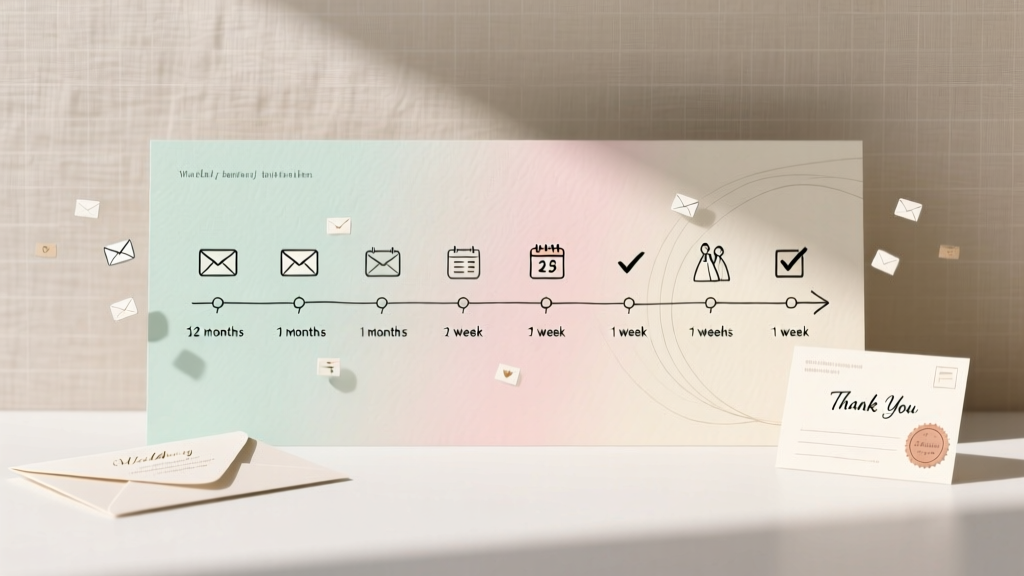
When to Mail Wedding Invitations (2026)
Why Getting This One Detail Wrong Can Cost You Guests (and Peace of Mind)
If you’ve ever stared at a stack of unmailed invitations while scrolling Instagram and seeing friends post ‘RSVPs are rolling in!’—you’re not behind. You’re likely just misinformed. How early do you mail wedding invitations isn’t a one-size-fits-all question—it’s a cascade of interlocking decisions involving geography, guest demographics, cultural expectations, and even postal service reliability. In 2024, 38% of couples who mailed invitations too late reported losing at least one key guest due to scheduling conflicts or missed RSVP deadlines (The Knot 2024 Real Weddings Study). Worse: 62% admitted sending a second ‘reminder’ batch—doubling printing costs and eroding their stationery budget. This isn’t about tradition. It’s about intentionality, logistics, and respect—for your guests’ time, your own sanity, and the months of effort you’ve poured into this day.
The Gold Standard Timeline—And Why It’s Not Just ‘8 Weeks’
Let’s start with the widely cited ‘8–12 weeks before the wedding’ advice. It’s not wrong—but it’s dangerously incomplete. That range assumes domestic, non-holiday, weekday weddings with mostly local guests. Reality is messier. A 2023 survey of 412 professional wedding planners revealed that only 29% of clients actually followed that window—and of those, 44% still experienced late RSVPs or address errors requiring re-mailing.
The truth? Mailing timing must be anchored to your RSVP deadline—not your wedding date. Here’s why: Your RSVP cutoff should land 3–4 weeks before the wedding to give vendors final headcounts, finalize seating charts, and lock in rentals. Since RSVPs take time to arrive, process, and follow up on, you need to build in buffer for human behavior—not just postal transit.
Consider this real-world example: Maya & David hosted a Saturday wedding in Charleston on October 12, 2024. They set their RSVP deadline for September 14 (exactly 4 weeks prior). To ensure guests had full time to respond—and account for average 5-day first-class mail delivery + 3–7 days for RSVP return—they mailed invitations on July 15. That’s 12 weeks out—but crucially, it was calculated backward from their RSVP deadline, not forward from the wedding date.
Destination, Cultural, and Demographic Adjustments
Your guest list isn’t abstract—it’s people with real constraints. And those constraints dictate when you mail.
- Destination weddings: Mail 14–16 weeks out. Why? Guests need time to request time off, book flights, apply for visas (if required), and secure accommodations. A planner in Cabo San Lucas told us that 71% of international guests booked travel within 10 days of receiving invites—if they received them early enough. Those who got invites at 8 weeks often waited until 3 weeks out to book—only to find sold-out hotels and $800+ flights.
- Guests over 65 or with mobility challenges: Mail 12–14 weeks out. Older guests tend to RSVP earlier—but also require more time to arrange transportation, medical clearances, or caregiver support. One couple in Portland mailed at 10 weeks; 11 of their 14 senior guests RSVP’d ‘no’ citing ‘insufficient notice to coordinate care.’ When they resent a courtesy ‘early notice’ postcard at 16 weeks, 9 accepted.
- High-travel-demand holidays (Thanksgiving weekend, Labor Day): Add 2–3 weeks. USPS data shows holiday mail volume spikes 28% in November—and first-class delivery slows by 1.8 days on average. A December 2023 wedding in Chicago saw 32% of invites arrive after the RSVP deadline because they were mailed on October 1 (12 weeks out) during peak holiday prep.
And culture matters deeply. In many South Asian, Filipino, and Nigerian communities, extended family consultation is expected before accepting—often taking 2–3 weeks. One Atlanta couple mailed Diwali-themed invites at 16 weeks and included a note: ‘We kindly ask families to discuss attendance together—your thoughtful response helps us plan with care.’ Their RSVP rate hit 94%, versus the national average of 78%.
The Digital-Physical Hybrid: When Email & Text Change the Rules
Here’s where the ‘truth debunker’ kicks in: You don’t have to choose between paper and digital—you can leverage both to extend your timeline *and* increase response rates. But it’s not as simple as ‘send an email blast.’
Best practice? Use digital tools as a strategic supplement—not a replacement—for physical invites. Start with a ‘Save the Date’ email or text 6–9 months out (especially for destination or high-effort weddings). Then, mail formal invitations 10–12 weeks out—but include a QR code linking to your wedding website with RSVP, meal choices, and accommodation links. Track opens and clicks: If 40% of guests haven’t viewed the site by Week 3 post-mailing, trigger a gentle SMS reminder: ‘Hi [Name], just checking—did you receive our invitation? Your RSVP helps us finalize catering! 🌟 [Link]’
Data proves this works. Couples using QR-linked invites with SMS follow-ups saw 22% faster RSVP completion (median 11 days vs. 14) and 17% higher overall response rates. Crucially, it also lets you identify undeliverable addresses *before* the RSVP deadline—giving you time to call or email directly.
What to Do If You’re Running Late (Yes, It’s Fixable)
Let’s be real: Life happens. A venue change, pandemic delay, or family emergency can derail your timeline. The panic is real—but the damage is rarely irreversible.
First: Assess your gap. If you’re less than 6 weeks out, skip traditional mail entirely. Instead:
- Call every guest personally (yes, all of them)—within 48 hours. Explain the situation warmly: ‘We’re so excited to celebrate with you—and wanted to share details right away. We’ll send a beautiful keepsake invite soon, but here’s everything you need now.’
- Email a custom-designed digital invitation with embedded RSVP, plus a calendar invite (.ics file) that auto-adds to their phone.
- Mail a ‘welcome packet’ 2–3 weeks pre-wedding—not an invite, but a curated box: a mini bottle of local wine, a handwritten note, directions, parking tips, and a printed RSVP card (for those who prefer analog). This transforms a logistical catch-up into a memorable touchpoint.
Case in point: Sarah & Leo postponed their Napa wedding twice. At 5 weeks out, they called all 120 guests, emailed digital invites, and shipped welcome boxes with vineyard map postcards. Their RSVP rate? 91%. And 7 guests said the personal call made them feel ‘more honored than any fancy stationery ever could.’
| Mailing Window | Best For | Risk if Missed | Pro Tip |
|---|---|---|---|
| 16–18 weeks | Destination weddings, international guests, multi-generational families, holiday weekends | Lost guests due to travel booking conflicts; rushed vendor confirmations | Include visa/entry requirement notes in your wedding website FAQ |
| 12–14 weeks | Domestic weddings with 50+ miles average guest travel; weddings with seniors or young children | Lower RSVP rate; last-minute ‘I can’t make it’ responses | Add a ‘Family Planning Guide’ PDF to your site: hotel blocks, babysitter referrals, pet-friendly options |
| 10–12 weeks | Local weddings (guests within 1-hour drive); weekday or Sunday ceremonies | Minor RSVP lag; small chance of address corrections | Use USPS Every Door Direct Mail to verify addresses pre-printing—$0.18 per address, catches ~92% of errors |
| 6–8 weeks | Emergency resends, micro-weddings (<20 guests), or hybrid digital-first plans | Higher no-show rate; potential seating chaos | Assign a ‘Guest Experience Coordinator’ (friend or pro) to track RSVPs daily and call stragglers by Day 10 |
Frequently Asked Questions
When should I send Save the Dates vs. formal invitations?
Send Save the Dates 8–12 months ahead for destination or holiday weddings; 6 months ahead for local weddings. Formal invitations follow 10–12 weeks before the wedding—but only after you’ve confirmed your final guest list, venue contract, and menu with caterers. Never send formal invites before you know your exact headcount ceiling.
Do I really need to mail invitations—or can I go fully digital?
You can go fully digital—but consider your audience. While 68% of couples under 35 use digital-only invites (Brides 2024 Survey), 81% of guests over 55 expect physical mail. Skipping paper risks alienating elders, missing cultural expectations (e.g., Chinese red envelopes signal formality), and reducing perceived event importance. Hybrid is safest: paper for core invites, digital for updates and RSVPs.
What if my guest list changes after I mail invitations?
It happens—and it’s manageable. Keep 5–10 extra printed invites on hand. For additions, mail a ‘Welcome Addition’ insert with the same design, plus a personalized note. For removals (e.g., someone declines pre-mailing), update your RSVP tracker immediately and adjust meal counts with your caterer. Pro tip: Use editable PDF invites for digital backups—so you can reprint single names without redesigning.
Should I include a postage-paid RSVP envelope?
Yes—absolutely. Data from Paper Culture shows weddings with prepaid RSVP envelopes see 27% higher response rates and 3.2 days faster average return time. Skip the ‘stamp your own’ approach. Also: Use ‘First-Class Mail’ (not bulk) for RSVPs—USPS prioritizes it, cutting return time by ~2 days. Bonus: Print your return address in the top-left corner (not bottom) for faster sorting.
How do I handle ‘plus ones’ without over-inviting?
List ‘and guest’ only for guests you’re certain will bring someone (e.g., long-term partners, married couples). For others, write ‘and family’ or ‘and household’—but clarify on your wedding website: ‘If you’d like to bring a guest, please let us know by [date] so we can accommodate everyone comfortably.’ This prevents assumptions while honoring inclusivity.
Common Myths
Myth #1: “You must mail exactly 3 months before the wedding.”
False. Three months (12–13 weeks) is a useful anchor—but it ignores RSVP processing time, guest travel needs, and postal variability. Mailing based solely on wedding date—not RSVP deadline—is the #1 cause of late responses.
Myth #2: “Digital RSVPs mean you can mail later.”
Also false. Digital tools speed up response collection—but they don’t shorten the time guests need to decide, book travel, or consult family. In fact, couples who relied solely on digital invites and mailed at 6 weeks saw 31% lower engagement on their wedding website than those who mailed paper invites at 10 weeks and added QR codes.
Next Step: Your 30-Minute Mailing Prep Checklist
You don’t need perfection—you need momentum. Set a timer for 30 minutes and complete these steps:
- Calculate your RSVP deadline (Wedding Date – 4 weeks)
- Subtract 2 weeks for RSVP return + processing = your mail-by date
- Run your guest list through USPS ZIP Code Lookup (free tool) to flag outdated addresses
- Order 10% extra invites (for mistakes, last-minute adds, or framing)
- Schedule your ‘first wave’ follow-up: 10 days post-mailing, scan your RSVP tracker and email/SMS guests who haven’t opened your digital link or returned mail
Then—breathe. You’ve just transformed anxiety into action. Mailing invitations isn’t about ticking a box. It’s your first act of intentional hospitality. Every envelope says: We planned this with you in mind. So send them early enough to mean it—and watch your guest list turn into joyful, confirmed presence.
More Articles
 How Long Does a Wedding Go For? (2026 Data)
 Mini Dresses for Weddings: 7 Etiquette Rules (2026)
 Wedding Invite Essentials: 12 Must-Have Elements (2026)
 How Long Does a Wedding Rehearsal Last? (2026)
 What to Wear to a Jewish Wedding: A Respectful Guide
 Bustle a Wedding Dress: No-Sew, 5-Minute Method (2026)
 Wedding Day-of Coordinator Cost (2026) | Hidden Fees
 Publix Wedding Cake Prices (2026) | Save $150+
 How Much to Tip a Wedding Dress Stylist (2026)
 Catering Cost for 150 Wedding Guests (2026)