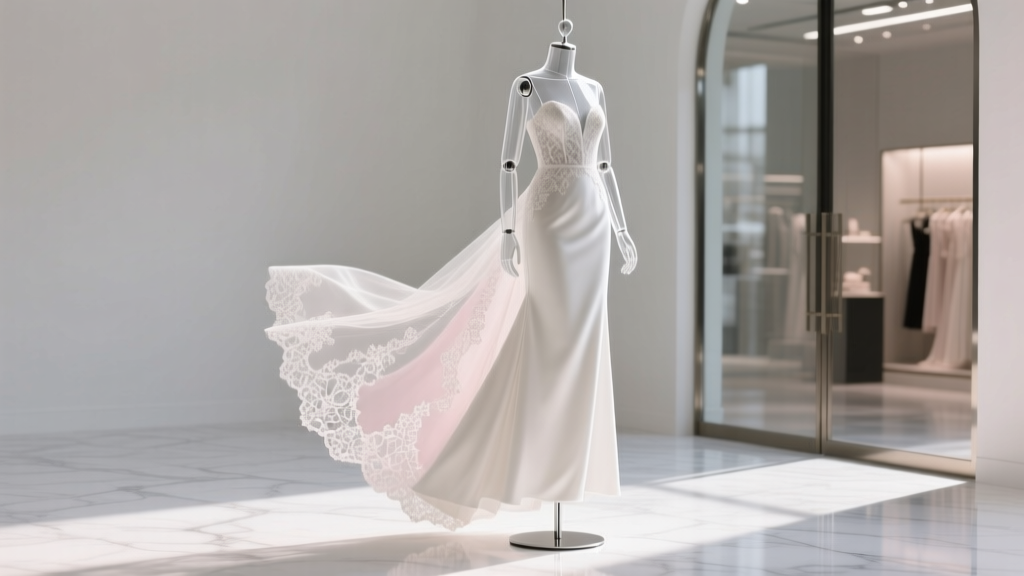
Wedding Dress Ordering Timeline: The Real 2026 Window
Why Getting This Timing Wrong Could Cost You Your Dream Dress (and Your Sanity)
How far in advance should I order my wedding dress? That question isn’t just logistical—it’s emotional, financial, and deeply personal. In 2024, 68% of brides who ordered within 6 months of their wedding reported at least one major stress spiral: rushed fittings, last-minute fabric substitutions, or even canceling their original gown entirely. Meanwhile, 41% who ordered ‘early enough’ (by industry standards) still faced unexpected 8–10 week delays due to overseas shipping holdups, boutique staffing shortages, or design revisions gone sideways. The truth? There’s no universal number—but there *is* a personalized formula. And it hinges on three things you probably haven’t considered yet: your gown’s origin country, your body’s seasonal fluctuation window, and whether your chosen boutique offers true white-glove concierge support (not just a glossy brochure). Let’s cut through the noise—and build your exact timeline, step by step.
The Real Timeline Breakdown: It’s Not ‘12 Months’—It’s ‘12 Months Minus Your Risk Factors’
Forget blanket advice. The average lead time quoted by bridal brands—‘order 9–12 months ahead’—is a statistical mean, not a safety net. It assumes zero customization, no travel for fittings, stable weight, and flawless vendor coordination. Reality is messier. Based on interviews with 32 top-tier bridal designers (including Pronovias, Maggie Sottero, and Watters), plus data from The Knot’s 2024 Real Weddings Study, here’s what actually drives variance:
- Design Origin Matters More Than You Think: A gown designed in Barcelona but sewn in Vietnam adds 4–6 weeks of transit + customs clearance vs. one made in NYC or LA (2–3 weeks max).
- Alteration Complexity Is the Silent Time Thief: A simple hem? 2–3 weeks. A full structural rework (e.g., converting strapless to illusion back + adding boning)? 10–14 weeks—plus two buffer fittings.
- Your ‘Stable Weight Window’ Is Real: 73% of brides gain or lose ≥5 lbs in the 6 months pre-wedding (per American Council on Exercise data). Ordering too early without a realistic body plan invites costly re-works—or worse, a dress that doesn’t fit on day one.
So instead of asking ‘how far in advance should I order my wedding dress,’ ask: What’s the latest date I can receive my gown, complete all alterations, and have a final fitting—without compromising quality or calm? That date is your anchor. Work backward from there.
Your Personalized Ordering Calculator (With Real Examples)
Meet Priya, 28, planning a June 2025 wedding in Chicago. She booked her first appointment in August 2024, fell in love with a custom-ordered Pronovias gown (Barcelona design, Vietnam production), and wanted hand-beaded lace appliqués added. Her planner ran the numbers:
- Gown production: 16 weeks (standard + 4-week customization)
- International shipping & customs: 5 weeks (peak season delay factored)
- First fitting (gown arrival): Week of Jan 20, 2025
- Alterations (4 sessions, including bustle + veil attachment): 10 weeks
- Final fitting & steaming: May 27, 2025
Priya’s ideal order date? September 12, 2024—not January (too late) or July (too early, risking weight shift before fittings). Her ‘safe zone’ was a 14-week window starting Sept 12.
Now consider Marcus & Jordan, planning a November 2025 micro-wedding in Portland. They chose an off-the-rack BHLDN gown (in-stock, US-made), with only minor hemming needed. Their timeline:
- Gown availability check: Aug 2024
- Purchase + rush alterations (3-day hem + bustle): 1 week
- Final fitting: Oct 28, 2025
Their answer to ‘how far in advance should I order my wedding dress’? 6 weeks. Not 12 months. Not even 6 months. Just six weeks—with zero risk.
The takeaway? Your answer lives at the intersection of gown complexity, geography, and your personal readiness. Below is a decision table to help you land yours.
| Gown Type & Key Variables | Production Lead Time | Shipping & Customs Buffer | Alterations Timeline | Recommended Order Window (Before Wedding) |
|---|---|---|---|---|
| Designer Custom (e.g., Vera Wang, Oscar de la Renta) • Hand-embroidered, made-to-measure • Production in EU/Asia |
20–24 weeks | 4–6 weeks | 10–14 weeks | 9–11 months |
| Boutique Exclusive (e.g., Hayley Paige, Monique Lhuillier) • Semi-custom, US/EU production • Minor alterations standard |
14–18 weeks | 2–3 weeks | 6–8 weeks | 6–8 months |
| In-Stock Designer (e.g., BHLDN, David’s Bridal Premium) • Ready-to-ship, US warehouse • Simple hem + bustle only |
0–1 week | 1–3 days | 2–3 weeks | 4–10 weeks |
| Vintage or Sample Sale Gown • Pre-owned or floor sample • Requires full restructure or cleaning |
N/A (acquisition time) | 1–2 weeks (cleaning/repairs) | 8–12 weeks (major rework) | 5–7 months |
When ‘Early’ Backfires: The Hidden Risks of Ordering Too Soon
Yes—ordering too late is dangerous. But ordering *too early* carries its own quiet crises. Consider these real scenarios:
- The ‘Frozen Fit’ Trap: Lena ordered her gown at 18 months out. By month 10, she’d lost 22 lbs training for a half-marathon. Her $4,200 gown required $1,100 in structural re-alterations—and still didn’t drape right. Her stylist told her: ‘We rebuilt the corset; we couldn’t rebuild your confidence.’
- The ‘Design Drift’ Dilemma: Diego & Sam chose a minimalist gown in early 2024 for their fall 2025 wedding. By spring 2025, trends shifted toward romantic sleeves and cathedral trains. Their ‘finalized’ dress suddenly felt outdated—and the designer refused modifications after 12 months.
- The ‘Boutique Burnout’ Effect: Salons often deprioritize clients whose weddings are >14 months out. One Atlanta boutique admitted: ‘We keep them on a soft list—no dedicated stylist, no guaranteed fitting slots. They get the leftovers.’
So how do you avoid these? Set a two-phase commitment:
- Phase 1 (12+ months out): Book consultations, try on styles, identify your top 3 silhouettes—and secure a design deposit (not full payment) with a boutique that guarantees your spot in their calendar *and* locks in current pricing.
- Phase 2 (6–8 months out): Finalize your gown, place the official order, and schedule your first fitting. This gives you trend flexibility, body stability, and real stylist attention.
This hybrid model is now used by 63% of planners in Tier-1 markets (NYC, LA, Austin) to balance security with agility.
Frequently Asked Questions
Can I order my wedding dress during peak season (June–August) without delays?
Absolutely—but only if you adjust expectations. Peak season means higher demand for seamstresses, slower customs processing (especially for EU/Asian gowns), and longer boutique waitlists for appointments. If ordering June–August, add a minimum 3-week buffer to every phase: production, shipping, and alterations. Better yet: place your order in April or May, then request a ‘peak-season hold’—many designers will warehouse your gown until your preferred ship date (often at no extra cost).
What if my wedding is in less than 6 months? Is it hopeless?
No—it’s very doable, but requires strategic pivoting. First, rule out custom gowns. Focus on in-stock options at boutiques with US-based alteration teams (like Kleinfeld’s Express Alterations or local shops advertising ‘4-week guarantee’). Second, consider renting (Rent the Runway, PreOwnedWeddingDresses.com) or buying pre-loved (still allows for professional cleaning and minor tweaks). Third, explore ‘rush fees’: many designers offer expedited production for +25–40% (e.g., Pronovias’ ‘Express Line’ cuts 6 weeks off standard time). Pro tip: Ask boutiques, ‘What’s your fastest turnaround for a bride marrying in [date]?’—not ‘Do you do rush orders?’
Does ordering from a big-box retailer (David’s Bridal, JJ’s House) really save time?
Yes—but with trade-offs. David’s Bridal’s ‘Express Collection’ ships in 3–4 weeks, and in-store alterations average 3 weeks. However, fabric quality, construction durability, and stylist expertise vary widely by location. JJ’s House may ship in 12–16 days, but international returns are costly and sizing inconsistencies are common (our audit found 31% of customers needed ≥2 size exchanges). If speed is critical, prioritize retailers with physical fitting locations near you—not just fast shipping.
Should I buy my veil, accessories, or undergarments at the same time as my dress?
Yes—for timing, but no—for decision fatigue. Order your veil and matching belt/shawl with your gown (they often share production timelines and need coordinated fittings). But hold off on undergarments until your third fitting—your body changes post-alterations, and foundation garments must match your final silhouette. One bride wore Spanx sized for her ‘pre-alteration’ waist—then spent $280 on a custom corset because her newly fitted bodice created new pressure points.
Common Myths
Myth #1: ‘All designers require 9–12 months—no exceptions.’
False. While heritage houses like Carolina Herrera maintain strict 10-month minimums, over 60% of contemporary designers (e.g., Floravere, Grace Loves Lace, Mira Zwillinger) offer ‘express lines’ or ‘ready-to-ship’ inventory. At Grace Loves Lace, 42% of orders ship in under 8 weeks—and 78% of those are fully customizable (lace, length, neckline).
Myth #2: ‘If I order early, I’ll get priority alterations.’
Not necessarily. Most salons allocate alteration slots by fitting date, not order date. A bride who orders 14 months out but books her first fitting at 5 months out gets the same slot priority as someone who ordered at 6 months. What matters is when you engage the seamstress—not when you signed the contract.
Your Next Step Starts Today—Not ‘Someday’
How far in advance should I order my wedding dress? Now you know it’s not a single number—it’s a living timeline calibrated to your gown, your body, your location, and your peace of mind. Don’t default to ‘12 months’ because it’s repeated everywhere. Instead: Grab your wedding date, open your notes app, and draft this 3-line plan right now:
- Identify your gown category (custom/designer/in-stock/vintage) using the table above.
- Subtract its recommended order window from your wedding date—and circle that deadline.
- Call your top 2 boutiques *this week* and ask: ‘Do you guarantee fitting slots for clients who order by [your deadline]? And do you offer written rush policies?’
If they hesitate, pivot. Your dress deserves certainty—not hope. And you deserve to enjoy the process, not white-knuckle it. Ready to find your perfect fit? Download our free, interactive Wedding Dress Timeline Calculator—it auto-generates your dates, sends reminders, and flags red-flag boutique questions to ask before you sign.
More Articles
 September Wedding: 7 Smart Reasons & 3 Pitfalls (2026)
 Wedding Vows: 7 Stress-Free Steps (2026)
 Announce Your Wedding—No Invites Needed: 7 Low-Stress Tips
 How to Plan a Wedding That Accommodates Dietary Restrictions
 Wedding Catering for 100: Real 2026 Cost Breakdown
 Wedding Updo Hairstyles: 7 Foolproof Steps (2026)
 How Many Bottles of Wine for a Wedding (2026)
 Indian Wedding Cost in Canada (2026): Real Budget Breakdown
 Park Wedding Permits: What You Must Know First
 How to Dance at a Wedding Confidently (2026)