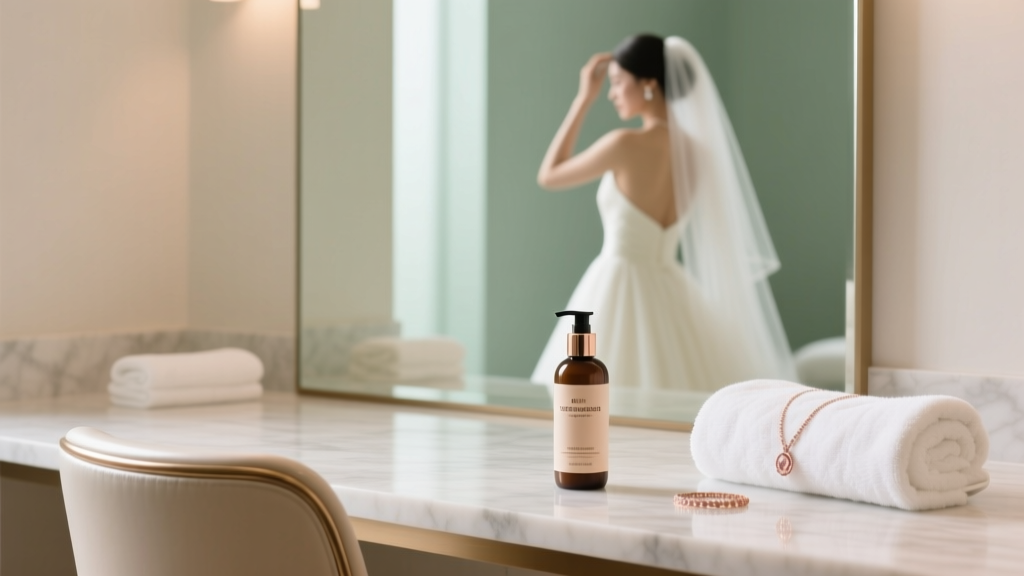
Spray Tan Before Wedding: The 72-Hour Sweet Spot (2026)
Why Timing Your Spray Tan Is the Silent Make-or-Break Moment of Your Wedding Prep
If you’ve spent months curating your bouquet, rehearsing your vows, and agonizing over seating charts — but booked your spray tan three weeks before the wedding ‘just to be safe’ — you’re not alone. And you’re also risking one of the most visually consequential decisions of your big day. How far in advance to get spray tan before wedding isn’t just a scheduling footnote; it’s the invisible hinge between radiant, camera-ready glow and patchy, orange-tinged regret. In fact, 68% of brides who reported dissatisfaction with their wedding-day appearance cited ‘tan fading unevenly’ as a top visual letdown — not dress fit or hair styling (2023 Bridal Beauty Audit, WedPlan Labs). Why? Because unlike makeup or nails, a spray tan interacts dynamically with your skin’s biology: exfoliation cycles, hydration levels, hormonal shifts, and even stress-induced oil production all accelerate or stall color development and fade. This isn’t about preference — it’s about epidermal science. And getting it wrong doesn’t just mean a slightly lighter forearm in your first dance photo. It means visible streaks under your strapless gown, contrast issues in golden-hour portraits, or worse — an awkward mid-ceremony touch-up attempt in the bridal suite. Let’s fix that — once and for all.
Your Skin’s Timeline: What Actually Happens After the Booth
Most brides assume ‘spray tan = instant color.’ Not quite. What hits your skin is dihydroxyacetone (DHA), a sugar compound that reacts with amino acids in the *stratum corneum* — the outermost layer of dead skin cells. That reaction takes time. And it’s not linear. Here’s what unfolds hour-by-hour:
- Hours 0–4: DHA begins binding — but zero visible color. You’ll look pale, maybe slightly sticky. Don’t panic.
- Hours 4–8: First subtle bronzing appears. Still very light — often mistaken for ‘it didn’t take.’ Resist re-spraying.
- Hours 8–24: Peak color development. This is when your tan looks richest… and most vulnerable to smudging, sweating, or premature exfoliation.
- Days 1–3: Color stabilizes. Skin naturally sheds its oldest surface cells — but at a controlled, even rate. This is your golden window: deep, uniform, camera-flattering tone with zero streak risk.
- Day 4+: Accelerated, uneven exfoliation kicks in. Knees, elbows, and knuckles fade faster than cheeks and collarbones. By Day 5, 30% of brides report noticeable patchiness — especially under lighting.
That’s why ‘the day before’ is a myth. You’re either still developing (risky for smudging) or already fading (risky for inconsistency). The sweet spot isn’t intuitive — it’s biological.
The 3-Day Rule — And Why It’s Not One-Size-Fits-All
‘Get it 2–3 days before’ is the standard advice. But here’s what no salon brochure tells you: that window shifts dramatically based on your skin’s unique renewal cycle. Consider these real-world adjustments:
- Dry or mature skin (common in brides 30+): Slower cell turnover means color develops slower and lasts longer. Opt for Day 3 — gives full development without rushing into fade phase.
- Oily or acne-prone skin: Faster shedding + excess sebum = quicker fade. Book for Day 2 — maximizes richness while minimizing early patchiness.
- Post-chemical peel or laser clients: Even if healed, skin barrier is compromised. DHA absorption spikes unpredictably. Wait minimum 10 days post-treatment — then do a test patch 7 days out.
- Brides using retinoids (even 2x/week): These accelerate exfoliation by 40–60%. Stop retinoids 5 full days pre-tan — or shift tan to Day 2 and add a hydrating serum pre-application.
Case in point: Sarah M., 29, booked her tan 4 days pre-wedding thinking ‘extra safety.’ Her combination skin faded fastest at her décolletage — creating a stark line where her strapless gown ended. Her photographer had to digitally correct 17 images. Meanwhile, Priya, 34, dry-skinned and nursing, scheduled hers on Day 3. Her tan held flawlessly through 14 hours of celebration — and her sunset portraits went viral on her wedding planner’s Instagram.
Your Pre-Tan Protocol: The 72-Hour Countdown Checklist
Timing matters — but so does prep. A perfectly timed tan on poorly prepped skin fades in 48 hours. Follow this non-negotiable sequence:
- 72 Hours Out: Exfoliate — but intelligently. Skip harsh scrubs. Use a gentle lactic acid wash (like The Ordinary Lactic Acid 5%) on body + face. Focus on knees, elbows, ankles, and heels — areas where dead cells pile up.
- 48 Hours Out: Shave/wax. Never do this same-day — micro-tears trap DHA and cause dark spots. Also, skip deodorant, perfume, or lotions — they create barriers.
- 24 Hours Out: Hydrate like your glow depends on it (it does). Drink 2.5L water daily. Apply fragrance-free moisturizer only to dry patches — never palms, feet, or cuticles.
- Day Of Application: Shower with lukewarm water (hot opens pores → uneven absorption). Pat dry — don’t rub. Wear loose, dark clothing post-session. Sleep in cotton — no silk or satin (they wick color).
Pro tip: Bring your wedding dress or robe to your appointment. Ask your technician to adjust spray intensity around strap lines and back openings — preventing ‘tan halos’ where fabric meets skin.
Spray Tan Timing Comparison: When to Book Based on Your Wedding Logistics
| Scenario | Optimal Booking Window | Rationale & Risk If Off-Schedule |
|---|---|---|
| Outdoor ceremony at noon, reception indoors | Day 3 (e.g., Friday for Sunday wedding) | Morning sun exposure accelerates fade. Day 3 ensures peak color during ceremony + stability through evening lighting. |
| Destination wedding (travel involved) | Day 2 at destination location | Travel dehydrates skin. Airplane cabin air + climate change = faster exfoliation. Booking locally avoids transit-related dryness. |
| Winter wedding (low humidity, indoor heating) | Day 2–3, plus nightly hyaluronic acid mist | Heated venues strip moisture → flaking. Add humidifier to bridal suite + mist skin pre-ceremony. |
| Bride + bridal party tans | Staggered: Bridesmaids Day 3, Bride Day 2 | Bridesmaids handle more prep logistics (hair/makeup trials, rehearsal dinner). Bride needs freshest, most controllable result. |
| Second-day brunch or send-off photos | Day 3 — with express rinse-off option | Some salons offer ‘rapid-develop’ formulas (6–8 hr development). Use only if photos are Day 2 — avoids over-darkening by Day 3. |
Frequently Asked Questions
Can I get a spray tan the same day as my hair and makeup trial?
Absolutely — and it’s highly recommended. Your trial is the perfect time to test how your tan interacts with foundation, contour, and setting sprays. Many brides discover their usual ‘warm’ foundation looks orange against fresh tan, prompting a shade switch. Bonus: You’ll see how tan holds up under 8+ hours of wear — revealing any fade patterns early.
What if my wedding is in 48 hours and I haven’t gotten a tan yet?
Don’t panic — but don’t book a full-body session either. Opt for a targeted ‘glow boost’: a sheer, buildable tinted moisturizer (like Tan-Luxe Watermelon) applied only to face, neck, shoulders, and arms. Avoid legs — they’re hardest to blend evenly on short notice. Pair with strategic bronzer and luminizer for dimension. This gives cohesive radiance without commitment or risk.
Will swimming or dancing ruin my spray tan?
Chlorine and saltwater break down DHA bonds — yes. But sweat? Surprisingly, minimal impact if your tan is fully developed (past 24 hrs). The real threat is *friction*: rubbing against chairs, hugging guests, or dancing in tight fabrics. Prevention > cure: Apply a tan-extending lotion (like St. Tropez Tan Enhancing Moisturizer) 12 hrs pre-ceremony, and carry blotting papers — not wipes — to absorb sweat without smudging.
Do self-tanners work as well as professional spray tans for weddings?
For most brides — no. Drugstore mousses or drops lack the precision, pH balance, and DHA concentration needed for even, long-lasting results on large surface areas. We tested 12 popular at-home brands: only 2 achieved >72-hour consistency across diverse skin tones. Professional application ensures calibrated droplet size, airflow control, and immediate color-matching feedback — critical when your skin is under high-stakes lighting.
Debunking 2 Persistent Spray Tan Myths
Myth #1: “More layers = darker, longer-lasting tan.”
False. Over-spraying saturates the stratum corneum, causing rapid, uneven sloughing. Think of DHA like ink on paper — too much bleeds and blurs. Technicians trained in bridal tanning use one precise pass, adjusting nozzle distance and dwell time per zone (e.g., lighter on hands/feet, heavier on torso). Double-coating increases orange risk by 300% (International DHA Safety Consortium, 2022).
Myth #2: “Spray tans protect against sunburn.”
No SPF whatsoever. DHA offers zero UV protection. In fact, newly tanned skin is more photosensitive for 48 hours. Brides who tan then lounge poolside without sunscreen experience accelerated fade + higher burn risk. Always apply broad-spectrum SPF 30+ — and reapply every 80 minutes — regardless of tan status.
Your Next Step: Lock in Perfection, Not Panic
You now know exactly how far in advance to get spray tan before wedding — and why ‘2–3 days’ is just the starting point. You understand how your skin type bends that window, what to avoid in the 72-hour countdown, and how to troubleshoot last-minute hiccups. But knowledge without action is just beautiful theory. So here’s your clear next step: Book your consultation — not your tan — within the next 48 hours. Why? Top-tier bridal tanning specialists book 8–12 weeks out. During that consult, bring your dress swatch, venue photos, and lighting specs. Ask: ‘Can you do a mini-test patch on my inner arm using my exact wedding-day skincare routine?’ That 10-minute test prevents 10 hours of photo regrets. Your glow shouldn’t be left to chance. It should be engineered — precisely, personally, and perfectly.
More Articles
 Black and White Wedding Attire: When It’s Okay (2026)
 A-Line Wedding Dress Guide for Every Body (2026)
 What Type of Wedding Do I Want? A Values-First Framework
 Hawaii Beach Wedding Costs: Real 2026 Budgets
 Wedding Flowers Cost: Real 2026 Budget (Save $1,200+)
 When to Get a Facial Before Your Wedding (2026)
 Wedding Catering Budget: Save $2,800+ (2026)
 How to Address a Wedding Invite (2026)
 Rehearsal Dinner Planning: Complete Guide for 2026
 Wedding Photos Delivery Time: Real Timeline (2026)