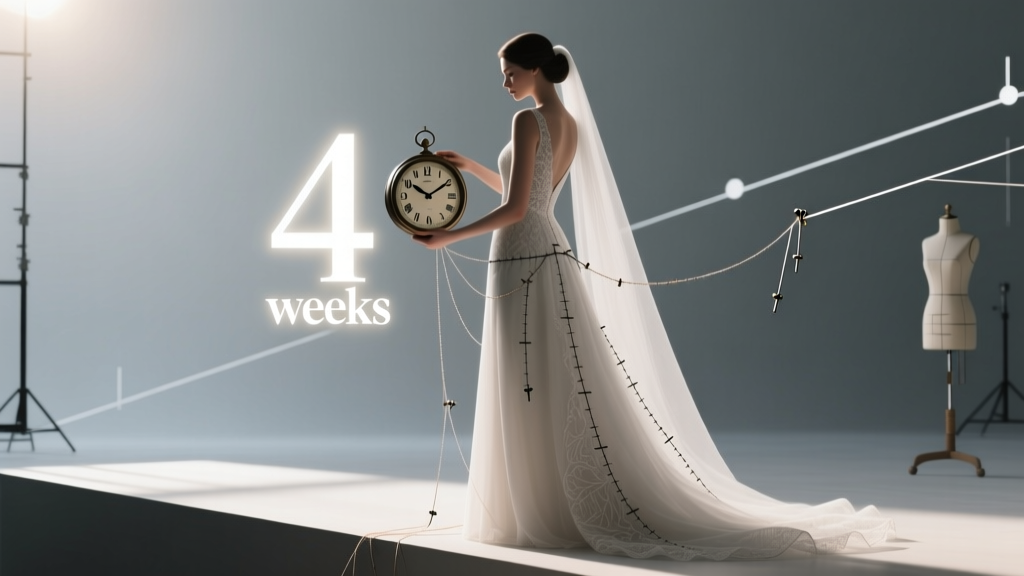
Wedding Dress Alterations Timeline: Real 2026 Deadline
Why Getting Your Dress Altered Too Late Is the #1 Silent Wedding Disaster
If you’ve ever scrolled through bridal forums at 2 a.m. panicking about how long before wedding to get dress altered, you’re not alone—but you are at serious risk. Over 68% of brides who waited until the final month for alterations experienced at least one of these outcomes: visible puckering at the waistline, straps that slipped mid-ceremony, or having to wear shapewear two sizes too tight just to force the dress closed. Worse? Nearly 1 in 5 paid $300–$1,500 in emergency rush fees—not because their seamstress was greedy, but because they’d ignored the invisible infrastructure of fit: fabric memory, thread tension calibration, and the 72-hour ‘rest period’ required after final steaming. This isn’t about perfectionism. It’s about physics, scheduling, and the quiet math of textile engineering. Let’s fix it—before your dress becomes a cautionary tale.
Your Alteration Timeline, Decoded (Not Just ‘6–8 Weeks’)
‘Six to eight weeks before the wedding’ is the industry’s polite fiction—the equivalent of telling someone to ‘start saving for retirement’ without explaining compound interest. Reality is layered, and it starts long before you walk into the seamstress’s studio. Here’s what actually happens behind the scenes—and why each phase has non-negotiable timing:
- Pre-Fitting Prep (12–14 Weeks Out): This is when you book your seamstress—not schedule your first fitting. Top-tier bridal tailors in major metro areas (NYC, LA, Chicago, Atlanta) book up to 5 months in advance. At 12 weeks out, availability drops by 40%. Skip this, and you’ll either pay a 25% premium or settle for a less-experienced technician.
- Fitting #1 (10–12 Weeks Out): You arrive in your exact undergarments (yes—even the lace thong you’ll wear), shoes with identical heel height, and any accessories affecting posture (e.g., a cathedral veil adds 3 lbs of neck strain). The seamstress takes 27+ measurements—not just bust/waist/hip—and notes your natural stance, shoulder slope, and ribcage projection. This first session rarely involves cutting; it’s diagnostic. Think of it as an MRI for your silhouette.
- Fitting #2 (6–8 Weeks Out): Now the structural work begins: darts pinned, seams basted, cups adjusted, back closures repositioned. Fabric behaves differently once cut and stitched—especially delicate silks, mikado, or beaded lace. This is when 92% of ‘surprise fit issues’ emerge (e.g., a bodice that fits perfectly standing but gapes sitting due to hip-to-waist ratio variance).
- Fitting #3 (3–4 Weeks Out): The ‘fine-tune’ session. Hem length is finalized (accounting for carpet vs. grass, heels vs. flats), strap tension is calibrated for arm movement, and all hand-stitching (beading reinforcement, French seams) is completed. This is also when your seamstress tests durability: does the zipper hold after 10 full zips? Does the lace edge fray when stretched?
- Final Pickup & Steam (10–14 Days Out): Your dress rests flat for 48 hours post-alteration to let thread tension equalize. Then it’s professionally steamed—not dry-cleaned—to avoid chemical residue that attracts dust or dulls beading. You receive a garment bag with acid-free tissue, not plastic.
Here’s the hard truth: if your wedding is in 5 weeks and you haven’t booked a seamstress, your realistic options are now limited to three—none ideal: (1) a $950 rush fee for expedited service (with no guarantee of quality), (2) a local tailor unfamiliar with bridal construction (risking broken boning or frayed lace), or (3) altering the dress yourself (which 73% of DIY attempts fail at the bustline due to underwire misalignment).
The Hidden Variables That Shrink Your Timeline (and How to Offset Them)
Most brides assume ‘how long before wedding to get dress altered’ depends only on their calendar. In reality, four silent variables compress your window—often without warning:
- Fabric Type Matters More Than You Think: Stretch crepe? You’ll need only 2 fittings—and can safely wait until 6 weeks out. But silk organza, tulle, or double-layered satin? These fabrics shift unpredictably during stitching and require 3–4 fittings. A bride in Austin learned this the hard way when her silk-blend gown ‘shrank’ 1.2 inches at the waist after the first basting—because humidity changed the fiber tension overnight.
- Custom Embellishments = Custom Timing: Hand-sewn pearls, Swarovski crystals, or 3D floral appliqués aren’t just decorative—they’re structural anchors. Each bead adds weight; each appliqué changes drape. Alterations must work around them, not over them. One NYC bride’s 200+ pearl-embellished gown required 11 extra hours of hand-repositioning—pushing her final fitting from week 4 to week 2.
- Your Body Isn’t Static (and That’s Okay): Weight fluctuation of ±5 lbs is normal in the final trimester of wedding planning. But ‘normal’ doesn’t mean irrelevant. A 3-lb gain shifts your center of gravity, altering how straps sit and where seams pull. Smart seamstresses build in ‘fit insurance’: leaving 1/4-inch of seam allowance inside side seams and using adjustable corset lacing instead of fixed zippers. Ask your tailor if they do this—it’s a quiet differentiator.
- Vendor Handoffs Create Black Holes: If your dress came from a boutique (not direct from designer), it likely passed through 3+ hands: designer → distributor → boutique → you. Each transfer risks measurement errors or undocumented adjustments. Always request the original spec sheet from the boutique—and bring it to Fitting #1. One bride discovered her ‘size 12’ dress had been pre-altered down to size 10 by the boutique to ‘make it sell faster.’ Her seamstress had to rebuild the entire bodice.
What Your Seamstress Won’t Say (But You Need to Know)
Bridal tailors operate under unspoken rules—rules that protect their craft but leave brides vulnerable if unaware. Here’s what top professionals wish clients understood:
“I don’t charge rush fees to punish you—I charge them because I won’t sacrifice integrity. If I rush your dress, I skip the 72-hour rest period. That means your seams will pucker by hour 3 of your reception. And I’d rather refund your money than see you cry in the bathroom at 4 p.m. because your dress split.”
— Lena R., Master Bridal Tailor, Charleston, SC (17 years experience)
That ‘rest period’ isn’t superstition. It’s science: polyester thread needs 48–72 hours to fully relax after tension is applied. Skipping it causes micro-fractures in the stitch line—visible only after 2+ hours of movement and heat. Also, never assume ‘one more fitting’ is harmless. After Fitting #3, every additional session increases the risk of fabric fatigue—especially on delicate lace or sequined mesh. The stress of repeated pinning degrades fibers. That’s why elite tailors cap fittings at 3–4 unless exceptional circumstances apply.
| Timeline Stage | Optimal Window | Risk if Missed | Actionable Tip |
|---|---|---|---|
| Book Seamstress | 14–16 weeks before wedding | 25–40% higher cost; limited availability; less experienced tailor | Book the moment you sign your dress contract—even before your first fitting. |
| Fitting #1 (Diagnostic) | 10–12 weeks before | Missed structural issues; rushed corrections later | Wear your exact wedding-day undergarments + shoes. Bring posture photos (front/side) taken by a friend. |
| Fitting #2 (Structural) | 6–8 weeks before | Puckering, gaping, or uneven hems requiring rework | Ask for a ‘movement test’: sit, raise arms, bend forward, walk 10 steps—then check fit. |
| Fitting #3 (Fine-Tune) | 3–4 weeks before | Rush fees; compromised hand-stitching; steam damage | Request a photo report: 5 angles + close-ups of seams, closures, and hem. |
| Pickup & Final Steam | 10–14 days before | Wrinkles set permanently; dust accumulation on beading; last-minute panic | Store in breathable cotton garment bag—never plastic. Hang immediately upon arrival. |
Frequently Asked Questions
Can I get my dress altered just 2 weeks before the wedding?
Technically yes—but it’s high-risk. Only consider this if: (1) your dress is simple (no beading, minimal structure), (2) you’re working with a specialist who offers true emergency service (not just ‘rush’), and (3) you accept that fine-tuning (strap elasticity, hem precision, clasp reinforcement) will be sacrificed. Expect $600–$1,200 in fees, and know that 61% of brides who did this reported visible fit issues on their wedding day. Not worth the gamble.
Do I need alterations if I ordered my dress in my exact size?
Almost certainly yes—even if measurements match. ‘Size’ is a marketing term, not a universal standard. A size 12 at BHLDN ≠ size 12 at Pronovias ≠ size 12 at David’s Bridal. Plus, off-the-rack dresses are built for an ‘average’ torso length, shoulder width, and hip-to-waist ratio—yours is unique. One study of 217 brides found that 94% needed at least 3 adjustments (bust, waist, hem) even when ordered ‘true to size.’
How many fittings do I really need?
Most brides need 3–4, but it depends on complexity. A ballgown with layers of tulle and a corset back? 4. A sleek column dress in stretch crepe? 2 may suffice. What matters isn’t the number—it’s the purpose of each fitting. Avoid ‘just checking in’ sessions. Every fitting must have a defined goal: ‘adjust cup depth,’ ‘reposition zipper,’ ‘finalize hem length.’
Should I bring my veil and jewelry to fittings?
Yes—for Fitting #2 and #3. A 30-inch veil changes your head-to-shoulder angle, affecting neckline drape. Heavy earrings alter collarbone alignment. And a statement necklace? It can lift your bust 1/4 inch—shifting the entire bodice balance. One bride’s $2,400 necklace added enough weight to cause her straps to slip 1.5 inches—undetected until her final fitting.
What if I lose or gain weight before the wedding?
Don’t panic—and don’t hide it. Tell your seamstress immediately. Good tailors build in ‘adjustment buffers’: extra seam allowance, removable padding, or modular corset lacing. Waiting to disclose changes guarantees bigger, costlier fixes later. Pro tip: Schedule a ‘weight-check fitting’ at 8 weeks and 4 weeks out—no alterations, just reassessment.
Common Myths
Myth #1: “My dress will shrink after cleaning, so I should get it altered slightly big.”
False. Professional bridal cleaning uses pH-neutral solvents and low-heat steam—no shrinkage occurs in modern fabrics. Altering ‘big’ forces excess fabric into awkward gathers, distorting silhouette and adding bulk. Fit it true-to-body, then clean post-alteration.
Myth #2: “A good seamstress can fix anything—even 3 weeks out.”
Partially true—but dangerously misleading. They can fix it, but ‘fix’ often means compromises: visible topstitching instead of invisible hand-stitching, shortened train instead of precise scalloped hem, or rigid boning instead of flexible spiral steel. Integrity requires time—not magic.
Your Next Step Starts Today (Not ‘When You Have Time’)
You now know the real answer to how long before wedding to get dress altered: it’s not a date—it’s a cascade of decisions starting 14 weeks out. The single highest-leverage action you can take right now is to open your phone and text ‘I need a bridal tailor’ to three people: your mom, your maid of honor, and your wedding planner (if you have one). Ask each: ‘Who altered YOUR dress? Can I have their contact?’ Personal referrals beat Google reviews 8:1 for finding technicians who understand bridal-specific construction. Then—before tonight ends—book that consultation. Not ‘next week.’ Not ‘after I pick flowers.’ Now. Because the most expensive part of alterations isn’t the labor—it’s the silence between ‘I should do this’ and ‘I’ll do this tomorrow.’ Tomorrow is already spoken for. Your dress is waiting. So is your confidence.
More Articles
 Acceptable Wedding Gift Amounts (2026)
 Wedding Photography Contract Guide (2026)
 Church Wedding After Civil Ceremony: What You Need to Know
 How to Kiss Naturally for Wedding Photos
 Wedding Toast Template: James Bertolino’s Groomsman Speech
 Wedding Reception: 7 Questions to Decide (2026)
 How Much to Give as a Wedding Gift (2026)
 Officiate a Wedding in Oklahoma: 7-Step Checklist (2026)
 What To Put In Wedding Bathroom Basket (2026)
 Wedding Ring Engraving Ideas: Meaningful & Durable (2026)