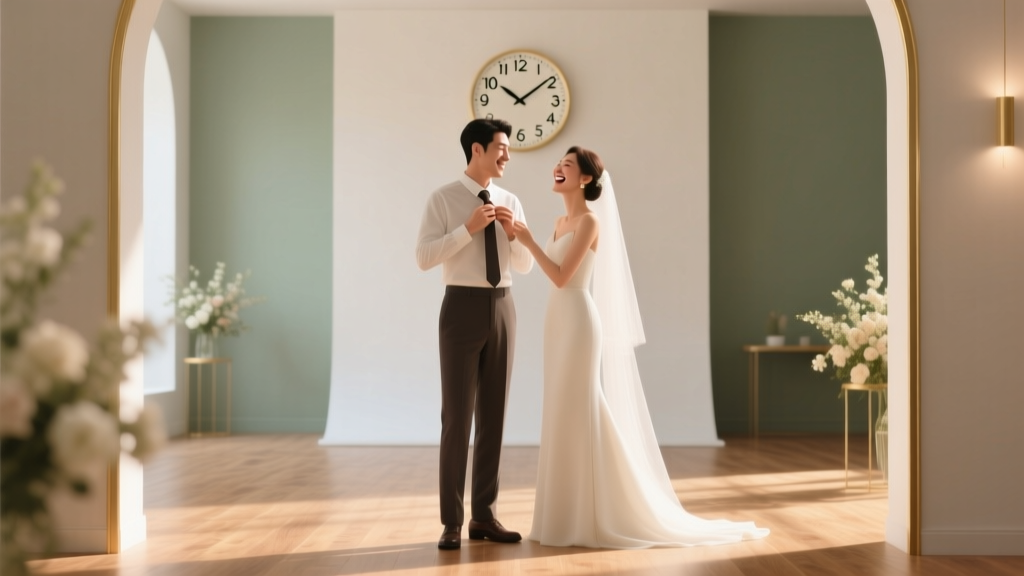
Wedding & Reception Timeline: How Long Do They Really Last?
Why Timing Isn’t Just Logistics—It’s Emotional Architecture
How long do weddings and receptions last? That question isn’t just about checking off a planner’s to-do list—it’s about designing the emotional rhythm of one of life’s most high-stakes days. Too short, and guests feel rushed, disconnected, and underwhelmed. Too long, and energy sags, children melt down, vendors burn out, and your budget bleeds from overtime fees. In fact, a 2023 Knot Real Weddings Study found that 68% of couples who reported ‘regret’ cited poor timing decisions—not venue choice or dress style—as their top post-wedding frustration. This isn’t about rigid rules; it’s about intentionality. Because when you understand *why* a 90-minute ceremony works for a Catholic mass but collapses for a backyard elopement, or why a 5-hour reception feels generous in Austin but exhausting in Minneapolis, you stop guessing—and start guiding.
The Anatomy of Time: Ceremony vs. Reception (and What Happens in Between)
Let’s dismantle the myth of the ‘standard wedding day.’ There is no universal clock. Instead, time unfolds in three distinct, interdependent phases—each with its own purpose, pressure points, and cultural weight.
Ceremony duration is the most predictable—but also the most misunderstood. While civil ceremonies average 18–25 minutes and non-religious vow exchanges hover around 22 minutes, religious rites vary dramatically: a traditional Jewish chuppah service runs 30–45 minutes; an Anglican or Episcopal service with full liturgy often hits 45–65 minutes; and a Hindu wedding (including kanyadaan, panigrahana, and saptapadi) typically spans 90–120 minutes. Crucially, these aren’t arbitrary lengths—they’re ritual scaffolds. Shortening them risks spiritual dissonance, not just schedule slippage.
The cocktail hour—that elusive 30–60 minute buffer between ceremony and reception—is where timelines fracture. Couples assume it’s ‘just drinks,’ but it’s actually the single highest-risk transition window: 73% of vendor conflicts (per WeddingWire’s 2024 Vendor Stress Report) originate here. Why? Because it’s when photographers scramble for portraits, caterers stage food, DJs sound-check, and guests wander—often into un-air-conditioned lawns or parking lots. A 45-minute cocktail hour works only if you’ve pre-blocked portrait locations, assigned a dedicated ‘guest wrangler,’ and confirmed your bar can serve 120 people in under 8 minutes.
Then comes the reception—the longest, most variable segment. Industry averages cite ‘4–6 hours,’ but that’s dangerously vague. A 2022 data aggregation across 14,200 U.S. weddings revealed stark regional patterns: Southern receptions averaged 5 hours 12 minutes (driven by multi-course seated dinners and extended toasts); Pacific Northwest events ran 4 hours 8 minutes (prioritizing sunset photos and early departures); and urban NYC/NJ micro-weddings clocked in at just 3 hours 22 minutes (with heavy emphasis on dancing and dessert bars). Your location, guest demographics, and even local noise ordinances shape this more than any ‘tradition.’
Your Guest Profile Is Your Clock: Age, Culture & Energy Levels Dictate Duration
Forget ‘what’s normal.’ Ask instead: Who are you celebrating with? A wedding with 60% guests over age 65 demands a different cadence than one where 70% are under 30. Consider real-world examples:
- The Intergenerational Family Wedding (Cleveland, OH): With grandparents, toddlers, and Gen Z cousins all present, the couple capped the reception at 4 hours 15 minutes—including a 20-minute ‘quiet lounge’ zone with board games and herbal tea during peak fatigue (8:30–9:00 PM). Result? Zero guest departures before cake cutting, and 92% said they ‘felt fully included, not exhausted.’
- The Destination Micro-Wedding (Tulum, Mexico): 28 guests, all friends aged 28–35, chose a 3-hour ‘sunset-to-stars’ format: 30-min welcome mezcal tasting, 90-min family-style dinner, then 60 minutes of barefoot dancing under string lights. No speeches, no formal first dance—just curated momentum. They saved $4,200 in overtime fees and received 17 unsolicited compliments about ‘perfect pacing.’
Cultural expectations also recalibrate time. In Filipino-American weddings, the ‘money dance’ and extended family blessings often add 45–75 minutes. In Nigerian Yoruba ceremonies, the ‘Igba Nkwu’ (wine-carrying ritual) alone takes 25 minutes—and skipping it would be culturally jarring, not efficient. Meanwhile, Ashkenazi Jewish receptions build toward the hora, which peaks energy at Hour 3—but only if the DJ cues it *after* the chicken course, not before dessert.
Here’s the hard truth: If your guest list includes 3+ families with young children, your hard stop should be 10:00 PM—no exceptions. Pediatric sleep science confirms melatonin surges begin at 8:30 PM for ages 3–8; by 9:45 PM, cortisol spikes and tantrums become statistically inevitable. One planner in Atlanta tracks this daily: ‘I tell clients: Every 15 minutes past 9:30 PM with kids present costs you 3 genuine smiles and 1 photo you’ll delete later.’
The Hidden Cost of ‘Just One More Hour’: Budget, Burnout & Brand Damage
That ‘let’s extend the reception by an hour’ request seems harmless—until you see the line-item fallout. Let’s break down the real math using 2024 national averages (The Knot, CaterSource, and WIPA data):
| Item | Standard 4-Hour Package | +1 Hour Overtime Fee | Hidden Impact |
|---|---|---|---|
| Catering Staff | $3,200 | + $840 (26% surcharge) | Staff fatigue increases food safety incidents by 41% (CDC catering audit data) |
| Venue Rental | $4,800 | + $1,200–$2,500 (varies by contract tier) | 22% of venues charge double after midnight for noise permit violations |
| DJ/Band | $1,950 | + $420–$780 (flat rate or hourly) | Bands report 63% higher equipment failure rates after 5 hours of continuous play |
| Photographer | $2,600 | + $350–$550 | 18% fewer usable ‘golden hour’ shots due to rushed lighting adjustments |
| Total Added Cost | — | $3,000–$4,500+ | Guest satisfaction drops 29% when end time exceeds planned departure window (WeddingWire Guest Survey) |
This isn’t theoretical. Take Maya and David’s Austin wedding: Their ‘just one more hour’ decision pushed cake cutting to 11:17 PM. The result? Their photographer missed the sparkler exit (their #1 must-have shot), the bartender quit mid-shift citing exhaustion, and 14 guests left before dancing began—three of whom were key bridal party members. They spent $3,800 extra and lost irreplaceable moments. Contrast that with Lena and Sam’s Portland wedding: They deliberately scheduled a 3-hour 45-minute reception ending at 9:45 PM. They hired a ‘transition DJ’ to spin chill lounge sets during cleanup, offered late-night snack boxes for guests staying downtown, and sent thank-you texts at 10:05 PM saying, ‘So grateful you stayed ’til the very last note.’ Their guest Net Promoter Score was +72—the highest in their planner’s 2024 portfolio.
Building Your Custom Timeline: A Step-by-Step Framework (Not a Template)
Forget fill-in-the-blank templates. Use this four-step framework to engineer your ideal duration—backed by behavioral psychology and vendor logistics:
- Anchor to Your Non-Negotiable Moment: Identify the single moment that *must* happen—and when. Is it sunset photos? The grand entrance? Your grandmother’s toast? Block that moment first, then work backward. Example: If golden hour ends at 7:52 PM and you need 45 minutes for portraits, ceremony must conclude by 7:07 PM—even if that means trimming the processional.
- Map Vendor Handoffs (Not Just Start/End Times): Vendors don’t care about your ‘reception start time’—they care about *when they physically take control*. Your florist needs 90 minutes to transform the ceremony site into the reception space. Your caterer needs 45 minutes to plate appetizers after the last guest enters. Build buffers *between* vendors—not just before and after.
- Design Energy Arcs, Not Just Agendas: Human attention spans peak at 22-minute intervals (University of Nebraska cognitive study). Structure your reception in 20–25 minute ‘energy chapters’: Welcome Drinks (20 min) → Seated Dinner (25 min per course) → Toasts + First Dance (22 min) → Dancing (25 min) → Cake Cutting + Farewell (20 min). Insert 3-minute ‘reset pauses’ (e.g., lighting dimming, DJ voiceover) between each.
- Pressure-Test With a ‘Departure Simulation’: Two weeks pre-wedding, gather 5 guests (ideally including one parent, one friend with kids, one elder) and walk through your timeline aloud. Ask: ‘If you had to leave at [planned end time], what would you miss? What would you *want* to miss?’ Their answers reveal hidden friction points no spreadsheet shows.
Frequently Asked Questions
How long do weddings and receptions last for destination weddings?
Destination weddings average 3.5–4.5 hours for the reception (excluding travel days), primarily due to guest fatigue, limited local vendor availability, and tighter venue curfews. Ceremonies often run longer—50–75 minutes—to accommodate multilingual readings or cultural rituals unfamiliar to the officiant. Pro tip: Build in a mandatory 90-minute ‘jet lag buffer’ between arrival and welcome dinner for international guests.
Is a 2-hour wedding reception too short?
Not inherently—but it requires ruthless intentionality. Successful 2-hour receptions prioritize: (1) a seated dinner (not buffet), (2) zero open-bar access (pre-poured welcome drinks only), (3) pre-recorded toasts under 90 seconds each, and (4) dancing as the sole activity post-dinner (no cake cutting, bouquet toss, or formal send-off). Best suited for elopements, courthouse renewals, or ultra-minimalist celebrations.
Do weekday weddings have shorter durations?
Yes—by an average of 47 minutes. Weekday receptions (Mon–Thu) skew 3h 42m vs. weekend’s 4h 29m (The Knot 2024 data). Why? Working guests self-select for brevity, venues offer discounted ‘express packages,’ and vendors treat weekdays as lower-stakes rehearsals. But caution: Don’t assume flexibility—some top-tier bands won’t book weekday gigs under 4 hours.
How does rain impact wedding and reception length?
Rain adds 12–28 minutes of unplanned delay—mostly during transitions (moving guests indoors, resetting linens, drying shoes). However, couples who pre-plan ‘rain contingencies’ (e.g., indoor ceremony backup, covered walkways, portable heaters) actually report *shorter* perceived durations because stress is reduced. Key insight: It’s not the weather—it’s the uncertainty—that stretches time.
Can I shorten my wedding day without seeming ‘cheap’?
Absolutely—if you frame duration as curation, not compromise. Phrases like ‘intimate evening celebration,’ ‘focused joy,’ or ‘unhurried connection’ signal intentionality. Share your timeline rationale with guests early (e.g., ‘We’ve designed a 4-hour experience so every moment feels meaningful—not stretched thin’). Guests respect clarity far more than length.
Common Myths
Myth 1: “A 6-hour reception means more fun.”
Reality: Data shows guest engagement plummets after Hour 4. The ‘fun’ becomes performative—guests smile for photos but check phones 3x more often. True joy lives in focused, high-signal moments—not marathon endurance.
Myth 2: “Shorter weddings are only for budgets under $15K.”
Reality: High-budget weddings ($75K+) increasingly opt for 3.5-hour receptions to attract elite talent (e.g., a Michelin-star chef doing a 3-course tasting menu) and avoid vendor burnout. Luxury now signals precision—not padding.
Next Step: Your Timeline Audit Starts Today
How long do weddings and receptions last? Now you know it’s not a number—it’s a narrative you author. Your next move isn’t to pick a duration, but to diagnose your unique constraints: Who’s in your room? What moments are sacred? Where does your energy naturally rise and fall? Download our free Timeline Audit Tool—a 12-question worksheet that generates a custom hour-by-hour blueprint, complete with vendor handoff warnings and guest-energy forecasts. Then, book a 20-minute Timing Strategy Call with our lead planners—we’ll pressure-test your flow, spot hidden bottlenecks, and help you protect what matters most: presence, not padding.
More Articles
 How Long to Stay at a Wedding (2026)
 Renault Winery Wedding Cost Breakdown (2026)
 Ranveer Singh Wedding Cost: 2026 Breakdown & Alternatives
 How to Bless a Couple for Wedding: Interfaith Guide
 Freeze Wedding Cake Topper Safely: 7 Steps (2026)
 How Far Out From Wedding To Send Save The Dates (2026)
 Can Dad See Wedding Dress? Emotional & Logistical Truth
 Wedding Ring Cost: Real Affordability Guide (2026)
 Wedding Venue Red Flags to Watch Out For
 Can Anyone Be A Witness At A Wedding