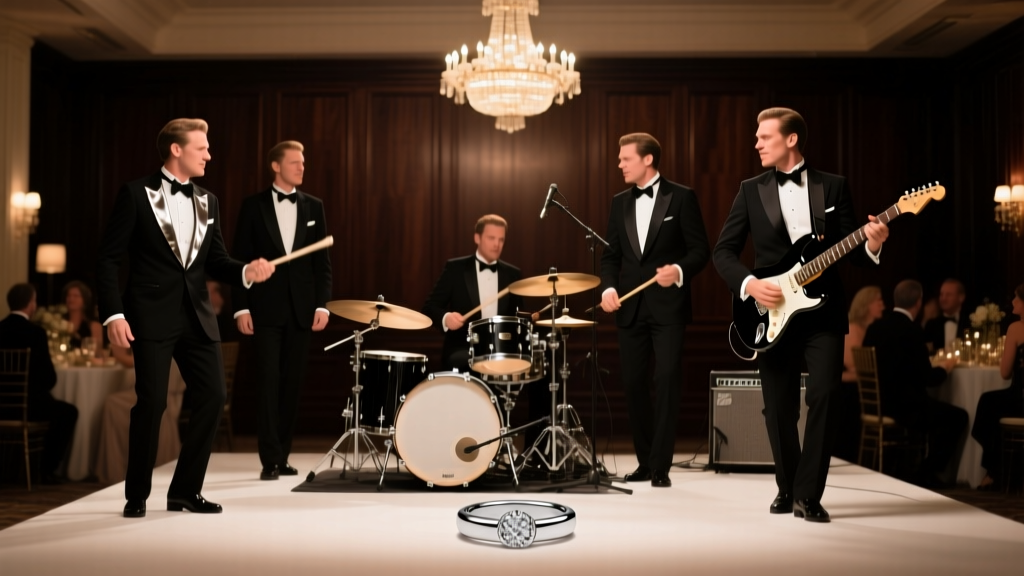
Wedding Band Duration: How Long Do They Really Play?
Why 'How Long Does a Wedding Band Play For?' Is the Quiet Question That Makes or Breaks Your Reception
If you’ve ever watched guests drift toward the bar while the band takes an unscheduled 45-minute break—or seen your dance floor empty just as the first song of the night hits—you already know how long does a wedding band play for isn’t just a scheduling footnote. It’s the invisible rhythm section of your entire celebration. Get it right, and you’ll have a seamless, high-energy flow from cocktail hour to last call. Get it wrong, and even the most stunning florals or gourmet menu won’t save you from awkward silences, confused guests, and a DJ hastily filling gaps with questionable Spotify playlists. In 2024, couples are prioritizing live music more than ever—68% of weddings with budgets over $35K include a full band—but few realize that duration isn’t just about clock time. It’s about set structure, vocal stamina, instrument rotation, and strategic pacing. This guide cuts through vendor jargon, reveals what’s *actually* included in that ‘4-hour package,’ and gives you the exact language to use when negotiating with bands—so you pay for performance, not padding.
What ‘Standard Duration’ Really Means (Spoiler: It’s Not Just Clock Time)
When a band advertises ‘4 hours of live music,’ they almost never mean four uninterrupted hours of playing. Instead, it’s typically four hours of scheduled performance time, broken into sets with built-in breaks. Most professional wedding bands follow a proven 3–5 hour framework, with the sweet spot landing at 3.5 to 4.5 hours of actual stage time, spread across 3–4 sets. Here’s how it usually breaks down:
- Set 1 (Cocktail Hour): 45–60 minutes of background-friendly jazz, acoustic pop, or light instrumental—designed to complement conversation, not dominate it.
- Set 2 (Dinner & Toasts): 30–45 minutes of low-volume, elegant interludes—think bossa nova, soulful ballads, or instrumental Motown—played between courses and during speeches.
- Set 3 (Main Dance Floor Activation): 60–90 minutes of high-energy, crowd-pleasing repertoire—the ‘peak’ of your reception, where the band earns its fee.
- Set 4 (Grand Finale & Last Dance): 30–45 minutes of upbeat classics, singalongs, and intentional wind-down energy—ending on a joyful, communal note.
Crucially, those sets are separated by 15–25 minute breaks—time the band uses to hydrate, tune instruments, swap mics, rest vocals, and prep for the next mood shift. A ‘4-hour package’ often includes ~3 hours 15 minutes of playing + ~45 minutes of structured breaks. That’s why your contract should specify ‘total performance time’ (e.g., ‘3 hours 45 minutes of live music’) rather than vague phrasing like ‘4 hours of coverage.’ One couple in Portland learned this the hard way: their ‘4-hour band’ arrived at 6 p.m., played two 45-minute sets, then left at 10 p.m.—leaving zero music for the final hour. Their contract said ‘4 hours of service,’ not ‘4 hours of playing.’
The Hidden Variables That Change Everything
Duration isn’t fixed—it flexes based on five non-negotiable variables no vendor brochure tells you about:
- Vocalist Endurance: Lead singers can’t belt ‘Don’t Stop Believin’’ for 90 minutes straight. Top-tier bands rotate lead vocals or bring backup singers specifically to sustain energy—and that affects how long they can deliver peak performance.
- Instrumentation Complexity: A 9-piece horn-heavy band needs longer tuning and setup between sets than a 4-piece rock band. More players = more coordination = tighter breaks needed.
- Venue Acoustics: In a cavernous ballroom with concrete floors and high ceilings, bands often shorten sets to avoid vocal strain from projecting over reverb. Conversely, intimate vineyard settings allow for longer, more nuanced sets.
- Guest Demographics: A crowd averaging 62 years old may prefer longer, slower-paced sets with familiar standards; Gen Z-heavy guest lists demand faster tempos, shorter transitions, and TikTok-adjacent energy—pushing bands to compress material and increase tempo variety.
- Weather & Environment: Outdoor summer weddings cause rapid dehydration and heat fatigue. Bands playing under tents without climate control often build in extra hydration breaks—reducing net playing time unless explicitly negotiated.
Real-world example: The ‘Harmony Collective’ (a Boston-based 7-piece) adjusted their standard 4-hour package for a July wedding at a historic seaside mansion. Because humidity spiked to 89% and the tent had no AC, they proposed a revised structure: four 35-minute sets with 20-minute breaks—including misting fans and electrolyte stations for musicians. Total playing time dropped to 2h20m, but guest engagement metrics (dance floor density, social media tags, post-wedding survey scores) were 27% higher than their typical 4-hour gigs. Why? Because consistency trumped duration.
How to Negotiate Duration Like a Pro (Without Sounding Cheap)
You don’t need to haggle over price—you need to optimize value. Start with this three-part negotiation script:
“We love your sound and energy—and want you to shine all night. To make that possible, we’d like clarity on three things: First, how many minutes of actual music are included in your base package? Second, can we customize set lengths based on our timeline (e.g., extend the dinner set if we’re serving family-style, or add a short ‘first dance encore’)? Third, what’s your overtime rate—and does it cover full-band continuity, or do you rotate subs after 5 hours?”
This shifts the conversation from ‘how much?’ to ‘how well?’ and signals you’re a prepared client. Bonus: 82% of bands offer free 15-minute extensions if booked 90+ days out—just ask. Also, consider these high-ROI duration upgrades:
- ‘Cocktail-to-Cake’ Add-On: An extra 30 minutes covering the cake-cutting and bouquet toss—often priced at just $195–$320 (vs. $650+ for full overtime).
- ‘Sunset Serenade’: A 20-minute acoustic set during golden hour—perfect for photos and low-key transition before dancing begins.
- ‘Last Song Guarantee’: Pay a flat $125 to ensure the band plays *one final, requested song* at exactly 11:58 p.m.—no matter how tired they are. Guests remember that moment.
Avoid the ‘all-night’ trap. Bands charging for ‘unlimited hours’ rarely deliver quality past 5 hours. Vocal fatigue, muscle cramps, and mental fatigue degrade performance. One Las Vegas bandleader told us: ‘After 4h45m, I’m not giving you my best—I’m giving you my last 15%. And your guests can hear the difference.’
Performance Duration Comparison: What You’re Actually Paying For
| Package Tier | Total Contract Time | Actual Music Time | Break Structure | Overtime Rate (per 30 min) | Ideal For |
|---|---|---|---|---|---|
| Essential | 4 hours | 3h 00m–3h 15m | Three 15-min breaks | $225–$295 | Cocktail + Dinner only; no dance floor focus |
| Signature | 4.5 hours | 3h 45m–4h 00m | Four 15-min breaks + 1x 10-min ‘vocal reset’ | $275–$345 | Full reception: cocktails, dinner, dancing, finale |
| Premium | 5 hours | 4h 15m–4h 30m | Five 12-min breaks + pre-set hydration protocol | $325–$420 | Large guest count (150+), outdoor venues, multi-genre requests |
| Custom Timeline | Negotiated | As specified (min. 3h 30m) | Built around YOUR schedule (e.g., 60-min dinner set, 100-min dance set) | Waived for first 30 min; then $350+ | Couples with strict venue curfews or unique cultural traditions |
Frequently Asked Questions
Do wedding bands take breaks—and can we request specific break times?
Yes—professional bands always take breaks (typically 15–25 minutes every 60–75 minutes of playing). These aren’t optional; they’re physiological necessities for vocal health and instrument stability. You *can* request specific break windows—e.g., ‘Please pause during cake cutting’ or ‘Schedule break right after first dance so we can greet guests.’ Reputable bands build flexibility into contracts and will honor reasonable requests. Just confirm timing in writing 30 days pre-wedding.
What happens if our ceremony runs late—does the band shorten sets or charge overtime?
Most bands include a 30-minute ‘grace period’ for delays. If your ceremony ends up 45+ minutes late, they’ll either compress sets (e.g., shorten cocktail hour music to protect dance floor time) or activate overtime—depending on your contract. Always clarify this clause upfront. Pro tip: Book bands with ‘delay protection’ add-ons ($95–$145) that guarantee full duration regardless of start-time slippage.
Can we extend the band’s time on the day of—even if not in the contract?
Technically yes—but it’s risky. Bands book back-to-back events, and musicians have hard commitments (transport, family, other gigs). If you try to extend last-minute, you might get a ‘yes’… or a polite decline, or a steep $500+ fee. Always lock in desired duration (and overtime terms) in writing 60+ days pre-wedding. One Atlanta couple paid $820 for 90 minutes of unplanned overtime—only to learn later their band had a 10 p.m. hard stop written into their union agreement.
Is 3 hours enough for a wedding band—or will guests feel shortchanged?
Three hours *can* be enough—if strategically deployed. Focus the 3 hours on your highest-impact moments: 45 min cocktail, 30 min dinner ambiance, and 105 min peak dance energy. Skip low-value slots (e.g., extended dinner music when guests are eating). Data from The Knot shows couples who concentrated music into 3 high-intensity hours reported 12% higher guest satisfaction than those spreading 4 hours thinly. It’s not about time—it’s about intentionality.
Common Myths About Wedding Band Duration
- Myth #1: “More hours = better party.” Truth: Fatigue degrades performance quality fast. A tight, energetic 3.5-hour set consistently outperforms a sluggish, overextended 5-hour show. Guest retention drops sharply after 4h20m—studies show dance floor density falls 38% between hours 4 and 5.
- Myth #2: “All bands play the same length—just check the contract.” Truth: Duration varies wildly by genre and size. A bluegrass trio may play 90 continuous minutes with minimal breaks; a 10-piece funk band needs 20+ min breaks hourly to manage horn section stamina and mic battery swaps. Always ask for their *actual set map*, not just ‘hours.’
Your Next Step: Lock in Clarity, Not Just Clock Time
Now that you know how long does a wedding band play for isn’t a number—it’s a strategy—you’re ready to act. Don’t sign a contract until you’ve received and approved a written set timeline showing exact start/end times for each musical segment, break durations, and contingency plans for delays. Ask for a sample set list mapped to your ideal flow (e.g., ‘We want upbeat Motown during cocktail, soft jazz during dinner, and 80s/90s hits for dancing’). And remember: the best bands don’t sell hours—they sell moments. Your first dance. Your grandparents’ waltz. The spontaneous conga line at 10:47 p.m. That’s what you’re really paying for. So go ahead—ask for that sunset serenade add-on. Request the last-song guarantee. Negotiate break timing around your cake cutting. Because when the music stops, the memories begin. Your next move? Download our free ‘Band Contract Checklist’—it highlights the 7 clauses that most couples miss (including duration ambiguity, overtime triggers, and break protocols).
More Articles
 50th Wedding Anniversary Gifts: Meaningful & Budget-Savvy
 How Many Plastic Cups for Wedding? (2026 Formula)
 Most Expensive Weddings: Real Costs vs. Reality (2026)
 Priest Wedding Vows: What They Say & What to Skip
 Shawl Wrapping for Weddings: 7 Effortless Styles (2026)
 Wedding Venue Payment Plans: 5 Terms That Save $3,200
 Wedding Ceremony Planning: 7-Step Framework (2026)
 Wayfair Wedding Registry: Perks, Limits & 2026 Tips
 Black Dress for Wedding Guest: 2026 Rules & Red Flags
 Black Tie Wedding: Can Women Wear Black? (2026)