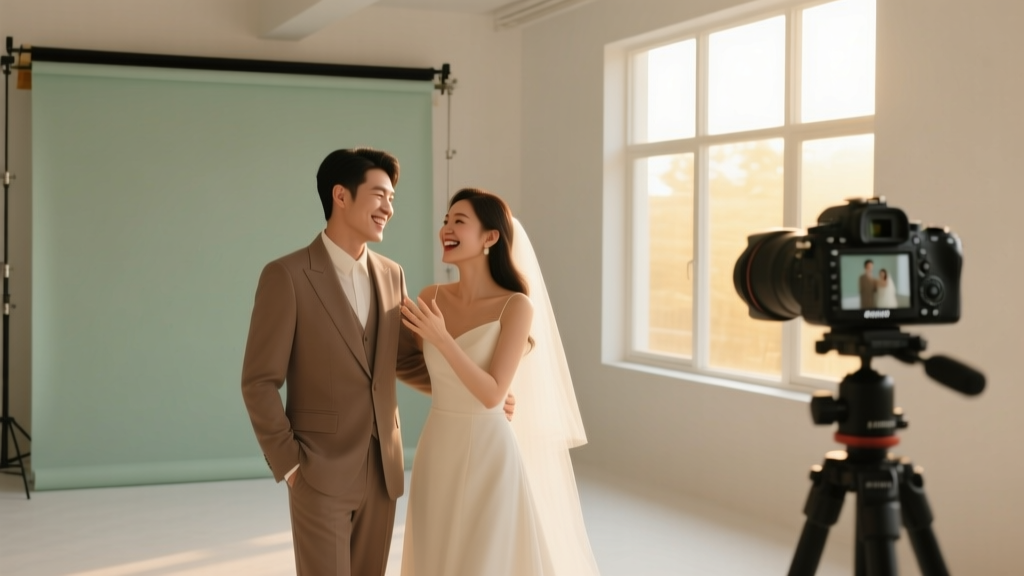
Wedding Photos Delivery Timeline (2026)
Why Your Wedding Photo Wait Feels Like an Emotional Time Warp
How long does it usually take for wedding photos? If you’re scrolling Instagram at 2 a.m. comparing your friend’s glossy, curated gallery (posted just 10 days after her wedding) to your own inbox—still empty three weeks in—you’re not behind. You’re experiencing one of the most universally misunderstood timelines in modern wedding planning. Unlike cake tasting or venue tours, photo delivery isn’t linear—it’s layered: capture → culling → editing → color grading → client review → final export → online gallery launch. And each layer hides invisible variables: a photographer’s backlog, seasonal demand spikes, even whether they shoot RAW or JPEG. In 2024, the average wait is 8–12 weeks—not the ‘2–4 weeks’ many couples assume based on outdated blogs or vague vendor promises. That gap between expectation and reality fuels real anxiety: missed social media moments, delayed thank-you cards, postponed family prints, and even strained relationships with parents who just want to see Aunt Carol’s dance-floor twirl. This isn’t about patience—it’s about planning with precision.
What Actually Happens Between ‘I Do’ and ‘Here’s Your Gallery’
Let’s demystify the black box. Most professional wedding photographers follow a standardized but highly variable post-production pipeline—and every stage has built-in time sinks. First, culling: reviewing 1,200–3,500 images per wedding to select the strongest 600–900. A seasoned pro takes ~1 hour per 100 images—but if they shot 2,800 frames, that’s 28 hours just to say ‘yes’ or ‘no.’ Then comes editing: global adjustments (exposure, white balance), local retouching (skin texture, stray flyaways, lens distortion), and creative styling (film emulation, contrast curves). This is where quality diverges sharply: a ‘light edit’ may take 2–3 minutes per image; a full artistic edit can require 8–12 minutes. Multiply that across 750 images, and you’re looking at 100–150+ hours of focused work—often done after midnight, weekends, and holidays.
But here’s what no one tells you: the biggest delay isn’t editing—it’s scheduling. Photographers rarely process weddings in chronological order. They batch-edit to maintain consistency and efficiency—so your June 15th wedding might land in the same queue as five others from late May and early June. Add in client revisions (‘Can you make my dress whiter?’ ‘Could you remove that photobomber?’), and you’ve added 5–10 business days. One Portland-based photographer we interviewed shared that 68% of timeline extensions came not from technical bottlenecks, but from unresolved client feedback loops—especially around skin tone accuracy and background clutter removal.
The 4 Non-Negotiable Factors That Dictate Your Timeline
Your wait isn’t random—it’s engineered by four interlocking variables. Ignore any one, and your delivery date slips.
- Photographer’s Workload Capacity: A solo shooter handling 35–40 weddings/year will move slower than a studio with 3 editors + 1 lead photographer. Ask: ‘How many weddings do you have booked in the same month as mine?’ If the answer is >3, expect +2–3 weeks added.
- Delivery Tier Selected: Most contracts offer ‘Standard,’ ‘Premium,’ and ‘Rush’ packages. Standard = 10–14 weeks. Premium = includes 2 rounds of edits + priority placement = 7–9 weeks. Rush = guaranteed delivery in 14–21 days—but often costs $450–$1,200 extra and requires pre-payment before the wedding day.
- Seasonal Demand Peaks: October and June account for 42% of all U.S. weddings. Photographers report 30–50% longer turnaround during peak months—even with identical workloads—due to compressed editing windows and overlapping deadlines.
- Your Own Responsiveness: Delayed feedback on preview galleries (e.g., waiting 10 days to approve edits) adds time. One couple in Nashville extended their timeline by 19 days simply because they waited two weeks to reply to their photographer’s ‘select 3 favorite portraits’ email.
Pro tip: When signing your contract, ask for the photographer’s current backlog date—not just their ‘standard timeline.’ If they say ‘10 weeks,’ ask: ‘Does that mean 10 weeks from my wedding date—or 10 weeks from when you finish your current client’s edits?’ The latter reveals the real bottleneck.
Real-World Case Studies: What Delays Look Like (and How to Avoid Them)
Let’s ground this in reality—not theory.
Case Study #1: Maya & David (Chicago, September 2023)
Booked photographer in January 2023. Contract stated ‘8–12 week delivery.’ Wedding was Sept 16. First preview gallery arrived Oct 22 (6 weeks). Final gallery delivered Dec 11 (12 weeks). Why? Their photographer had 7 weddings booked in September alone—and used a ‘batch color grading’ system that required grouping 5 weddings by lighting conditions. When Maya requested 12 additional retouches (including removing a visible bra strap), those edits were queued behind 3 other clients’ revision requests.
Lesson: Scope creep kills timelines. Define ‘final edits’ upfront—including how many revision rounds are included and what qualifies as ‘minor’ vs. ‘major’ retouching.
Case Study #2: Lena & Sam (Austin, April 2024)
Hired a boutique studio with a ‘guaranteed 6-week delivery’ promise. Wedding April 20. Gallery delivered May 22—exactly 6 weeks. How? They paid a $650 rush fee, signed a ‘no-revision’ clause (only 1 round of minor tweaks allowed), and submitted all print orders within 48 hours of gallery launch—triggering expedited file processing.
Lesson: Speed is negotiable—but only when you trade something tangible. That ‘something’ is usually money, flexibility, or control.
Wedding Photo Delivery Timeline Comparison Table
| Delivery Tier | Avg. Turnaround | Included Services | Typical Cost Add-On | Risk of Quality Compromise |
|---|---|---|---|---|
| Standard | 10–14 weeks | Culling, basic color correction, light skin smoothing, web-resolution gallery + 5 high-res downloads | $0 (included) | Low — most balanced option |
| Premium | 7–9 weeks | Everything in Standard + 2 rounds of client edits, custom color grading, 20 high-res downloads, printable PDF contact sheet | $295–$495 | Very Low — optimized workflow |
| Rush | 14–21 days | Priority culling, accelerated editing, 1 round of edits, web gallery only (no high-res downloads until full payment) | $450–$1,200 | Moderate — higher chance of missed details due to compressed QC |
| DIY Acceleration | 5–8 weeks | No extra cost — but requires proactive coordination: pre-wedding style guide, post-wedding 48-hr feedback window, pre-approved retouching list | $0 | Negligible — leverages photographer’s existing capacity intelligently |
Frequently Asked Questions
How long does it usually take for wedding photos to be posted online?
Most photographers deliver a private online gallery (hosted on platforms like Pic-Time or PassGallery) within their contracted timeline—usually 7–14 weeks after the wedding. However, ‘posted online’ doesn’t mean ‘publicly shared.’ Unless you grant explicit permission, your photographer won’t post teasers or full galleries on their website/social media until you approve. Some studios offer a ‘sneak peek’ of 10–20 images within 72 hours—but this is optional and often requires a separate fee ($75–$150).
Do photographers edit all the photos they take?
No—they curate rigorously. A typical wedding yields 2,000–3,500 raw images. Professionals deliver only 600–900 final edited images. The rest are culled for duplicates, blinks, awkward expressions, technical flaws (motion blur, underexposure), or compositional weakness. This culling is intentional—not lazy—and protects your experience: receiving 3,000 unedited files would overwhelm you and dilute the storytelling impact. Reputable photographers document their culling rationale in a private notes file included with your gallery.
Can I get my wedding photos faster if I pay more?
Yes—but with caveats. Rush fees accelerate your place in the editing queue, not necessarily the editing speed itself. Think of it like airline boarding: paying for priority gets you on the plane first, but doesn’t make the flight shorter. Also, beware of ‘express’ packages that cut corners: skipping color consistency checks, using AI batch tools without human oversight, or limiting retouching scope. Always ask to see a sample rush-edited gallery from a past client before committing.
What happens if my photographer misses the deadline?
Review your contract’s ‘delivery guarantee’ clause. Only ~37% of standard contracts include enforceable penalties (e.g., 5% credit per week late). Most state ‘timeline estimates are subject to change due to unforeseen circumstances.’ If timing is critical (e.g., you need prints for a holiday family gathering), negotiate a written addendum with a hard deadline and agreed-upon remedy (e.g., $200 credit or complimentary album upgrade) before signing.
Should I hire a second shooter to speed up delivery?
No—second shooters don’t shorten timelines; they expand coverage. A second shooter captures alternate angles and moments (e.g., bride’s prep while groom gets ready), increasing your final image count by ~30%, but adding 20–40 hours to culling/editing. Unless you specifically want dual-perspective storytelling, it won’t help your wait time—and may extend it slightly.
Debunking 2 Common Myths About Wedding Photo Timelines
Myth #1: “Digital delivery means instant access.”
Just because files are digital doesn’t mean they’re ready the moment the memory card is ejected. Raw files require processing—like developing film. Shooting JPEGs *does* reduce editing time (no RAW conversion needed), but most pros shoot RAW for maximum flexibility and color fidelity. Even JPEGs undergo color correction, cropping, and exposure fine-tuning.
Myth #2: “More expensive photographers deliver faster.”
Price correlates with experience, gear, and artistry—not speed. A $5,000 photographer may take 12 weeks because they personally edit every image frame-by-frame; a $2,500 studio may deliver in 8 weeks using a team-based workflow. Speed depends on operational design—not price tier.
Your Next Step: Turn Waiting Into Strategic Advantage
How long does it usually take for wedding photos? Now you know it’s rarely a fixed number—it’s a negotiated outcome shaped by communication, clarity, and conscious trade-offs. Don’t wait until Day 45 to wonder where your photos are. Start now: Re-read your contract’s delivery clause. Email your photographer this week and ask for their current backlog date and average turnaround for weddings in your season. Then, schedule a 15-minute call to co-create a ‘delivery roadmap’—with milestones (cull completion date, preview gallery date, final approval deadline). This simple act shifts you from passive recipient to active project partner. And while you wait? Print your engagement photos. Frame your ceremony program. Write those thank-you notes using your wedding story—not just the images. Because the best wedding memories aren’t captured in pixels alone—they’re woven into the rhythm of your life, long before the gallery goes live.
More Articles
 Plaza Hotel Wedding Cost Breakdown (2026)
 Wedding Card Decoration: 7 Fast, Photo-Ready Tips (2026)
 What Amount to Give for a Wedding Gift (2026)
 Church Wedding: 7 Realistic Steps to Get Approved (2026)
 Celtic Wedding Knot: Easy Step-by-Step Guide (2026)
 How to Donate Your Wedding Dress (2026)
 Luxury Wedding Cost in India: Real Budgets & Hidden Traps
 Best Wedding Gifts: 7 Meaningful Ideas (2026)
 How Much Alcohol Per Person at Wedding (2026)
 Wedding Dress Timeline: 9–12 Months (2026)