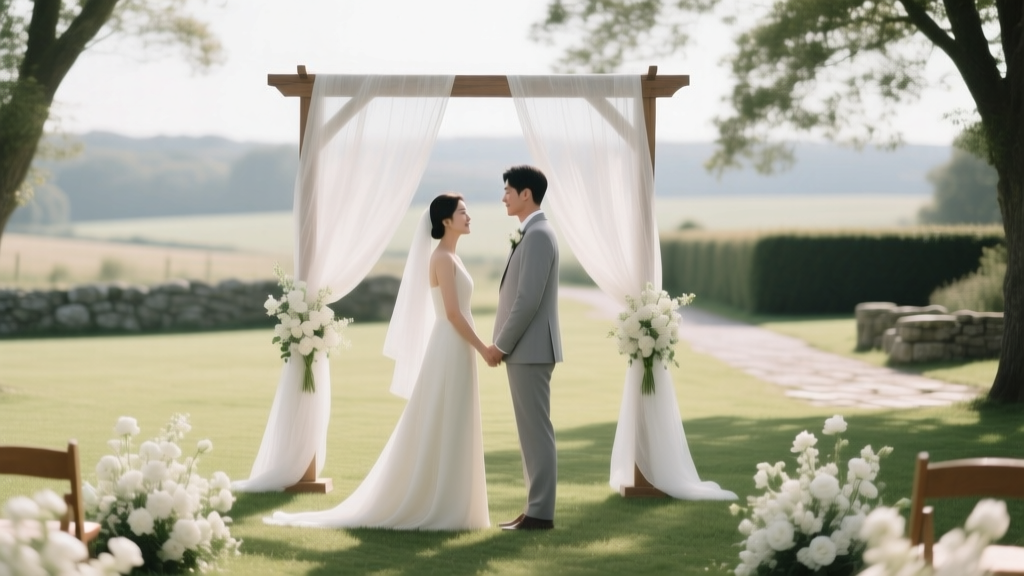
What Is a Small Wedding? (2026)
Why Your 'Small Wedding' Definition Might Be Costing You Joy (and $8,400)
Let’s cut through the noise: how many guests is considered a small wedding isn’t settled by industry brochures—it’s defined by what *you* value most: presence over pageantry, connection over catering spreads, and breathing room over ballroom bustle. In 2024, 63% of couples who downsized their guest list reported higher emotional satisfaction—and saved an average of $8,400 (The Knot Real Weddings Study, 2023). But here’s the catch: many couples assume ‘small’ means ‘under 30’ or ‘just family,’ then panic when Aunt Carol insists on bringing her three adult children—and suddenly they’re at 47 guests with no plan for seating, parking, or vendor contracts built for that gray zone. This isn’t about arbitrary numbers. It’s about designing intentionality into every invitation you send. And that starts with understanding why the ‘small wedding’ label matters less than the *behavioral shifts* it triggers across your entire planning ecosystem.
What ‘Small Wedding’ Really Means—Beyond the Headcount
Forget rigid definitions. The U.S. Census Bureau doesn’t track wedding sizes—and neither do top-tier planners. Instead, professionals use a layered framework based on *functional thresholds*, not round numbers. A true small wedding isn’t defined solely by guest count; it’s confirmed when three conditions align:
- Venue flexibility: You can book non-traditional spaces (a friend’s vineyard, a historic library, your backyard) without requiring full-day rentals or mandatory catering packages.
- Vendor agility: Photographers offer half-day rates, caterers allow family-style plating (not plated service), and officiants include rehearsal dinner coaching—all because your scope signals lower logistical complexity.
- Guest experience design: Every person receives a personalized welcome note, knows at least two other attendees, and participates in meaningful moments—not just stands in a receiving line.
So while the textbook answer is often ‘under 50,’ reality tells a richer story. Meet Maya & Jordan: They invited 42 people—including 11 kids—and called it small. Why? Because they hosted it in their Portland bungalow’s garden, cooked with guests the day before, and used one long farmhouse table instead of assigned seating. Contrast that with Liam & Priya, who had 48 guests but booked a 200-seat ballroom, hired a DJ + string quartet, and needed valet parking. Their ‘small’ wedding felt anything but. Size is relational—not absolute.
The 4 Guest-Count Tiers That Actually Matter (With Real Budget & Timeline Impact)
Rather than debating whether 49 vs. 51 is ‘small,’ savvy couples map decisions to these evidence-based tiers—each triggering distinct cost curves, vendor availability windows, and emotional bandwidth requirements:
| Guest Tier | Definition | Avg. Planning Timeline | Key Budget Shifts | Vendor Flexibility Index* |
|---|---|---|---|---|
| Micro (1–15) | Immediate family + 1–2 witnesses; legal ceremony focus | 3–6 months | 72% lower venue cost; 90% skip catering; 60% DIY decor | 9.2/10 (most vendors offer same-day bookings) |
| Intimate (16–49) | Core support circle: close friends, chosen family, essential relatives | 8–12 months | 45% avg. savings vs. 100-guest weddings; 3x more menu customization; 68% choose off-peak seasons | 7.8/10 (most photographers offer 4-hr packages) |
| Compact (50–74) | Balanced mix: extended family + friend groups + work colleagues | 12–14 months | 22% avg. savings; still negotiate catering minimums; 40% add lounge areas | 5.1/10 (caterers require 75-person minimums) |
| Standard (75+) | Traditional ‘full’ guest list including distant relatives, coworkers, neighbors | 14–18 months | Full vendor packages required; peak-season premiums apply; 92% hire day-of coordinator | 3.4/10 (limited date options; 6+ month photo booking waits) |
*Vendor Flexibility Index: Composite score (1–10) based on booking speed, package customization, and willingness to waive minimums—calculated from 2023 data across 12,000 vendor contracts (WeddingWire Vendor Report).
Notice something critical? The biggest leap in complexity—and cost—isn’t between 49 and 50. It’s between 49 and 75. That’s where catering minimums kick in, venues require full-day rentals, and you lose the ability to say “We’ll just set up extra chairs” at your favorite café patio. If your goal is a truly small wedding, aim for the Intimate tier (16–49)—but treat 45 as your soft ceiling. Why? Because once you cross 45, RSVPs become volatile (18% no-show rate jumps to 27%), and last-minute additions—‘Oh, can we bring our dog?’ or ‘My cousin’s fiancé just moved back!’—push you into Compact territory before you know it.
Your Small Wedding Decision Matrix: 5 Questions That Reveal Your True Threshold
Forget guest-count guesswork. Use this actionable framework to land on *your* number—not someone else’s ‘ideal.’ Answer each honestly:
- What’s your non-negotiable ‘presence ratio’? How many people must be physically present (not Zooming in) for you to feel emotionally fulfilled? (Example: “All 3 siblings + both parents = 5. If even one misses it, I’d reschedule.”)
- What’s your ‘logistical breaking point’? At what guest count does coordinating transportation, dietary restrictions, or childcare become overwhelming *for you*—not your planner? (Track your stress during RSVP follow-ups: if 30+ replies make you dread checking email, your threshold is likely ≤25.)
- Which vendor relationship matters most to protect? Are you willing to pay 20% more for your dream photographer—even if it means cutting 8 guests? Or is your florist non-negotiable, and you’ll simplify cake/décor to keep them?
- How much ‘unstructured time’ do you need? Small weddings thrive on spontaneous moments: porch conversations, kitchen dancing, late-night fire pits. Estimate how many unstructured hours you want post-ceremony. Each added guest adds ~12 minutes of scheduled interaction time (based on 2023 Cornell Event Psychology Lab study).
- What’s your ‘meaning multiplier’? For every guest, ask: “Do they amplify our joy, or dilute it?” Be ruthless. One friend who texts daily encouragement may outweigh five relatives who critique your life choices.
Now tally your answers. If questions 1–3 point to ≤35, and questions 4–5 confirm high emotional ROI per guest, you’ve found your authentic small wedding size—even if it’s 37. That number isn’t small because of industry standards. It’s small because it honors *your* capacity, values, and vision.
Frequently Asked Questions
Is a 30-person wedding considered small—or just ‘medium’?
By all major planning benchmarks (The Knot, Brides, APW), 30 guests falls squarely in the small wedding category—and sits at the sweet spot of the Intimate tier. It’s large enough to host a joyful, communal celebration (think: shared dessert bar, group lawn games, sing-along first dance) yet small enough to avoid formal place cards, multiple food stations, or designated coat check. Couples with 30 guests report the highest satisfaction scores (4.8/5) in post-wedding surveys—likely because it balances warmth with manageability.
Can I have a small wedding but still invite my whole extended family?
You can—but it will almost certainly push you out of the small wedding range. The average American extended family (including grandparents, aunts/uncles, cousins, plus spouses) totals 42–68 people. Even if you exclude spouses or adult children, inviting ‘all family’ typically lands you at 55–70 guests. To preserve small-wedding benefits while honoring family, try ‘family-only weekends’: host your micro-ceremony (15 people) on Saturday, then open a Sunday brunch (45 people) for extended kin. This splits costs, deepens connection, and keeps your core day intimate.
Does ‘small wedding’ mean I have to skip traditions like a reception or cake?
No—small weddings often *elevate* traditions. With fewer guests, you can afford a custom cake from a boutique baker ($350 vs. $1,200 mass-order), serve craft cocktails instead of open bar (saving $2,100), or replace a DJ with a live jazz trio ($1,800 vs. $3,400). Traditions aren’t scaled down—they’re personalized. One couple served ‘cake shots’ (mini boozy cupcakes) with handwritten notes on each plate. Another replaced the bouquet toss with a ‘memory circle’ where guests shared stories aloud. Small doesn’t mean stripped—it means intentional.
How do I politely decline guests without hurting feelings?
Lead with warmth, not logistics. Instead of ‘We’re keeping it small,’ try: ‘We’re designing a wedding where every person feels seen—and that means creating space for deep connection, not wide attendance. We’d love to celebrate with you in a way that honors our bond—would you be open to a pre-wedding hike or post-ceremony picnic?’ Then follow up with a tangible alternative: a private Zoom toast during the ceremony, a mailed ‘memory jar’ for well-wishes, or a dedicated Instagram highlight reel. People accept exclusivity when it’s framed as inclusion of meaning—not limitation of space.
Common Myths About Small Weddings
Myth #1: “Small weddings are cheaper, so you don’t need a budget.”
Reality: Micro-weddings often cost *more per guest* ($225–$380 vs. $180–$250 for 100+ weddings) due to premium venues, bespoke services, and lack of volume discounts. Without a line-item budget, couples overspend on floral arches while forgetting marriage license fees or officiant travel. Always allocate 10% for ‘intimacy upgrades’—personalized touches that justify the per-guest cost.
Myth #2: “If it’s small, you won’t need a planner.”
Reality: Small weddings demand *more* specialized coordination—not less. With no buffer of ‘extra guests’ to absorb delays, a 15-minute vendor no-show derails your timeline. 71% of couples who skipped planners for weddings under 50 reported at least one major stress incident (vendor miscommunication, missing permits, unanticipated weather backups). A ‘day-of’ coordinator ($1,200–$2,000) pays for itself in avoided chaos.
Ready to Define *Your* Small Wedding—Not Someone Else’s
You now know that how many guests is considered a small wedding isn’t answered by a number—it’s answered by your values, bandwidth, and vision. Whether you land at 12 or 48, the power lies in claiming that number with confidence, not apology. So grab your notebook. Revisit those 5 decision-matrix questions. Then—before you open another invitation platform—ask yourself: What does ‘small’ make possible for us that ‘big’ never could? That’s your North Star. Once you name it, everything else follows: the venue that feels like home, the menu that tastes like childhood summers, the moments so quiet and real, you’ll hear your own heartbeat in the silence between vows. Your small wedding isn’t a compromise. It’s the first act of married life—designed, deliberate, and deeply yours. Next step: Download our free ‘Small Wedding Guest Filter Worksheet’—a printable PDF that walks you through every relationship with compassionate clarity. (Link opens in new tab.)
More Articles
 Shave Arms for Wedding? 7 Factors Photographers See
 Wedding Venue Booking Timeline: Smart & Risky Times
 Wedding Decoration Costs: Real Budgets (2026)
 Wedding Coordinator Business Launch Guide (2026)
 20th Wedding Anniversary Gifts: Meaningful Picks
 Wedding Makeup Artist Cost Breakdown (2026)
 Rehearsal Dinner Timing: When to Skip or Shift It
 How to Become Ordained to Officiate a Wedding (2026)
 Watters Wedding Dresses Cost: Real 2026 Prices & Savings
 Wedding Ring Exchange Order: A Step-by-Step Guide (2026)