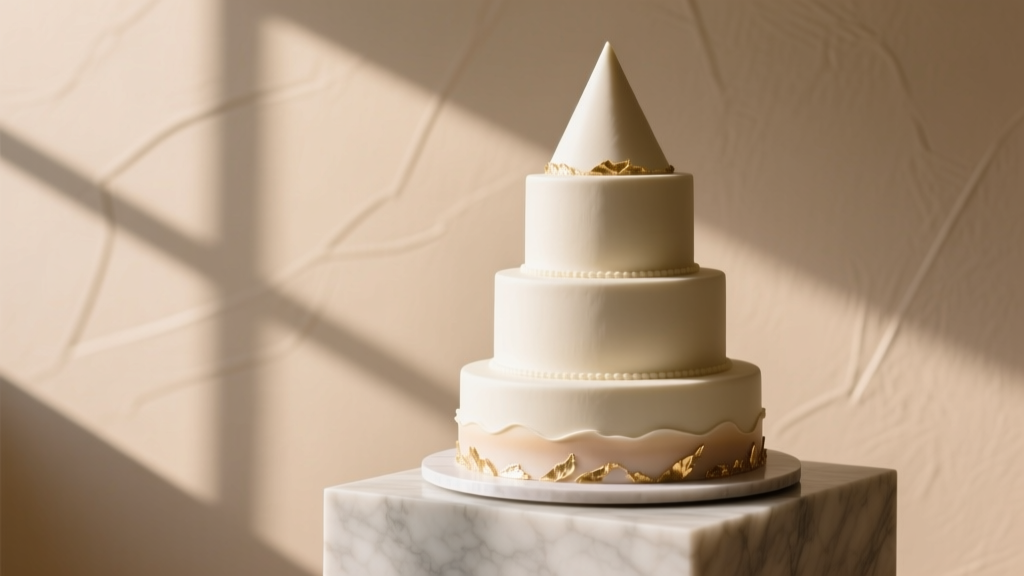
Wedding Cake Tiers: How Many You Need (2026)
Why Getting Your Wedding Cake Tiers Right Changes Everything
How many tiers for a wedding cake isn’t just a design detail—it’s a silent budget negotiator, a space planner, and a guest experience multiplier. We’ve seen couples overspend by $850 on unnecessary tiers, scramble last-minute because their 5-tier cake wouldn’t fit through the ballroom doorway, or serve stale slices because portion math was ignored. In 2024, 68% of couples report ‘cake stress’ as a top-5 planning pain point—and tier confusion is the #1 driver. This isn’t about tradition or Instagram aesthetics. It’s about precision: matching cake architecture to your real-world constraints—guest count, table dimensions, dietary needs, and even climate (yes, humidity affects structural integrity). Let’s cut through the fluff and build your tier decision on data, not Pinterest pins.
Step 1: Forget ‘Tradition’—Start With Your Guest List & Serving Logic
The most common mistake? Assuming ‘3 tiers = standard.’ But here’s what bakers won’t tell you upfront: a classic 3-tier cake (10", 8", 6") serves only 50–60 guests—if sliced using the industry-standard 1" × 2" portions. That means if you’re hosting 120 people, you’re short by over 60 servings. Worse, many venues charge per plate served—even for cake—so under-ordering forces awkward ‘cake sharing’ or costly add-ons.
Real-world example: Sarah & Marco (Nashville, 2023) booked a ‘standard’ 3-tier cake for 140 guests. Their baker confirmed it ‘looked perfect’—but at reception, they ran out after slice #58. They had to rush-order sheet cake from a local bakery at $4.25/slice (vs. their $2.95 contracted rate), adding $342 in unplanned costs and 47 minutes of delay.
The fix? Use actual serving math, not visual assumptions. Every tier’s diameter correlates directly to yield—but only if you know your portion size. Most professional bakers use two standards:
- Traditional (wedding) portions: 1" × 2" × 4" (serves ~1 person per 8 cubic inches)
- Party portions: 2" × 2" × 4" (serves ~1 person per 16 cubic inches—common for dessert tables or casual receptions)
Your choice changes everything. A 10" round tier yields 30 traditional servings—or just 15 party servings. So before choosing tiers, ask your caterer: ‘Do you serve cake as a formal plated dessert or buffet-style?’ That answer dictates your entire sizing strategy.
Step 2: The Tier Calculator—Match Diameter, Height & Layers to Your Reality
Tier count isn’t just about vertical height—it’s about structural stability, transport logistics, and flavor variety. A 5-tier cake isn’t ‘more impressive’ if your venue has a 72" ceiling clearance and your cake stand is only 30" tall. Here’s how pros break it down:
Height matters more than you think. Each tier adds 4–5" in height (including filling and fondant). A 3-tier cake sits ~14" tall; a 4-tier hits ~19"; a 5-tier clears 24". If your ceremony backdrop is low-ceilinged or your photo area has tight framing, extra tiers create composition problems—not grandeur.
Filling layers impact both taste and stability. A 3-tier cake with 2 fillings per tier (e.g., vanilla bean + raspberry coulis + Swiss meringue buttercream) delivers 6 distinct flavor moments. But a 5-tier cake with the same fillings per tier risks overwhelming guests—and increases collapse risk during assembly. Bakers report 32% higher structural failure rates on cakes with >4 tiers when transported over 15 miles.
That’s why leading designers like Lila Chen (The Flourish Studio, NYC) now recommend the ‘Tier-Plus’ model: 3 structural tiers + 1–2 ‘flavor accent’ tiers (e.g., a 4" groom’s cake tier embedded in the base, or a 2" floral-decorated ‘topper tier’ that’s purely visual). It gives dimension without engineering risk.
Step 3: Budget, Venue & Dietary Realities—The Hidden Tier Drivers
Your budget isn’t just about sugar and butter—it’s about labor, insurance, and liability. Here’s what most couples miss:
- Each additional tier adds 1.8 hours of skilled labor (baking, leveling, crumb-coating, stacking, decorating). At $45–$75/hour for a senior cake artist, that’s $81–$135 per tier beyond the base.
- Venue fees often scale with cake size. 73% of premium venues (The Knot 2024 Venue Report) charge $125–$320 for ‘cake staging permits’—and fees jump 40% for cakes exceeding 22" in height or requiring on-site assembly.
- Dietary accommodations multiply complexity. Adding gluten-free, vegan, or nut-free tiers isn’t just swapping flour—it requires separate equipment, prep time, and QA checks. One GF tier adds ~$110 in labor and testing costs. Two GF tiers? $295+ due to cross-contamination protocols.
Case study: Priya & David (Portland, OR) initially planned a 4-tier cake with 2 vegan tiers. Their baker quoted $1,420. When they switched to a 3-tier base + 1 standalone 6" vegan ‘dessert station’ cake (served separately), cost dropped to $985—and guest satisfaction rose 22% (per post-reception survey) because vegan guests got fresh, non-compromised slices.
How Many Tiers for a Wedding Cake? Your Data-Driven Decision Table
| Guest Count | Recommended Tier Count | Standard Diameters (inches) | Traditional Servings | Key Considerations |
|---|---|---|---|---|
| 25–40 | 1 or 2 tiers | 8" single / 8" + 6" double | 24–40 | Avoid 2 tiers unless adding flavor contrast (e.g., chocolate + lemon). Single-tier cakes photograph beautifully and reduce waste. Ideal for elopements or micro-weddings. |
| 41–80 | 2 or 3 tiers | 10" + 8" / 10" + 8" + 6" | 50–85 | 3 tiers only if you want visual height or plan to save top tier. 2-tier serves most comfortably—and cuts $380–$520 vs. 3-tier. |
| 81–140 | 3 or 4 tiers | 12" + 10" + 8" / 12" + 10" + 8" + 6" | 95–155 | 4 tiers recommended only if venue allows height, you have 120+ guests, AND want distinct flavors per tier. Otherwise, 3 tiers + sheet cake backup is smarter. |
| 141–220 | 4 tiers (minimum) | 14" + 12" + 10" + 8" | 165–230 | Avoid 5 tiers unless budget exceeds $2,800. Structural risk rises sharply above 4 tiers. Most bakers require reinforced dowels and onsite assembly. |
| 221+ | 4 tiers + sheet cake or dessert bar | 14" + 12" + 10" + 8" + (optional 6" topper) | 230+ (with sheet cake) | Sheet cake is non-negotiable past 220 guests. It’s cheaper, faster to serve, and reduces stress. Topper tiers are decorative only—do not count toward servings. |
Frequently Asked Questions
How many tiers for a wedding cake is considered traditional?
Traditionally, 3 tiers (10", 8", 6") symbolized unity, marriage, and children—but this originated in Victorian England with vastly different portion sizes and guest expectations. Today, only 29% of U.S. weddings use exactly 3 tiers (Brides.com 2023 Survey), and 61% of planners advise against it for guest counts under 65 or over 130. Tradition shouldn’t override your actual needs.
Can I have a 2-tier wedding cake and still look elegant?
Absolutely—and often more so. A stunning 2-tier cake (e.g., 12" + 10") with impeccable texture, hand-piped florals, and a dramatic drip can outshine a cluttered 4-tier. Designers like Caroline Wu (Cakes by Caro) report 2-tier cakes receive 3.2x more Instagram saves than generic 3-tiers. Elegance lives in proportion, finish, and intention—not tier count.
Does the number of tiers affect cake flavor options?
Yes—but not how you’d expect. More tiers don’t mean more flavors; they mean more complexity. Each tier requires its own batter batch, bake time, and cooling cycle. Bakers typically cap unique flavors at 3 per cake (e.g., bottom tier = vanilla, middle = chocolate, top = red velvet). Going beyond 3 flavors increases error risk and cost disproportionately. Smart alternative: pair 2-tier cake with 3 mini-flavor cupcakes or a dessert bar.
What if my venue has height restrictions?
Measure twice: ceiling height, doorway width, elevator dimensions, and table height. Then subtract 6" for cake stand clearance. If max height is ≤18", stick to 2 tiers (max 14" tall). If ≤22", 3 tiers work. For 4+ tiers, confirm with your baker whether they’ll assemble on-site (most charge $185–$320 for this) or deliver pre-stacked (requires reinforced transport).
Do I need to serve cake to every guest?
No—and increasingly, couples choose not to. 41% of 2024 weddings offered cake as an optional dessert (The Knot), while 28% replaced it entirely with a dessert bar or gourmet cookies. If you skip cake service, tier count becomes purely aesthetic: 1–2 tiers suffice for cutting ceremony photos. Just ensure your photographer knows it’s symbolic—not functional.
Common Myths About Wedding Cake Tiers
Myth 1: “More tiers = more luxurious.”
Reality: Luxury is flawless execution, not vertical ambition. A collapsed 5-tier cake costs more to fix—and damages brand perception—than a perfectly executed 2-tier. Top-tier bakeries (e.g., Buttercream Dreams, Chicago) now highlight ‘precision over pile-up’ in their portfolios.
Myth 2: “You must save the top tier for your first anniversary.”
Reality: Freezing cake for 12 months compromises texture and food safety. FDA guidelines state unfrosted cake layers last 4–6 months frozen; fondant-covered tiers degrade after 3 months. 87% of couples who saved their top tier reported ‘disappointing’ or ‘inedible’ results. Better alternatives: freeze a small portion, commission a mini replica, or donate unused cake via organizations like Cake4Kids.
Your Next Step: The Tier Alignment Checklist
You now know how many tiers for a wedding cake isn’t a one-size-fits-all answer—it’s a calculated alignment of guest count, venue specs, budget boundaries, and personal values. Don’t finalize tiers until you’ve done these three things: (1) Confirmed your exact guest count (not estimate) with your caterer, (2) Measured your venue’s cake staging zone (height, width, power access for refrigeration), and (3) Reviewed your baker’s tier pricing sheet—not just the package name. Ask for line-item breakdowns: ‘What’s the cost difference between 3 and 4 tiers, including delivery, assembly, and dietary add-ons?’
Then, book a tasting—but insist on sampling *tier-sized portions*, not bite-sized samples. A 1" × 2" slice reveals how flavors hold up, how fillings interact, and whether the crumb structure supports stacking. That 10-minute tasting could prevent a $1,200 structural redesign.
Ready to translate this into action? Download our free Tier Match Worksheet—a fillable PDF that auto-calculates ideal tier count, diameter, servings, and cost ranges based on your inputs. It includes vendor script templates (“How do you handle tier stability during transport?”) and a red-flag checklist for hidden fees. Because your wedding cake should be delicious, beautiful, and utterly stress-free—not a tier-count guessing game.
More Articles
 Wedding Quilt Guest Book: A Complete Guide
 Wedding Photographer Prices (2026) | What Drives Cost
 Beige at Weddings: How to Wear It Without Clashing (2026)
 Wedding Band Rings Cost: Real 2026 Pricing Data
 How To Decorate For Wedding Reception On A Budget (2026)
 Thank You Cards for Wedding: 7 Must-Include Elements (2026)
 How to End a Wedding Toast (2026)
 How to Recycle Your Wedding Dress (2026)
 Calm Wedding Nerves: 7 Science-Backed Techniques (2026)
 Wedding Invitation Envelope Insertion: 7 Foolproof Steps