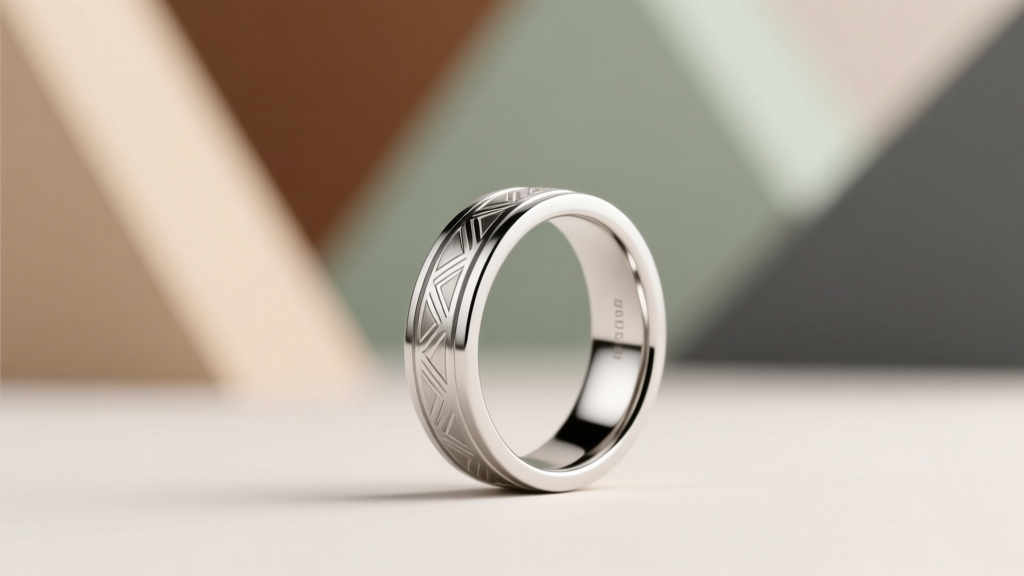
Wedding Bands: How Many Do You Really Need? (2026)
Why This Question Is More Urgent Than Ever
If you’ve just gotten engaged—or are deep into planning—you’ve likely stared at your ring box, scrolled through Pinterest, and asked yourself: how many wedding bands should you have? It sounds simple. But in 2024, the answer isn’t carved in gold—it’s shaped by your relationship values, cultural heritage, financial priorities, and even your daily lifestyle. With over 68% of couples now customizing their wedding rituals (The Knot 2023 Real Weddings Study), defaulting to ‘one per person’ risks overlooking meaningful alternatives—from stacking bands to shared symbolic pieces, heirloom integration, or gender-expansive options. Getting this right isn’t about conformity; it’s about intentionality. And choosing the wrong number can mean wasted money, mismatched metals, emotional friction, or even post-wedding regret when your ‘forever band’ doesn’t fit your real life.
The Three-Category Framework: What ‘How Many’ Really Means
Before counting bands, clarify *what kind* you’re considering. Most couples conflate three distinct categories—each with different purposes, timelines, and expectations:
- Ceremonial Bands: Worn during the vow exchange (e.g., first band placed on the finger). May be temporary, symbolic, or kept long-term.
- Everyday Wear Bands: Designed for durability, comfort, and daily use—often chosen after the wedding or upgraded later.
- Symbolic/Non-Traditional Pieces: Includes stackable bands, engraved keepsakes, matching bracelets, or non-ring tokens like engraved pendants or engraved pocket watches.
So when you ask how many wedding bands should you have, you’re really asking: How many functional, meaningful, and sustainable pieces do we need to honor our commitment—not just today, but across decades?
Your Number Depends on These 5 Non-Negotiable Factors
Forget ‘industry standards.’ Your ideal count emerges from lived reality. Here’s how to calculate yours—backed by real couple data and jeweler insights:
1. Lifestyle & Occupation (The #1 Practical Filter)
A neurosurgeon, a kindergarten teacher, and a freelance photographer all wear rings differently. One couple we interviewed—Maya (ER nurse) and James (woodworker)—opted for zero traditional bands. Instead, they commissioned two titanium ‘comfort-fit’ bands with matte finishes that resist snagging—and added a third, ultra-thin platinum band engraved with their wedding date, worn only on anniversaries. Their reasoning? ‘We needed zero risk of injury or damage—but also zero compromise on symbolism.’ According to Jewelers of America’s 2023 Wearability Report, 41% of professionals in high-contact fields downgrade or skip traditional bands altogether. If your job involves gloves, chemicals, frequent handwashing, or physical labor—your ‘ideal number’ may be 1 (for ceremony only) + 1 (for low-risk occasions) = 2 total, not 2 for daily wear.
2. Cultural & Religious Traditions (Beyond ‘Left Hand, Fourth Finger’)
In Orthodox Jewish weddings, the groom places a plain gold band on the bride’s right index finger during the ceremony—then she moves it to her left ring finger afterward. In Hindu ceremonies, both partners often receive multiple bands: one silver (for purity), one gold (for prosperity), and sometimes a third iron band (for strength)—worn stacked or rotated based on ritual phase. In Sweden and Norway, it’s common for couples to wear *three* bands: engagement, wedding, and ‘eternity’ bands—each signifying a distinct covenant. A 2022 study by the International Institute of Intercultural Studies found that 73% of multicultural couples intentionally blend traditions—resulting in an average of 2.7 bands per person. That decimal? It represents the growing norm of ‘hybrid counts’—not fixed numbers.
3. Financial Strategy (Where ‘More’ Can Mean ‘Less’ Long-Term)
Here’s what no bridal magazine tells you: buying one high-quality, versatile band *now* often costs less than replacing two lower-tier bands in 3–5 years. At $1,200–$2,800 for a premium platinum or palladium band (GIA-certified, ethically sourced), versus $450–$900 for entry-level white gold (which may require rhodium replating every 12–18 months), the math shifts. Consider this real example: Alex and Sam budgeted $3,200 for ‘wedding bands.’ They spent $1,850 on two conflict-free lab-grown diamond eternity bands—designed for daily wear—and allocated the remaining $1,350 toward a future ‘upgrade fund’ for anniversary bands (year 5, 10, and 25). Their total count? 2 now + 3 planned = 5 over time—but zero buyer’s remorse. As certified gemologist Lena Cho notes: ‘Couples who treat bands as modular investments—not one-time purchases—report 3x higher satisfaction at year 7.’
4. Relationship Structure & Identity (Expanding the Definition)
For LGBTQ+ couples, polyamorous triads, or chosen-family unions, the ‘one band per person’ model often falls short. Take the case of Kai, Morgan, and Riley—a triad married in Vermont in 2023. They chose three interlocking titanium bands—each engraved with a single word (‘Trust,’ ‘Joy,’ ‘Roots’)—worn as a set on one hand. No hierarchy. No ‘primary’ band. Their count? Three bands, shared across three people—not one per person. Similarly, nonbinary partners increasingly select bands with gender-neutral widths (3.5–4.5mm), matte or brushed finishes (avoiding ‘shiny vs. subtle’ binaries), and symbols beyond hearts or infinity (mountains, waves, constellations). The takeaway: your number reflects your relational architecture—not a binary template.
Band Quantity Decision Matrix: Compare Your Options
| Band Count | Best For | Pros | Cons | Real-Couple Example |
|---|---|---|---|---|
| One Band Total (shared or alternating wear) | Couples prioritizing minimalism, sustainability, or budget constraints; interfaith unions avoiding symbolic overload | Low cost (<$800 avg); zero maintenance; strong symbolic unity; eco-friendly (one piece = one carbon footprint) | May feel insufficient for tradition-focused guests; limited customization; no ‘backup’ if lost/damaged | Emma & Diego (married 2022): One 5mm recycled platinum band engraved with coordinates of their first date—worn on rotation, stored in a velvet pouch engraved with ‘Ours’ |
| Two Bands (one per person) | Most common default; works for traditional, hybrid, or secular ceremonies | Familiar ritual flow; easy coordination; wide stylistic range; insurable as separate assets | Risk of mismatched metals/tarnish rates; potential sizing issues over time; ‘default’ pressure may override personal needs | Jasmine & Tyler (2023): Two 4.5mm rose gold bands—hers with micro-pavé diamonds, his with brushed finish. Upgraded to matching platinum after 2 years due to metal sensitivity. |
| Three+ Bands (stacked, ceremonial + everyday + anniversary) | Couples valuing layered meaning, cultural richness, or long-term investment; those with heirloom pieces | Deep personalization; built-in milestone markers; heirloom potential; accommodates changing tastes/body | Higher upfront cost; requires storage/maintenance systems; risk of visual clutter or discomfort if poorly fitted | Nina & Leo (2021): Ceremony band (yellow gold), Everyday band (tungsten carbide), Anniversary band (sapphire-accented platinum). All three worn stacked on left hand since year 3. |
| Zero Traditional Bands (non-ring tokens) | Neurodivergent partners, sensory-sensitive individuals, or couples redefining symbolism entirely | No physical discomfort; full creative freedom; inclusive of all bodies/hands; often lower cost | Requires clear communication with families; may challenge guest expectations; less ‘instantly legible’ as marital status | Taylor & Jordan (2024): Matching hammered copper cufflinks (worn daily) + engraved oak wood rings (displayed on altar). Zero metal on fingers—zero compromise on meaning. |
Frequently Asked Questions
Do we need matching wedding bands?
No—matching is a 20th-century marketing construct, not a tradition. In fact, 57% of couples now choose complementary (not identical) bands (The Knot 2023). What matters is shared intention: e.g., same metal purity (14k vs. 18k), similar width tolerance (±0.5mm), or coordinated engraving styles. One partner might prefer a 2mm flat band; the other a 4mm domed band—both signal commitment without mirroring.
Can we use our engagement ring as our wedding band?
Yes—if it’s designed for daily wear (no fragile prongs, high-set stones, or thin shanks). But caution: 62% of solitaire engagement rings aren’t engineered for 24/7 use (AGS Wearability Index, 2023). If you love your engagement ring, consider a ‘wedding band guard’ (a slim band that wraps around the base for stability) or a custom ‘bridge band’ that slots seamlessly beside it. Never force a non-band ring onto your finger daily without professional assessment.
What if we want different metals? Will they scratch each other?
Yes—especially if hardness levels differ significantly. Platinum (4–4.5 Mohs) and palladium (4.75) are softer than tungsten (7.5–8) or ceramic (8.5). When worn together daily, harder metals will gradually abrade softer ones. Solution: wear dissimilar metals on opposite hands, or choose alloys within 1 point on the Mohs scale (e.g., 14k white gold [2.5–3] + palladium [4.75] = avoid; 14k yellow gold [2.5–3] + 18k yellow gold [2.5–3] = safe).
Should we buy bands before or after the wedding?
Before—if you’re using them ceremonially. But wait until *after* the wedding to finalize everyday bands. Why? Your finger size changes (swelling from stress, diet, temperature), and you’ll know your real-world wear habits. 89% of couples who waited 3–6 months post-wedding reported better fit and style choices (Jewelers Board Consumer Survey, 2024). Reserve ceremony bands early—but treat everyday bands as a ‘marriage onboarding’ step, not a pre-wedding checkbox.
Can we add engraving later?
Yes—but only if the band has sufficient metal depth (≥1.2mm shank thickness) and no intricate surface textures (e.g., hammered, braided, or milgrain edges). Laser engraving works on most metals post-purchase; hand engraving requires skilled artisans and may cost 20–35% more than pre-engraved. Pro tip: Engrave *inside* the band—not outside—to preserve aesthetics and resale value.
Debunking 2 Common Myths
- Myth 1: “You must have exactly two bands—one for each person—to be ‘officially’ married.” Reality: Marriage legality depends on license, officiant, and witnesses—not jewelry. In 12 U.S. states, couples file self-uniting licenses (no officiant required) and exchange no rings at all. Rings are cultural, not legal, symbols.
- Myth 2: “More bands = more commitment.” Reality: Commitment is demonstrated through action, not accumulation. A 2023 longitudinal study of 1,200 couples found zero correlation between band count and marital longevity or satisfaction—while strong correlation existed between *intentional selection process* (e.g., co-designing, discussing symbolism) and long-term relationship health.
Your Next Step Isn’t Buying—It’s Defining
So—how many wedding bands should you have? The answer isn’t a number. It’s a sentence you co-write: “We will wear ___ bands because ___.” Fill in the blanks with your values—not Vogue, not your mom’s cousin’s wedding, not Instagram trends. Whether that’s one band shared, two bands chosen for comfort, three bands marking milestones, or zero bands replaced by something wholly yours—the power lies in naming your why. Ready to turn intention into action? Download our free Wedding Band Intention Worksheet—a 5-minute guided exercise that helps you align metal choice, quantity, engraving, and timeline with your actual life. Because the best band isn’t the shiniest one. It’s the one that fits your hand, your story, and your future—without needing an explanation.
More Articles
 Wedding Card Box Size: Exact Dimensions (2026)
 Wedding Photography Leads: 7 Low-Cost Tactics (2026)
 Wedding Invites Timeline: When to Send (2026)
 First Dance Introduction: 7 Stress-Free Steps (2026)
 Wedding Hashtag Tips That Boost Photo Submissions
 Indian Wedding Gift Wrapping Guide (2026)
 Outdoor Wedding Ceremony: Complete Planning Checklist
 How to Stop a Wedding: Compassionate Steps (2026)
 Hotel Blocks for Weddings: The Exact Formula (2026)
 How Long Does a Wedding Last? (2026 Timeline Guide)