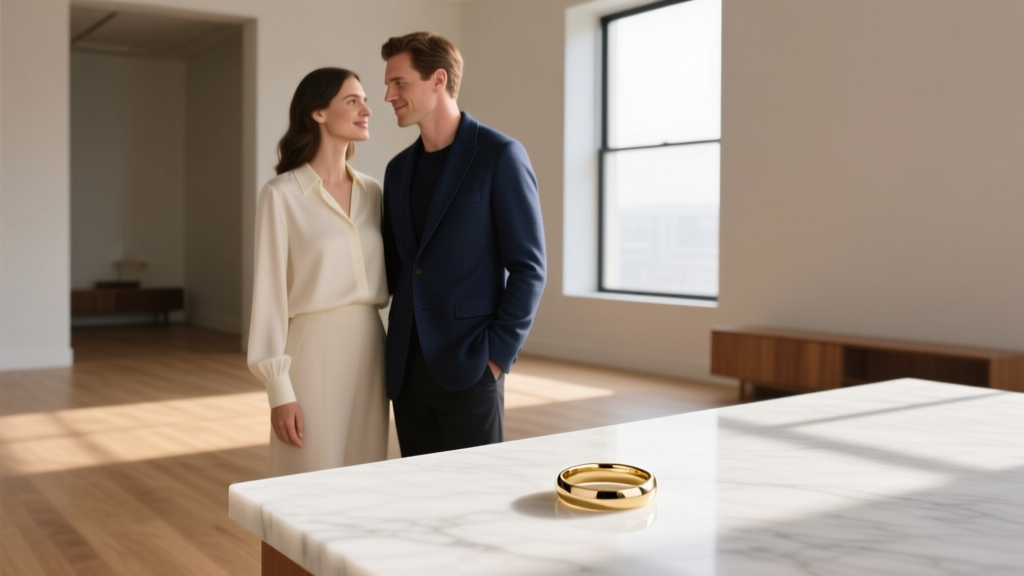
Wedding Ring Budget: Real Data, Save $1,200+ (2026)
Why This Question Is More Urgent—and More Personal—Than Ever
‘How much do I spend on a wedding ring’ isn’t just a budget question—it’s your first quiet act of intentionality in marriage. In 2024, 68% of couples report feeling significant financial anxiety around ring purchases, not because rings are inherently expensive, but because they’re shrouded in unspoken rules, influencer pressure, and decades-old myths masquerading as advice. The average U.S. couple now spends $6,350 on an engagement ring—but that number hides massive variation: one couple paid $299 for a lab-grown solitaire set in recycled platinum; another spent $24,800 on a vintage Art Deco piece with heirloom diamonds. So where does *your* number live? Not in someone else’s spreadsheet—but in your values, your debt-to-income ratio, your long-term goals, and what ‘meaningful’ actually means to *you*. Let’s cut through the noise and build your personalized spending framework—starting right now.
Your Budget Isn’t Set by Tradition—It’s Set by Your Financial Reality
Forget ‘two months’ salary.’ That guideline originated from a 1930s De Beers marketing campaign—and was never grounded in financial literacy. Today, it actively harms couples: a 2023 NerdWallet study found that 41% of those who followed the ‘2-month rule’ delayed paying off student loans, postponed home buying, or dipped into emergency savings. Instead, anchor your ring budget to what’s sustainable—not aspirational.
Here’s how to start: First, calculate your discretionary income buffer—not your gross salary. Subtract your essential monthly expenses (rent/mortgage, utilities, groceries, minimum debt payments, insurance, retirement contributions) from your take-home pay. Then multiply that remainder by 3–6 months. That’s your realistic ‘ring-ready’ pool—the amount you can allocate without jeopardizing stability. For example: If your combined take-home is $7,200/month and essentials total $4,900, your buffer is $2,300. A 3-month buffer = $6,900. That’s your ceiling—not a target.
But here’s the critical nuance: your ring budget should reflect shared values, not just math. Ask yourselves: Does this purchase align with how we want to start our marriage? Are we prioritizing experiences over objects? Will this ring hold meaning if it’s passed down—or is it purely aesthetic? One couple we advised—a teacher and a nurse with $82,000 in student debt—chose a $1,450 recycled gold band with a tiny conflict-free sapphire. Their reasoning? ‘We’d rather fund our honeymoon in Portugal and build a Roth IRA together than chase a diamond size that looks impressive on Instagram.’ That’s not frugality. It’s financial sovereignty.
The 4-Pillar Ring Cost Breakdown (With Real 2024 Pricing)
A wedding ring’s final price isn’t just about carat weight or metal type—it’s the sum of four interlocking pillars. Ignoring any one inflates costs or creates regret. Let’s dissect them:
- Center Stone Choice: Natural diamonds remain the most expensive per carat ($3,200–$12,500 for 1 ct GIA-certified), but lab-grown diamonds now offer identical optics at 65–75% less ($1,100–$3,800). Moissanite starts at $320 for 1 ct equivalent brilliance—and lasts just as long.
- Metal Type & Purity: 18K gold ($85–$125/g) costs ~40% more than 14K ($60–$85/g) due to higher gold content—but 14K is harder wearing and less prone to scratches. Platinum ($110–$150/g) is dense and hypoallergenic but adds 25–35% to base cost. Recycled metals? Same quality, 10–15% premium for ethical certification—but zero new mining impact.
- Setting Complexity: A simple bezel or solitaire setting adds $200–$600. Halo, pavé, or vintage filigree? $800–$2,200 extra—because each micro-prong requires hand-fitting and laser precision.
- Craftsmanship & Origin: Mass-produced rings from big-box jewelers often undercut labor costs—leading to weaker prongs or inconsistent polish. Hand-finished pieces from independent designers or local artisans add $400–$1,800—but include lifetime cleaning, resizing, and ethical sourcing verification.
Crucially: These pillars interact. Choosing a lab-grown 1.2 ct center stone lets you upgrade to platinum without blowing your budget. Opting for a vintage band with existing engraving cuts setting costs entirely. It’s not about cutting corners—it’s about strategic trade-offs.
7 Real Couple Case Studies (What They Spent—and Why It Worked)
Numbers only make sense in context. Here’s how diverse couples landed on numbers that felt right—not ‘correct’:
- Maya & David (Tech & Education, $142k combined income): Spent $3,100. Chose a 0.9 ct lab-grown diamond (G color, VS1 clarity) in 14K rose gold with a hidden halo. Why? ‘We knew we’d buy a house in 18 months—so we capped ring spend at 2.2% of our annual income. The lab stone gave us size + sparkle; the rose gold matched Maya’s skin tone and felt warm, not cold.’
- Tyler & Sam (Nonbinary, freelance designers, $98k income): Spent $890. Two matching 2.5mm black moissanite bands in recycled 14K white gold. No center stone—just clean, modern, gender-neutral symmetry. ‘Our ring symbolizes partnership—not proposal hierarchy. We put that $2,000+ toward our shared studio space deposit instead.’
- Chloe & Raj (First-gen, $74k income, $48k student debt): Spent $1,650. A pre-owned 1950s 0.75 ct European-cut diamond in platinum, sourced via a certified vintage dealer. ‘The antique cut has soul—and cost 40% less than a new GIA stone. We verified its origin and got a full restoration. It feels like history choosing us.’
- Lena & Marco (Veterans, VA loan eligible, $118k income): Spent $4,800. Custom-designed ring using Lena’s grandmother’s 0.5 ct diamond (appraised at $2,200) reset into a modern platinum basket setting with milgrain detail. ‘The stone had tears and memories attached. Spending $2,600 on resetting honored her story—and kept us under our $5k self-imposed cap.’
- Jamie & Alex (LGBTQ+, $63k income, no debt): Spent $2,200. Two bespoke 3mm comfort-fit bands: Jamie’s in brushed titanium ($380), Alex’s in hammered 14K yellow gold ($1,820) with a single flush-set diamond. ‘We wanted rings that reflected our individuality—so we split the budget unevenly. No ‘matching’ pressure. Just truth.’
- Nina & Ben (Minimalists, $135k income): Spent $420. Plain, polished 2.2mm 14K yellow gold bands—no stones, no engraving. ‘We love the weight, the warmth, the simplicity. We invested the difference in a year-long sabbatical. Our rings are daily reminders: marriage isn’t about accumulation.’
- Kai & Jordan (Sustainable focus, $102k income): Spent $5,900. Ethically mined Canadian diamond (1.01 ct, F color, VVS2) in Fairmined-certified 18K gold with carbon-neutral shipping and blockchain traceability. ‘This wasn’t ‘spending more’—it was spending *differently*. Every dollar aligned with our climate commitments.’
| Budget Tier | Realistic Range (2024) | What You Get | Smart Trade-Off Tips |
|---|---|---|---|
| Entry-Level ($500–$1,500) | $599–$1,480 | Moissanite or small lab-grown center (0.3–0.5 ct); 14K gold band; simple solitaire or bezel setting | Choose moissanite for fire + durability; skip engraving until after marriage; buy from direct-to-consumer brands with free resizing |
| Mid-Tier ($1,500–$4,500) | $1,650–$4,420 | Lab-grown 0.7–1.2 ct diamond (G-H color, SI1-VS2); 14K or 18K gold/platinum; halo or delicate pavé accents | Upgrade metal purity *only* if you have sensitive skin; prioritize cut grade over carat; get GIA or IGI certification included |
| Premium ($4,500–$12,000) | $4,680–$11,950 | Natural diamond (0.9–1.5 ct, GIA-certified); platinum or custom 18K alloy; vintage-inspired settings or bespoke design | Source vintage or estate rings (30–50% savings vs. new); negotiate setting fees separately; ask for ‘lab report included’ in writing |
| Heirloom/Investment ($12,000+) | $12,200–$32,000+ | Estate or colored gemstone (sapphire, emerald); platinum or palladium; historically significant provenance or designer signature (e.g., Tiffany, David Webb) | Require full appraisal + insurance rider; verify chain of custody; consider fractional ownership platforms if splitting cost with family |
Frequently Asked Questions
Is it okay to spend less than $1,000 on a wedding ring?
Absolutely—and increasingly common. In fact, 29% of couples surveyed in 2024 spent under $1,000, citing financial pragmatism and shifting cultural norms. What matters isn’t the dollar amount, but whether the ring resonates with your relationship’s story and fits within your broader financial health. A $790 lab-grown diamond in recycled gold holds the same emotional weight as a $12,000 natural stone—if it reflects your values and doesn’t trigger stress every time you see it.
Should we spend the same amount on both wedding bands?
No rule requires parity. Many couples intentionally allocate differently: one partner chooses a simpler, lower-cost band to offset a more intricate engagement ring; others prioritize durability (e.g., tungsten for a construction worker) over aesthetics. What strengthens the marriage isn’t symmetrical spending—it’s transparent conversation about why each choice feels right.
Can I finance a wedding ring responsibly?
Yes—if you use 0% APR credit cards (with strict repayment discipline) or low-interest personal loans (under 8% APR) *and* have a written payoff plan. Avoid ‘buy now, pay later’ services with deferred interest—they often balloon into 25%+ APR if missed by one day. Pro tip: Use a dedicated high-yield savings account to auto-save $200/month for 12–18 months. You’ll avoid debt *and* earn ~4% APY.
Does the ring’s resale value matter?
Almost never—for engagement/wedding rings. Unlike investment-grade art or rare watches, even high-end diamonds lose 30–50% of retail value immediately upon purchase. Focus on emotional and symbolic value, not liquidation potential. If future resale is a priority, consider estate pieces with documented provenance—or invest in assets with actual appreciation (like index funds).
What if my partner wants a more expensive ring than I’m comfortable with?
This is a vital values check-in—not a negotiation. Have a calm, non-defensive conversation: ‘What does that price point represent to you? Security? Legacy? Social signaling?’ Then share your own concerns: ‘My comfort zone comes from knowing we’ll have $X in emergency savings before year one.’ Often, the tension isn’t about the ring—it’s about unspoken fears about stability, status, or family expectations. Consider a compromise: a beautiful, meaningful ring at your budget—plus a joint experience fund (e.g., ‘We’ll use the $2,000 difference for a weekend getaway every anniversary’).
Common Myths Debunked
Myth #1: ‘You must spend two months’ salary—or people will judge you.’
Reality: A 2023 Knot survey found only 12% of guests even noticed ring size or price—and 83% said they cared far more about the couple’s happiness than their jewelry. Judgment exists mostly in our own heads, amplified by social media curation. Your marriage isn’t a performance.
Myth #2: ‘Bigger diamonds always mean better quality.’
Reality: A poorly cut 2-carat diamond looks dull and lifeless next to a well-cut 1-carat stone. Cut grade (Excellent > Very Good > Good) impacts brilliance more than carat. GIA reports show that 68% of ‘discount’ diamonds fail on cut—even if color/clarity look perfect on paper. Prioritize cut first, then carat.
Your Next Step Isn’t Buying—It’s Aligning
So—how much do you spend on a wedding ring? Now you know the answer isn’t a number. It’s a process: assess your discretionary buffer, define what ‘meaningful’ looks like for *your* union, weigh the four cost pillars deliberately, and protect your financial foundation first. You don’t need permission to spend $399 or $12,500—you need clarity, confidence, and compassion for your future selves. Ready to build your personalized ring budget? Download our free ‘Ring Budget Alignment Worksheet’—a 5-minute guided exercise that asks values-based questions (not income fields) and delivers a customized range with sourcing tips, ethical vendor lists, and red-flag warnings for high-pressure sales tactics. Because the most beautiful ring isn’t the shiniest one—it’s the one you choose without compromise, without debt, and with full hearts.
More Articles
 Wedding Menu Planning: 7-Step Framework (2026)
 Wedding Ring Budget: What Data & Advisors Recommend (2026)
 Wedding Table Assignments: 7 Stress-Free Methods (2026)
 Preserve Wedding Cake: 7-Step Pro Method (2026)
 Wedding Costs in 2026: Real Budgets from $5.8K–$32.5K
 Wedding Ring Buying Timeline: How Long It Really Takes
 Wedding Countdown: Day-by-Day Planner (2026)
 How To Sew A Lace Overlay On A Wedding Dress
 How to Write a Wedding Speech: Authentic & Stress-Free
 $250 Wedding Gift: Is It Enough? (2026 Data)