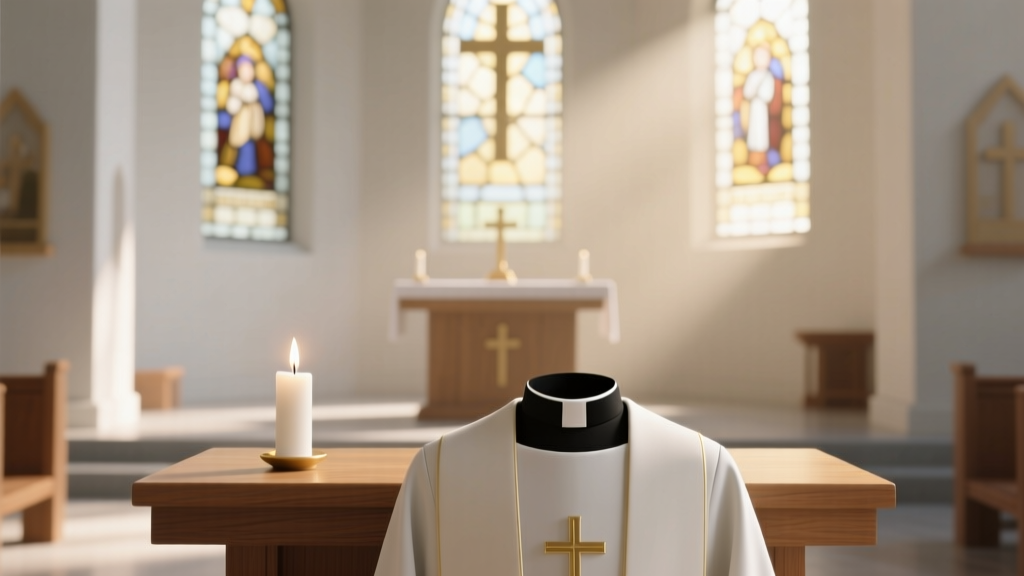
How Much Does a Priest Cost for a Wedding?
Why This Question Is More Urgent—and Tricky—Than You Think
If you’ve just gotten engaged and typed how much does a priest cost for a wedding into Google, you’re not alone—and you’re probably feeling a mix of reverence, anxiety, and quiet confusion. Unlike hiring a DJ or florist, asking about a priest’s ‘cost’ feels spiritually awkward. Yet the reality is unavoidable: weddings involve real logistics, and most parishes do expect some form of financial contribution. But here’s what no one tells you upfront: there is no universal fee, no national price list, and no ‘payment’ in the transactional sense—yet misunderstanding this distinction can lead to budget shortfalls, strained parish relationships, or even last-minute officiant cancellations. In 2024, with average U.S. wedding costs nearing $30,000 and Catholic dioceses reporting a 22% increase in pre-marital counseling waitlists, getting this right isn’t just about dollars—it’s about respect, transparency, and spiritual readiness.
What ‘Cost’ Really Means: Donation, Not Fee
Let’s start with the most critical clarification: in the vast majority of Catholic dioceses—and many mainline Protestant denominations—a priest does not charge a fee for performing a sacramental wedding. Canon law (Canon 841) explicitly prohibits selling sacraments. What you’re actually contributing is a donation or stipend, intended to cover administrative overhead, preparation time, facility use, and sometimes charitable outreach. That distinction changes everything: it means the amount isn’t negotiable like a vendor quote—but it is contextual, variable, and deeply tied to your relationship with the parish.
Consider Maria and James, a couple from Chicago who assumed their $250 ‘officiant fee’ covered everything—only to learn two weeks before their wedding that their parish required an additional $175 for music licensing, $95 for altar server stipends, and a $300 ‘sacramental preparation deposit’ (non-refundable if they withdrew after completing the Engaged Encounter weekend). Their total ‘priest-related’ outlay ballooned to $720—not because the priest was ‘expensive,’ but because they hadn’t mapped the full ecosystem of associated costs.
The key insight? You’re not paying the priest—you’re supporting the parish’s ministry to you. That includes pre-marital counseling (often 6–12 hours across multiple sessions), marriage prep paperwork, certificate processing, and liturgical coordination. A 2023 National Association of Catholic Chaplains survey found that priests spend an average of 14.2 hours per couple on wedding-related ministry—nearly double the time spent on baptisms or funerals. So while the ‘donation’ may feel abstract, it reflects real labor and institutional stewardship.
Breaking Down the Numbers: Regional Averages & What Drives Variation
So—how much should you budget? The answer depends heavily on geography, denomination, parish size, and whether you’re a registered member. Below is a data-backed snapshot of typical expectations across major U.S. regions and traditions:
| Region / Denomination | Typical Donation Range | What’s Usually Included | Common Add-Ons | Member vs. Non-Member Difference |
|---|---|---|---|---|
| Catholic Diocese (Midwest) | $200–$500 | Pre-Cana, ceremony, basic certificate | Music licensing ($75–$150), altar servers ($25–$40 each), rehearsal attendance ($50) | Members often pay 30–50% less; non-members may face mandatory prep surcharge |
| Catholic Diocese (Northeast) | $400–$900+ | Same as above + bilingual support, extended counseling | Facility rental ($200–$600), organist ($125–$275), cantor ($75–$150) | Rarely waived—even for long-time members; emphasis on ‘parish sustainability’ |
| Episcopal/Anglican | $300–$750 | Pre-marital sessions, banns reading, ceremony | Choir surcharge ($100–$200), verger honorarium ($40), recording license ($60) | Membership discount common; some parishes require 6-month minimum membership |
| Lutheran (ELCA) | $150–$400 | Counseling, liturgy planning, certificate | Organist ($80–$180), sanctuary flowers ($120–$300), sound tech ($60) | Often waived for confirmed members; non-members may be asked to attend 3+ worship services first |
| Non-Denominational/Independent | $500–$1,500 | Custom ceremony design, rehearsal, travel (if remote) | Video editing ($200–$400), officiant lodging ($150–$350), ‘gratitude gift’ (not required but customary) | Less formal structure; pricing often set by individual pastor, not church policy |
Note: These figures exclude state-mandated marriage license fees ($30–$120), which are paid separately to county clerks—not the priest or parish. Also, no reputable priest will demand cash up front before meeting you. Legitimate requests always follow initial consultation and mutual discernment.
Your 5-Step Action Plan: Budgeting Respectfully & Strategically
Don’t just guess or rely on hearsay. Here’s exactly what to do—step by step—to avoid surprises and honor both your budget and your faith community:
- Call Your Parish Office (Not the Priest Directly): Start with the parish secretary or pastoral associate. They’ll clarify current donation guidelines, prep requirements, and availability. Ask: “What is the recommended donation for weddings in 2024, and what does it cover?” Write down every line item they mention.
- Confirm Membership Status & Timeline: If you’re not already registered, ask how long you must be a member before eligibility—and whether attending Mass regularly for 3–6 months reduces costs. One Detroit couple saved $320 simply by transferring registration 5 months pre-wedding.
- Request a Written Breakdown: Legitimate parishes provide itemized estimates. If they refuse or give vague answers (“just whatever you feel led to give”), consider it a red flag—or at least a sign you’ll need extra diligence.
- Factor in Hidden Time Costs: Pre-marital counseling often requires weekend retreats ($150–$400/person), online modules ($25–$75), and workbook fees ($30–$60). These aren’t ‘priest costs,’ but they’re part of the same financial ecosystem.
- Decide on Delivery Method & Timing: Most parishes prefer checks made payable to the parish (not the priest personally), submitted 2–4 weeks pre-wedding. Cash gifts to the priest directly are discouraged—and in some dioceses, prohibited—unless given privately post-ceremony as a token of thanks.
Real-world example: When David and Lena chose a small rural parish in Tennessee, their priest gently explained that while the suggested donation was $275, he’d accept $150 if they volunteered 10 hours helping renovate the parish hall. They did—and deepened their connection to the community far beyond the wedding day.
Frequently Asked Questions
Do I have to pay a priest if I’m getting married in a Catholic church?
No—you are not required to pay the priest personally. However, most parishes request a donation to support the sacramental ministry and operational costs. Refusing all contribution may raise concerns about sincerity or readiness, especially if coupled with resistance to required prep. Canon law forbids charging for the sacrament itself, but parishes may decline to schedule weddings if financial contributions fall significantly below local norms—particularly for non-members.
Can I negotiate the donation amount?
Not in the way you’d haggle with a vendor—but you can discuss context. If you’re facing hardship (job loss, medical debt, student loans), most pastors will work with you confidentially. Bring documentation and frame it as a request for pastoral accompaniment—not a negotiation. One Boston parish reduced a $650 request to $200 after reviewing a couple’s layoff letter and rent receipt.
Is it rude to ask how much a priest costs for a wedding?
It’s not rude—but how you ask matters. Avoid phrasing like “What’s your fee?” or “How much do you charge?” Instead, say: “We want to honor your time and the parish’s ministry—what’s the recommended donation for weddings this year, and what does it support?” That centers gratitude and stewardship over transaction.
What if the priest performs the ceremony outside the church (e.g., beach, backyard)?
That changes everything. Off-site ceremonies usually require special dispensation (Catholic) or ecclesiastical permission (Protestant), plus added costs: travel stipend ($75–$200), liability insurance rider ($100–$300), and potentially higher music/licensing fees. Some priests decline off-site weddings entirely due to canonical or safety concerns. Always confirm feasibility before booking your venue.
Are donations tax-deductible?
Yes—if paid to the qualified religious organization (the parish/church, not the priest personally) and documented with a receipt stating “no goods or services were provided in exchange.” Keep records for IRS Form 8283 if donating over $250. Note: Gifts given directly to the priest are not deductible.
Debunking Common Myths
- Myth #1: “If you’re a member, it’s free.” While membership often reduces or waives the donation, it rarely eliminates all associated costs—especially for music, facilities, or specialized prep. A 2022 study of 127 parishes found 83% still requested minimum contributions from members, citing rising utility and insurance costs.
- Myth #2: “The priest keeps the money.” In virtually all cases, donations go directly to the parish operating fund—not the priest’s personal income. Priests receive stipends from the diocese or congregation salary pools; wedding donations support building maintenance, youth ministry, food pantries, and staff salaries—not individual pockets.
Your Next Step Starts With One Phone Call
Now that you know how much does a priest cost for a wedding isn’t really about cost at all—it’s about covenant, community, and conscientious stewardship—your next move is simple but powerful: pick up the phone and call your preferred parish office this week. Don’t wait until invitations are printed or venues booked. Ask for their current wedding policy packet, request a meeting with the pastoral team, and bring your questions—not just about numbers, but about meaning. Because the most valuable part of your wedding isn’t the price tag on the sacrament. It’s the intentionality behind it. And that, no algorithm can quantify.
More Articles
 Wedding Transportation Cost (2026) | Real Couple Quotes
 Wedding Venue Red Flags to Watch Out For
 White Jacket to Wedding: Etiquette Rules (2026)
 Wedding Cake Planning: 7-Step Blueprint (2026)
 Black to Semi-Formal Wedding: 7 Style Rules (2026)
 September Wedding Attire: Dress Code Decoder (2026)
 Church Wedding Costs: Hidden Fees & Savings (2026)
 Do You Have To Do Wedding Favours (2026)
 Wedding Officiant Costs: $0–$1,200+ (2026)
 Change Last Name Before Wedding: Legal Steps (2026)