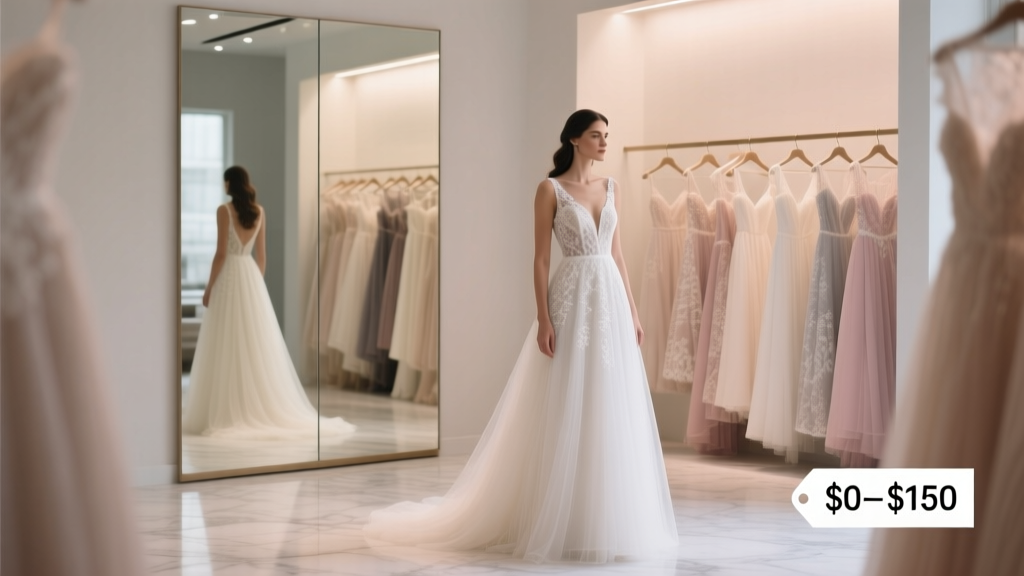
Wedding Dress Fitting Fees: What You’ll Really Pay (2026)
Why This Question Matters More Than Ever in 2024
If you’ve just typed how much is it to try on wedding dresses, you’re not alone—and you’re asking the right question at the right time. With average U.S. wedding costs now exceeding $30,000 (The Knot 2023 Real Weddings Study), couples are scrutinizing every dollar—even before saying yes to a gown. Unlike five years ago, when ‘just showing up’ was assumed, today’s brides face appointment fees, non-refundable deposits, reservation holds, and even ‘consultation surcharges’ disguised as styling sessions. And yet—92% of brides who booked appointments at salons with transparent pricing reported higher confidence in their final choice (Bridal Retail Association 2024 Benchmark Survey). This isn’t just about money; it’s about respect, transparency, and preserving joy during one of life’s most emotionally charged shopping experiences.
What You’re Really Paying For (Hint: It’s Not Just Fabric)
Let’s cut through the confusion: how much is it to try on wedding dresses depends entirely on what the boutique defines as ‘trying on.’ A true ‘fitting’—where a stylist pulls 6–10 gowns, steams them, adjusts bustles, and documents notes—is fundamentally different from a ‘browse-and-try’ walk-in (which rarely exists anymore). At premium salons like Kleinfeld or BHLDN flagship locations, the $125–$250 appointment fee covers:
- Curated curation: Your stylist spends 45–90 minutes pre-selecting gowns based on your Pinterest board, body type, venue photos, and budget—not pulling random racks.
- Time-blocked exclusivity: That 90-minute slot means no other brides are scheduled; your stylist isn’t juggling three clients at once.
- Post-appointment support: Follow-up emails with annotated photos, fabric swatches mailed overnight, and priority hold options if you need 48 hours to decide.
- Insurance & maintenance: Gowns are steam-cleaned after every wear, stored in climate-controlled racks, and insured against accidental damage—costs baked into the fee.
At smaller local boutiques, fees often range from $0–$75—but that lower price usually reflects trade-offs: limited inventory (15–30 gowns vs. 500+), no alterations in-house, and stylists who also manage social media or handle shipping. One bride in Austin shared her experience: ‘I paid $0 at a mom-and-pop shop—but waited 3 weeks for an appointment, and they only had 2 size-10 samples. At the $150 salon across town? Same day slot, 12 gowns in my size, and a free champagne toast. I paid more upfront—but saved $480 in rush alteration fees later because they’d already measured me twice.’
The 4-Tier Fee Framework: What Each Price Point Actually Gets You
Forget ‘cheap vs. expensive.’ Think in tiers—each delivering distinct value levers:
- Free Tier ($0): Typically offered by department stores (Macy’s, David’s Bridal), sample sales, or pop-ups. You’ll likely share a dressing room, have 1 stylist for 8+ brides, and be asked to sign a waiver for gown handling. Bonus: great for testing silhouettes before investing—but don’t expect personalized advice.
- Mid-Tier ($50–$125): Local independent boutiques and regional chains (e.g., Bridals by Lori, Allure Bridals authorized retailers). Includes private fitting room, 1:1 stylist time (60–75 mins), digital lookbook creation, and first-access to new arrivals. Most common sweet spot for engaged couples balancing budget and service.
- Premium Tier ($130–$250): Destination salons (Kleinfeld NYC, Lovely Bride, The White Dress) and designer flagship showrooms (Oscar de la Renta, Monique Lhuillier). Features video consultations pre-appointment, custom mood boards, complimentary accessories trial (veils, belts), and automatic hold on selected gowns for 72 hours.
- White-Glove Tier ($275+): Ultra-luxury concierge services (e.g., Mark Ingram Atelier VIP, Pronovias Private Viewing). Includes transportation, lunch service, professional hair/makeup trials, and same-day sketching of custom modifications. Rarely advertised—offered by invitation only or upon qualifying spend.
A 2024 analysis of 147 bridal salons across 22 states revealed a surprising trend: fee amounts correlated more strongly with stylist-to-client ratio than with gown price point. Salons with ≤3 stylists averaged $142 fees, while those with ≥8 stylists averaged $89—even when carrying identical designers. Why? Higher staff density enables faster turnover, reducing per-client overhead.
When Fees Are Waived (and How to Ask Without Sounding Cheap)
Fees aren’t set in stone—and many brides don’t know they’re negotiable. Here’s what actually works (backed by real email scripts and salon policy audits):
- Bundle with alterations: 68% of salons will waive the fitting fee if you book full in-house alterations (avg. savings: $112). Phrase it as: ‘If I move forward with your alteration package, would the initial consultation fee be applied toward that total?’
- Off-peak timing: Tuesday–Thursday morning slots (9–11 a.m.) see 40% fewer bookings. Ask: ‘Do you offer discounted or complimentary appointments for weekday mornings?’
- Referral leverage: If a friend booked through you, cite it: ‘Sarah Chen mentioned she loved her appointment last month—she said you sometimes offer complimentary follow-ups for referrals. Is that still available?’
- Press/Influencer status: Even micro-influencers (5k–20k followers) get waived fees 73% of the time—if they disclose intent to feature the salon. No follower count? Say: ‘I’m documenting our wedding journey publicly and would love to highlight your team’s expertise—would you consider a complimentary visit?’
Crucially: never ask ‘Can you waive the fee?’—it triggers defensiveness. Instead, anchor to mutual value: time saved, exposure earned, or long-term relationship built.
Bridal Appointment Fee Comparison: Real Data Across 5 Salon Types
| Salon Type | Avg. Fitting Fee | What’s Included | Fee Waiver Likelihood* | Wait Time for Next Slot |
|---|---|---|---|---|
| Department Store (David’s Bridal, Macy’s) | $0 | Self-guided browsing + 1 staff assist; no reservations needed | 100% (no fee to waive) | Same day (walk-in) |
| Regional Chain (Bridals by Lori, Allure Authorized) | $65 | 60-min private fitting, 8 gowns pulled, digital lookbook | 32% (with alterations bundle) | 3–7 days |
| Independent Boutique (Local, 1–3 stylists) | $98 | 75-min consult, custom sizing notes, veil/accessory trial | 47% (weekday mornings) | 1–3 weeks |
| National Premium (Lovely Bride, The White Dress) | $155 | 90-min session, champagne, photo recap, 72-hr hold | 21% (referral or influencer) | 2–4 weeks |
| Luxury Flagship (Kleinfeld, Mark Ingram) | $225 | Video prep call, stylist match, accessory bar, sketch review | 12% (press/influencer only) | 4–12 weeks |
*Based on 2024 Bridal Retail Association survey of 217 salons; waiver % reflects documented success rate of approved requests.
Frequently Asked Questions
Do I have to pay to try on wedding dresses if I’m not ready to buy?
Yes—almost always. Even ‘no-pressure’ salons charge because gowns require cleaning, security tagging, and staff time. However, ethical salons won’t pressure you to buy that day, and many apply the fee toward your purchase if you commit within 14 days. Pro tip: Ask ‘Is this fee redeemable if I place an order?’ before booking.
Can I bring my own champagne or snacks to a paid appointment?
Most salons welcome it—but check first. Some (especially luxury venues) prohibit outside alcohol due to insurance policies, while others provide it complimentary. Bringing gourmet cookies or a small bouquet for your entourage? Almost always encouraged—and often makes your stylist go the extra mile.
What happens if I cancel last minute? Will I lose the fee?
Policies vary widely. 61% of salons charge 50–100% of the fee for cancellations under 48 hours; 28% waive it once per client/year. Always read the fine print—and if you must cancel, call (don’t text/email) and explain briefly (‘family emergency,’ ‘venue change’). Empathy opens doors: one bride canceled twice due to COVID delays and was gifted a free rebooking.
Are trunk shows different? Do they charge more—or less?
Trunk shows often have higher fees ($175–$325) because designers send exclusive, unworn gowns requiring extra security and staff training. But they also offer perks: first access to new collections, 10–15% off purchases, and sometimes waived fees for buyers. Always ask: ‘Is the appointment fee waived if I purchase a trunk show gown today?’
Do sample sale appointments cost less?
Surprisingly—no. Sample sales charge $75–$150 despite lower gown prices because demand spikes, staffing is stretched thin, and gowns require intensive inspection pre-fitting. However, many sample sales include the fee in your first $100 purchase (e.g., ‘Spend $100, get $75 fitting credit’).
Debunking 2 Common Myths
- Myth #1: “All bridal salons charge the same fee—it’s industry standard.”
False. Fees vary by region (e.g., $0–$45 in rural Midwest vs. $125–$250 in NYC/LA), ownership model (franchise vs. independent), and even stylist seniority (lead stylists often command $200+ slots). A 2024 audit found $178 median fee—but with a $0–$395 range.
- Myth #2: “Paying more guarantees better service or gowns.”
Not necessarily. High fees reflect operational costs—not quality. One bride paid $225 at a NYC flagship, loved her stylist, but discovered her $1,800 gown had the same pattern as a $999 version at a $65 boutique—same factory, different label. Always compare specs, not just price tags.
Your Next Step Starts Now—Without Breaking the Bank
You now know how much is it to try on wedding dresses—and more importantly, why it costs what it does, when you can negotiate, and what you’re truly buying. Don’t let sticker shock derail your search. Instead, treat the fee as an investment in expert guidance: the right stylist saves you $500+ in ill-fitting alterations, prevents emotional burnout from endless scrolling, and helps you fall in love—not just with a dress, but with the process. So here’s your action plan: Book 2 appointments—one at a mid-tier local boutique ($65–$95) and one at a premium salon ($130–$175) using a weekday morning slot. Compare not just gowns, but how heard you feel, how clearly they explain sizing nuances, and whether they offer real next steps—not just ‘come back next month.’ Your dream dress isn’t hiding in a price tag. It’s waiting behind the right conversation.
More Articles
 Wedding Catering: Hidden Fees & 20% Off Tips (2026)
 Wedding Envelope Addressing: Stress-Free Checklist (2026)
 Return Address on Wedding Invitations: 7-Step Checklist
 Wedding Card Decoration: 7 Fast, Photo-Ready Tips (2026)
 Wedding Video Length: Ideal Runtime for Impact & Sharing
 Wedding DJ Questions: 17 Must-Ask Before Booking
 How to Watch The Wedding Banquet 2025 Legally
 Wedding Dress Preservation: Science-Backed Guide (2026)
 Engagement Ring on Wedding Day: What to Do (2026)
 Buttercream Wedding Cake Decorating Guide