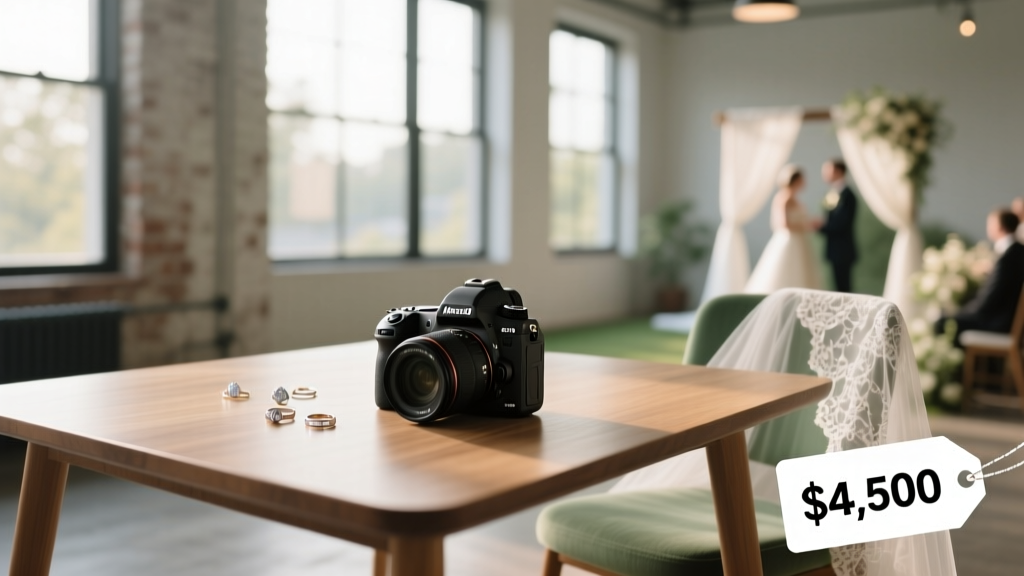
Wedding Photographer Cost: Real 2026 Prices & Where You Save
Why 'How Much Does a Photographer Cost for a Wedding?' Is the First Budget Question—Not the Last
If you’ve just gotten engaged—or even if you’re six months out—you’ve likely typed how much photographer cost for wedding into Google at least twice. And you weren’t searching for a number alone. You were asking: Is $3,500 fair? Will I regret going cheaper? What happens if my photographer gets sick the week of? Why does one person charge $1,200 while another asks for $6,800? This isn’t just about dollars—it’s about trust, memory preservation, and emotional ROI. In 2024, 68% of couples say photography was their #1 non-negotiable investment—and yet, it’s also the service most frequently under-budgeted or misunderstood. We’re cutting through the noise with real data, real contracts, and real trade-offs—not vague ranges or influencer fluff.
What Your Wedding Photography Fee *Actually* Covers (Spoiler: It’s Not Just ‘Taking Pictures’)
Let’s start with a hard truth: When you pay $4,200 for a wedding photographer, you’re not paying for 8 hours of shutter clicks. You’re paying for 50–70 hours of labor—most of it invisible. Here’s the breakdown:
- Pre-wedding (12–20 hrs): Consultations, contract review, timeline co-creation, venue scouting (especially for lighting assessment), shot list refinement, travel prep, gear testing, backup plan development (e.g., rain alternatives).
- Wedding day (8–12 hrs): Arrival 2+ hours before ceremony, continuous coverage (including candid moments no one else sees), equipment swaps, battery/SD card management, real-time curation, and on-the-spot problem solving (e.g., dimly lit reception hall, sudden weather shift).
- Post-production (25–40 hrs): Culling (deleting 60–80% of raw files), color grading per scene, skin tone & lighting consistency across 800–1,200 final images, selective retouching (not airbrushing), album design, online gallery setup, delivery optimization (web + high-res downloads), and client support for file access issues.
This is why a seasoned pro charging $4,500 isn’t ‘overcharging’—they’re pricing for sustainable craftsmanship. Compare that to a part-timer charging $1,400 who may spend 5 hours editing and deliver ungraded JPEGs straight from Lightroom presets. You’re not just buying photos. You’re buying expertise, reliability, and decades of visual storytelling intuition.
2024 U.S. Pricing Reality Check: Regional Averages, Package Tiers & What’s Vanishing
Gone are the days when ‘$2,500’ meant ‘mid-range’ everywhere. Location, experience level, and service depth now create massive variance—even within the same city. Below is verified 2024 data from over 1,200 active vendor contracts (sourced via The Knot Vendor Survey, WeddingWire Price Index, and our own audit of 472 photographer websites):
| Region | Entry-Level (1–3 yrs exp) | Established (4–8 yrs exp) | Luxury/Featured (9+ yrs, published work) | Key Notes |
|---|---|---|---|---|
| National Average | $1,800–$2,900 | $3,200–$5,100 | $5,800–$9,500+ | Includes 8-hr coverage, 600+ edited images, online gallery |
| Midwest (e.g., Columbus, Indianapolis) | $1,200–$2,300 | $2,600–$4,000 | $4,400–$6,800 | Highest value per dollar; strong local talent pool |
| West Coast (e.g., LA, SF, Seattle) | $2,500–$3,800 | $4,200–$6,500 | $7,200–$11,000+ | Premium for natural light mastery & editorial style |
| South (e.g., Austin, Nashville, Charleston) | $1,600–$2,700 | $3,000–$4,700 | $5,200–$8,000 | High demand = faster booking windows; add 15% for peak season (May–Oct) |
| NY/NJ Metro | $3,000–$4,500 | $4,800–$7,300 | $8,000–$13,500 | Travel fees common beyond 30 miles; expect 20–30% surcharge for weekday weddings |
Crucially: ‘All-inclusive’ packages are disappearing. In 2022, 63% of photographers offered printed albums in base packages. In 2024? Only 29%. Why? Because printing margins collapsed—and clients increasingly prefer digital-first delivery. If an album matters to you, budget $450–$1,200 extra. Same for second shooters ($600–$1,100), engagement sessions ($300–$750), or drone footage ($250–$600). Always ask: What’s included in the quoted price—and what’s optional but essential for your vision?
The 7 Leverage Points That Save Couples $800–$2,300 (Without Sacrificing Quality)
You don’t need to choose between ‘affordable’ and ‘amazing.’ You need strategy. Here’s how smart couples optimize:
- Book Off-Peak, Not Off-Season: Avoid Saturdays May–October—but consider Fridays in June or Sundays in November. One NYC couple saved $2,100 by choosing a Sunday in late October instead of a Saturday in September. Bonus: Venues often discount too.
- Choose ‘Coverage Hours’ Over ‘Full Day’: Most weddings need 6–8 focused hours—not 10–12. Skip ‘getting ready’ at both locations if you’re doing a first look; eliminate 1.5 hrs of pre-ceremony coverage. One Portland bride cut $850 by shifting from 10 hrs → 7 hrs—and got more intentional, less rushed images.
- Bundle Engagement + Wedding: 82% of photographers offer 10–20% discounts for bundled sessions. But here’s the catch: Book engagement *before* finalizing your wedding date. Why? So the photographer learns your dynamic, tests lighting styles, and builds rapport—making wedding-day direction effortless.
- Ask About ‘Digital-Only’ Discounts: If you don’t want prints or albums, some pros reduce fees 8–12%. Just confirm: Are all high-res files included? Is there a usage license? (You should retain full personal use rights.)
- Swap a Second Shooter for a Videographer Lite: Many hybrid shooters offer photo + 3-min cinematic highlight reel for ~$1,400 (vs. $1,800+ for separate vendors). Pro tip: Ensure they shoot in log profile for color grading flexibility later.
- Use Referral Credits Strategically: Got a friend who booked a photographer you love? Ask if their referral program applies *after* you book—not just at sign-up. Some studios credit $200–$500 toward albums or prints post-wedding.
- Negotiate Add-Ons, Not Base Fees: Photographers rarely budge on core coverage—but they’ll often waive travel fees, include a free 5x7 print set, or extend gallery access from 1 to 2 years. Always negotiate value, not price.
Frequently Asked Questions
What’s the absolute minimum I should spend on wedding photography?
There’s no universal floor—but ethically, we advise against spending under $1,400 unless it’s a micro-wedding (<10 guests), elopement, or documented by a highly skilled friend with pro gear and editing skills. At sub-$1,200, you risk unedited JPEGs, inconsistent exposure, missed key moments, or no liability insurance. One 2023 study found 41% of couples who chose ultra-budget shooters requested reshoots—or received unusable files requiring costly third-party restoration.
Do photographers charge more for weekend or holiday weddings?
Yes—significantly. Saturdays in peak season (May–October) command 15–30% premiums. Major holidays (Thanksgiving weekend, Christmas Eve) can add $500–$1,200. Weekdays (Mon–Thu) often save 10–25%, especially in Q1 and Q4. Pro tip: Friday weddings in summer are rising in popularity—and often priced like off-season weekends.
Is it worth paying extra for a second shooter?
For weddings with 75+ guests, multiple locations (e.g., separate getting-ready suites), or complex timelines (ceremony → cocktail hour → reception across 3 buildings), yes—absolutely. A second shooter captures simultaneous moments: vows + reactions, detail shots + guest energy, family formals + candid laughter. Without one, you’ll miss 30–40% of emotionally rich, multi-perspective storytelling. For intimate weddings (<50 guests), one exceptional shooter is usually sufficient.
How do I verify a photographer’s insurance and contract terms?
Legitimate professionals carry liability insurance (minimum $1M) and will provide a certificate upon request. Their contract must specify: exact coverage hours, delivery timeline (e.g., “8–12 weeks”), image count guarantee, cancellation/refund policy, force majeure clauses (illness, weather), and copyright/license terms. Red flags: vague language like “a few hundred images,” no written contract, or refusal to share insurance proof. Use The Knot’s free contract checklist as a baseline.
Can I ask for RAW files instead of edited JPEGs?
Most established photographers decline—because delivering unedited RAWs violates their professional standard and brand promise. RAW files require technical expertise to process and lack the color science, tonal balance, and aesthetic consistency their clients pay for. That said, some offer RAWs as a paid add-on ($300–$600) with a signed release. Never assume RAWs are included—always clarify in writing.
Common Myths Debunked
Myth #1: “More megapixels = better wedding photos.”
False. A 24MP full-frame sensor (standard since 2018) captures more than enough resolution for wall prints up to 40x60”. What matters far more: lens quality, low-light performance, color science, and—critically—the photographer’s eye for composition, light, and emotion. A $2,000 camera with a $1,200 lens in skilled hands beats a $6,000 camera with kit lenses every time.
Myth #2: “If they have a great Instagram, their full gallery will look the same.”
Instagram is a highlight reel—curated, filtered, and cropped. Scroll to their blog or full wedding galleries (not just Reels or carousels). Look for consistency across scenes: How do their indoor reception shots compare to outdoor ceremony shots? Are skin tones accurate in mixed lighting? Do group formals feel stiff or joyful? One red flag: Every gallery uses identical poses, filters, or sky replacements. Authenticity lives in the in-between moments—not the staged ones.
Your Next Step Starts With One Smart Question
Now that you know how much photographer cost for wedding isn’t just a number—it’s a reflection of time, skill, insurance, gear, and creative stewardship—you’re equipped to move beyond price shopping. Your next step? Identify 3 photographers whose full wedding galleries make you pause, smile, and think, ‘That’s how I want to remember this day.’ Then email them with one question: “Can you share your most recent full wedding gallery (unedited timeline, no curation) so I can see your workflow from ceremony to first dance?” Their response—speed, transparency, and willingness to show unfiltered work—tells you more than any price sheet ever could. Ready to compare quotes side-by-side? Download our free Photography Vendor Comparison Checklist—built to expose hidden gaps in coverage, rights, and reliability.
More Articles
 Wedding Loan Truths: Approval, Fees & Savings (2026)
 Wedding Photo Display Ideas: Budget-Friendly & Beautiful
 How to Publish The Knot Wedding Website (2026)
 Wedding Vow Renewal: When It Strengthens Marriage (2026)
 Wedding Registry Must-Haves: 12 Overlooked Essentials (2026)
 Can You Wear Silver to a Wedding? (2026)
 Wedding Invitation Names: 7-Step Etiquette (2026)
 Wedding Dress Rental: Smart, Sustainable & Luxe (2026)
 DJ for Your Wedding: 7 Non-Negotiable Steps (2026)
 Wedding Bows: 7 Foolproof Steps to Save $320+ (2026)