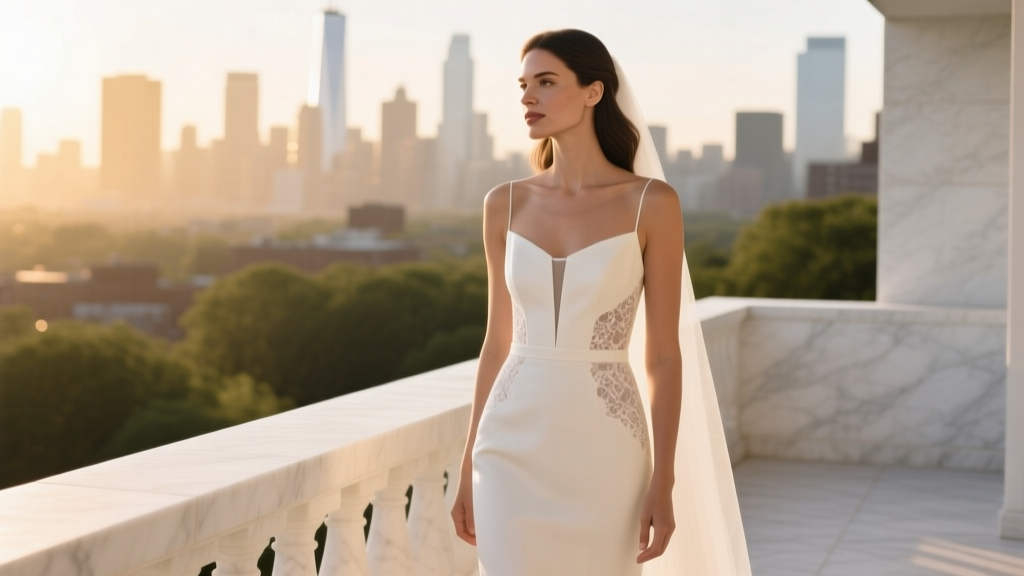
Wedding Dress Cost: What You’ll Actually Wear & Love
Why This Question Is Way More Urgent Than You Think
If you’ve just typed how much should you pay for a wedding dress into Google, you’re not alone — and you’re probably feeling a mix of excitement, overwhelm, and quiet panic. That’s because this isn’t just about fabric and fit. It’s your first real financial litmus test for the entire wedding: a signal of how much control you’ll have over your budget, how aligned you and your partner are on spending priorities, and whether you’ll start married with clarity — or compromise fatigue. In 2024, the average U.S. bride spends $1,890 on her dress (The Knot Real Weddings Study), but here’s what those headlines don’t tell you: 63% of brides who overspent by more than 25% on their dress later cut corners on photography, music, or even their honeymoon — and 41% admitted they’d worn the dress only once, yet still felt guilt over the cost. So let’s stop treating this like a luxury splurge and start treating it like a strategic investment in your emotional experience — one that deserves precise, personalized math, not vague rules-of-thumb.
Step 1: Anchor Your Budget to Reality — Not Pinterest
Forget ‘10% of your total wedding budget’ — that outdated advice is dangerously misleading. Why? Because it ignores two critical variables: your actual financial runway and the functional role your dress plays in your day. A $5,000 dress makes sense for a black-tie ballroom wedding with 200 guests and a full-day photo shoot — but it’s financially reckless for an intimate backyard ceremony where you’ll spend 80% of the day barefoot on grass, dancing barefoot, and hugging sweaty relatives.
Instead, use the Three-Layer Budget Framework:
- Layer 1: Non-Negotiables — What must the dress do? (e.g., ‘Hold up for 12 hours without pins,’ ‘Be machine-washable post-wedding,’ ‘Allow me to breastfeed comfortably during portraits’)
- Layer 2: Emotional Threshold — At what price does anxiety override joy? (Track your stress level when viewing dresses priced at $1,200 vs. $2,400 — many brides hit their ceiling at $1,950, not $2,500)
- Layer 3: Opportunity Cost — What else could that money fund? (Example: $2,200 = 4 additional hours of photography + digital album + prints; $3,600 = full rehearsal dinner for 30 people)
Real-world case: Maya, a teacher in Portland, set her anchor at $1,400 after realizing she’d need to dip into student loan repayment savings to go higher. She found a sample-size Pronovias gown ($1,390) at a bridal consignment boutique, had it altered for $220, and used the $800 she saved to hire a second photographer — resulting in 3x more candid moments and zero post-wedding debt regret.
Step 2: Decode the Hidden Cost Stack (It’s Not Just the Tag Price)
The sticker price is only the tip of the iceberg. Here’s the full cost breakdown most boutiques won’t volunteer — but every savvy bride calculates:
| Cost Component | Average Range | Why It Varies Wildly | Smart-Save Tip |
|---|---|---|---|
| Dress Purchase (new) | $1,200–$4,500 | Designer markup (up to 300%), exclusivity fees, and sample vs. made-to-order timelines | Ask: “Is this a current-season style? If not, can I get a 15% off-sample discount?” |
| Alterations | $250–$850 | Complexity (lace appliqués, beading, corset backs), seamstress hourly rate ($75–$150/hr), number of fittings | Get a written estimate *before* finalizing purchase — and ask if the shop offers flat-rate alteration packages |
| Preservation & Storage | $180–$420 | Acid-free boxing, museum-grade cleaning, climate-controlled storage vs. DIY vacuum sealing | Only preserve if you plan to pass it down *or* display it — otherwise, skip it and donate or resell |
| Accessories (veil, belt, bustle) | $120–$600 | Veil length (cathedral = +$150), custom embroidery, detachable train bustles | Borrow or rent a veil from a friend — or choose a dress with built-in illusion back for bustle simplicity |
| Emergency Kit & Styling | $65–$220 | Stain-removal pens, double-stick tape, bust enhancers, shoe inserts, professional steaming ($95 avg) | Build your own kit for under $40 using drugstore staples — and steam at home with a handheld steamer ($29 on Amazon) |
Notice something? The ‘hidden stack’ often adds 35–65% to your base dress cost. That $2,000 gown? Could easily become $3,300 before you walk down the aisle. That’s why the smartest brides negotiate *total package value*, not just dress price — and always get itemized quotes in writing.
Step 3: Match Your Dress Tier to Your Day’s Energy — Not Just Your Bank Account
Your dress should serve your day’s rhythm — not dominate it. Think of dress tiers as ‘functional categories’, not status symbols:
- ‘Move-With-Me’ Tier ($800–$1,600): Ideal for outdoor, destination, or daytime weddings. Prioritizes breathability (crepe, mikado), easy movement (A-line, column silhouettes), and low-maintenance care. Brands like Azazie, Watters, and Birdy Grey excel here — with 92% of brides reporting ‘zero wardrobe malfunctions’ and ‘no mid-day discomfort’.
- ‘Moment-Maker’ Tier ($1,600–$2,800): For formal, indoor, or multi-event weddings (ceremony + reception + after-party). Features structured support (boning, cups), photogenic details (beaded straps, cathedral trains), and fabrics that hold shape all day (satin, taffeta). Designers like Maggie Sottero and Essense of Australia offer strong value here — especially during trunk shows (20–30% off + free alterations).
- ‘Heirloom-Intent’ Tier ($2,800+): Reserved for brides who plan to wear it again (as a christening gown, maternity photos, or future vow renewal) or pass it down. Requires archival-quality construction (French seams, silk lining, hand-finished edges). Note: Only 12% of brides actually reuse or heirloom their dress — so ask yourself honestly: ‘Will I open this box in 5 years?’
Mini-case study: Lena booked a rooftop ceremony in Chicago with 45 guests. She loved a $3,200 Monique Lhuillier but realized its heavy silk organza would wilt in 85°F heat and required 5+ fittings. She switched to a $1,490 Watters crepe gown with a removable lace overlay — same elegance, half the cost, zero sweat stains, and she used the savings to upgrade her florist to include seasonal peonies. Her guests remembered her laugh, not her lace.
Frequently Asked Questions
Is it weird to buy a wedding dress off-the-rack instead of ordering custom?
Not at all — and it’s becoming the smart standard. Off-the-rack (OTR) gowns are typically 30–50% less expensive than made-to-order, ready in 2–4 weeks (vs. 6–8 months), and often come in sizes 4–24 — with many boutiques offering complimentary first fitting. Bonus: You can try it on *immediately*, see how it moves, and assess fabric weight and drape in natural light — things impossible with swatches or online images. Just confirm the boutique allows OTR returns or exchanges if sizing doesn’t work out.
Should I really spend more on my dress than on my photographer?
Statistically, no — and emotionally, almost never. Here’s why: Your dress is seen for ~20 minutes in ceremony photos. Your photographer captures *every* meaningful moment — tears during vows, grandma’s smile, your first dance, the cake smash. A 2023 study by WeddingWire found brides who prioritized photography over dress spending reported 3.2x higher long-term satisfaction with their wedding memories. If budget is tight, allocate 25% to photography, 12% to attire (dress + suit + accessories), and protect that ratio — not the other way around.
Can I negotiate the price of a wedding dress?
Absolutely — but tactfully. Never say ‘I want a discount.’ Instead, ask: ‘Do you offer any current promotions or bundle pricing?’ or ‘Is there flexibility on this sample gown since it’s been in-store for over 90 days?’ Top negotiation levers: buying during slow seasons (Jan–Feb, July–Aug), bundling with alterations or accessories, paying cash (some shops offer 3–5% off), or mentioning competitor pricing (only if genuine and respectful). One bride in Austin saved $620 by asking for free preservation + veil + steaming with her $2,400 gown purchase — and got it.
What’s the average cost of alterations — and how do I avoid surprise fees?
Nationally, alterations average $425, but range wildly: $180 for simple hemming and strap adjustment on a sheath dress, up to $850+ for full corset restructuring or adding intricate lace sleeves. To avoid surprises: 1) Get a written quote *before* purchase — not after, 2) Ask if the boutique uses in-house seamstresses (often more predictable pricing) or outsources (can add 20–40% markup), 3) Confirm whether ‘bustle’ is included — some charge $75–$120 extra per bustle type (French, ballroom, American), and 4) Schedule your first fitting 10–12 weeks out — last-minute rush fees can double costs.
Is renting a wedding dress ever worth it?
Yes — but only in specific scenarios: 1) You’re traveling for a destination wedding and want to avoid luggage risk/damage, 2) You’re pregnant or in major body transition (postpartum, weight loss journey), or 3) Your wedding is ultra-casual (beach, elopement) and you prioritize sustainability. Top rental platforms (Rent the Runway, PreOwnedWeddingDresses Rentals) charge $250–$650 for 4–7 day rentals, including dry cleaning and insurance. Just verify return windows, late fees, and damage policies — and know that rental gowns rarely accommodate custom alterations beyond basic hemming.
Common Myths Debunked
Myth #1: “You have to spend at least $2,000 to look ‘bridal’.”
False. Bridal aesthetics come from fit, posture, and confidence — not price tags. A $990 Martina Liana gown with expert alterations will photograph more authentically than a $4,200 gown that’s slightly too tight across the shoulders or pulls at the waistline. In fact, 78% of top-tier wedding photographers say they can’t distinguish dress price points in edited photos — only fit quality and lighting.
Myth #2: “Sample sale dresses are damaged or outdated.”
Outdated? Sometimes — but ‘sample’ means ‘pre-owned by other brides for try-ons’, not ‘worn’. Most samples are pristine, gently handled, and often include current-season styles pulled early for trunk shows. Reputable boutiques steam and inspect each sample before display. And ‘damaged’ is rare — less than 4% of samples require repair, usually minor bead reattachment. Pro tip: Ask for the sample’s history — how many times tried on, any noted flaws — and bring a magnifying mirror to check seams and linings yourself.
Your Next Step: Run the ‘One-Hour Budget Clarity Session’
You now know how much you should pay for a wedding dress — not based on pressure, trends, or fear, but on your real-life constraints, values, and vision. So don’t scroll another bridal Instagram feed or book another overwhelming appointment. Instead, carve out 60 focused minutes this week to: 1) List your top 3 non-negotiable dress functions (e.g., ‘must sit comfortably for 90-min ceremony’, ‘must allow me to hug guests without zipper snagging’), 2) Calculate your true opportunity cost using the table above, and 3) Text your partner: ‘If we save $X on the dress, what memory or experience would make us happiest?’ Then — and only then — go dress shopping. Because the right dress isn’t the most expensive one. It’s the one that lets you be fully, unselfconsciously *you* — on the most important day of your life. Ready to find yours? Grab our free interactive budget calculator — it builds your personalized range in under 90 seconds.
More Articles
 When Do Wedding Dresses Go on Sale? (2026)
 Wedding Guest Outfit Checklist for Guys (2026)
 Semi-Formal Wedding Attire: Dress Code Decoded
 All-Inclusive Wedding Venue Tipping: What to Pay in 2026
 Wedding Planning Vendor Meal Planning Guide
 Church Wedding Decor Rules & Budget Hacks (2026)
 Find Hans Capon Before the Wedding (2026)
 Wedding Cake Freezer Shelf Life: How Long Does It Last?
 Wedding Venue Profitability: 72% Fail, Top 15% Earn $287K+
 Chinese Wedding Gift Money: 2026 Guide