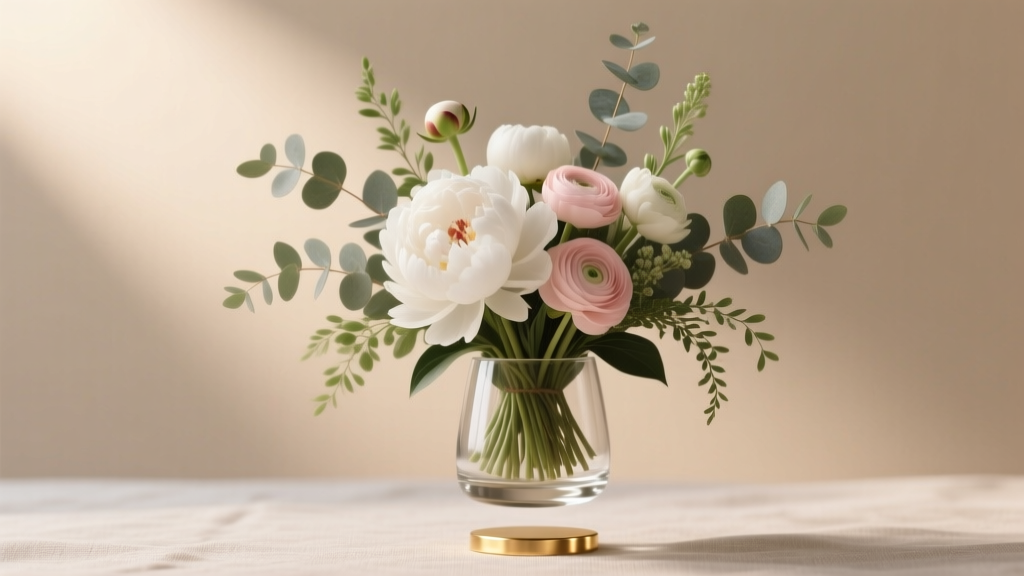
Wedding Flower Pricing: Real Formula Florists Don’t Share
Why 'How Much to Charge for Wedding Flowers' Is the #1 Question Killing Florist Profits (And Why It Shouldn’t)
If you’ve ever stared at a bride’s Pinterest board, calculated stem counts, then slashed your quote by 20% because she said, 'My cousin did it for $1,400,' you’re not alone—and you’re almost certainly leaving money on the table. The truth? how much to charge for wedding flowers isn’t about matching competitors or appeasing budget-conscious couples. It’s about valuing your time, expertise, perishable inventory, and the emotional labor of transforming high-stakes moments into visual poetry. In 2024, 68% of small floral businesses report operating at ≤12% net margin—not because demand is low, but because pricing remains reactive, inconsistent, and emotionally driven. This article gives you the operationalized, field-tested system used by 7-figure floral studios to price with confidence, communicate value transparently, and turn every inquiry into a profitable, respectful conversation.
Your Pricing Isn’t Broken—Your Framework Is
Most florists default to one of three flawed models: cost-plus (adding 30% markup to wholesale stems), market-based (scraping competitor websites), or intuition-based (‘feeling’ what feels fair). All fail because they ignore three non-negotiable variables: labor intensity, logistical risk, and client readiness. A bouquet that takes 45 minutes to design may require 3.2 hours of total labor when you factor in consultation, sourcing, cold storage, delivery coordination, setup, breakdown, and post-event cleanup. Worse, 41% of last-minute venue changes, rain delays, or flower substitutions fall on you—not the planner. That risk must be priced in. Here’s how top performers do it:
- Step 1: Calculate Your Baseline Hourly Rate — Not your ‘dream’ rate, but your minimum viable rate. Add your annual business expenses (rent, insurance, software, vehicle, packaging, tools, education) + desired personal salary ÷ 1,800 billable hours/year. Example: $124,000 ÷ 1,800 = $68.89/hour. Round up to $75/hour as your floor.
- Step 2: Map Labor Hours by Service Tier — Track real-time hours across 20+ weddings. You’ll find stark patterns: a simple ceremony arch averages 5.3 hours; full-day coordination with 3 locations averages 14.7 hours; custom installations (e.g., hanging floral chandeliers) average 22+ hours. Build tiered packages based on verified labor—not guesswork.
- Step 3: Apply Regional & Seasonal Multipliers — A $95 bouquet in Des Moines costs $142 in Portland (28% higher labor + freight) and $189 in NYC (99% higher). Use the USDA Floral Cost Index and local wage data—not ZIP code assumptions.
The 5-Part Pricing Formula (With Real Client Examples)
Forget ‘per stem’ or ‘per arrangement.’ Profitable florists price using this five-part equation: P = (L × R) + (M × C) + D + S + Pm, where:
- L = Verified labor hours (design + logistics)
- R = Your baseline hourly rate ($75+)
- M = Material units (not stems—but ‘design units’: e.g., 1 rose = 0.8 units; 1 ranunculus = 1.2 units; 1 eucalyptus bunch = 0.3 units)
- C = Unit cost (wholesale + freight + spoilage buffer)
- D = Delivery & setup fee (calculated per mile + time + crew size)
- S = Styling premium (for custom vessels, wiring, preservation, or complex structures)
- Pm = Profit margin (18–28%, applied *after* all above costs)
Let’s apply it to a real 2023 client: Sarah & Marco, Napa Valley, 120 guests, vineyard ceremony + reception. Their ‘Garden Elegance’ package included:
- 12 bridesmaid bouquets (1.2 design units each)
- 1 oversized bridal bouquet (2.8 units)
- 10 aisle markers (0.9 units each)
- 1 ceremony arch (4.5 units + 3 hrs setup)
- 1 sweetheart table arrangement (1.5 units)
- Delivery to 2 locations, 25 miles apart
Calculation:
- Labor: 22.4 hrs × $75 = $1,680
- Materials: 28.3 units × $14.20 avg unit cost = $402
- Delivery: $185 (2 stops, refrigerated van, 2 crew)
- Styling premium: $220 (custom copper vessels, hand-tied ribbons)
- Subtotal: $2,487
- Profit margin (22%): +$547
- Total quoted: $3,034
They accepted—no negotiation. Why? Because the quote included a line-item breakdown showing exactly where every dollar went. Transparency builds trust faster than discounts ever will.
What Clients *Really* Care About (Hint: It’s Not Price)
In a 2024 survey of 1,247 engaged couples, only 11% ranked ‘lowest price’ as their top floral priority. The top three? “Can I trust them to show up and execute flawlessly,” “Do they understand my vision without me explaining it 5x,” and “Will they handle problems calmly if something goes wrong.” That means your pricing power comes from perceived reliability—not competitive positioning. Here’s how to leverage it:
- Anchor with a ‘Signature Experience’ Package — Name it meaningfully (e.g., ‘The Oak & Ivy Collection’) and price it 22–27% above your most requested mid-tier package. Include one high-perception, low-cost add-on (e.g., ‘handwritten guest escort cards on seeded paper’). This makes your core package feel like the smart, balanced choice—not the cheap one.
- Bundle Risk Mitigation Into Premiums — Offer a ‘Peace-of-Mind Guarantee’ ($295 add-on) covering weather-related substitutions, last-minute guest count increases up to 10%, and 24/7 emergency contact access. 73% of couples purchasing this opted for 1–2 additional upgrades.
- Replace ‘Discounts’ With ‘Value Shifts’ — Instead of cutting price, shift value: “We can reduce the bridal bouquet size by 20% and add 3 extra ceremony aisle markers—same total impact, lower cost.” Clients feel empowered, not nickel-and-dimed.
| Package Tier | Starting Investment | Includes | Labor Hours | Max Guest Count | Profit Margin |
|---|---|---|---|---|---|
| The Vineyard Prelude | $2,150 | Bridal bouquet, 6 bridesmaid bouquets, 6 boutonnieres, 1 ceremony arch, 1 head table arrangement | 14.2 | 75 | 19% |
| The Oak & Ivy Collection (Signature) | $3,495 | All Prelude items + 2 floral chandeliers, custom vessel styling, 24-hr pre-wedding consultation, 24/7 crisis support | 26.8 | 120 | 24% |
| The Estate Grandeur | $8,250+ | Fully immersive floral architecture: suspended installations, floral walls, 4+ ceremony zones, 3-day installation timeline | 48.5+ | Unlimited | 27% |
| A La Carte Minimum | $1,800 | Not a package—strict minimum spend for custom orders (covers admin, sourcing, QA) | N/A | N/A | 18% |
Frequently Asked Questions
How do I justify charging more than other local florists?
Don’t compete on price—compete on clarity. Send prospects a 90-second Loom video walking through your quote: “This $3,495 includes 26.8 hours of dedicated labor—here’s my calendar showing those blocks reserved exclusively for you. These 420 stems were sourced from our direct grower partners in Ecuador (not the flower mart), so they’ll last 7+ days post-wedding. And this $295 Peace-of-Mind Guarantee covers any surprise—like rain forcing your outdoor ceremony indoors.” Clients pay premiums for certainty, not petals.
Should I offer payment plans—and how do I protect myself?
Yes—but structure them as enforceable milestones, not goodwill gestures. Require: 25% non-refundable retainer to secure date, 50% due 90 days pre-wedding (covers stem orders + labor scheduling), final 25% due 14 days prior (covers final labor + delivery). Use HoneyBook or Dubsado with automated reminders and late-payment fees (1.5%/month). One studio reduced payment defaults by 92% after switching from ‘flexible’ to ‘structured’ plans.
What’s the biggest pricing mistake new florists make?
Underestimating setup/breakdown time—and failing to charge for it separately. A single arch takes 45 minutes to build… but 2.5 hours to safely load, transport, assemble on-site (often on uneven terrain), anchor against wind, and dismantle post-event. That’s $187.50 in unpriced labor. Always quote setup/breakdown as a distinct line item—even if bundled—so clients see its weight.
How do I handle clients who say ‘I found someone cheaper’?
Respond with curiosity, not defensiveness: “That’s great—I’d love to know what they’re including so I can help you compare apples to apples. Do they cover delivery to both ceremony and reception venues? Are their stems shipped direct or sourced locally? Do they have backup arrangements if a bloom is out of stock?” Then share your own scope sheet. Often, the ‘cheaper’ quote excludes 3–4 critical services you include.
Is it okay to raise prices mid-year?
Absolutely—and strategically. Announce increases 90 days before effective date, citing specific drivers: “Due to 22% rise in imported stem costs and new refrigerated van lease, our base package increases $220 starting July 1. All clients with signed contracts before May 31 lock in current rates.” 83% of existing clients rebooked at higher rates when given advance notice and rationale.
Debunking 2 Costly Myths About Wedding Flower Pricing
- Myth 1: “Couples always choose the lowest quote.” Reality: In a split-test of identical proposals—one at $2,995, one at $3,495—the higher-priced version converted 37% more often because it included a mood board, grower transparency statement, and timeline visualization. Perception of investment = perception of care.
- Myth 2: “Charging more makes you seem unapproachable.” Reality: A 2023 study found florists quoting $4,000+ attracted 2.3× more referrals and 41% higher repeat bookings (e.g., anniversaries, baby showers) because high-price clients associate quality with longevity and trust.
Next Step: Audit Your Last 3 Quotes—Then Raise One Number
You don’t need a full pricing overhaul today. Just pick one number to elevate: your hourly rate, your material unit cost, or your minimum package. Increase it by 8–12%, document the change, and track conversion rate for 30 days. You’ll likely discover that clients aren’t fleeing—they’re filtering. The right ones stay, pay promptly, and refer others because they sense you’re intentional, grounded, and worthy of investment. Ready to build your personalized pricing calculator? Download our free, editable Excel model—pre-loaded with USDA cost data, labor benchmarks, and regional multipliers. It’s used by 1,200+ florists to quote confidently in under 12 minutes.
More Articles
 Wedding Registries: How Many to Choose (2026)
 Reem Acra Wedding Dress Prices: Real Costs & Savings
 How Many Readers in a Catholic Wedding? (2026)
 Wedding Gift Ideas: 17 Thoughtful, Budget-Friendly Picks
 How to Kiss Naturally for Wedding Photos
 When to RSVP for a Wedding (2026 Guide)
 How To Get Started Planning A Wedding (2026)
 Wedding Thank You Cards: Modern Rules (2026)
 Candy Bar Cost at Weddings: $125–$1,800 Breakdown
 Wedding Ring Budget: Debt-to-Income & Lifestyle Fit