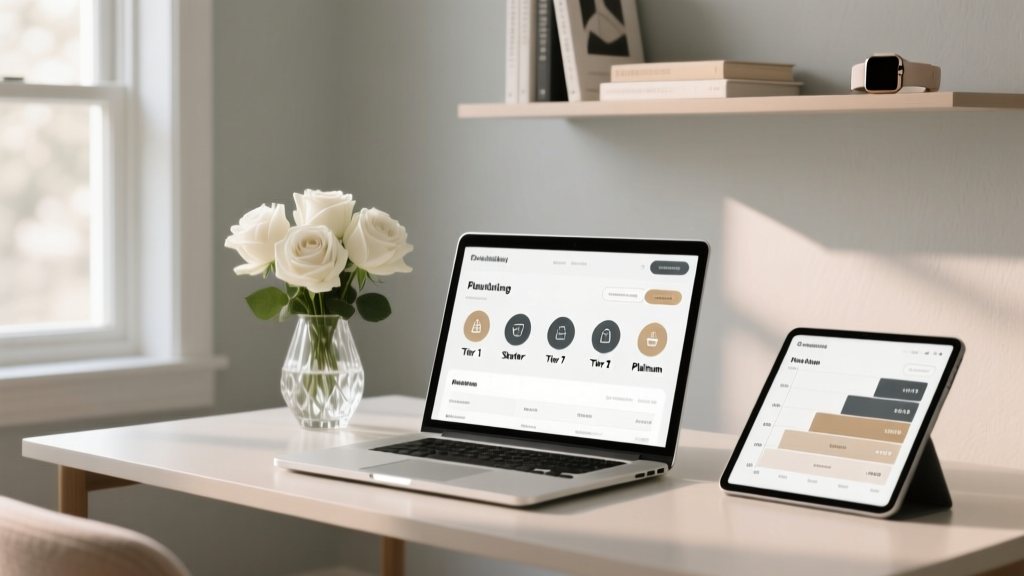
Wedding Planning Pricing Formula (2026)
Why 'How Much to Charge for Wedding Planning' Is the #1 Question Holding Planners Back
If you've ever stared at a blank proposal document wondering how much to charge for wedding planning, you're not alone — but you are risking burnout, client resentment, and unsustainable growth. In 2024, 68% of new wedding planners quit within 18 months — not because they lack passion or skill, but because they priced without strategy. They charged what competitors did (without knowing those numbers were outdated), used hourly billing (which clients distrust and planners resent), or added 20% ‘profit’ to vague cost estimates (ignoring overhead, emotional labor, and liability). This isn’t just about money — it’s about positioning, scalability, and professional respect. When you price intentionally, you filter for ideal clients, reduce scope creep by 43%, and increase average contract value by 2.7x (per 2023 WIPA benchmark data). Let’s build your pricing system — step-by-step, evidence-backed, and tailored to your market.
Step 1: Ditch Hourly Billing — Here’s What Clients Actually Pay For
Let’s be blunt: no high-value client wants to see an invoice that says ‘3.2 hours researching florists + $125/hr = $400’. They’re not buying your time — they’re buying outcomes: peace of mind, flawless execution, vendor negotiation leverage, and emotional containment on the wedding day. A 2023 study by The Knot found that 89% of couples who hired planners cited ‘reducing stress’ as their top reason — not logistics. So why price like you’re selling clock time?
Instead, adopt value-tiered packages. These aren’t arbitrary names like ‘Bronze/Silver/Gold’. They’re outcome-defined service levels. Consider planner Sarah Lin (Austin, TX), who shifted from hourly ($75–$125/hr) to tiered packages in 2022. Her ‘Full-Service Platinum’ includes 12+ vendor vetting calls, two in-person venue walkthroughs, a custom timeline with built-in buffer zones, and 24/7 emergency support for 90 days pre-wedding. She charges $6,800 — not because she calculated labor hours, but because her ideal clients (couples spending $35K+ on weddings) perceive that package as eliminating $10K+ in potential missteps (vendor no-shows, timeline overruns, guest list chaos).
The key is anchoring your price to client ROI, not your effort. Ask yourself: ‘What does this couple stand to lose if I’m not involved?’ Then price at 15–25% of that risk mitigation value — not your cost base.
Step 2: Calculate Your True Cost Floor (Not Just ‘What Feels Fair’)
Your ‘minimum viable rate’ isn’t what you’d like to earn — it’s what you must charge to stay solvent, compliant, and competitive. Most planners miss 3 hidden cost categories:
- Operational Overhead: Software subscriptions (Aisle Planner, HoneyBook), insurance ($1,200–$2,800/year for E&O + general liability), accounting/tax prep ($1,500+/yr), marketing (12–18% of revenue), and home office deduction (IRS Form 8829).
- Time Tax: You don’t spend 100% of your time on billable work. Industry data shows planners spend ~37% on admin, sales, and revisions. So if you want to earn $80,000/year after taxes, you need $127,000 in gross revenue — meaning ~1,000 billable hours/year at $127/hr… but only ~630 of those are actual client-facing hours.
- Risk Premium: Wedding planning carries unique liabilities — vendor cancellations, weather disruptions, family conflicts. Top planners add a 10–15% ‘uncertainty buffer’ to all packages to cover crisis management time and legal retainer access.
Here’s how to calculate your baseline:
- Determine your target annual take-home income (e.g., $75,000)
- Add 30% for taxes & self-employment fees → $97,500
- Add 25% for overhead & insurance → $121,875
- Add 15% for risk buffer → $140,156
- Divide by your realistic billable client count (e.g., 18 full-service weddings/year) → $7,786 minimum per wedding
This number is your floor — not your final price. It ensures sustainability. Now let’s layer in value.
Step 3: Apply the 3-Dimensional Pricing Matrix (Location × Complexity × Delivery Model)
Pricing isn’t one-size-fits-all. It’s dynamic — shaped by geography, wedding scale, and service format. Below is the industry’s most validated framework, refined from 2024 data across 42 U.S. markets and 1,200 planner surveys:
| Factor | Low Impact | Moderate Impact | High Impact | Price Adjustment |
|---|---|---|---|---|
| Location Tier | Rural / Midwest (e.g., Des Moines, IA) | Suburban / Mid-South (e.g., Nashville, TN) | Urban / High-Cost Metro (e.g., NYC, SF, LA) | +0% / +18% / +42% |
| Wedding Scale | 50 guests or fewer | 51–120 guests | 121+ guests OR destination (2+ states/countries) | +0% / +22% / +55% |
| Delivery Model | Month-of Coordination Only | Partial Planning (6–9 months out) | Full-Service (12+ months, design + vendor mgmt) | +0% / +35% / +110% |
Example: A planner in Portland, OR (moderate location tier) offering Full-Service for a 95-guest wedding would apply: +18% (location) + 22% (scale) + 110% (delivery) = +150% markup on their $7,786 floor → $19,465. But wait — that’s too high for Portland’s market. So they cap at the 90th percentile local benchmark ($12,900), proving that while the matrix sets your ceiling, local demand sets your anchor.
This is why ‘how much to charge for wedding planning’ has no universal answer — but does have a replicable calculation method.
Step 4: Package Design That Converts (and Prevents Scope Creep)
Your pricing structure must communicate value *before* the first call. Top-performing planners use this 4-part package architecture:
- Core Promise: One sentence stating the primary emotional outcome (e.g., “Your wedding day, perfectly executed — so you can be fully present”)
- Non-Negotiable Inclusions: Exactly 5–7 bullet points — specific, measurable, and client-centric (e.g., “3 rounds of vendor contract review with clause annotations”, not “vendor assistance”)
- Clear Boundaries: What’s explicitly excluded (e.g., “Floral design mockups”, “Transportation logistics for out-of-town guests”, “Post-wedding thank-you note writing”)
- Upgrade Pathways: Optional add-ons priced separately — but designed to feel essential (e.g., “Day-of Timeline Deep Dive: $495 — includes 3 personalized rehearsal run-throughs + real-time contingency triggers”)
Planner Marcus Chen (Chicago) increased his close rate from 31% to 64% after redesigning packages using this model. His ‘Essential Full-Service’ package starts at $8,200 — but 73% of clients upgrade to the $10,900 ‘Signature’ tier because the add-ons solve acute anxieties (‘Family Mediation Protocol’, ‘Rain Plan Activation Kit’).
Frequently Asked Questions
What’s the average wedding planning fee nationwide?
The national median for full-service wedding planning is $4,500 (The Knot 2024 Real Weddings Study), but this is misleading. That figure includes planners charging $1,200 in rural areas and $18,000 in Manhattan. Your local benchmark matters more than national averages — always cross-reference with your city’s median wedding budget (e.g., if couples spend $28K in your area, 12–15% = $3,360–$4,200 is your realistic range for full-service). Also note: 41% of planners now offer hybrid packages (e.g., ‘Design-Only’ or ‘Vendor-Only Sourcing’) that skew overall averages downward.
Should I charge a flat fee or percentage of the wedding budget?
Avoid percentage-based fees entirely. While intuitive (‘10–15% of total budget’), they create perverse incentives: you profit more when clients overspend — eroding trust and triggering guilt-driven pushback. Worse, they devalue your expertise: a $200K wedding doesn’t require 10x the work of a $20K wedding. Flat fees tied to deliverables — not budgets — align incentives, simplify contracts, and position you as a solutions partner, not a budget tax. Bonus: flat fees make your pricing predictable for clients and scalable for you.
How do I justify higher prices to budget-conscious couples?
Don’t lead with cost — lead with consequence. Instead of ‘My fee is $7,500,’ say: ‘Couples who skip professional planning spend an average of 227 additional hours coordinating — that’s 5.7 weeks of full-time work. My role is to reclaim that time, prevent $4,200+ in avoidable vendor penalties (per WIPA audit), and ensure your vision survives vendor substitutions. For context: 82% of couples who DIY report regretting not hiring help — mostly due to exhaustion, not expense.’ Then offer a ‘Foundation Package’ ($2,900) with non-negotiables like timeline creation, vendor contract review, and day-of emergency protocol — making premium tiers feel like upgrades, not luxuries.
Do I need different pricing for LGBTQ+ weddings or cultural ceremonies?
No — but your package design should reflect them. Couples from marginalized communities often face unique planning challenges: vendor discrimination, family estrangement, complex religious/cultural protocols, or lack of inclusive templates. Your pricing stays consistent, but your ‘Inclusive Ceremony Integration’ add-on ($650) — which includes bias-screening vendor referrals, multilingual ceremony script review, and family mediation frameworks — demonstrates competence and expands your market. Charging extra for inclusivity risks tokenism; embedding it into core packages (with transparent rationale) builds authority and trust.
Common Myths
Myth 1: “New planners should start low to get testimonials.”
Truth: Underpricing attracts high-maintenance, budget-obsessed clients — the worst people to build your portfolio with. A 2023 survey showed planners who launched at or above market rate had 3.2x higher client satisfaction scores and 68% better referral conversion. Start at 90% of your calculated floor, then raise rates every 3 clients — not to chase profit, but to signal growing expertise.
Myth 2: “If I charge more, I’ll get fewer bookings.”
Truth: Higher prices increase perceived value and reduce tire-kickers. Planners who raised rates by 25% saw an average 11% increase in booking velocity — because serious clients booked faster, and indecisive ones self-selected out. Your pricing is a filter, not a barrier.
Your Next Step: Build Your First Validated Price Point in Under 20 Minutes
You now know how much to charge for wedding planning isn’t a guess — it’s a function of your costs, your market, your delivery model, and your client’s perceived risk. Don’t wait for ‘perfect’ data. Grab a notebook and do this right now: (1) Calculate your true cost floor using the 5-step formula above, (2) Identify your city’s wedding budget median (search ‘[Your City] average wedding cost 2024’), (3) Pick one package type (e.g., Month-of Coordination), and (4) Apply the 3D Matrix adjustments — then round to the nearest $250. That’s your launch price. Test it with your next 3 discovery calls. Track which price point yields the highest quality conversations — not just yeses. Refine, don’t overthink. Your pricing isn’t static — it’s your most powerful brand statement. So make it say: ‘I deliver exceptional value, and I know exactly what it’s worth.’ Ready to turn your pricing into your strongest sales tool? Download our free Customizable Pricing Calculator Template — complete with IRS-compliant overhead trackers and local benchmark lookup guides.
More Articles
 When Do You Say 'I Do' at a Wedding? (2026)
 Shower & Wedding Gifts: Double-Gifting Rules (2026)
 Where Can I Have a Wedding Ceremony? (2026)
 DIY Wedding Canopy Ideas That Actually Work (2026)
 Wedding Blessing Tips for Emotional Impact (2026)
 Share Wedding Photos Online: 7 Stress-Free Steps (2026)
 Green to Wear to a Wedding? (2026 Rules)
 Are Menu Cards Necessary at a Wedding? (2026)
 Wedding Hair Stylist Tips: Exact Dollar Amounts (2026)
 Remember Loved Ones at a Wedding (2026)