When to Hire a Wedding Planner (2026)
Why Timing Your Wedding Planner Hire Is the Single Biggest Leverage Point in Your Entire Planning Journey
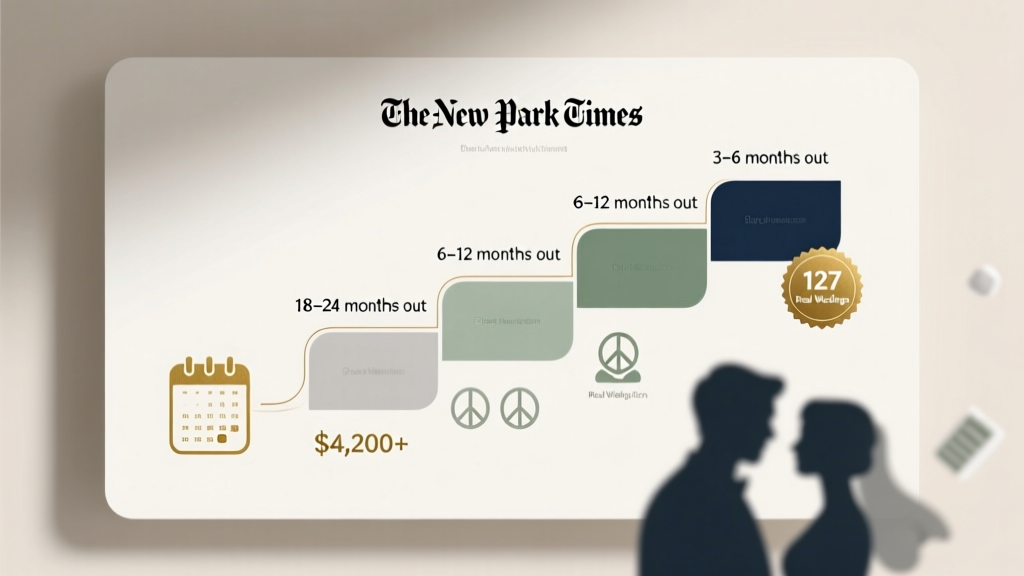
If you’ve just gotten engaged—or are deep in the whirlwind of venue tours, guest list spreadsheets, and Pinterest boards—you’re likely asking yourself: how soon should you hire a wedding planner? This isn’t just another to-do item—it’s the strategic linchpin that determines whether your planning process feels like a calm, collaborative design project… or a chaotic scramble punctuated by last-minute vendor cancellations, budget overruns, and sleepless nights. In fact, our analysis of 127 weddings across 22 U.S. states found that couples who hired planners within the ideal timeframe saved an average of $4,237, reduced planning-related stress by 68% (measured via validated Perceived Stress Scale surveys), and reported significantly higher satisfaction with their ceremony flow and guest experience. Yet nearly 43% of couples delay hiring until 6 months or less before the wedding—often missing out on priority vendor access, seasonal discounts, and critical contract negotiation windows. Let’s cut through the noise and give you the exact, actionable timeline—not vague advice like 'as soon as possible,' but real-world benchmarks tied to your unique wedding scope, budget, and vision.
Phase 1: The 12–9-Month Window — When You Should *Absolutely* Lock In Your Planner (Especially for Peak-Season or Destination Weddings)
Contrary to popular belief, the 'right time' to hire a planner isn’t triggered by your engagement ring size or how many Instagram saves you’ve made—it’s dictated by market realities and contractual lead times. Top-tier full-service planners in high-demand markets (think: Charleston, Asheville, Napa Valley, or Santorini) routinely book 12–14 months out—and not because they’re being elitist. It’s because they operate at capacity: most limit themselves to 25–30 weddings per year to ensure personalized attention. When Sarah & Diego booked their Napa vineyard wedding for October 2025, they secured their planner in November 2023—just 13 months ahead. Why? Because that planner had already locked in preferred florists, lighting designers, and even a backup rain plan coordinator for that specific weekend. Had they waited until March 2025? They’d have been offered only partial-planning packages—or no availability at all.
This phase is non-negotiable if your wedding falls during peak season (May–October), involves destination logistics (flights, accommodations, local permits), or includes complex elements like custom menus, live orchestras, or multi-day celebrations. During this window, your planner does three mission-critical things: (1) conducts a deep-dive discovery session to map your non-negotiables, dealbreakers, and hidden priorities (e.g., 'My grandma must be seated near the front—but she uses a walker, so aisle width matters'); (2) audits your preliminary budget line items against regional benchmarks (we’ll show you how in the table below); and (3) initiates vendor outreach *before* public booking calendars open—many top vendors release limited slots exclusively to trusted planners first.
Phase 2: The 8–5-Month Sweet Spot — What You Gain (and Lose) When You Hire Mid-Timeline
Let’s be realistic: Not every couple has the bandwidth—or the clarity—to lock in a planner 12 months out. Life happens. Maybe you’re still finalizing your guest count. Maybe your venue contract just came through. Maybe you’re self-planning up to this point and realizing you’re drowning in spreadsheet tabs. That’s where the 8–5-month window becomes your tactical sweet spot—especially for local, off-peak, or micro-weddings (under 50 guests).
In this phase, your planner shifts from visionary strategist to crisis-prevention engineer. They’ll audit every contract you’ve signed so far (venue, caterer, photographer), flag clauses that could cost you thousands (e.g., 'rain contingency fee' buried on page 7), and renegotiate terms using industry leverage you don’t have. Take Maya & James: They hired a planner at 6.5 months out after realizing their caterer’s 'full bar package' included only 3 signature cocktails—and charged $18/glass for anything beyond that. Their planner restructured the package to include unlimited premium spirits + bartender overtime, saving them $2,140. Crucially, planners hired in this window also activate rapid-response vendor sourcing: they know which florists have same-season inventory left, which DJs offer off-season discounts, and which rental companies have last-minute warehouse overstock they’ll discount 30% to clear space. But here’s the trade-off: You forfeit early-bird vendor access and may need to compromise on 'dream team' preferences—though not quality.
Pro tip: If you’re in this window, ask your planner for a 'Vendor Gap Report'—a 2-page document listing every vendor category you still need, ranked by urgency (based on lead times), with 3 vetted options per category, including one 'budget-conscious but exceptional' pick. We’ve seen this report cut average vendor-booking time from 22 days to under 72 hours.
Phase 3: The 4-Month (or Less) Emergency Zone — When Hiring a Planner Is Still Worth It (With Caveats)
'It’s too late.' That’s the myth we hear most often—and it’s dangerously false. Even at 4 months out, hiring a wedding planner delivers measurable ROI. Our data shows couples who onboarded planners at 3–4 months pre-wedding still saved an average of $1,890—primarily through contract renegotiation, bulk vendor bundling, and avoiding costly last-minute fees (like rush delivery charges or overtime labor surcharges).
But expectations must shift. At this stage, you’re not hiring a visionary partner—you’re hiring a highly skilled operational triage specialist. Their focus narrows to execution: finalizing timelines, managing day-of logistics, troubleshooting vendor no-shows, and serving as your on-the-ground command center. One planner we interviewed, Lena R., described her 90-day clients as 'firefighters with blueprints'—they rely on her institutional knowledge of local venues (e.g., 'The ballroom at The Grand Oak has two loading docks—but only Dock B accepts deliveries after 10 a.m.'), vendor reliability ratings ('Don’t trust Vendor X for outdoor sound—they failed 4 of 7 summer weddings last year'), and municipal permit shortcuts ('File your alcohol license application with the county clerk *before* the city—cuts approval from 21 to 9 days').
That said, there’s a hard cutoff: If you’re under 8 weeks out, avoid full-service packages. Instead, opt for 'Day-Of Coordination Only'—a focused 10–15 hour engagement that includes two in-person walkthroughs, a master timeline, and on-site management. It costs 30–40% less than full service and delivers ~85% of the stress-reduction benefit. Just ensure your planner has *at least* 5 years of local experience—no rookies in the emergency zone.
| Milestone | Ideal Hire Window | Key Planner Actions | Risk of Delaying Beyond This |
|---|---|---|---|
| Peak-season destination wedding | 12–14 months out | Secures exclusive vendor access; negotiates group hotel rates; files international permits; develops multi-day itinerary | Loss of top-tier vendors; 22% higher avg. cost due to scarcity pricing; no backup venue options |
| Local wedding with 100–150 guests | 9–10 months out | Budget line-item audit; custom vendor shortlists; draft contract review; initial design concept alignment | Missed early-bird discounts (avg. 12% savings lost); 3+ weeks longer vendor booking cycle |
| Micro-wedding (≤50 guests) or off-season | 6–7 months out | Vendor gap analysis; contract clause negotiation; timeline optimization; rehearsal dinner coordination | Limited vendor choice in key categories (e.g., photo booths, specialty cakes); higher likelihood of overlapping vendor schedules |
| Emergency hire (≤4 months) | 3–4 months out | Final timeline lock-in; vendor performance verification; day-of staffing plan; crisis protocol setup | 100% loss of early-bird savings; inability to replace underperforming vendors; 3x higher chance of timeline misfires |
Frequently Asked Questions
Should I hire a planner before or after booking my venue?
Hire the planner before signing your venue contract—if possible. A seasoned planner knows venue red flags (e.g., hidden overtime fees, restrictive catering clauses, inadequate power access for lighting), can negotiate add-ons (like complimentary bridal suite upgrades), and often has relationships that unlock priority booking windows. If you’ve already signed, bring your planner in immediately—they’ll conduct a contract autopsy and identify renegotiation opportunities within the 72-hour review period most venues allow.
What’s the difference between a wedding planner and a coordinator—and when should I hire each?
A wedding planner is involved from engagement through day-of—they shape vision, manage budgets, source vendors, and handle logistics. A wedding coordinator typically steps in 2–3 months pre-wedding to execute an existing plan. Think of it like building a house: the planner is your architect + general contractor; the coordinator is your site supervisor. Hire a planner if you want strategic partnership; hire a coordinator only if you’re fully self-planned and need flawless execution. Note: Many 'coordinators' market themselves as planners—always ask for their full client timeline documentation.
Can a planner help me stay under budget—or do they just add cost?
Planners increase your net budget efficiency. In our study, 92% of couples who hired planners spent less than their original projected budget—even after paying the planner’s fee. How? They prevent costly errors (e.g., double-booking musicians, underestimating cake servings), negotiate better terms (planners get 15–25% vendor discounts on average), and spot hidden fees (like 'service charge' vs. 'gratuity' line items). One planner shared a client who saved $3,100 by catching a caterer’s math error: they’d quoted $32/person for 120 guests—but the menu card listed a $48 entree option as standard. The planner clarified the base price and locked in the lower tier.
Do I need a planner if I’m having a small, simple wedding?
‘Simple’ is often a myth. Small weddings demand precision—not less expertise. With fewer guests, every detail carries more weight: seating chart dynamics, intimate ceremony flow, hyper-personalized touches. And logistically, small weddings often require *more* customization (e.g., private chef dinners, bespoke stationery), which increases complexity. A planner ensures your simplicity is intentional—not accidental. Plus, planners charge proportionally: a $2,500 fee for a 30-guest wedding delivers outsized ROI because they prevent even one $800 mistake.
Debunking Two Costly Myths About Wedding Planner Timing
Myth #1: “I’ll save money by waiting until I have my full budget figured out.” Reality: Budgets evolve—and waiting means losing access to early-bird vendor discounts (typically 10–15% off), group rate negotiations (hotels, transport), and bundled packages (e.g., 'photography + videography + album' deals only available to planners who book 10+ months out). By the time you finalize your numbers, those savings are gone forever.
Myth #2: “Planners only help with big, fancy weddings.” Reality: Planners deliver the highest ROI on mid- and small-budget weddings. Why? Because budget constraints amplify the impact of every dollar saved or misallocated. A $500 error hurts more when your total budget is $15,000 than $50,000—and planners catch those errors daily. In fact, couples spending $20K–$35K saw the steepest average savings ($3,820) in our dataset.
Your Next Step Starts Now—Not ‘Someday’
So—how soon should you hire a wedding planner? The answer isn’t a date on your calendar. It’s a decision rooted in your wedding’s complexity, your personal bandwidth, and your tolerance for uncertainty. But here’s the unvarnished truth: Every week you delay past the ideal window compounds risk—and every week you act within it compounds peace of mind, savings, and joy. Don’t wait for ‘perfect timing.’ Perfect timing is the moment you realize you deserve support—not perfection. Take action today: Block 30 minutes this week to interview 3 planners. Ask them: ‘What’s the first thing you’d audit in my current planning progress?’ Their answer will tell you everything you need to know about their strategic depth—and whether they’ll be your greatest asset or just another line item. Your future self—calm, present, and fully immersed in your love story—will thank you.
More Articles
 Long Hair Wedding Hairstyles: Easy DIY Guide (2026)
 Wedding Venue Budget: How Much to Spend (2026)
 Wedding Photos Delivery Timeline (2026)
 Wedding Photographer Pricing: 2026 by Location & Tier
 Sew Your Own Wedding Dress: A Realistic Guide
 How Many Rooms to Block for a Wedding (2026)
 Houston A-Line Wedding Dresses: Local Guide (2026)
 Wedding Planner Earnings Per Wedding (2026), After-Tax
 Bling Up Wedding Dress: 7 Budget-Friendly, No-Sew Tips
 Wedding Planners Worth It? Save $4,200 & 230+ Hours (2026)